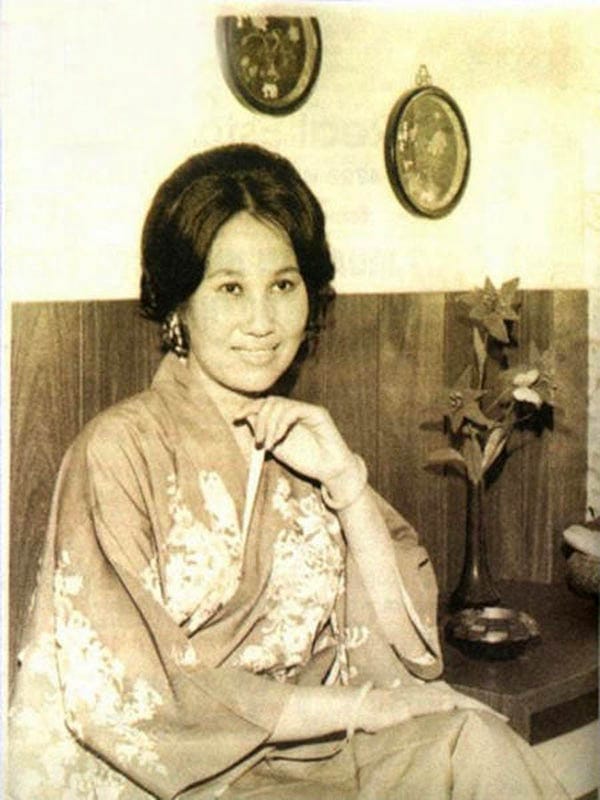
thái thanh

Một ngày đó tóc mây đã phai mầu,
Có chờ ta oán trách đâu, có vì duyên kiếp không lâu.
Đời sẽ thấy chúng ta sống không cầu!
Cho tình cứ úa phai mau, cho người cứ mãi phụ nhau.


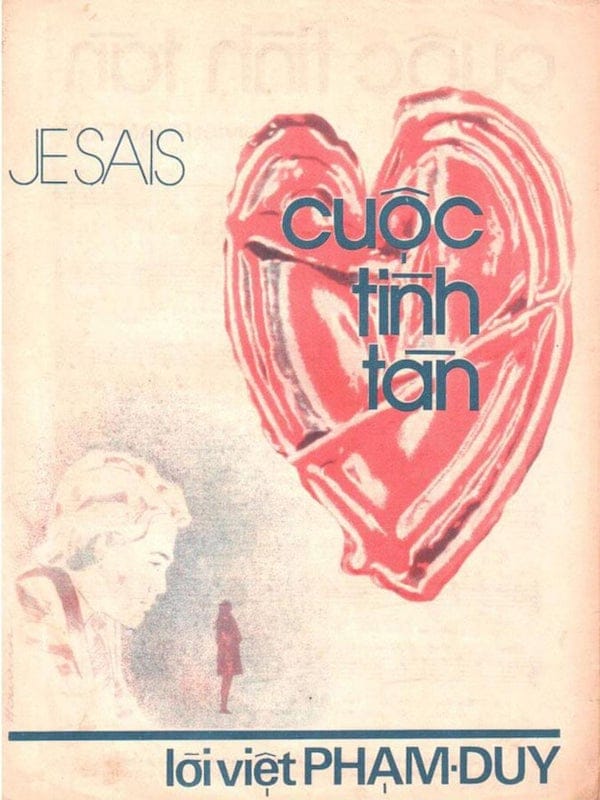
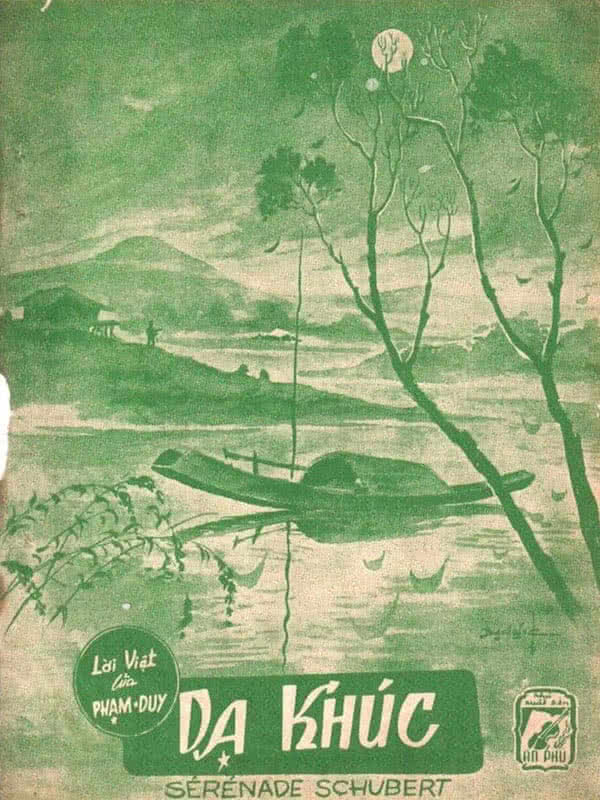
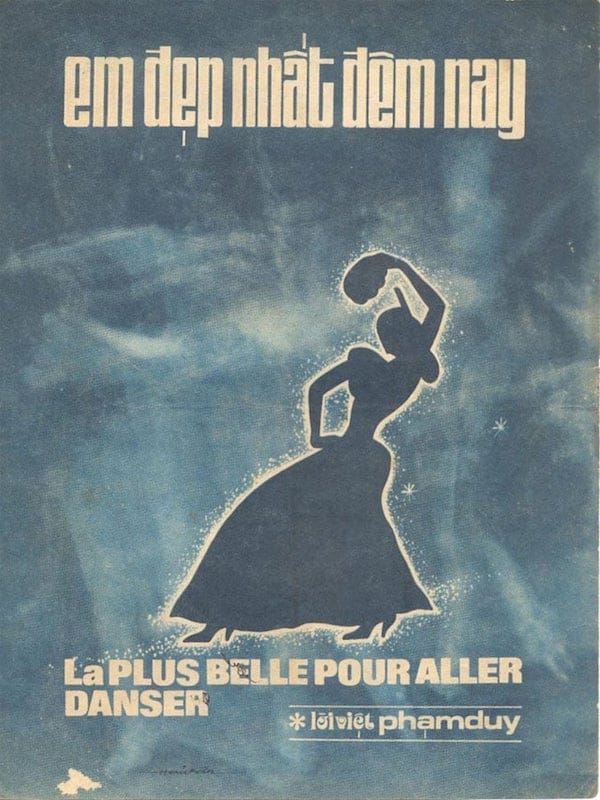
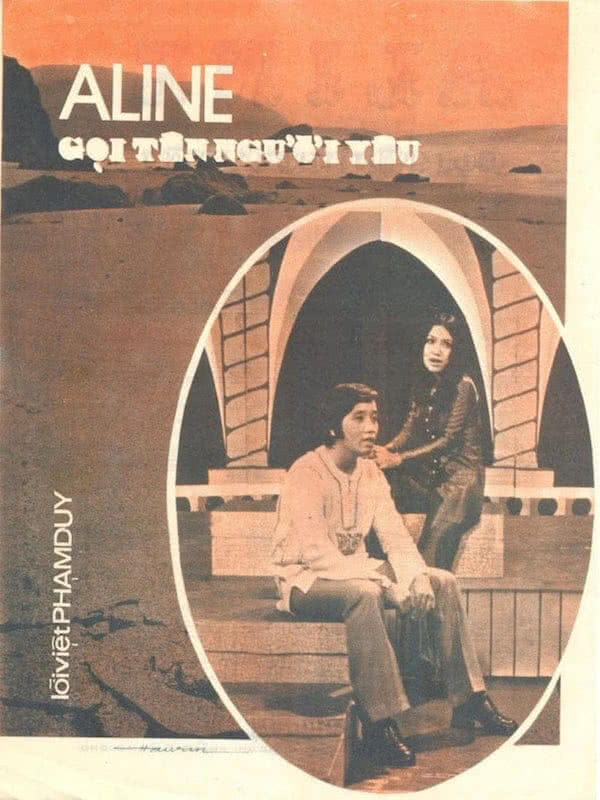
Post ở đây làm tư liệu, những ca khúc cổ điển, bán cổ điển nhạc ngoại quốc lời Việt do giọng ca Thái Thanh trình bày. Đa số những ca từ này đều được đặt bởi Phạm Duy hay là Phạm Đình Chương, những người tiên phong trong việc “phổ cập” nhạc cổ điển, bán cổ điển ngoại quốc vào nền ca khúc Việt.

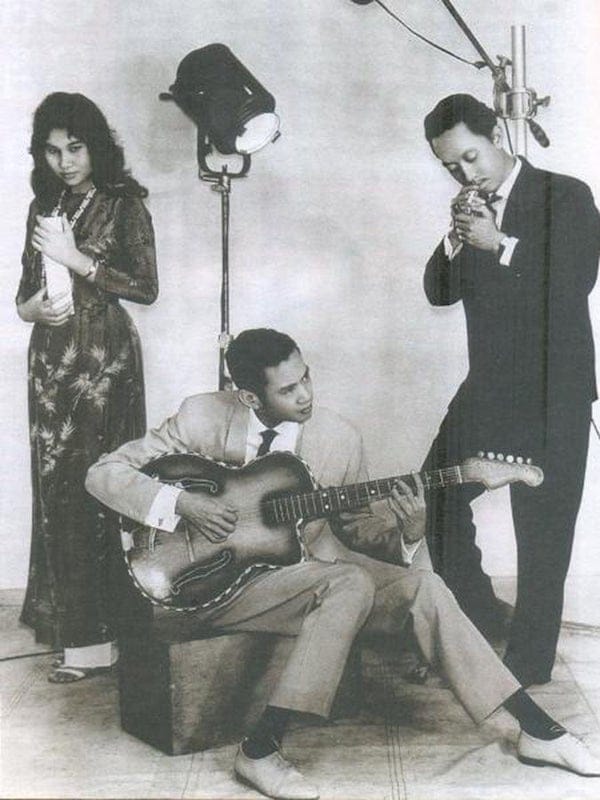
Ảnh trên: Thái Thanh và 2 người anh, Hoài Bắc (Phạm Đình Chương), Hoài Trung (Phạm Đình Viêm, half – brother), những giọng hát vàng của ban hợp ca Thăng Long một thời. Một số bản thu âm chất lượng khá tệ (một ít được thu vào những năm 50 hay sớm hơn), nhưng không vì thế mà che lấp đi được “tiếng hát trên trời” Thái Thanh! Về ca từ, trong những lời ca khá “cổ điển” và “sáo” này, tôi luôn tìm thấy điều gì đó về cách sử dụng tiếng Việt!

Khúc nhạc muôn đời - Domino, Louis Ferrari 
Lòng người ly hương - La complainte des infidèles, Georges Van Parys 
Dạ khúc - Serenade, F. Schubert 
Dòng sông xanh – Le beau Danube bleu, J. Strauss 
Sóng nước biếc – Les flots du Danube, J. Ivanovici 
Những chiếc lá úa – Les feuilles mortes, Joseph Kosma 
Ave Maria – F. Schubert 
Khúc ca muôn thủa – Granada 
Chiều tà – Serenata, E. Toselli 
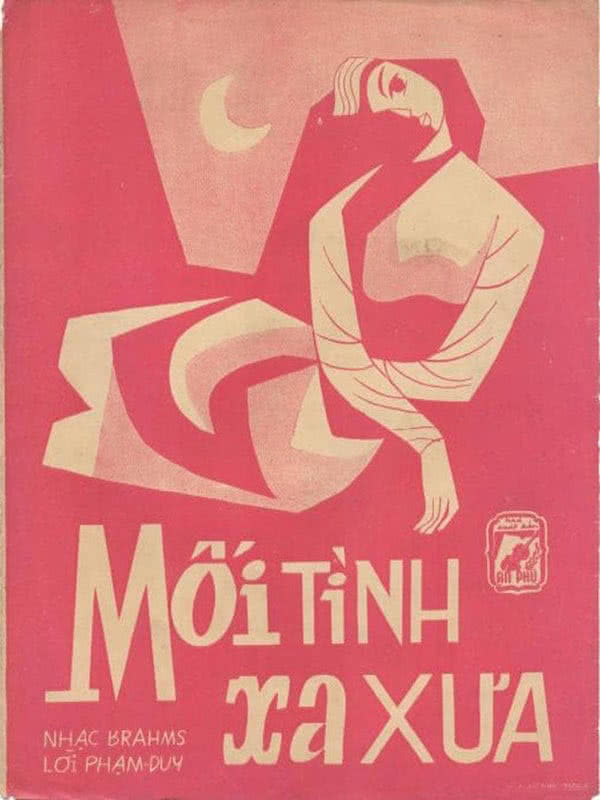
Mối tình xa xưa – Célèbre valse, J. Brahms 
Ánh mắt liêu trai – Reverie, R. Schumann 
Tango xanh – Le tango bleu, Tino Rossi 

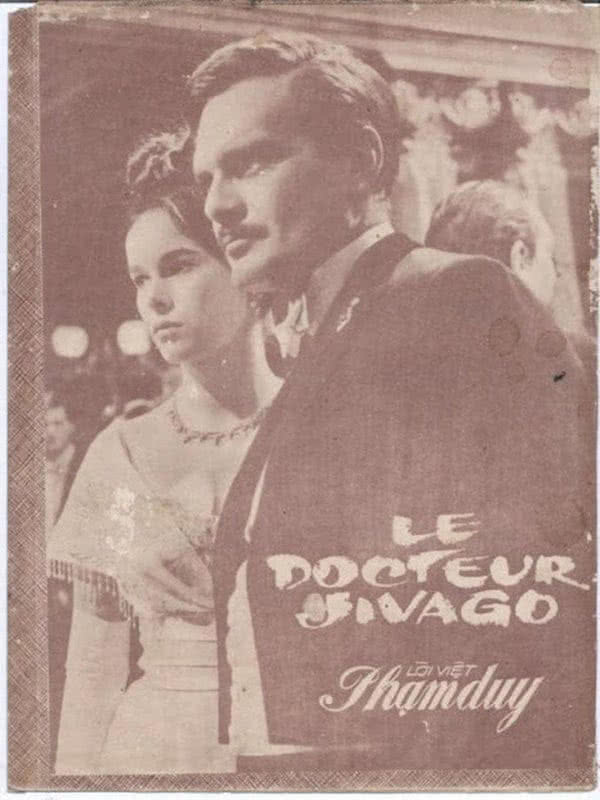
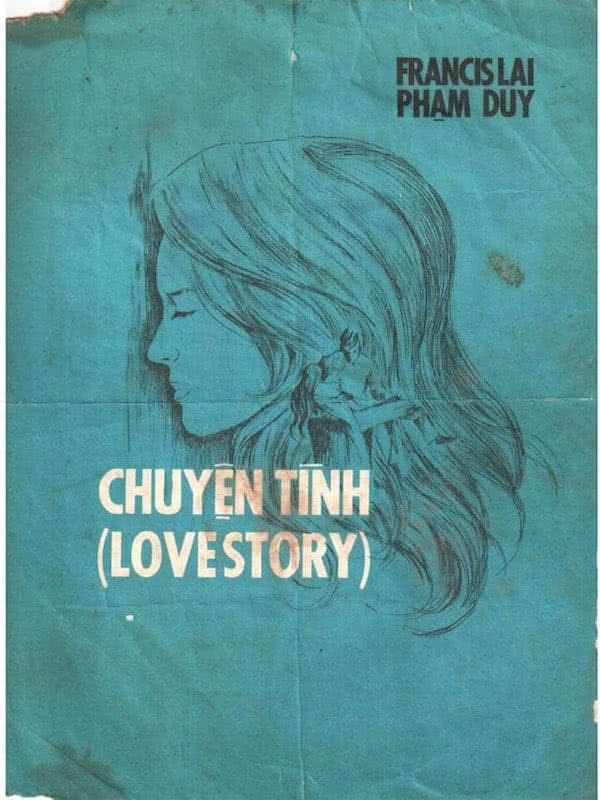
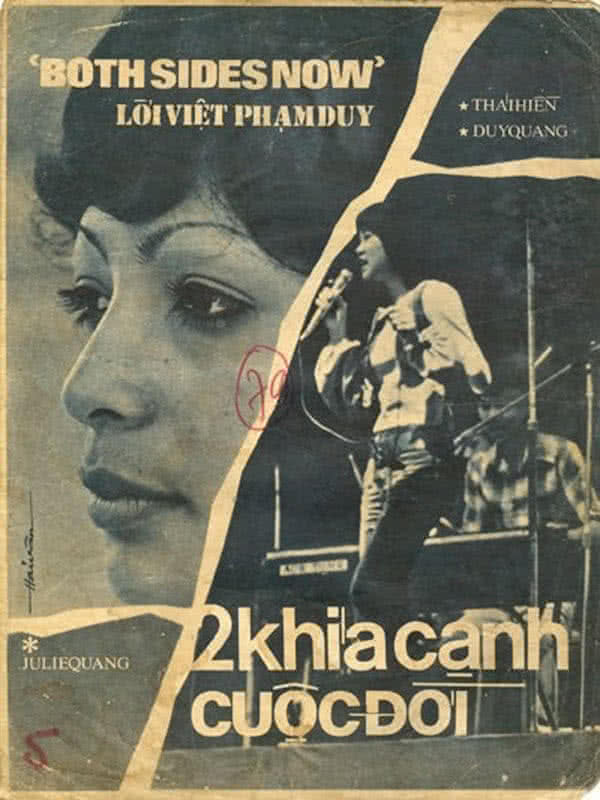
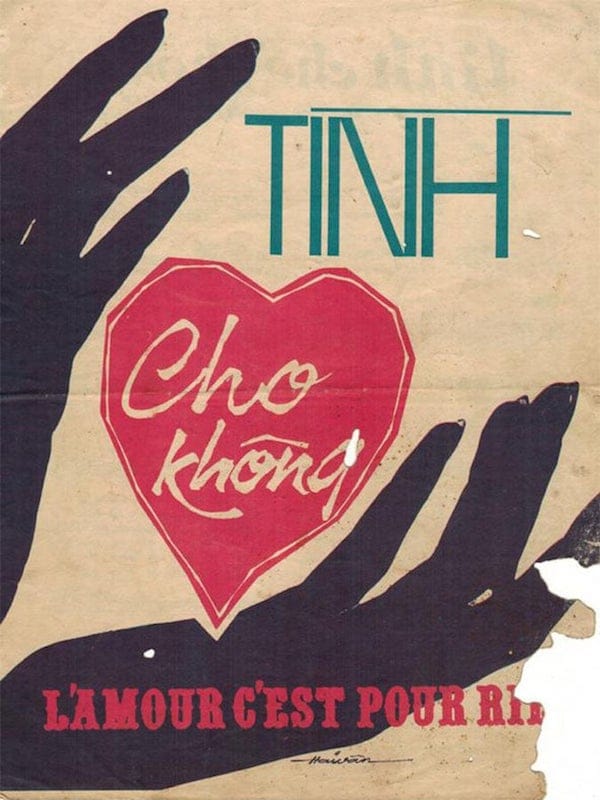
Tiện thể post luôn ở đây một số bìa minh hoạ nhạc ngoại quốc do NS Phạm Duy đặt lời Việt:

kim tước

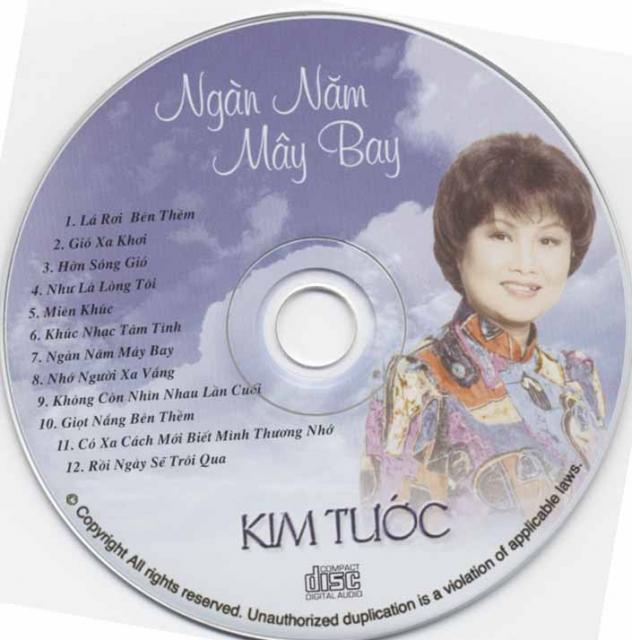
Trong số những giọng ca nữ trước 75 mà tôi thường nghe: Thái Thanh, Hà Thanh, Mai Hương… còn có một người ít nổi tiếng hơn, nhưng không kém phần điêu luyện, đó là Kim Tước. Trước 75, Kim Tước thường chỉ hát bè cho các ca sĩ lớn khác (Anh Ngọc, Thái Thanh, Khánh Ly…), mãi sau này, cô mới thu âm một số album khi đã định cư ở Mỹ. Dĩ nhiên lúc đó, với thời gian, giọng ca đã khác, dù kỹ thuật studio thật sự tốt hơn trước rất nhiều.

Không nhìn nhau lần cuối - Kim Tước 
Giọt nắng bên thềm - Kim Tước 
Thu chiến trường - Kim Tước 

Hai bài hát trên thuộc album Ngàn năm mây bay thu âm năm 2003, điều tôi lấy làm lạ là hòa âm của album này rất VN (loại VN sau 75), tôi suy đoán rằng người làm hòa âm này đã sống nhiều năm dưới chế độ VN XHCN. Riêng bài Thu chiến trường đã giới thiệu sơ qua trong một bài trước về Phạm Duy, là giọng Kim Tước khi còn trẻ.

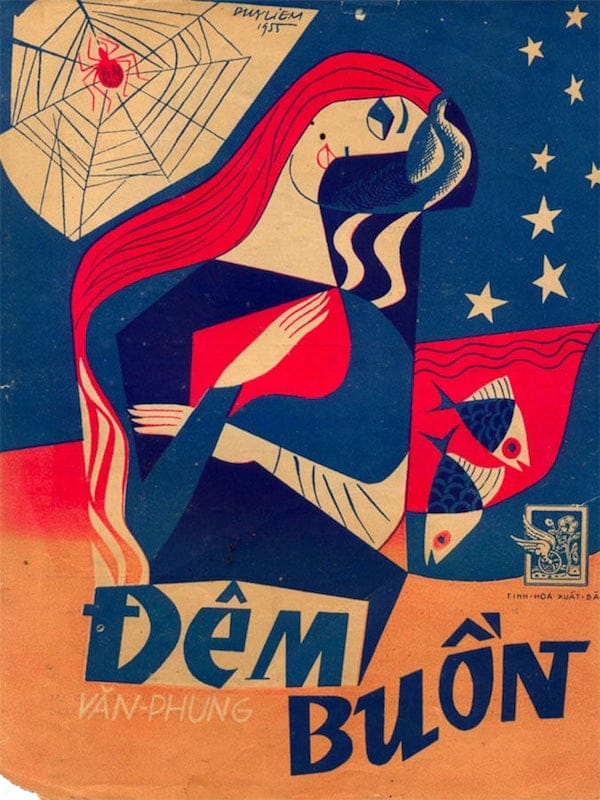
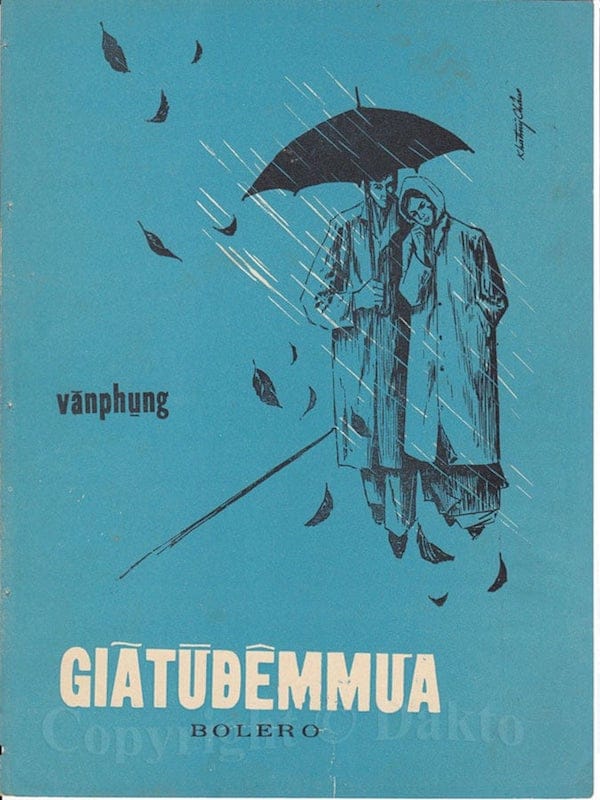
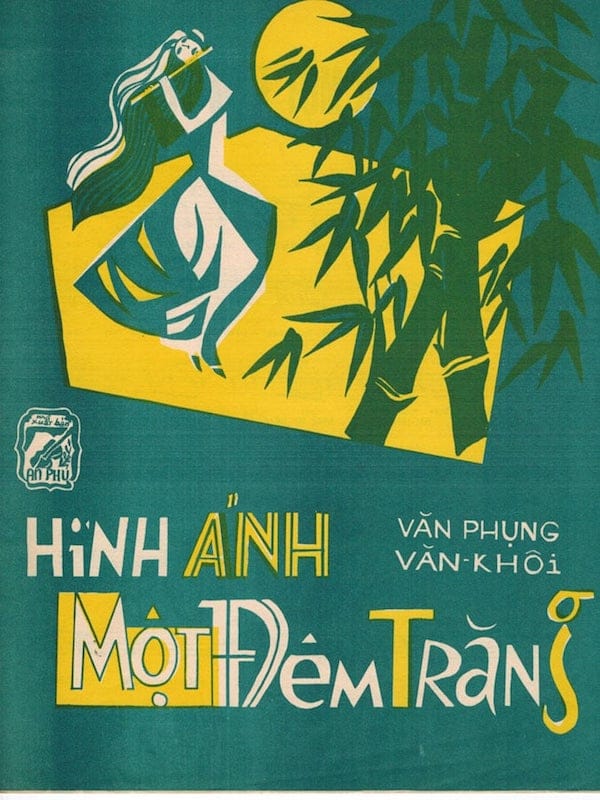
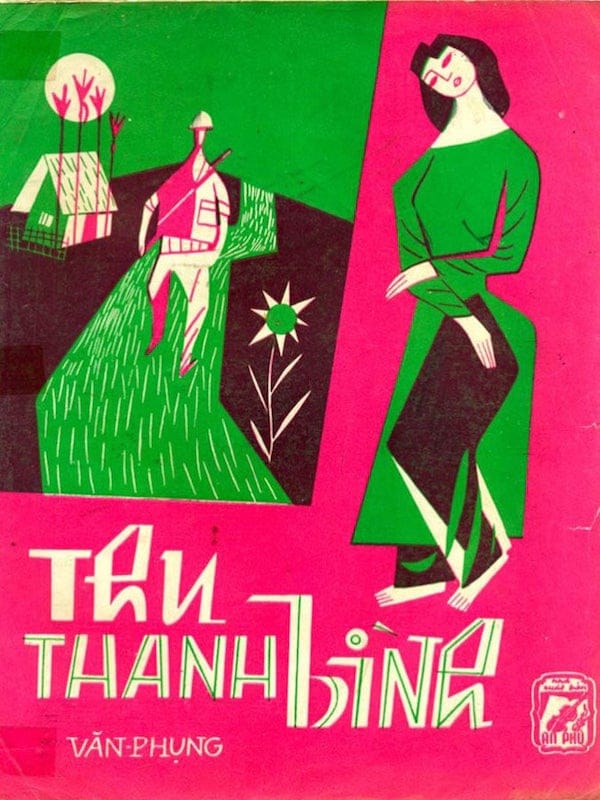
văn phụng

Các anh về tưng bừng trước ngõ, lớp lớp đàn em hớn hở theo sau.
Mẹ già bịn rịn áo nâu, vui đàn con ở rừng sâu mới về…

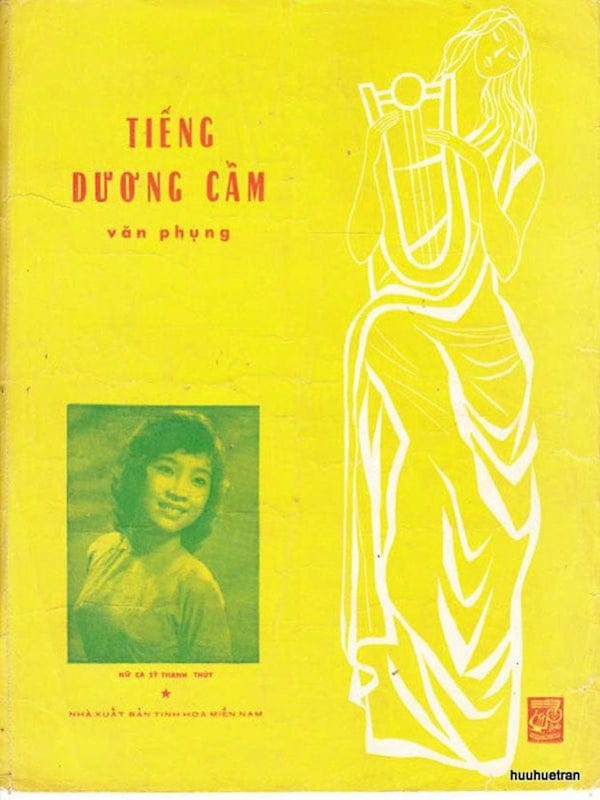
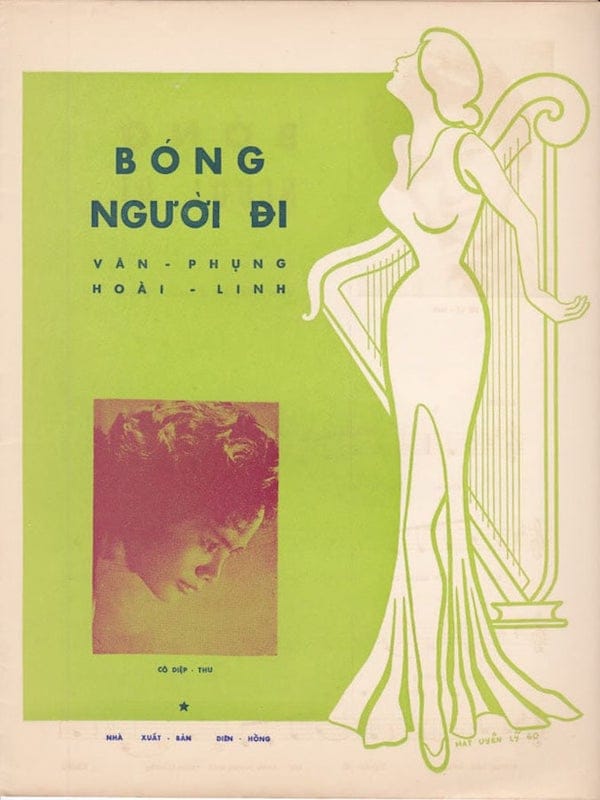
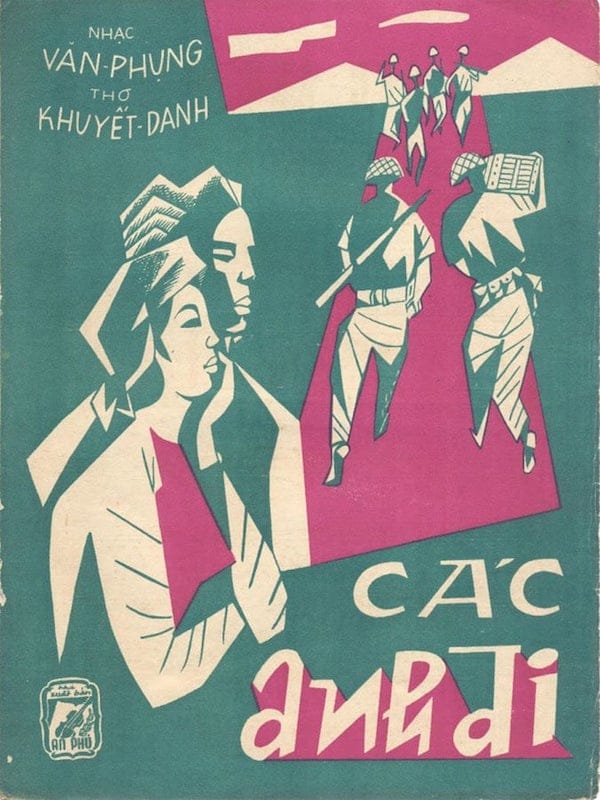
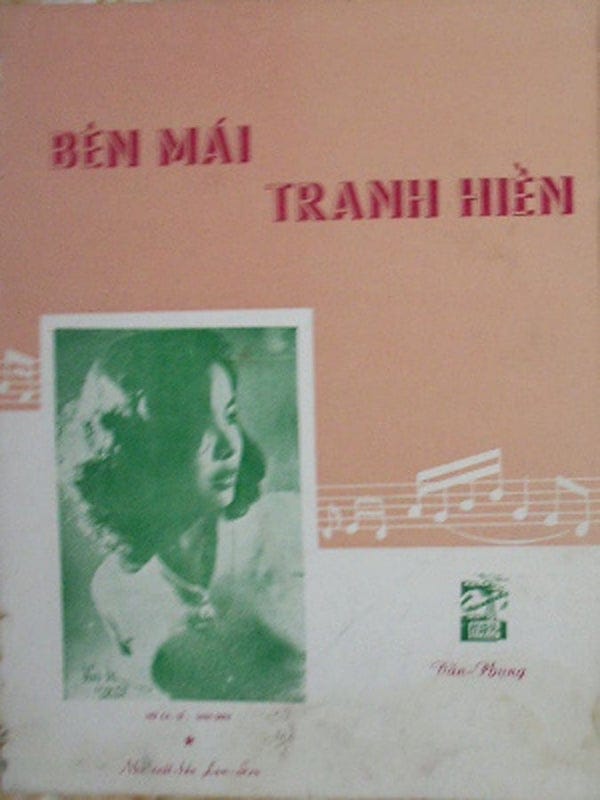
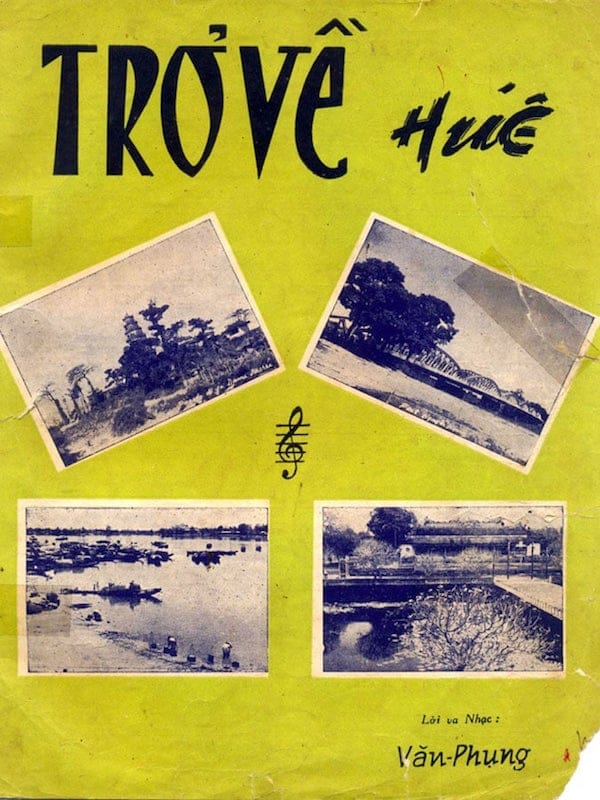
Nói về nhạc cảm, trước khi hiểu được phần nào âm hưởng dân ca Việt Nam trong nhạc Phạm Duy, Lê Thương, Văn Cao, Dương Thiệu Tước, Thẩm Oánh… một điều mà tôi phải qua 25, 30 tuổi mới cảm được phần nào, thì, nó giống như một đường vòng, con đường cảm nhận âm nhạc dễ dàng nhất là qua nét nhạc… Tây phương. Có một nhóm các nhạc sĩ trước 75 chuyên sáng tác thuần theo phong cách Tây phương, ít hoặc không sử dụng các nét dân ca VN: Văn Phụng, Cung Tiến, Vũ Thành

Tiếng dương cầm - Thái Thanh 
Bóng người đi - Thái Thanh 
Các anh đi - Thái Thanh 

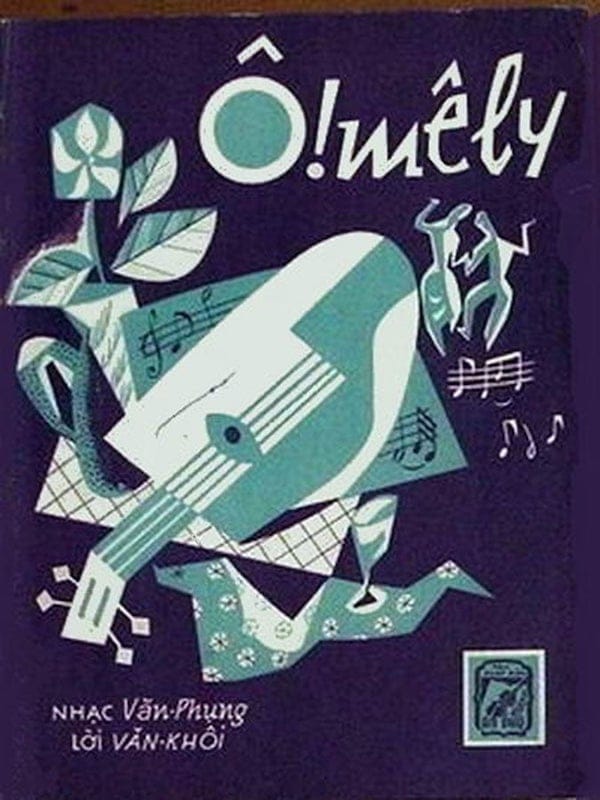
Đa số các vị này đều là Công giáo, con đường âm nhạc của họ bắt đầu từ… nhạc nhà thờ, họ học nhạc lý vỡ lòng với các linh mục, và đa số đồng thời là những nhạc sĩ hòa âm tài năng. Nhạc của họ nghe rất dể nhận ra và dể nhập tâm… dĩ nhiên điều đó không có nghĩa là nhạc của họ thuộc loại “easy – listening”. Nói cho đúng thì tôi đã thích những tác phẩm của ông: Tiếng dương cầm, Bóng người đi, Tôi đi giữa hoàng hôn, Ô mê ly… những circle of fifths dạng như: trao ai duyên ban đầu, dù muôn năm trọn kiếp không phai mầu, thương cho ai dãi dầu…, nhiều năm trước khi hiểu rằng Các anh đi mới là ca khúc mình thực sự yêu thích!

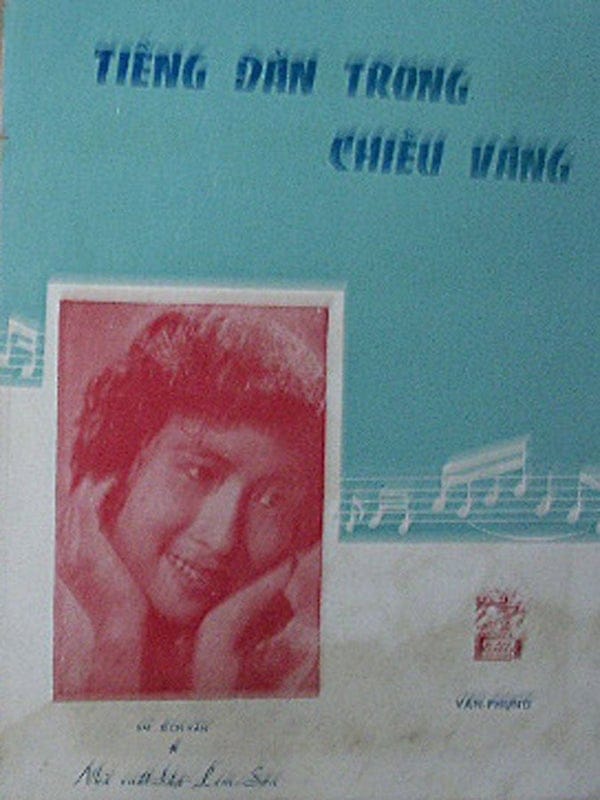
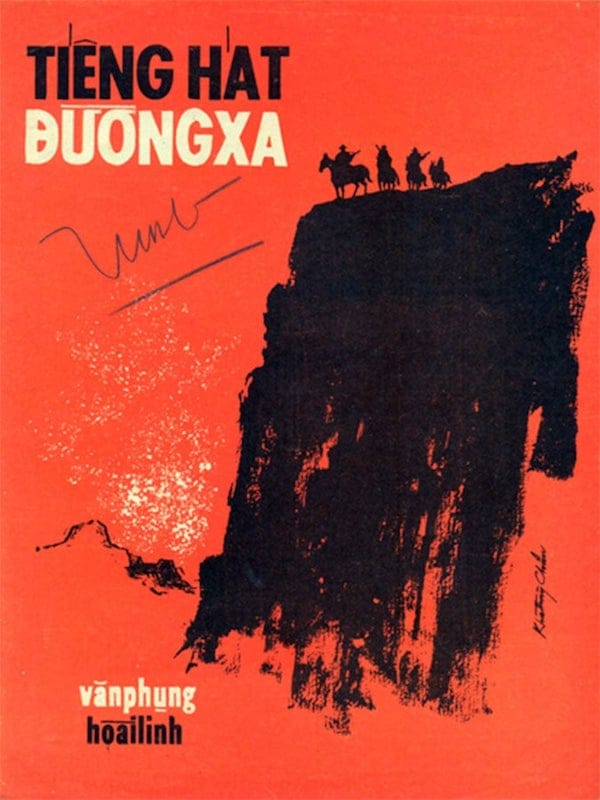
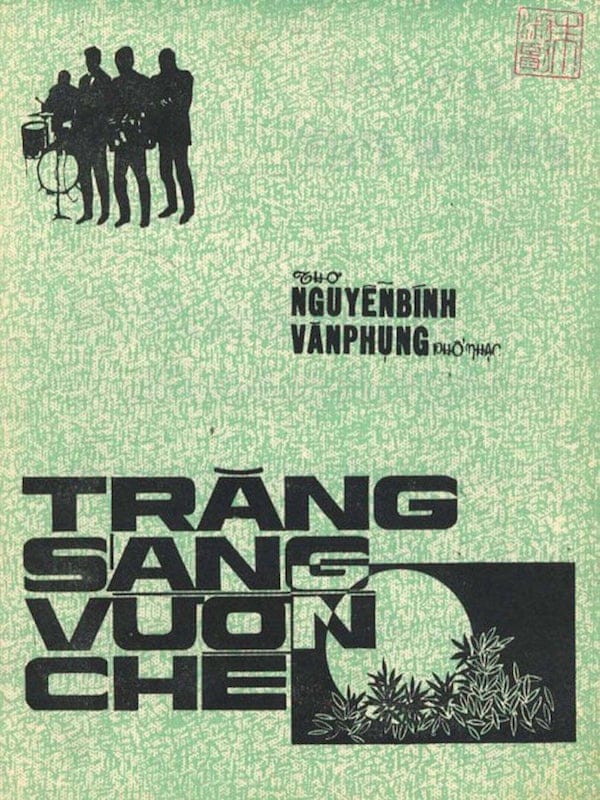
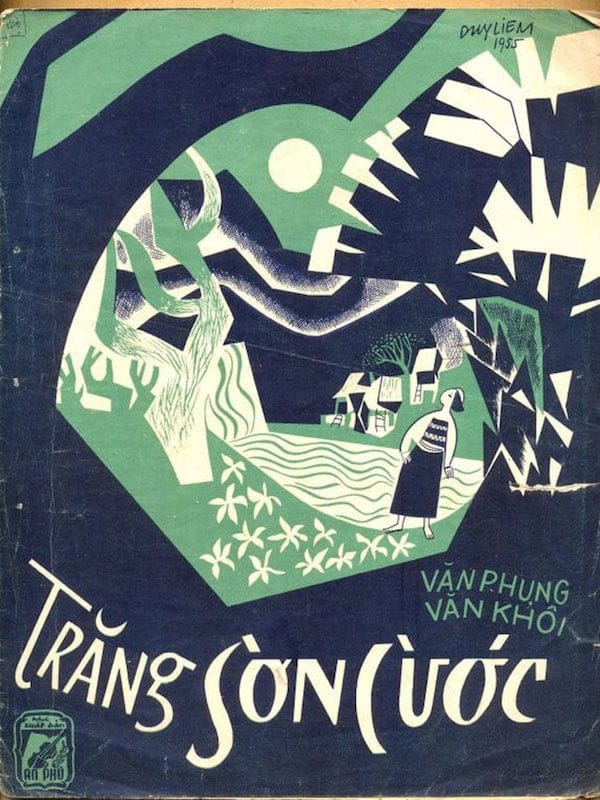
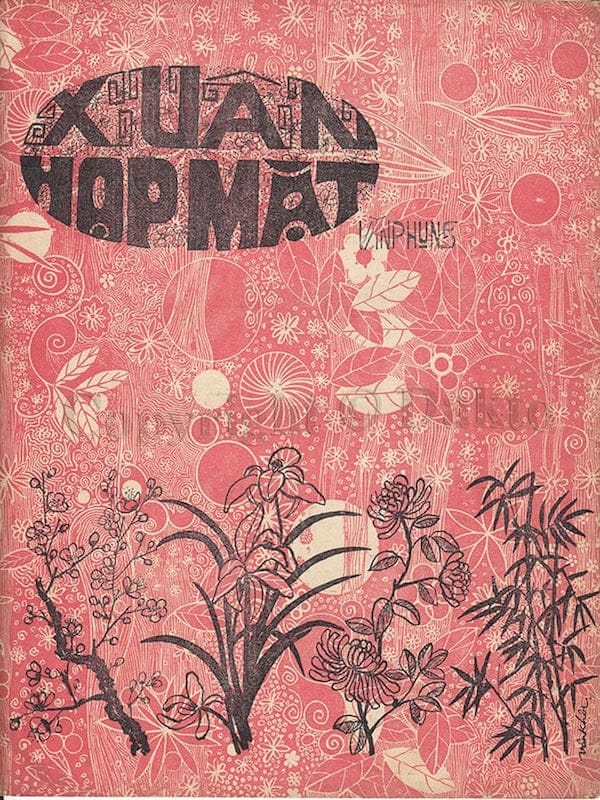
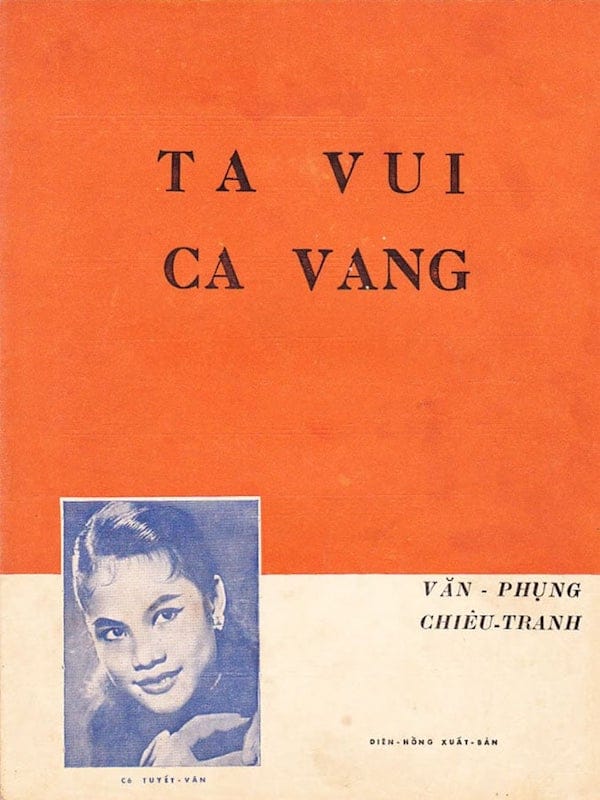
Một vài bìa nhạc Văn Phụng:

sến

Tiếp tục chương trình nhạc “sến” ở post trước, những loại nhạc mà khi nhỏ mỗi lần nghe đến tôi đều nở một nụ cười “mím chi”. Nhưng cũng ngay từ lúc ấy, tôi cũng biết rằng “sến” cũng có năm bảy đường, không phải “sến” nào cũng giống nhau, cùng một tác giả viết toàn nhạc “sến” cũng có nhiều bài “nghe được”. Nên những nhận định hoàn toàn mang tính cá nhân, không phân tích kỹ nhiều khi gây ra nhiều nhận định bao đồng, hàm hồ… mà nói rõ ràng thì mang tiếng khắt khe, thiên lệch…

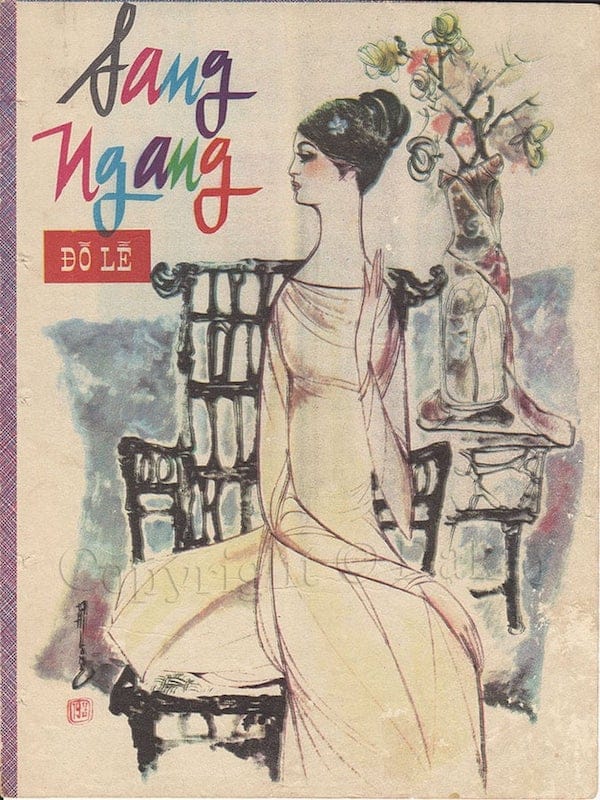
Sang ngang – Thái Thanh 
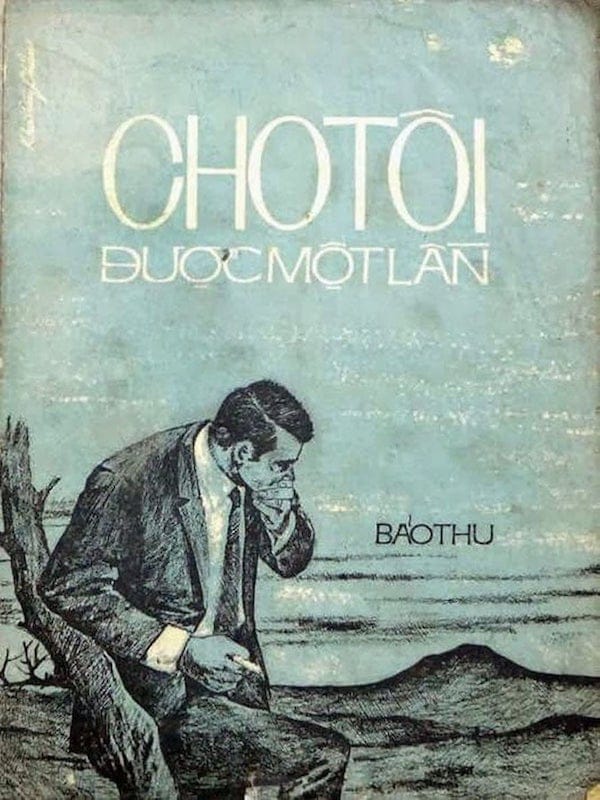
Cho tôi được một lần – Lệ Thu 

Có hai bài mà người ta thường hay gọi là “sến” mà tôi rất thích. Một bài sầu não đến rợn người mà không ai có thể nghĩ là được viết ra bởi một cậu bé 15 tuổi, nhạc sĩ Đỗ Lễ: Nếu biết rằng tình là dây oan, nếu biết rằng hợp rồi sẽ tan… thà dương gian đừng có chúng mình.

Một bài lại tràn đầy vui tươi yêu đời (nhạc sĩ Bảo Thu) mà lũ trẻ con chúng tôi bấy giờ thường rêu rao hát: Cho tôi được một lần, nhìn hoa giăng đầu ngõ. Một lần cài hoa đỏ lên tim. Một lần dìu em qua nhà mới… Riêng bài sau có không biết bao nhiều là lời nhạc chế tinh nghịch!

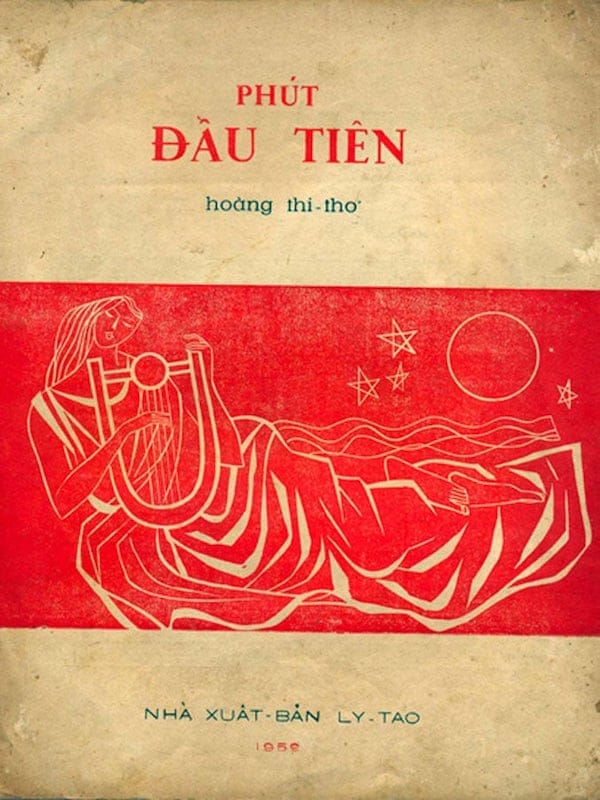
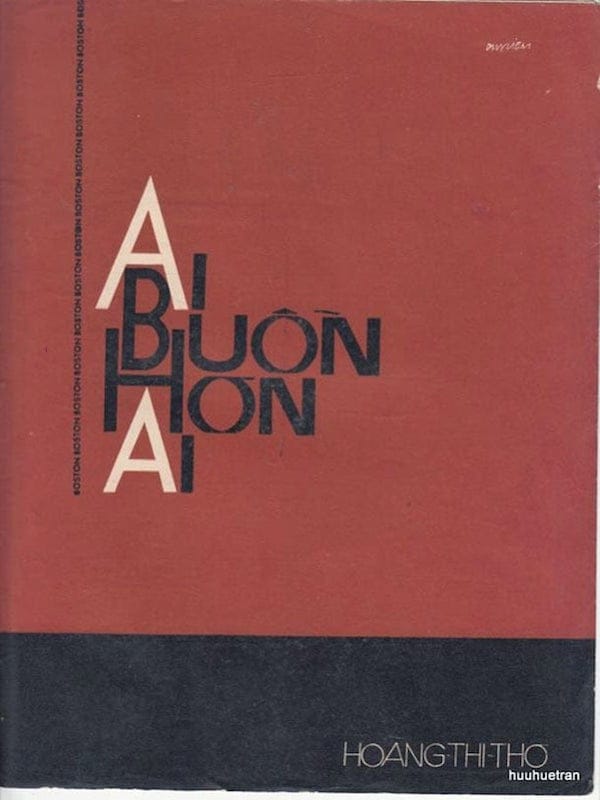
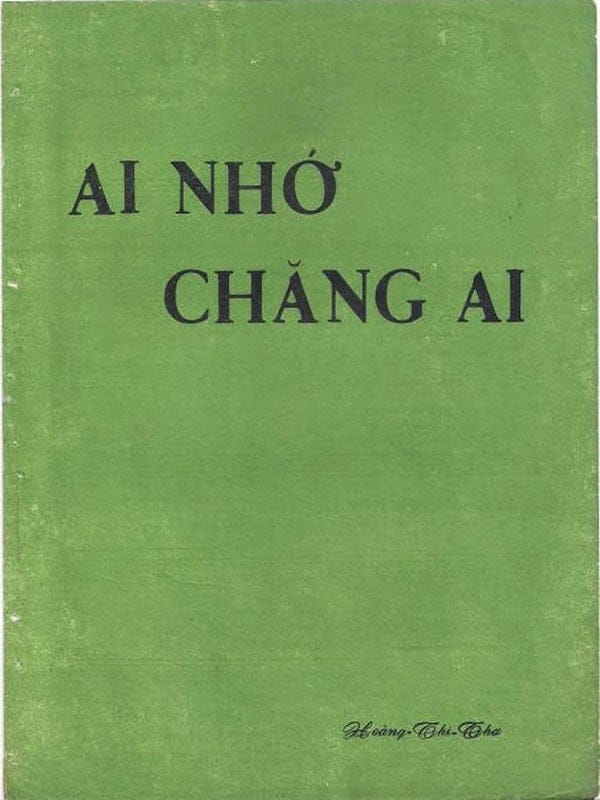
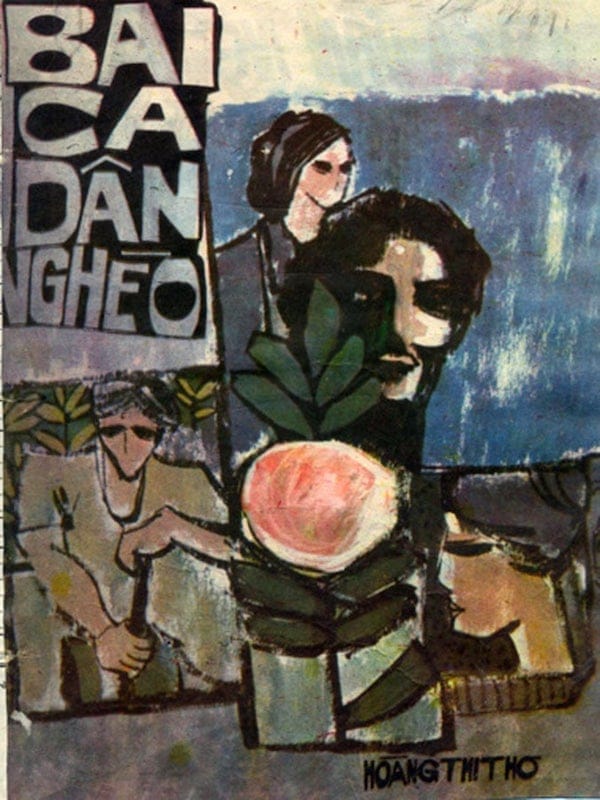
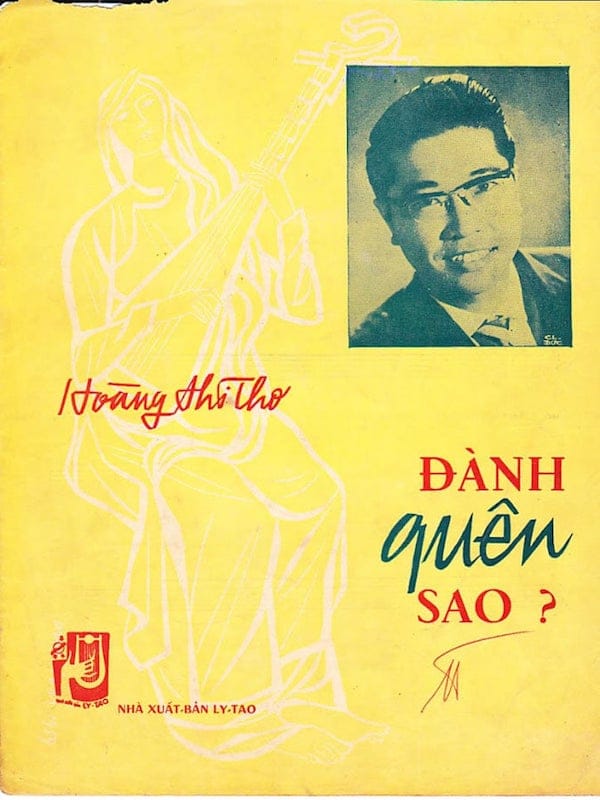
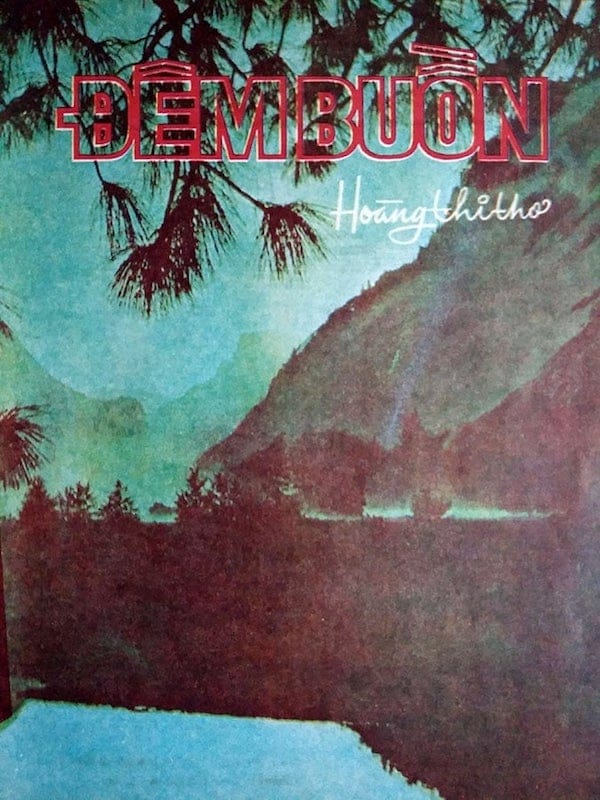
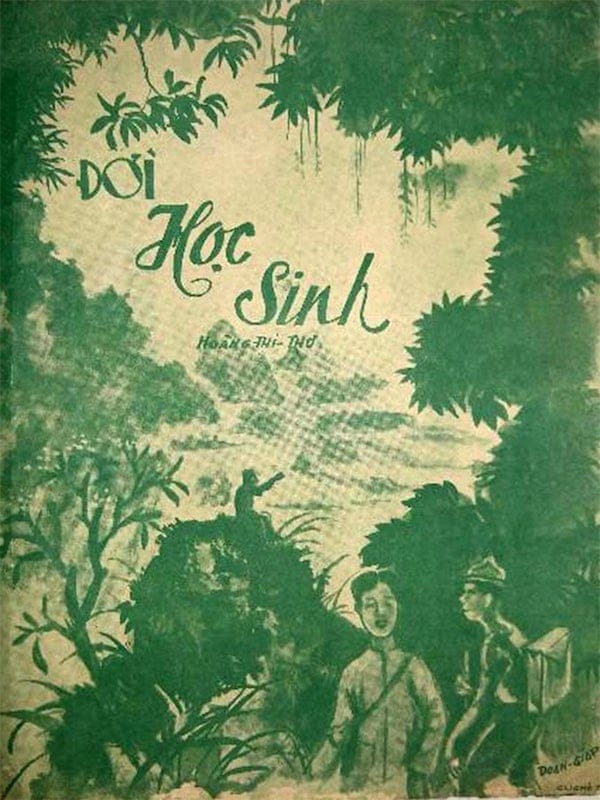
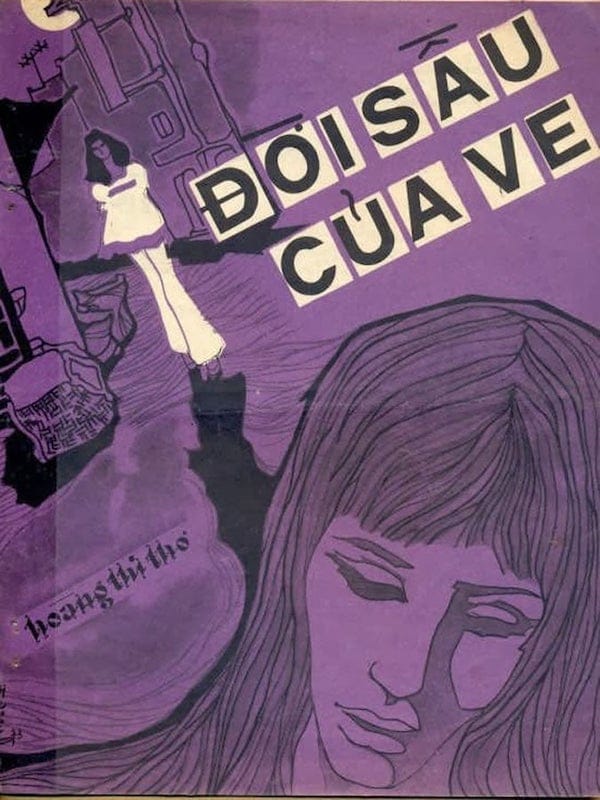
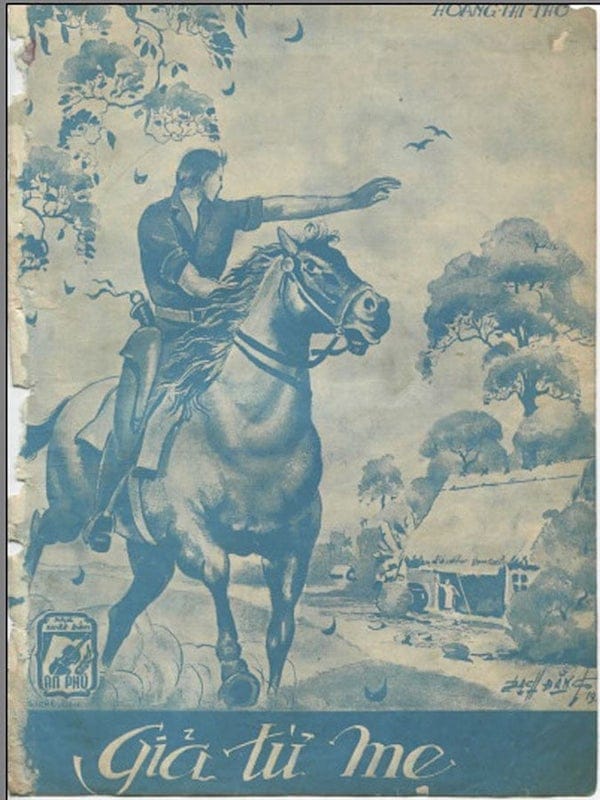
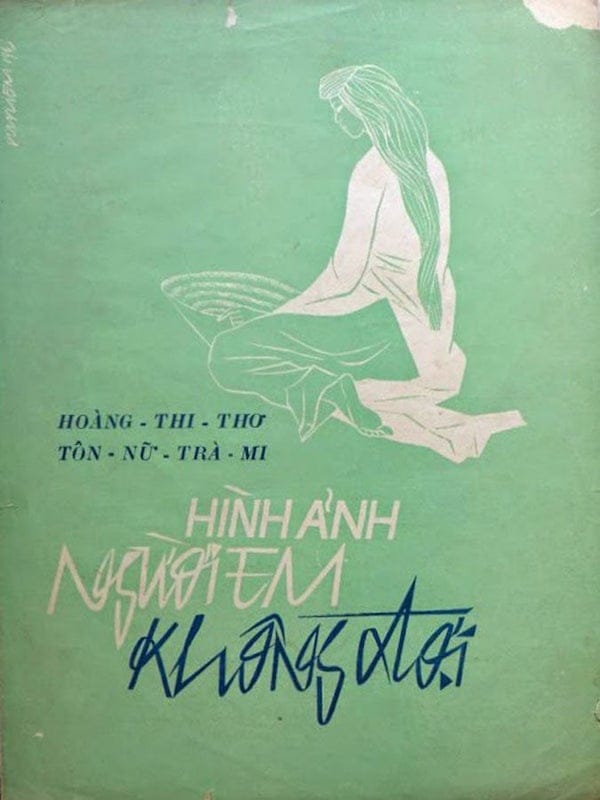
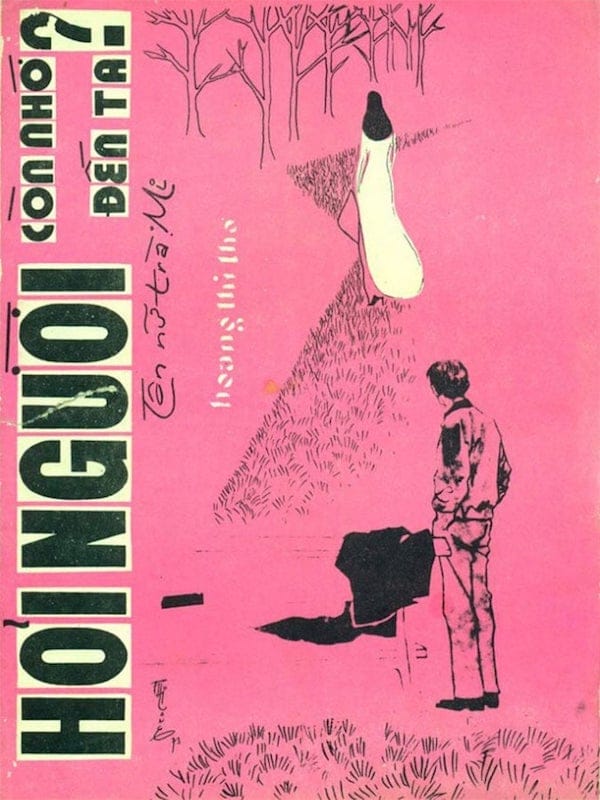
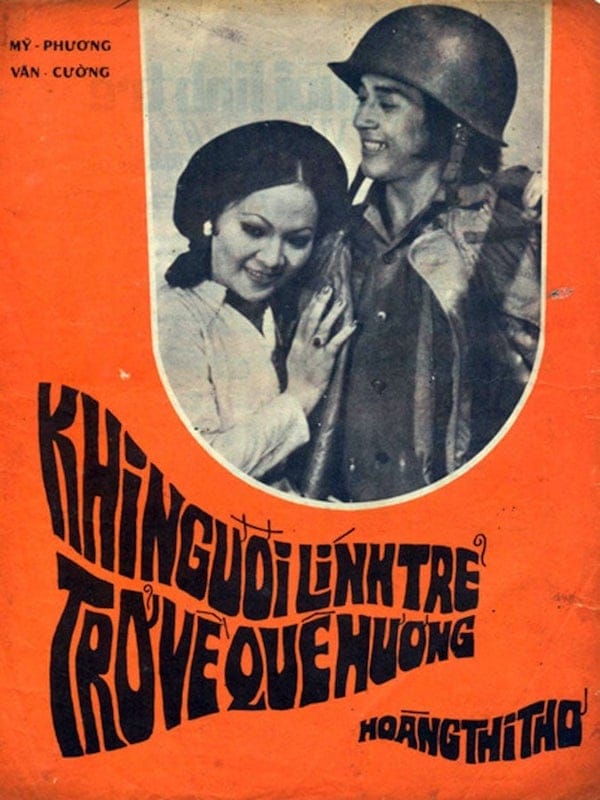
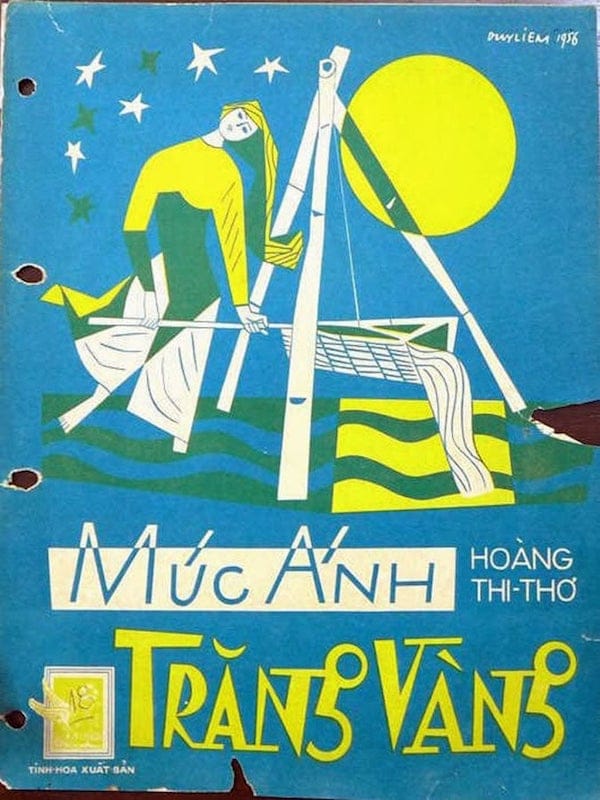
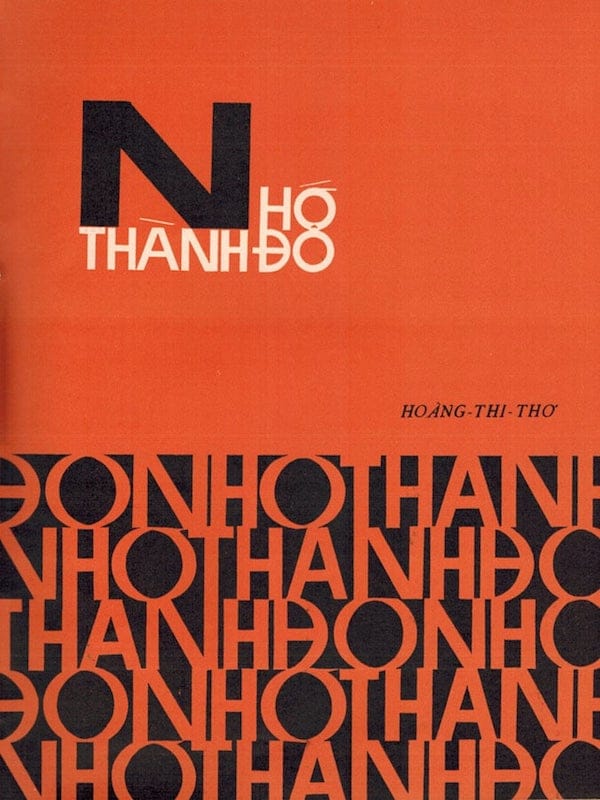
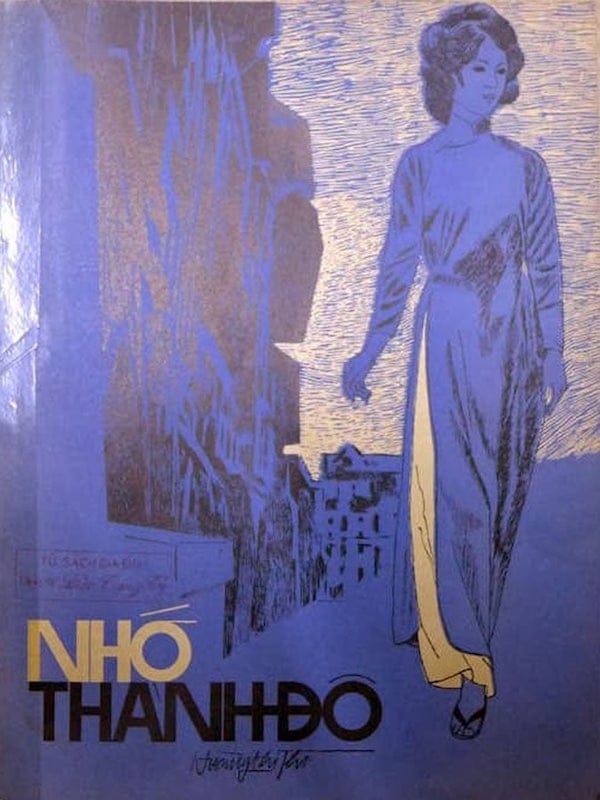
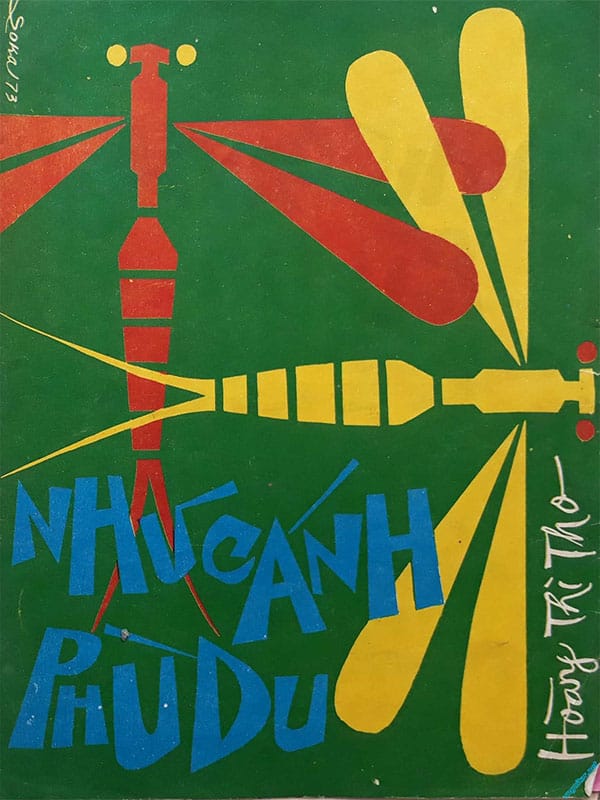
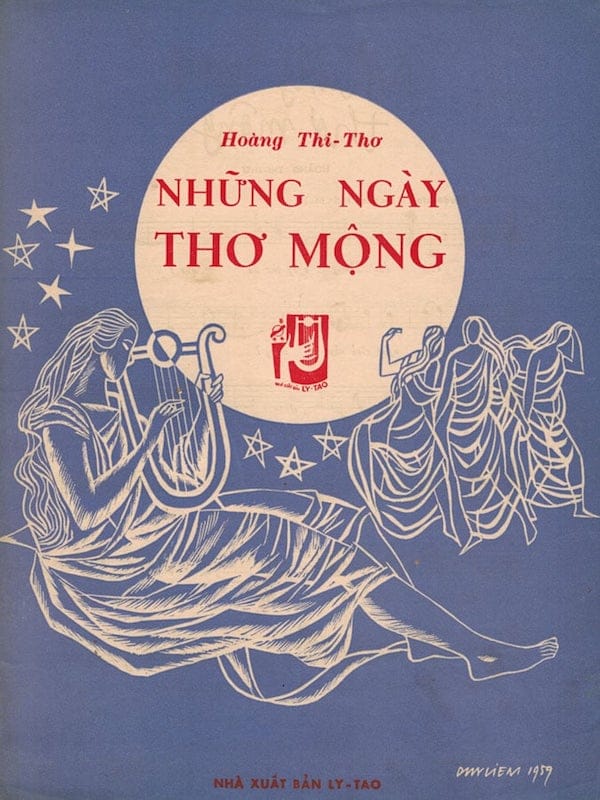
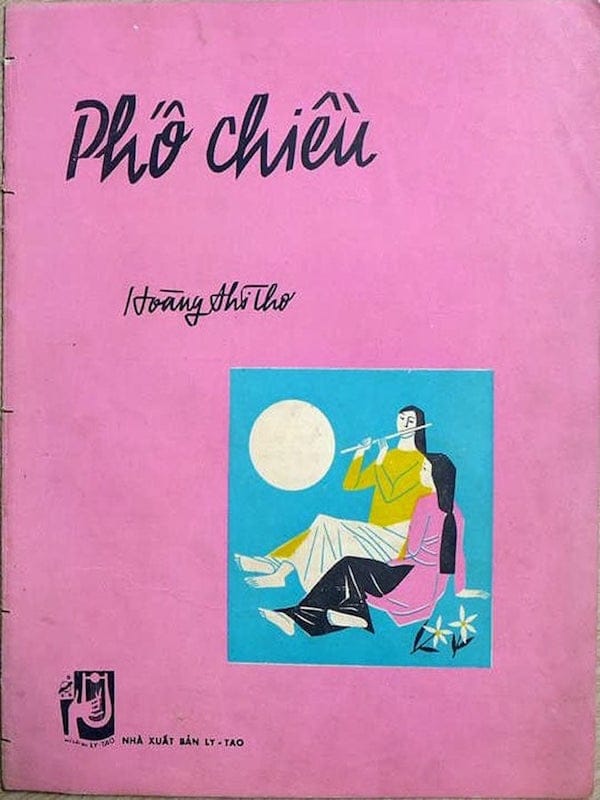
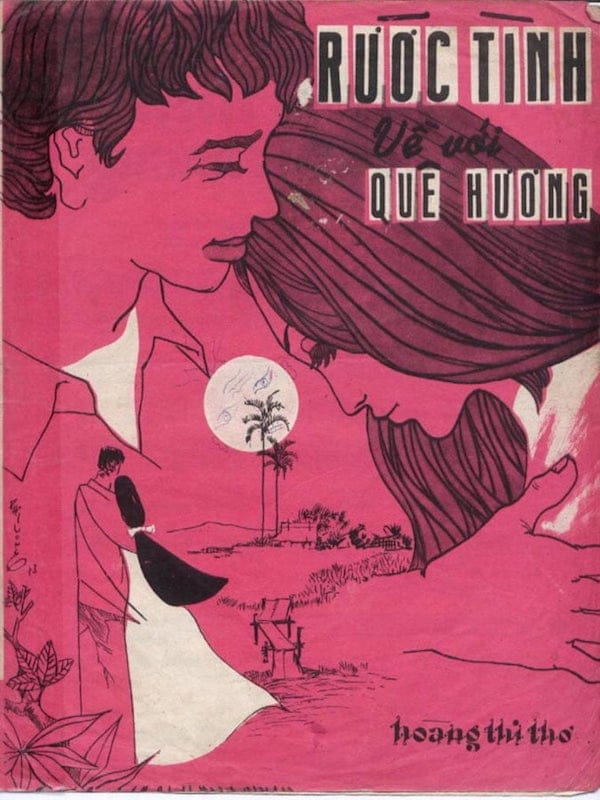
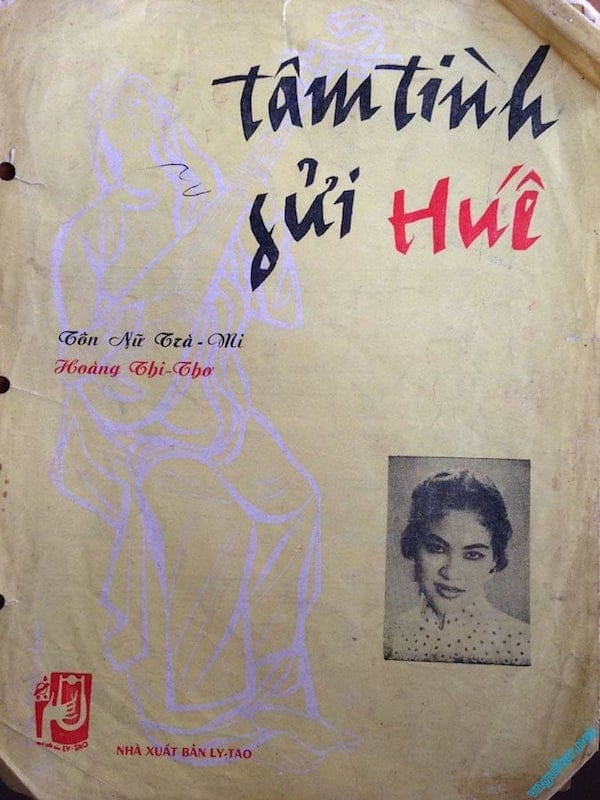
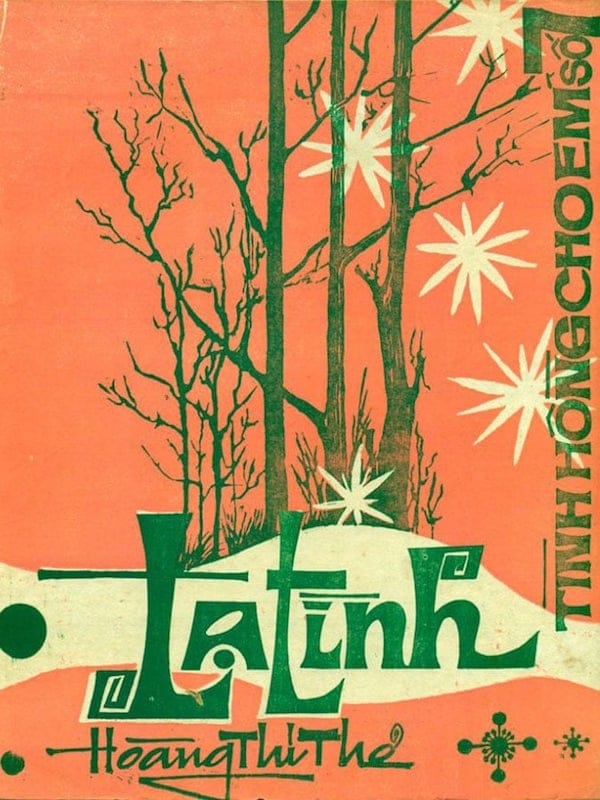
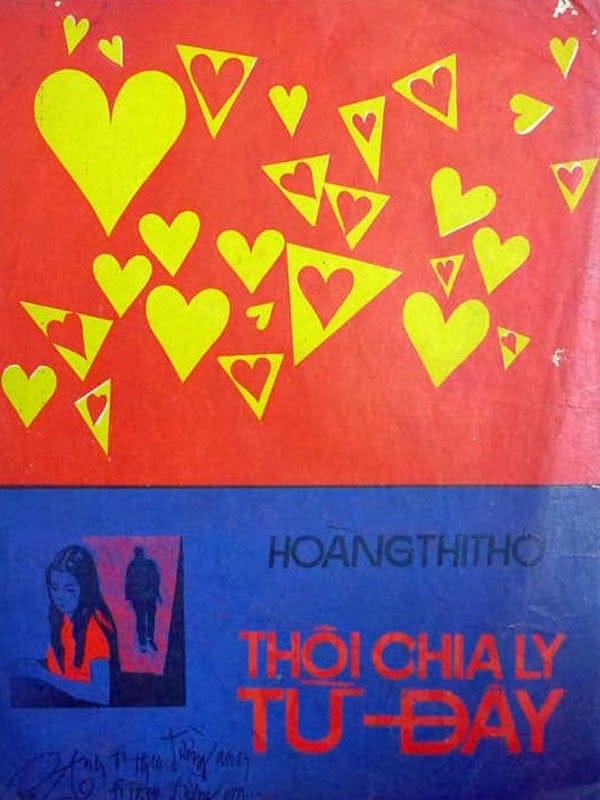
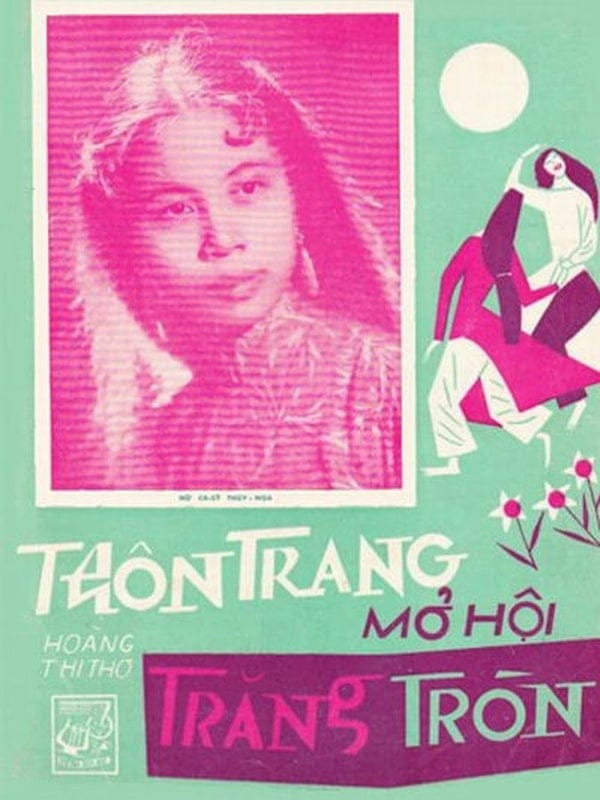
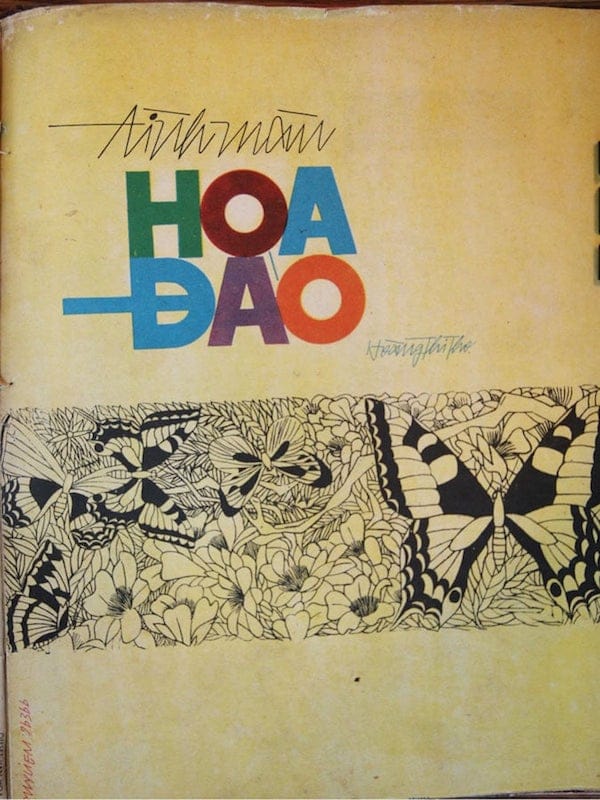
hoàng thi thơ

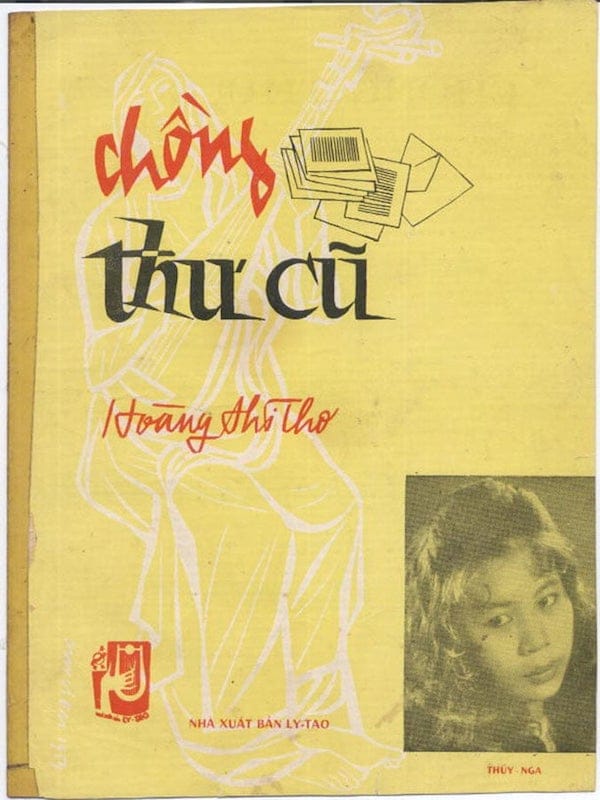
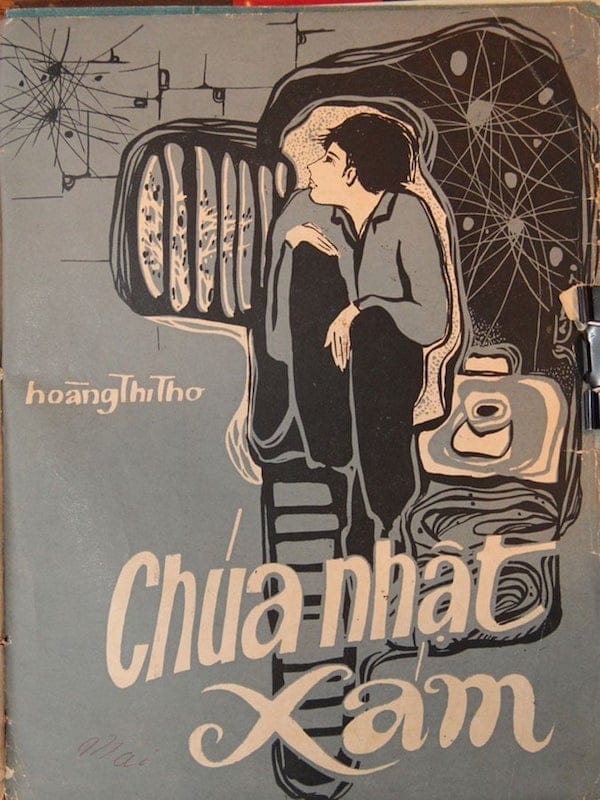
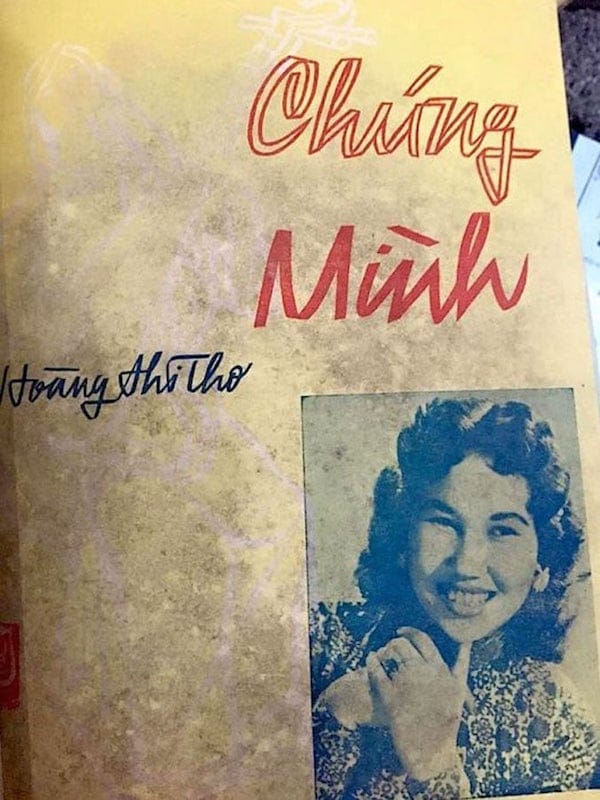
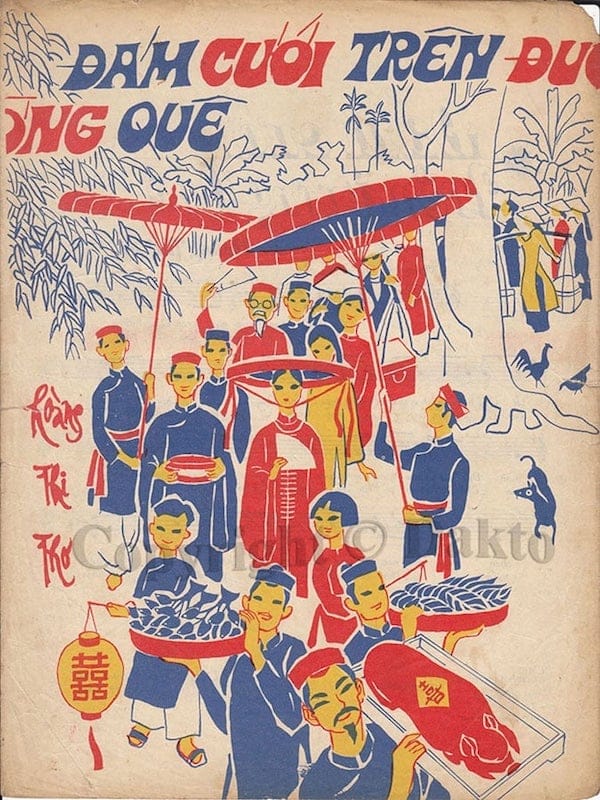
Nếu ai đó để cho trí nhớ của mình quay lại những khoảnh khắc mong manh xa xưa sẽ không dấu được trên môi những nụ cười nhẹ như thời gian thoáng qua… những đứa bé chưa lớn ngày xưa nghêu ngao những lời hát: Thi ơi Thi, Thi biết không Thi, khi con tim yêu đương là sống với đau thương… hay Anh xin đưa em về, về quê hương yêu dấu, Anh xin đưa em về, về quê hương tuyệt trần… Những đứa bé đó đang hát nhạc của Hoàng Thi Thơ và dám cá là về sau, đa số sẽ bắt gặp lại chính mình với cảm giác ngượng ngùng khi nghe lại những bản nhạc ấy: phải chăng đó chính là chúng ta một thời như thế?

Phút đầu tiên – Thái Thanh 
Đường xưa lối cũ – Thái Thanh 

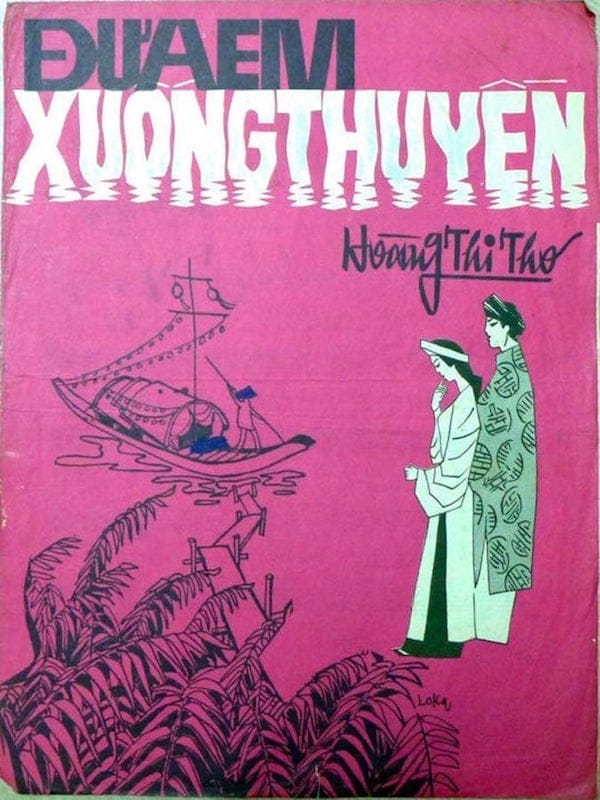
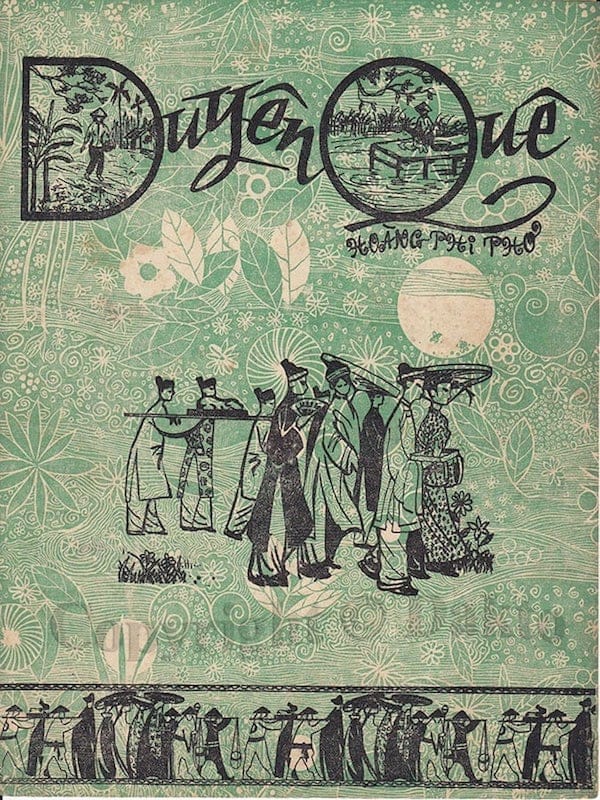
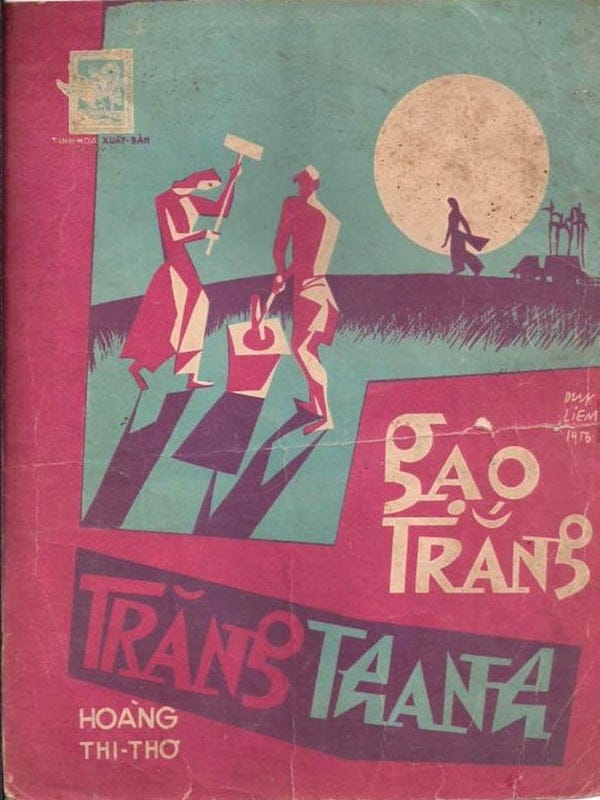
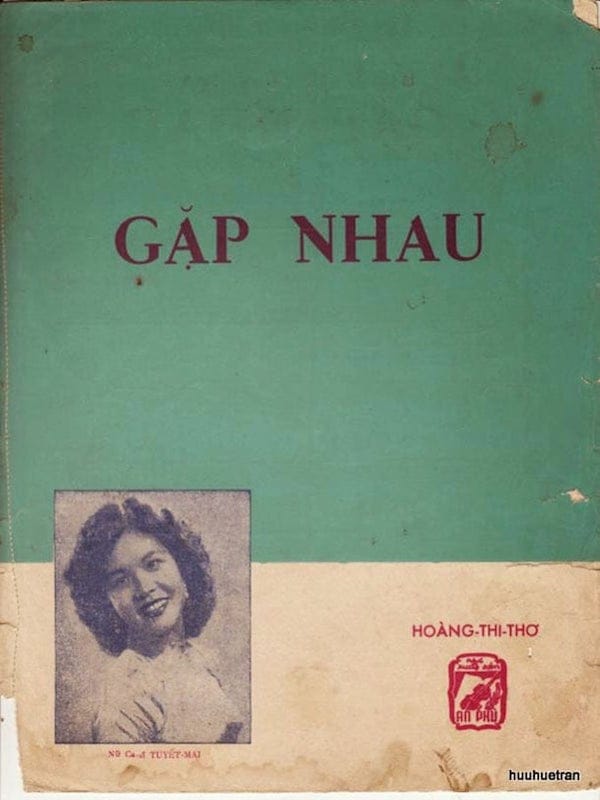
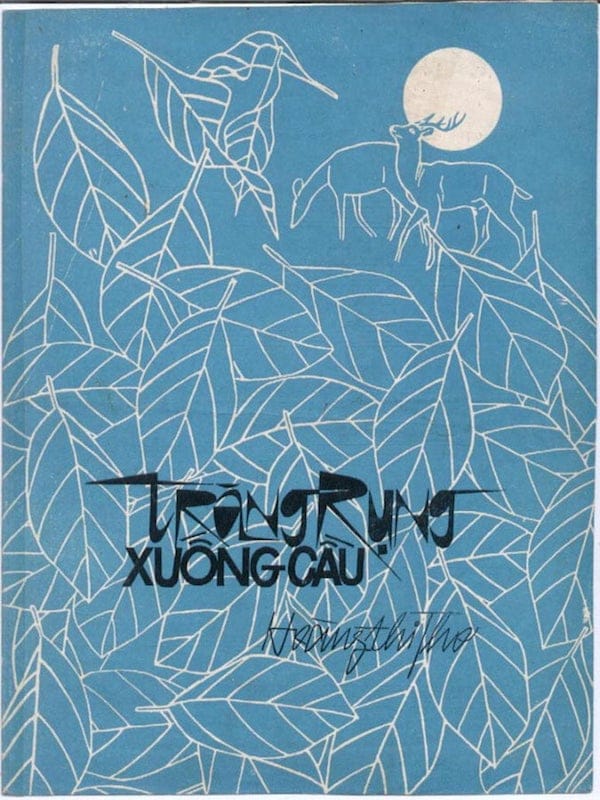
Nhạc của Hoàng Thi Thơ rất quen thuộc qua nhiều thế hệ, những bản Gạo trắng trăng thanh, Trăng rụng xuống cầu, Tà áo cưới rất phổ biến ở thế hệ cha mẹ tôi. Riêng cá nhân tôi thì chỉ thích một phần các tác phẩm của Hoàng Thi Thơ, và biết rằng nhạc của ông, cũng như của nhiều tác giả khác, thuộc loại phải cần một không gian, một giọng ca phù hợp, một cảm nhận thực sự để không bao giờ phải thấy ngỡ ngàng, xa lạ với chính mình. Trong số những tác phẩm của Hoàng Thi Thơ, tôi đặc biệt thích Phút đầu tiên, một bản nhạc có phần đi trước thời gian của nó…

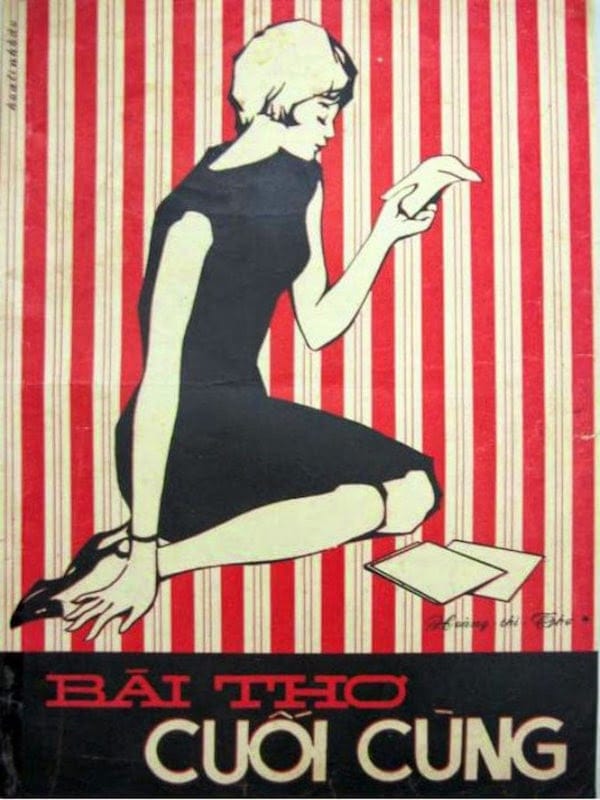
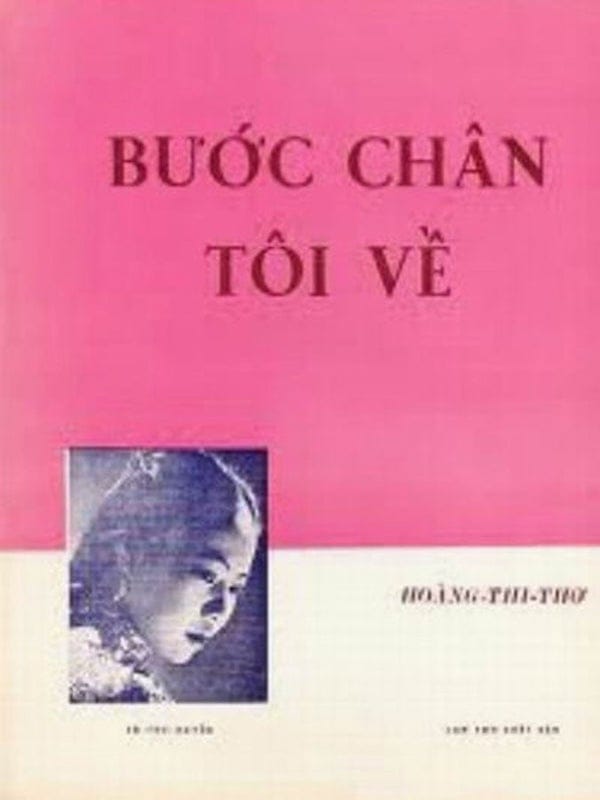
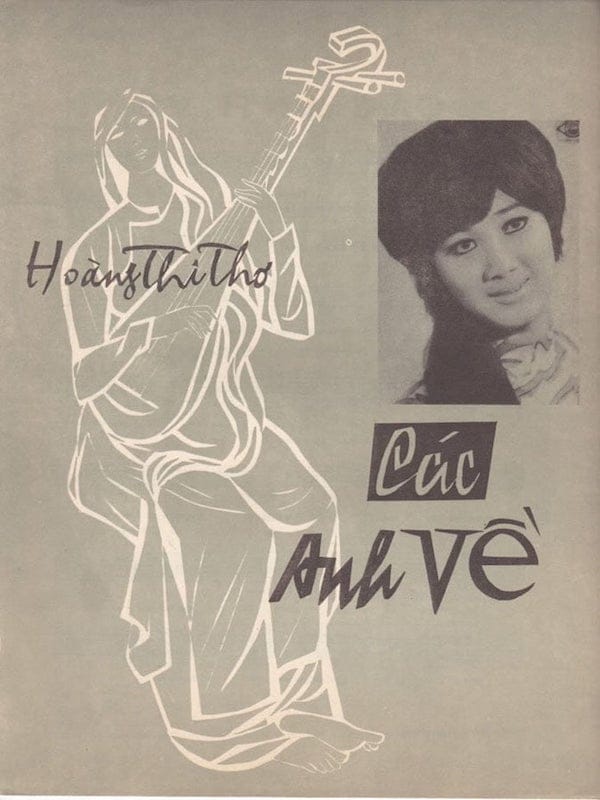
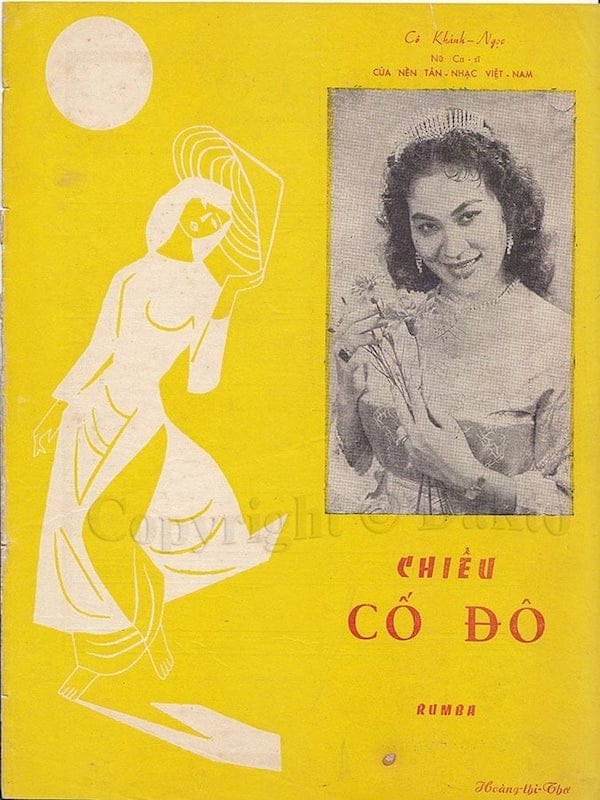
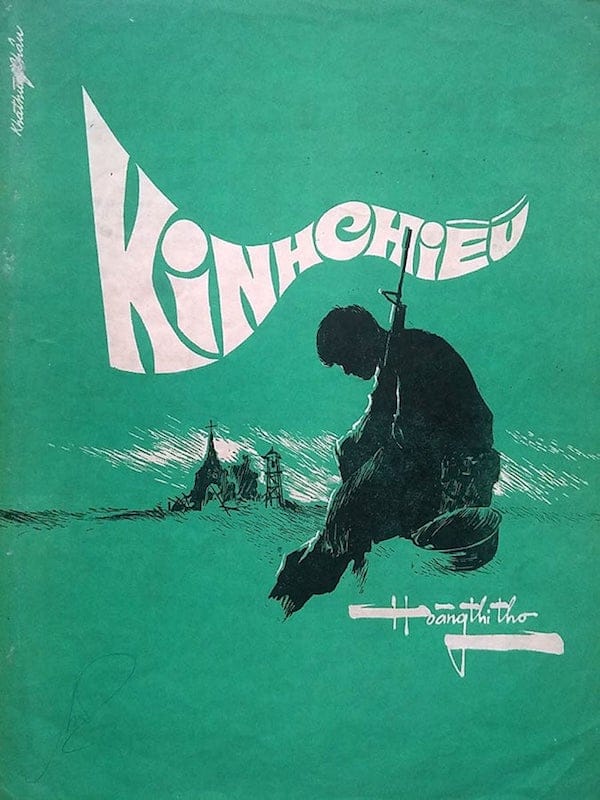
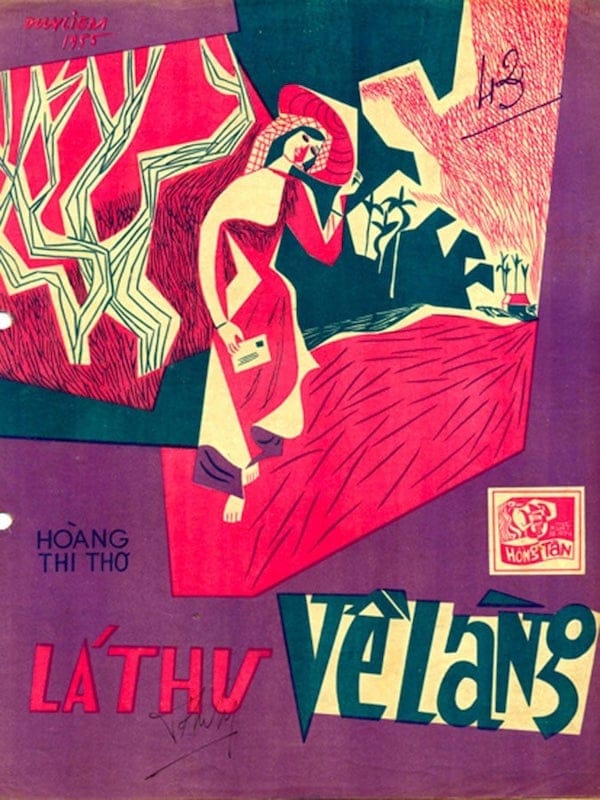
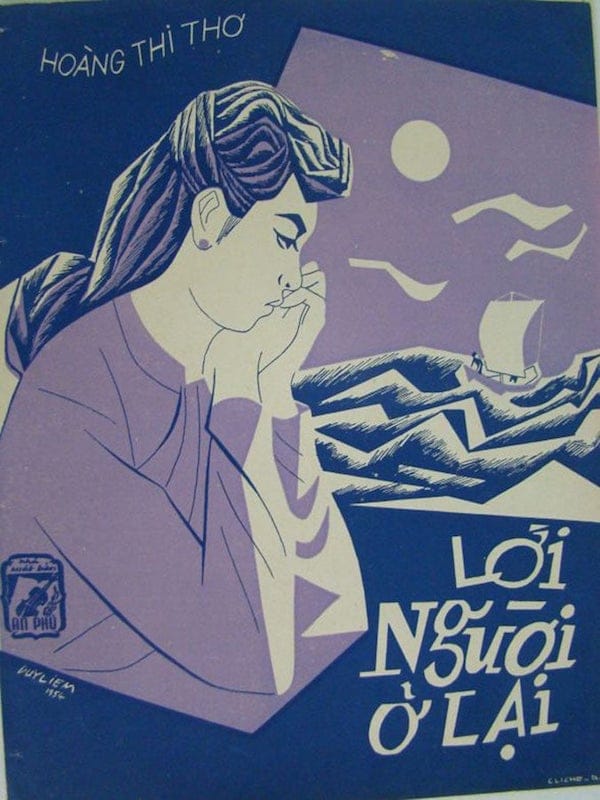
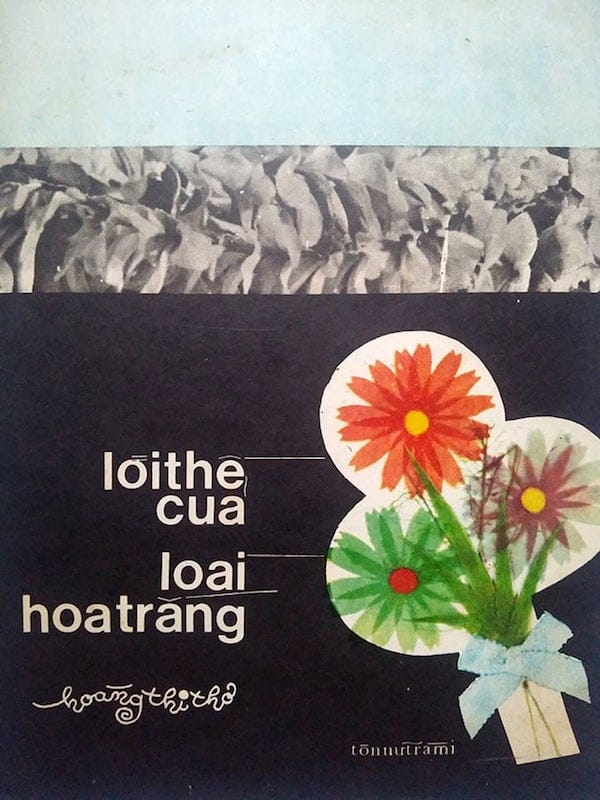
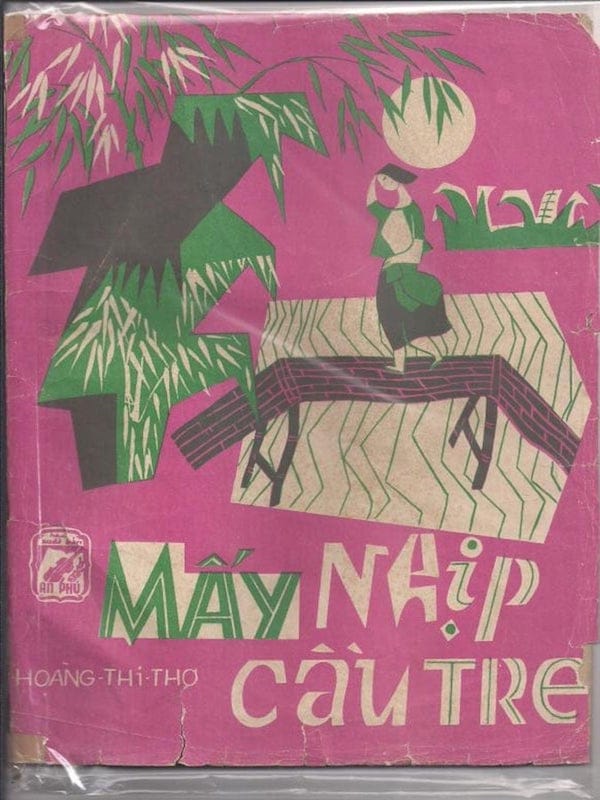
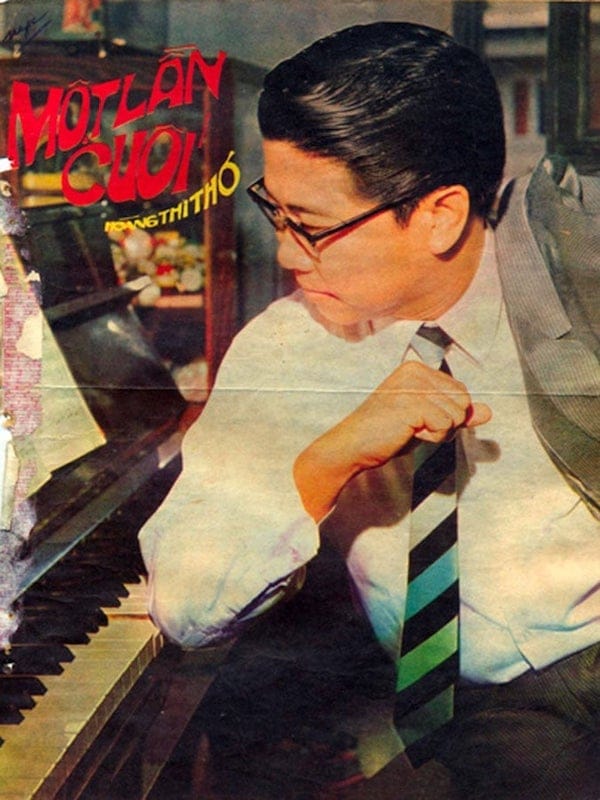
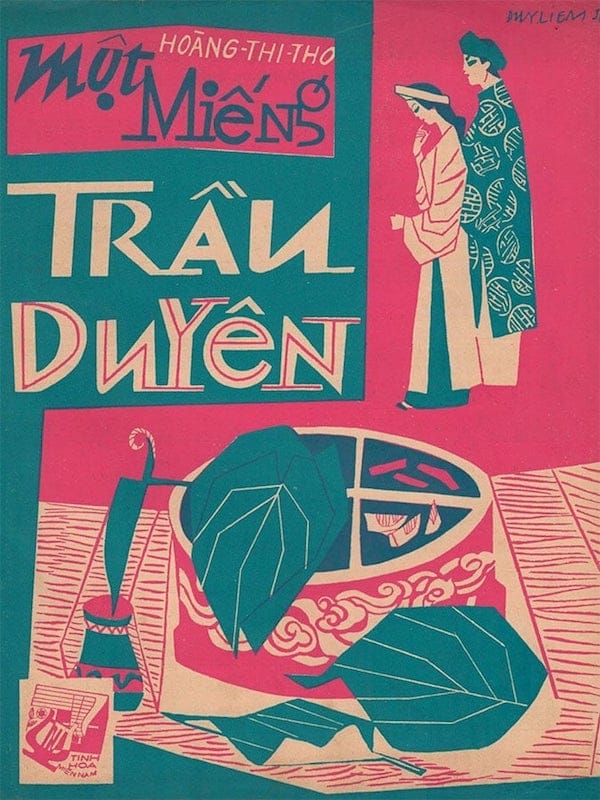
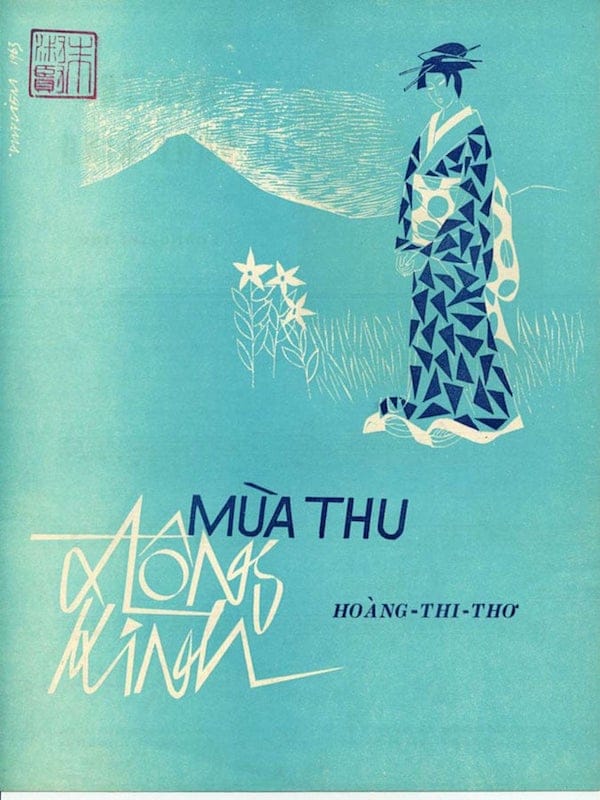
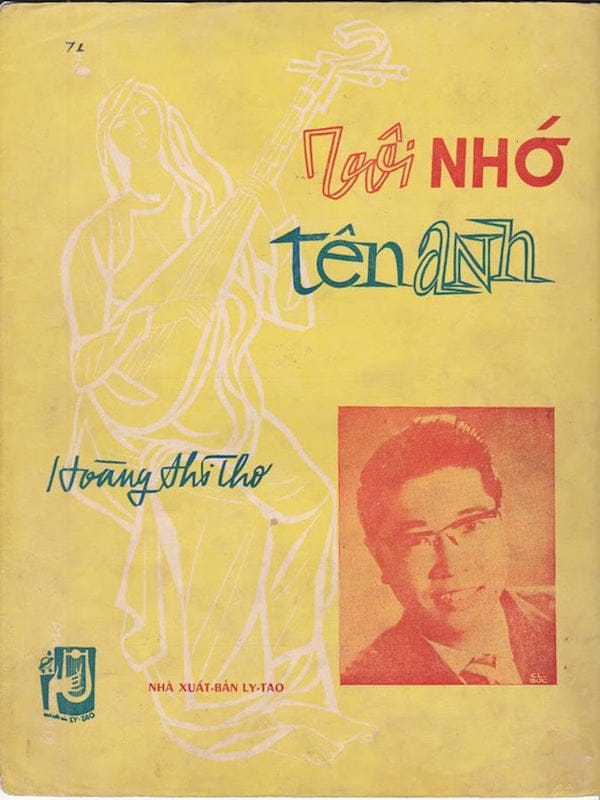
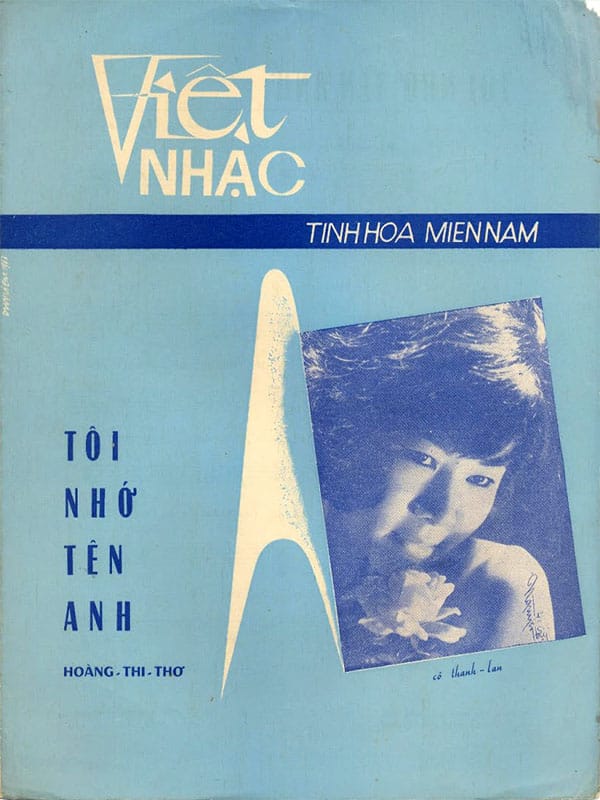
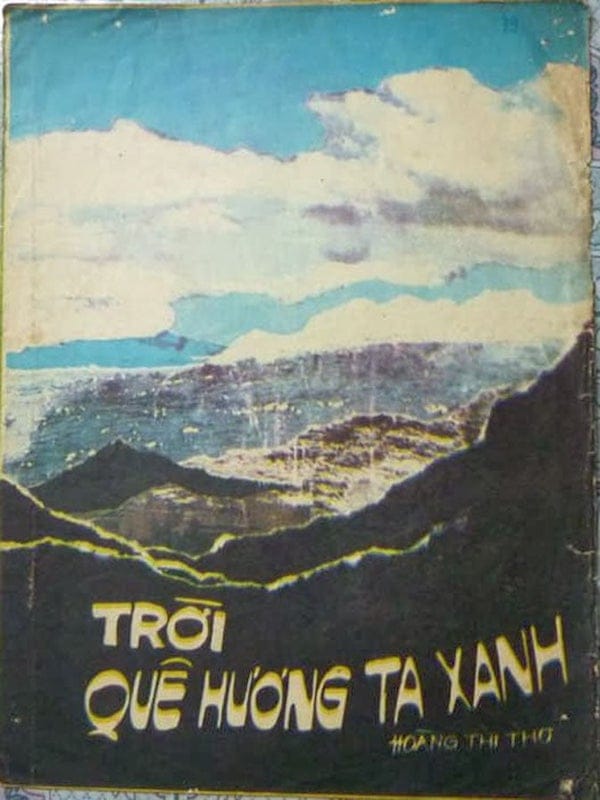
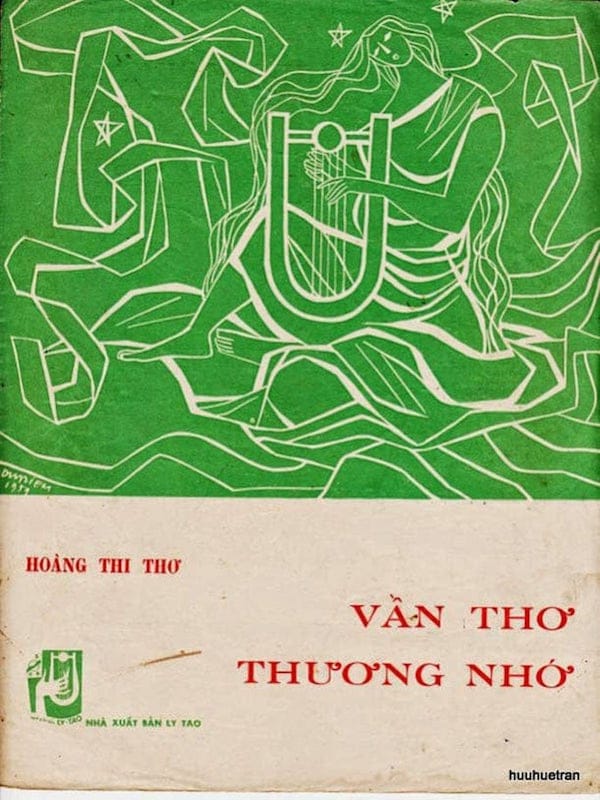
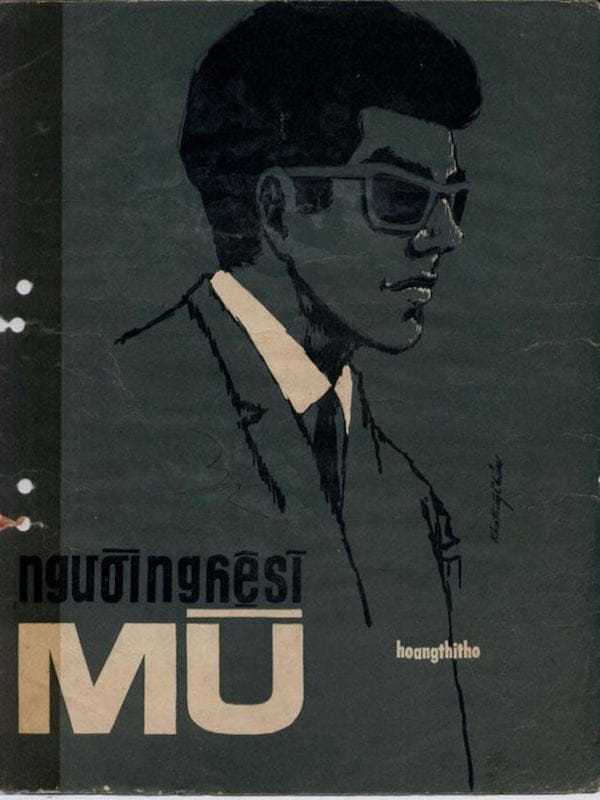
Một vài bìa nhạc Hoàng Thi Thơ:

the world is not flat

The book title reminds me of the same stupid question: how to put an elephant into a refrigerator. I still insist that you can not put a normal elephant into a normal refrigerator, no matter how people is arguing about that! The question: how to eat an elephant (answer: one bite at a time) actually makes more sense to me!

Friedman is right that there have been dramatic changes in the global economy, in the global landscape; in some directions, the world is much flatter than it has ever been, with those in various parts of the world being more connected than they have ever been, but the world is not flat… Not only is the world not flat: in many ways it has been getting less flat. (Nobel Prize – winning economist Joseph Stiglitz)

The popular expression that a capitalist will even sell you the rope you need to hang him with seems to be becoming increasingly true. Aronica and Ramdoo’s book is an important addition to the literature of globalization and a necessary therapy for all those whose minds have been in touch with Friedman’s glib phrases. (blogcritics.org)

I would tell you how I usually encounter a dialogue taken place in Vietnamese, a pattern that repeats over and over again, and people never learns a thing, neither do they actually have a little sense about real things behind it. Here’s how the dialogue would go on, taken an example to describe the pattern: A (a certain person): I’ve recently read the book “The world is flat”, and really love it! Ah ha, the world is truly flat!   Me: No, the world is not flat!   A: I would suppose you don’t mean it geographically, think about it like a metaphor to get the philosophy of the book, man!   Me: No, the world is not flat!   A: You never get a thing, you crazy!

By now, anyone with a second thought should recognise my meaning either geographically or metaphorically. After that I asked him something into the content of the book. It turned out he knows almost nothing of the book except its name, and parrots the name as if he had found a “holy truth”! Yes I would certainly understand, while everyone was reading and everyone was saying the world is flat, he wouldn’t dare saying (or even thinking) the opposite. My opinion about the book could be right, or it could be wrong, but actually I won’t argue on the surface of phrases, flat or not flat is just a matter of words, what important is the book’s content.

I’d read through the more than 300 pages of the book which takes its examples, facts… exclusively in the Information Technology contexts, either in India, China or other Asian, Latin countries. It is full of details of only the IT industries, details about out – sourcing, internet, software work flow, email, network phone… the things usually seen in outsourcing service. Obviously the author meant a similarity for other fields, other industries, which seems to be a too restrictive point of view, we all know that IT in fact is only a very small fraction of the economy (taken the VN textile industry alone for an example, its estimated yearly revenue is roughly 12 ~ 15 times bigger than the IT counterpart).

The book concentrates on globalisation: the trends of out – sourcing, the way people communicates, the way firms process information… The author propagates it as “a way to be”, a trend, a life style that is absolutely irreversible. Also Friedman considers open source software the most disruptive force of all of the trends since it allows knowledge to be freely distributed and decentralised efforts could be cooperated. Friedman also encourages young American to become scientists, engineers, mathematicians… leaving low – level labour jobs to other countries. The author also tried to relate those vast details with other profound social and political problems.

I have never read anything so “colonial” like that book. It takes a lot of facts, truths… in a small sector of the economy and tries to provide a biased and exaggerated point of view. To exactly quote the author: When the walls came down, and the windows came up, windows can not come from thin air, there’re always “invisible” walls somewhere, and most of the times, those invisibles are much more overwhelming than the visible ones. In fact the book only receives “warm appreciations” in the field it’s related with, and aiming to, that is IT, it does tremendously receive negative reviews right in the country of its author (you can easily check out the web for that).

The world has never been flat, anywhere, anytime. It’s not flat in the sense of people about their living conditions and standards. It’s not flat in everyone’s mental and psychological status. It’s not flat in different life styles, in people’s hugely diverse definitions and pursuits for happiness. It’s not flat even in the American (or any Western) societies, whose tradition has always been the supporting for personal values, think and do differently. It’s not flat as human as a physical and mental objects are bounded to geological and social constraints, and human is more a complex creature rather than, over copper wires, a piece of (possibly cleverly falsified) transmitted information.

thất cầm

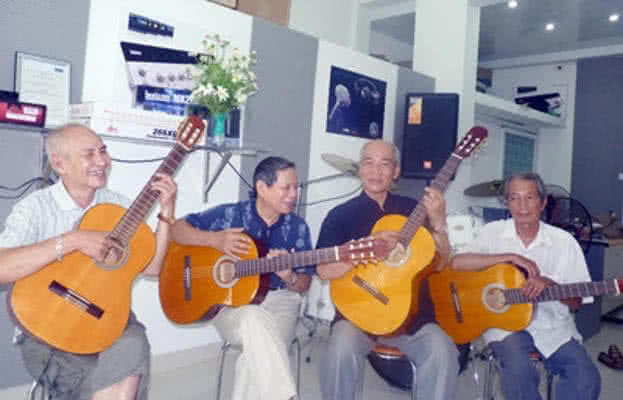
Một album rất dễ thương Thất cầm một thuở… một số tác phẩm của Thất cầm, nhóm những cây đại thụ trong làng guitar Việt Nam. Dĩ nhiên là thật khó để so sánh, nhưng nhiều khi cách chơi guitar không liền mạch, cách tạm ngừng hết câu rất VN, và cả những tiếng ngón tay rít trên dây đàn… những âm thanh đó gần gũi với tai nhạc của chúng ta hơn là âm thanh mượt mà đến hoàn hảo (không hề có lấy một tiếng rít dây) như của Francis Goya chẳng hạn.

Domino - Thất cầm 
Bài ca hy vọng - Thất cầm 
Quê em miền trung du - Thất cầm 
Quê em miền trung du – Thái Thanh 

Không khó để tìm thấy trong album này những bài nhạc mình yêu thích: Domino, Mazuka, Andaloucia, Bài ca hy vọng… và nhất là Quê em miền trung du, bài ca của nhạc sĩ Nguyễn Đức Toàn nổi tiếng thời kháng chiến 9 năm: Quê em miền trung du, đồng suối lúa xanh rờn, giặc tràn lên thôn xóm… Anh về quê cũ, đi diệt thù giữ quê, giặc tan đón em về. Từ mờ sáng tinh mơ, anh đi trong bóng cờ… Riêng bài ca này, hãy nghe lại qua một giọng ca đã đi vào huyền thoại: Thái Thanh.

kindle – the verb

Kindle, I’m using it extensively for the time being, my reading list is growing huge with so much books, documents to be read. Kindle suits my needs very well, you can make side notes along the lines, like writing on the margins (similar to the layout of this website with notes putting on the left). These notes can later be synchronised to your laptop so that you can re – organise your random thoughts into systematic thinking and schedule. You can also use dictionaries without having to leave your reading. I’m still getting surprises on Kindle’s audio quality and its battery time, you can read, listen to music for weeks before having to recharge.

Xa cách – Tuấn Ngọc 

While I’m trying to develop some home – brew softwares for Kindle (including an email client), I’m also getting sympathised to Amazon’s designs. You would only got a special – purpose machine by removing odd features, confiding yourself to very specific needs, anything rather than reading is strictly restricted. Reading, taking notes, making investigations and drawing out plans are real pleasures, at least for the time being. Just want to discover what I wanna want to do until the time of vanishing out of this earthy world!

I used to criticise reading a lot, and I still do. We’d had generations of parrot – repeating readers already. You don’t have to read (at all), but whatever you read, do it thoroughly. I have to speak straight out, as many of our fellows pretend to read something other reads, listen to music other likes. But the cassock doesn’t make the priest, literature, music… are of personal values. Whatever you read or listen does not matter, it does only matter if you can discover new things out of the contents. I apologise the true readers and listeners, this is specific to my environment only, I get disgusted with all those “fashionable things” going on around down town!

the tự – do boat


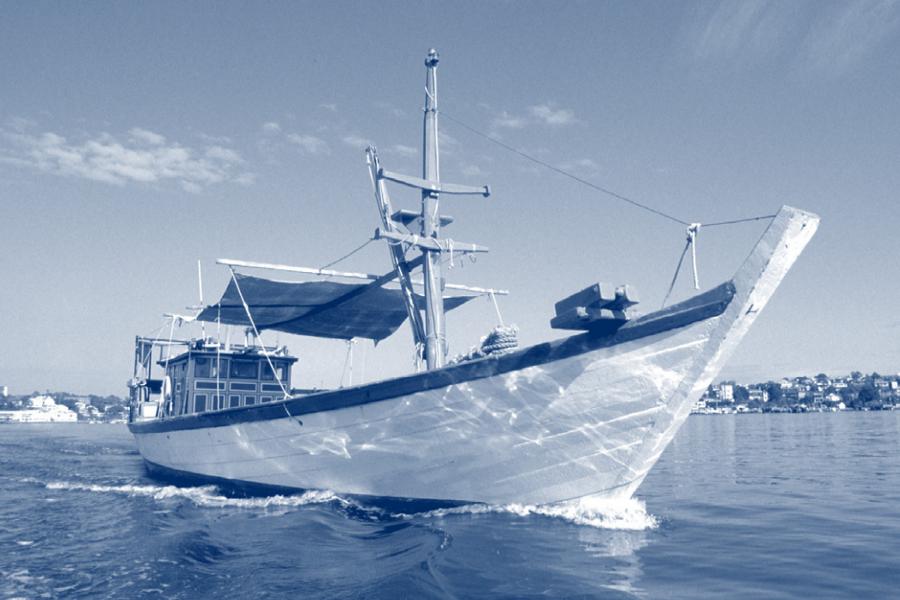
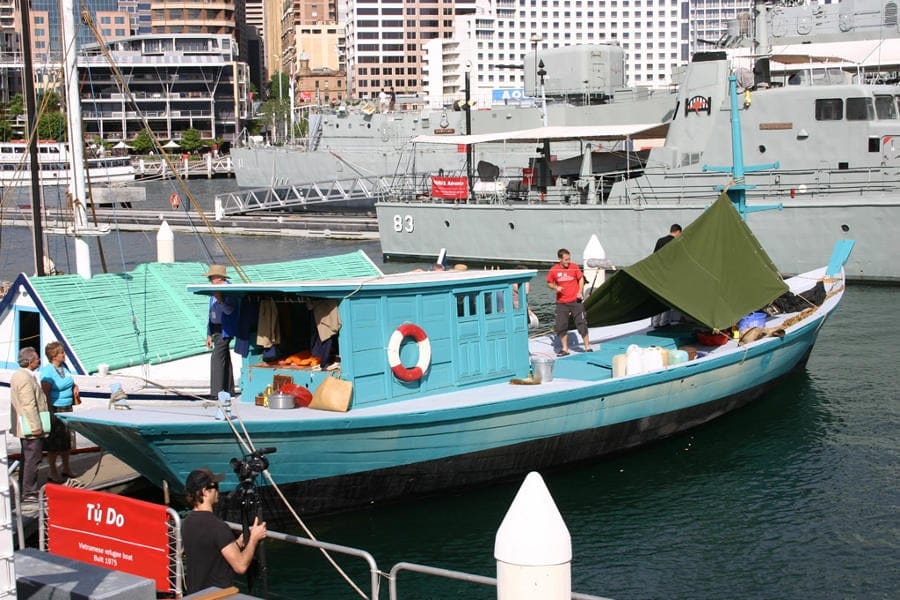
The boat now belongs to the Australian National Maritime Museum. It has been refurbished and restored to the original design with the help of the Lu family, and preserved as a museum’s fully – operational object to demonstrate the country’s immigration history, the whole story is recited here.

Interesting story about a Vietnamese boat – people‘s vessel, the one dubbed: Tự do – Freedom. In 1976, the boat was laid down at Phú Quốc island as a dragnet fishing vessel, a construction built just for the escape from the newly – formed regime (1975). Mr. Tan Than Lu planned his escape meticulously along with his family, relatives and friends.

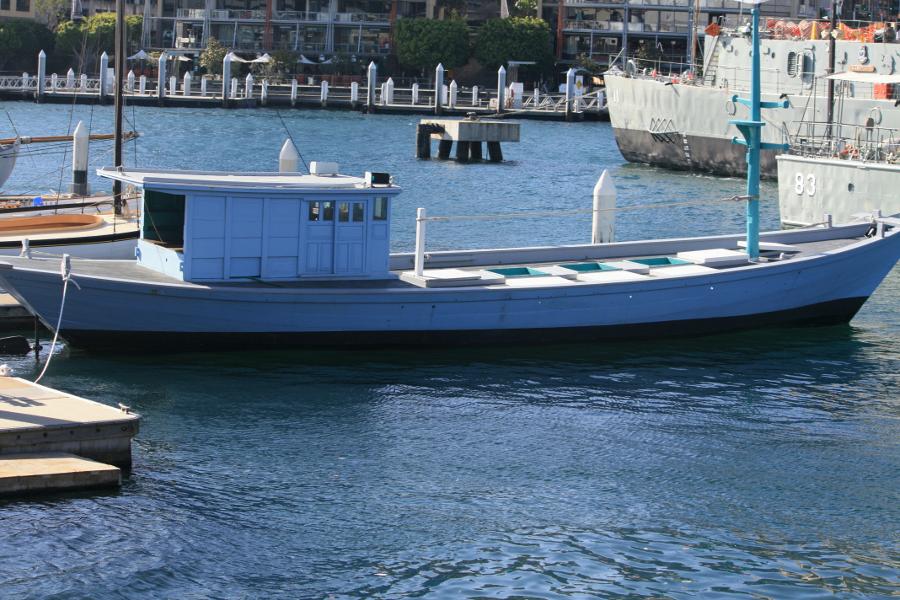
The hull (as seen in the images) still incorporates in it some Vietnamese indigenous ship building features, the registration number reads: VNKG1062, which indicates that the boat originally had its home port in Kiên Giang, Việt Nam. Hull dimensions: 19.4m (length), 5.2m (beam) and 1.8m (draft). It must be noticed that the Lu family is a very rare case among almost half a million of Vietnamese boat – people at the time, very few could afford building such a boat for escaping, and few had had such a lucky and successful trip.

The boat involved in fishing for half a year to allay government’s suspicion. Then pretended to have an engine breakdown so that surveillance of them would be relaxed, a more powerful replacement engine was installed during the night, children were given cough medicine to make them sleep and keep silence, the crew of 38 departed on Aug 16th, 1977. They arrived at Mersing, Malaysia, where 8 passengers were disembarked as refugees.

After one month of unsuccessful approaches to the US Embassy, Mr. Lu decided to set sail for Australia with the remaining 30 people on board. They were resupplied and encouraged to move on by the Indonesian authorities. They reached Darwin, Australia on Nov 21st, 1977 after a 6000 kilometers journey guided only by map torn from a schoolbook and a simple compass.

un vietnamien bien tranquille

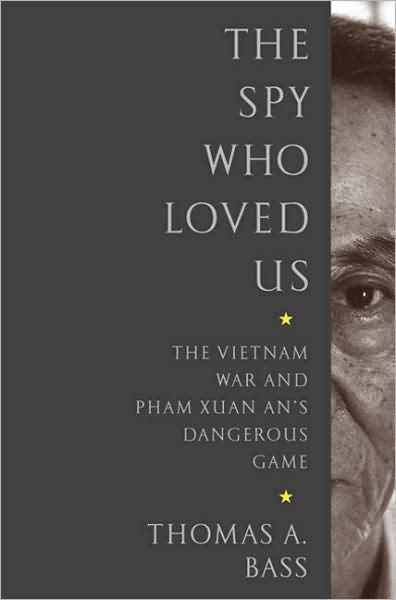
Having a time to read some notable documents: The spy who loved us – Thomas Bass, and The perfect spy – Larry Berman. At first, I’d thought: oh, all these stories I’ve knew quite well already, there’s no need to read more. But then I considered it’s good to be reflective, reading the same stories in another language, from other points of view.

I’d read these two books (in English), which contains quite some interpreting errors (most of them are unintentional I think) then I proceeded to their Vietnamese translations (which are really bad, lots of linguistic mistakes), but again another reflections of reflections. All readings confirmed my understanding about the Vietnamese legendary intelligence agent Phạm Xuân Ẩn, whose role is now recognized as crucially decisive in the second IndoChina war.

Espionage and Journalism

As the first IndoChina war was approaching its end, the Việt Minh leaders knew that it’s just a matter of time before the American get their hands in. They had lived and fought with the French long enough that they had extensively well understanding on their enemy, the same is not true for the Americans. During the 9 years of the first IndoChina war, Ẩn had already worked against the French, under his cousin Phạm Xuân Giai, head of South Vietnam’s Cinquième Bureau – department for psychological warfare, who was working for the French’s Deuxième Bureau.

In 1957, Phạm Xuân Ẩn was ordered to go to the States, studying journalism (as a cover), learning their language, culture, their way of thinking… a preparation that later turned out to have devastating effects. During the time in America (and even long before), Ẩn has developed a sympathy (if not admiration) for American people and culture, and at the same time, touting his horns in a war to come against them.

These two professions were very contradictory, but also very similar. The intelligence job involves collecting information, analyzing it, and jealously keeping it secret, like a cat covering its droppings. The journalist, on the other hand, collects information, analyzes it, and then publishes it to the world. (Phạm Xuân Ẩn)

Information and disinformation

Upon coming back (1959), Ẩn worked for several presses: Việt Tấn Xã, Reuters, Time… Among all journalists in Saigon at the time, Ẩn is considered to be the best informants: new – comers introduced with him for guidances, seasoned ones seeked him for tips. He had various sources in the governments, army officers, secret polices… he had the best ears on the ground for everything. He is dubbed: “the weatherman” who foretell the political atmosphere, generals consulted him before planning coup d’état, the Buddhist monks informed him in advance if they prepare a protestant self – burning.

He made very good friend and closed cooperation with Edward Lansdale, head of IndoChina CIA division, the legendary agent nick – named: the king – maker, who manipulated every puppets on the Southern political stage, yet Lansdale had never doubted it. People was thinking he could be a CIA agent, a French sûreté, a South VN secret police, or he could be both. But none ever thought of him working for the Red NLF.

After the war, upon learning about the fact, some of his colleagues have tried to prove that Ẩn could had been giving disinformation at times. In fact, all his written records at the Time magazine (where he worked for 10 years) proved the opposite. Had he done it, with all the overwhelming clandestine agents among the presses, things could have easily been cross – checked and that would betray Ẩn, the espionage. And he of course hadn’t made those preliminary mistakes.

The source had given me the story on condition that I shouldn’t reveal it before it happened. These are the ethics of the press. You have to observe them, no matter how tough it may be. These are also the ethics of an intelligence agent who knows the propaganda value of burning monks. (Phạm Xuân Ẩn)

Balance and Objective

One thing Ẩn learned in American news career is that: a writing must be well – balanced, not biased in any directions, and at the same time it has to be objective, giving useful information to help coming to some helpful conclusions. Yet the two are usually contradictory. Similarly, questions have been raised about the nature of a man who lived an extremely dangerous double life for 30 years, about the one who deeply admires American culture but fiercefully fights against them.

In fact, Ẩn made true friend to many American journalists, help them in many cases, many of whom still love him even after learning that he was a spy. Many would recall how he saved the life of Robert Sam Anson, the war correspondent who was arrested by the VC in Cambodia. Ẩn came closest to getting discovered when he promised to Anson’s wife (who was begging for help) that he would do everything he could, a dangerous remark which implies he really could do something. Anson was later released as per request Ẩn made to his superiors, a truth Anson would only know for sure years later.

He was a man of wisdom, courage, and clear – headed patriotism. He was also – even if it seems ironic to say this under the circumstances – a man of extraordinary integrity. He loved us at our best even while confronting us at our worst. (Daniel Ellsberg)

Strategy and Tactic

A pattern in Ẩn’s stories, as usual, as an amusing raconteur: I’m a strategic analyst, I was concentrating on background information and situation assessment. Yet it’s a reason he gives in order not to get into too much details that he wouldn’t want to release even in the next 50 years: that’s related to too many people, many have died, but some still alive with their relatives, there’s no reason to cause harm to them anyway (Ẩn has always been loyal and protective to his information sources, from either sides, many of which is built upon personal relations).

But Western researchers found this an “undeniable fact”: he’s been awarded with 16 medals, among which 2 are general (one “Hero of the People’s Army” medal, the highest military award in VN, and another medal for “50 years of Party’s service”), the other 14 are all credited to specific battles, 4 of which is apparently known: the Ấp Bắc battle (1963), the Tết offensive (1968), the Lam Sơn 1972 operation, and the final 1975 campaign. That gives some obvious hints on his role as a tactical adviser who devised detailed tactics to be used in various battles.

He would have had enough knowledge of the battlefield tactics, rules of engagement, logistics and battle – readiness of both the Vietnamese and Americans in that area at that time to give pretty good advice on the way to set up a trap for them. Certainly Ấp Bắc had the hallmarks of a trap. (Nick Turner)

Nguyễn Văn Tào (nom de guerre: Tư Cang), head of the H.63 spy ring, direct ‘boss’ of Phạm Xuân Ẩn, famous for his ability of pistol shooting with both hands, and never miss a shot.
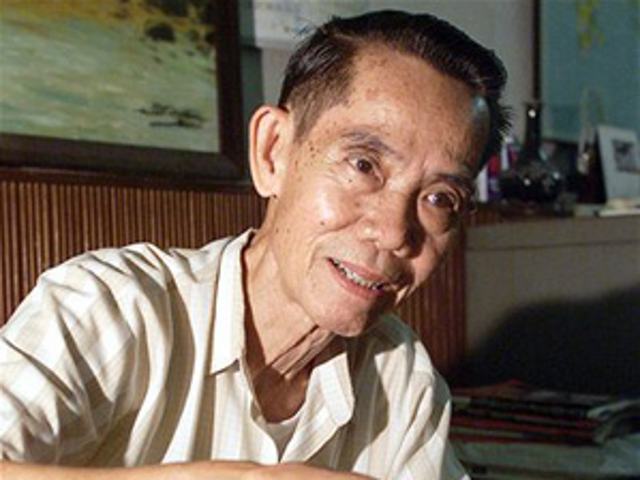
Phạm Xuân Ẩn (nom de guerre: Hai Trung), the strategic analyzer whose information, documents, assessments… greatly changed the pace of war.
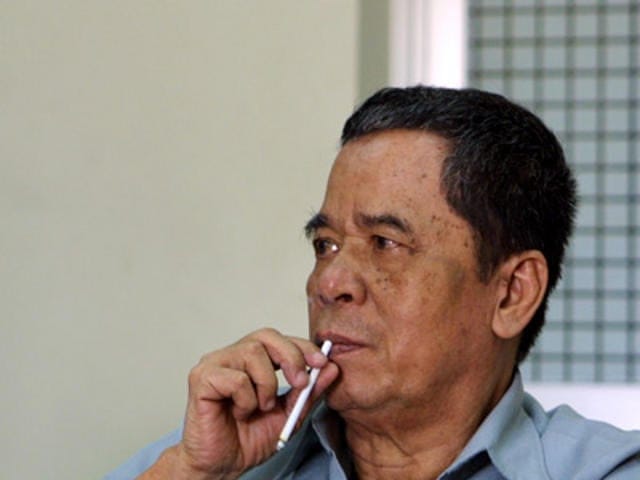
Nguyễn Văn Thương (nom de guerre: Hai Thương), one of the couriers who run Ẩn’s messages. He was arrested, tortured, both his 2 legs were cut off six times, each without any narcotic. He could had saved his life, but he chose to save the network.

How could someone so voluble and open about his life be a spy? How could someone so funny and pointed in his remarks about human stupidity be a Communist? …He was a divided man of utter integrity, someone who lived a lie and always told the truth. (Thomas Bass)

Communists and Nationalists

This is the point of hatred conflicting among Vietnamese communities for so many years. My point of view, which is also reflected tho – throughly throughout the books (can be seen as 2 American views) is that: the communists, they had an ideologue (no matter right or wrong it could be), and they had determinations. On that basics, they’d had detailed planning and extensive efforts to carry it out, and they’d made sacrifices to carry it out to the end. The same is not true with the so called southerners’ nationalism.

As long as the Americans were pumping money in, the Southern government staffs were trying to steal as much as possible, and pretend to be supportive to the Americans’ causes while avoiding fights and casualties on the battle fields. They’d lost, as they presented nothing, not nationalists, not even anti – communists, but only their own personal and family’s interests. The consequence can be seen clearly: the majority of southern people took side, they have always been sympathetic to the Communists’ national independence causes, although they’re not communists.

Communism and Patriotism

It would eventually become clear why so many people have made extreme efforts and sacrifices, it was not because of any ideology. Of the total 43 members of the H.63 espionage network, 25 were captured, tortured, many of them chose to die, but the network remained unbroken. They were couriers, who in 15 continuous years, ran the total 498 messages (reports) from Phạm Xuân Ẩn to the Iron Triangle Củ Chi, from where it would be delivered directly to the Politburo in Hà Nội. Ẩn always kept an poison pill in his pocket, ready for a death that was hanging over him for those 15 years.

Many who survived the war found themselves disillusioned with the post – war living, finding that the new regime has become even more corrupted than the previous one, and that is not what they were fighting for. Yet they were fighting not for any individual, any ideology, any government… Many failed to realize it is patriotism in the truest and deepest meaning! Phạm Xuân Ẩn to the last year of his life, works as an consultant to TC2 (the Vietnamese equivalence of Deuxième Bureau), who doesn’t understand and doesn’t trust him, but badly need his razor – sharp analyses and assessments.

Lessons learnt

If something can be learnt from Phạm Xuân Ẩn’s life, it’s something about cultural understanding. While most VC has very limited knowledge about American culture and values, they’d succeeded in cultivating at least one spy who could think like an American, a spy who loved Americans and was loved by them in return. That way he can get deep into the adversary’s mind and soul, and know the way to defeat them.

It’s all about understanding, the French had stayed in Vietnam for a considerable amount of time, they’d learnt to divide and conquer the Vietnamese, a job they’d done excellently. It took a few generations to absorb their culture, to gain enough understanding to have successful retaliations. What the American had done in Vietnam to some extent was repeating things the French had done already, in a far larger scale.

Those above are indeed the small part of the lessons. Ẩn said: the American are very good at collecting and analyzing information, but they don’t know what to do with them (at least in scopes of the Vietnam war). Similarly, we can say: the Vietnamese know how to obtain a victory (or it supposes to be called so), but then they don’t know what to do with it. Phạm Xuân Ẩn in person is a talkative one, he can talk about his thinking all day.

But as a spy, a strategic analyzer, he is actually a very quite Vietnamese, who had much more profound thoughts and understanding but can’t say it out. Lots of our own problems are briefly reflected throughout the American books, but they’re not recognized tho – throughly by our own people… Things get passed silently in our sleeping – pleasing minds until another war, another revolution that is… just pending.

The spy who loved us – Thomas Bass (pdf.tar.gz) (mobi.tar.gz)

Perfect spy – Larry Berman (pdf.tar.gz) (mobi.tar.gz)

hoàn kiếm turtle

Ai về xứ Bắc ta đi với,
Thăm lại non sông giống Lạc Hồng.
Từ độ mang gươm đi mở cõi,
Trời Nam thương nhớ đất Thăng Long!

This could be the last living turtle in Hoàn Kiếm lake and among the lone 4 surviving individuals (2 in China and 2 in Vietnam). The specie is known to be the largest soft – shell turtle in the world.

In 1967, this turtle died (the body preserved at Ngọc Sơn temple), leaving the turtle above the last one. His post – mortem measures: 2.1 x 1.2 meter in size, 250 kg in weight, estimated age at 400 years.

Recently, there’s been much activities on protecting the last specimen of turtle living in Hoàn Kiếm lake. Preserving efforts are being taken place to: improve his living conditions and try to mate him with similar turtles in the hope of producing offspring. All Vietnamese was taught at elementary school legends behind this sacred Hoàn Kiếm turtle. And through out our history, the turtle appeared at crucial moments for not just one time… It’s the Golden Turtle who assisted King An Dương Vương in building the ancient citadel of Cổ Loa (~ 257 BC).

The turtle later helped the king in creating a multi – shot crossbow that destroyed the Northern invaders… In the last “known” advent, the Golden Turtle was sent to reclaim the Heaven’s Will Sword, which was given to Lê Lợi who carried out a 10 years resistance war and regained Vietnam’s independence. Much like King Arthur and his sword Excalibur, myths on a sword with super power sent to assist the hero is unlikely. However, the story’s moral is much more likely and profound indeed:

One year after winning, declaring independence and becoming the Emperor (1428 AD), Lê Lợi goes for boating on a lake near his palace. In the mist of the lake, the Golden Turtle appears, advances toward the boat and asks the emperor to return the sword. It suddenly became clear to Lê Lợi that the sword was only lent to him to carry out his duty, as a powerful weapon in war time, but it now must be returned to its owner, lest it would harm him and his country if misused as it’s not the appropriate tool in peace time.

Lê Lợi draws the sword out and hands it to the Golden Turtle, who grasps it with his mouth, then disappears into deep water. Aftermath, the lake was renamed Hoàn Kiếm, which means: lake of the Returned Sword (or Sword lake for short in spoken language), now at the center of Hà Nội, Việt Nam’s capital. Wise old men argue that if this only remaining sacred creature is going to die, then who would reclaim the hammer and sickle – ☭ ?

russian movies

Some recently seen (in the past few weeks) post – Soviet Russian war movies: Admiral (2008), Attack on Leningrad (2009) and Brest Fortress (2010). I can’t say anything rather than: marvelous! Both these three films should be on top of greatest war films, in many aspects: acting, costume and makeup, sound & music… comparable to any other war films ever made in the West. CGI (Computer Generated Imagery) is really good but maybe still a bit after that of Hollywood.

Russian cinema has made excellent advances, less propagandic, less rigid patterns, closer to real people in real life… that the things that made the films worth watching! In my opinion, of the series of three, the later the more interesting ones (though others may have their own different idea and evaluation).

Admiral (2008)

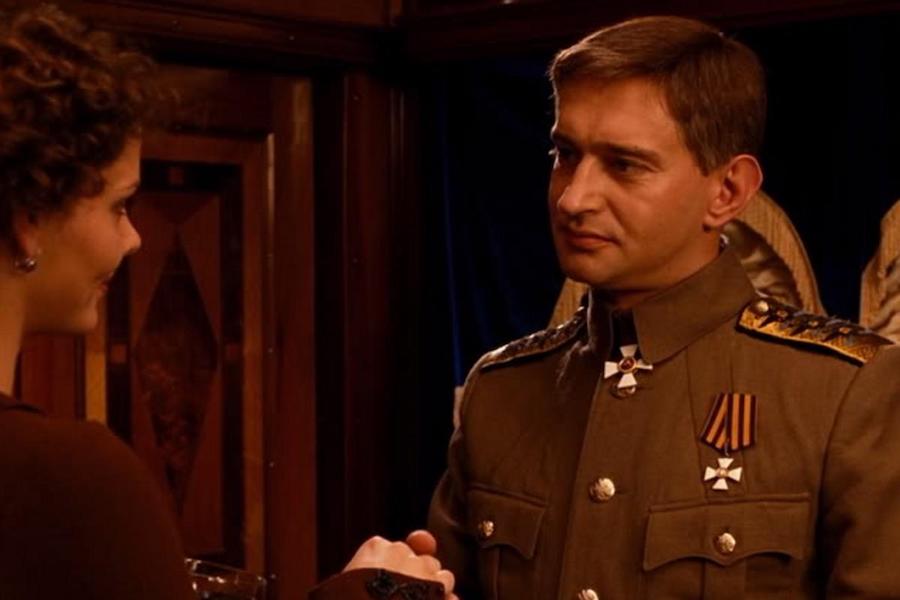
The films recites the life of Aleksandr Kolchak, admiral of the Russian Empire Navy. Kolchak himself was a complex character, living in a complex time: a famed Polar explorer, a valorous naval commander, a passionate lover, and eventually the Supreme Governor of the anti – communist White forces. No longer ruled by a dictatorial doctrine, Russia is now seeking to bring back true images of an extremely harsh period in her history.

The film starts with glorious feats of Kolchak commanding a destroyer in the Navy, his bravery in battles, his love affair with Anna Timiryova… and then the Red October came. Kolchak becomes the Supreme Ruler of the White Russia, who fought against the Bolshevik. Kolchak has far less success as a political leader than as a naval commander, he was finally arrested and executed by the Red. After decades of being vilified by the Soviet government, Kolchak is still now a controversial figure though there’re been rehabilitation movements to restore the place he deserves in Russian history.


Attack on Leningrad (2009)

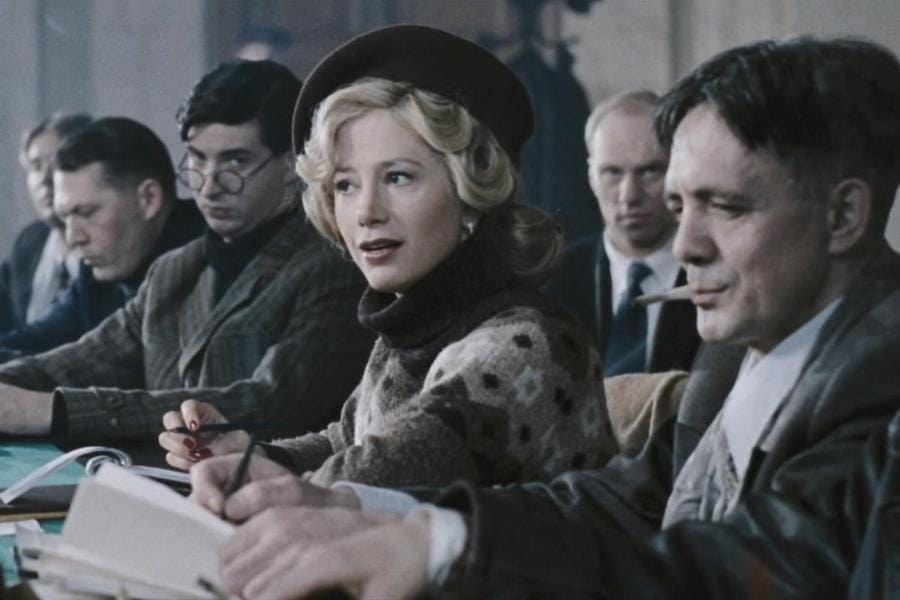
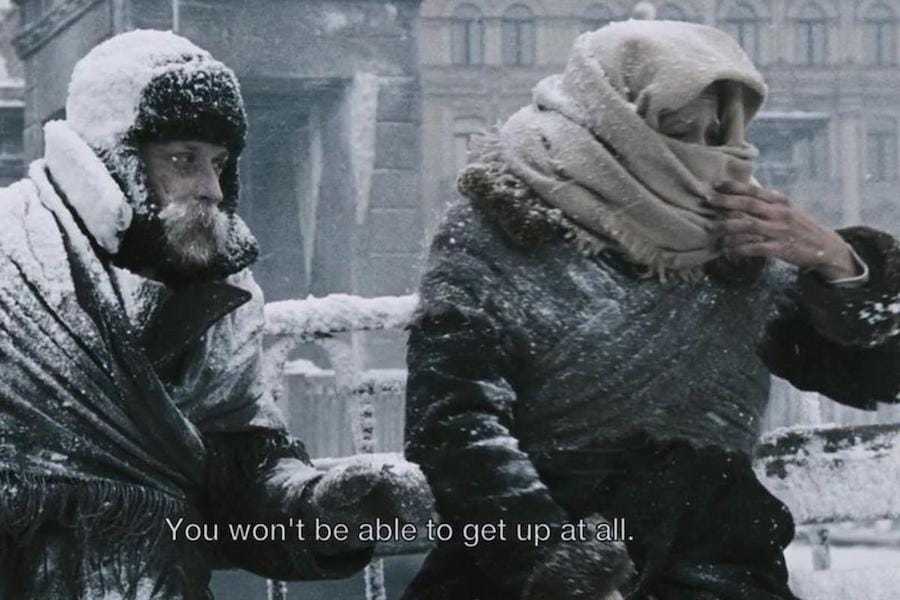
An English journalist (of Russian origin) was trapped in the besieged city of Leningrad, the war correspondent Kate Davis was assumed dead but find herself among the starving people of the city struggling for their own survival. With the help of a kind and idealistic police women Nina Tsvetnova, they live through the 900 days in that sieged hell where food shortage only permits a ration of 125 gram of bread for each person a day. Encirclement around the city was almost completed, the only supply route through lake Ladoga was called the Road of Life (and also the Road of Death).

Nina Tsvetnova later guides a soldier group attempting to re – establish the supply route across the frozen surface of the lake. As a reward, she is permitted to bring members of her family out of the city. Nina along with the journalist take one child out with them. They succeeded but decide to return to help another child. Both two women died in the terrible city but saved two children out of the 1.5 million civil death toll, half of the city’s population.


Brest Fortress (2010)

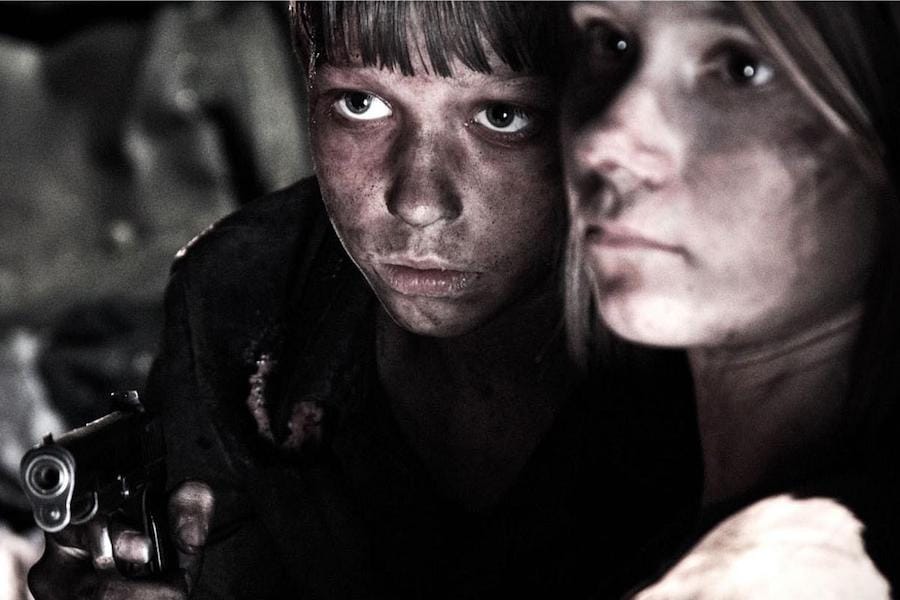
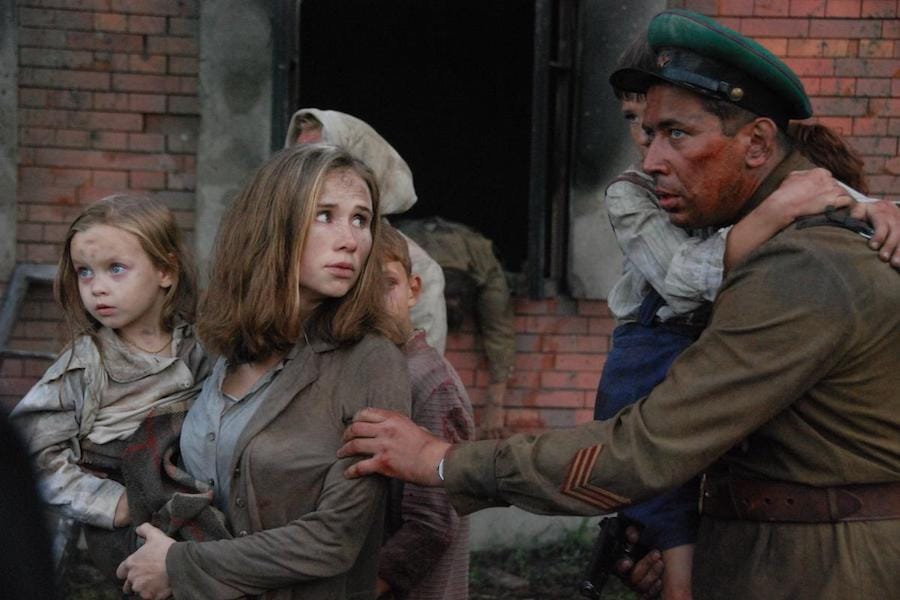
Brest fortress was the strong hold which accounts for 5% of total Germany losses in the first phase of their Russia invasion. When German started the war, the Russian was unprepared, under – powered and defeated easily, their army was in all the way to retreat, except for this fortress. Defensed by a small unit, a regiment formation of soldiers along with their families, the fortress stands for almost a month when German has already advanced hundreds of miles into Soviet territory, leaving the point an isolated symbolically heroic fortification.

Yet they fight to the last man without any food, medical and ammunition supply, without any reinforcement. Alexander Akimov, a 15 year old young cadet of the fortress lived through the bloodshed resistance, trying to help other soldiers and his girlfriend Anya. He is the lone survivor to recall the story. The film is indeed beautiful: it concentrates on normal people, their daily lives and activities, their love, hate and humanly feelings… their choices and fates against the brutalities of war!


12 angry men


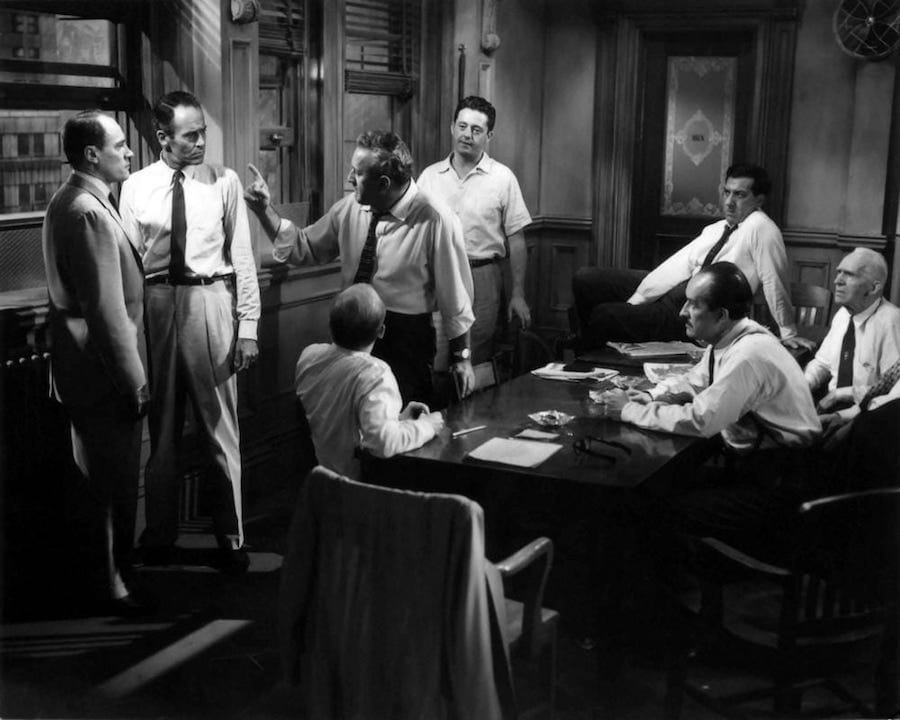
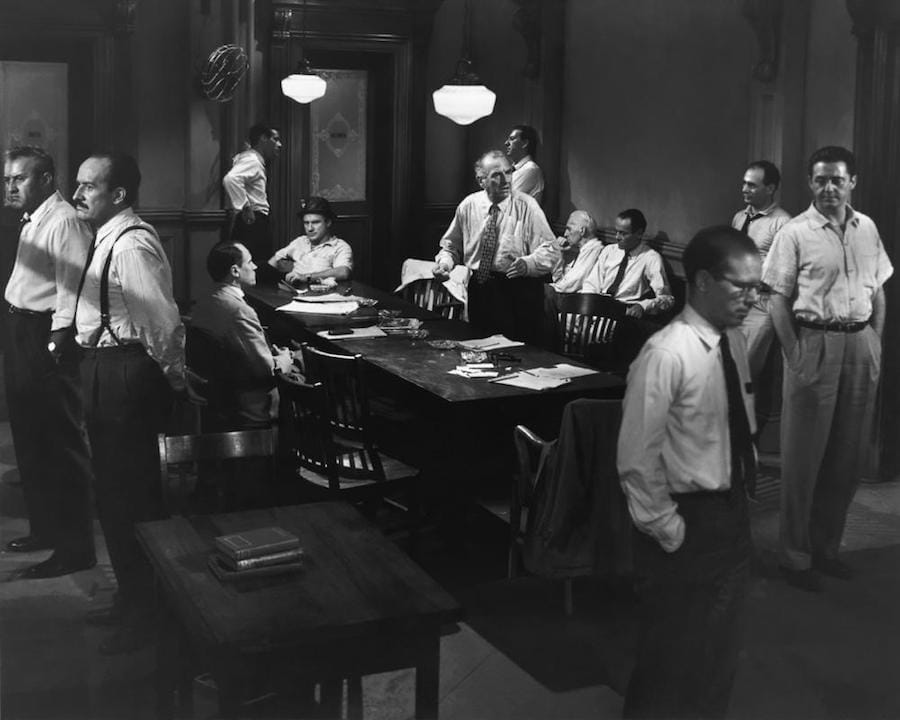
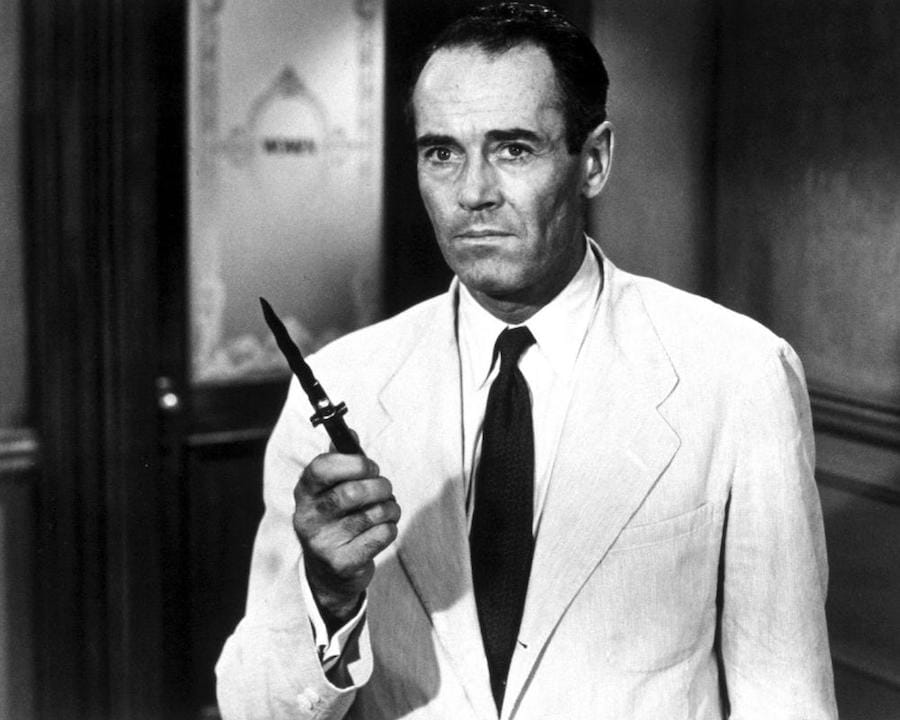
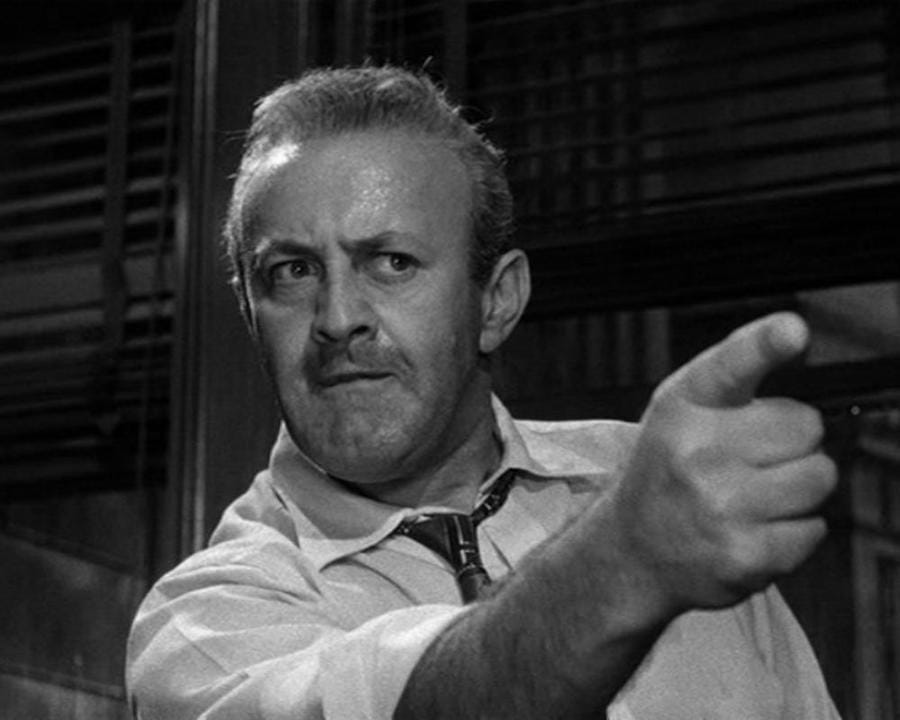
One of the films I’ve really enjoyed recently, having some free times during the new year holiday to “re – master” some classics. Yes, it is truly a classical master – piece! Off 95 minutes of the picture, almost 90 min is spent in just a single room, with 12 men discussing, arguing, debating… There’s not even a single frame for flashbacks, visualizations or imagined scenes or such things, a 2 – hour continuous hard talk between 12 jurors of a trial’s jury, to decide in a murder case whether a boy is guilty or not.

Although some scenarios in the film are quite predictable, and some details are somewhat illogical (those that could hardly occur in real world), the fascinating part of the film is about the diversity of the jury board: 12 men from different backgrounds, ages, professions… different personalities, their logic systems, their value scales… and their prejudices. Some just doesn’t care, some is more or less “a yes man”, flipping sides at any times, some just want to kill the boy cause he grew up in slum, and slum is where crime was born…

Only one man has the braveness that leads him (and later the whole board) to the truth! The film gets to the core of the American juridical system, and helps explaining why the country has a strong democracy: democratic is built upon the votes (decision making) of a mass, it’s the quality, the responsibility of the mass that decide outcomes. The film also helps explaining why in some countries, dictatorship is the only thing that’s possible. That is, eventually, people get the ruling system, the kind of government they’ve wanted!

bánh chưng

Mọi năm, đa số những đồ ăn Tết đều do trong nhà tự làm: bánh, mứt các loại, nem chả, rượu… ngày trước có những năm trong nhà tự làm đến cả chục loại bánh mứt khác nhau, hai ba loại rượu! Thật không có dịp nào để thể hiện khả năng DIY (Do It Yourself) như là dịp Tết!

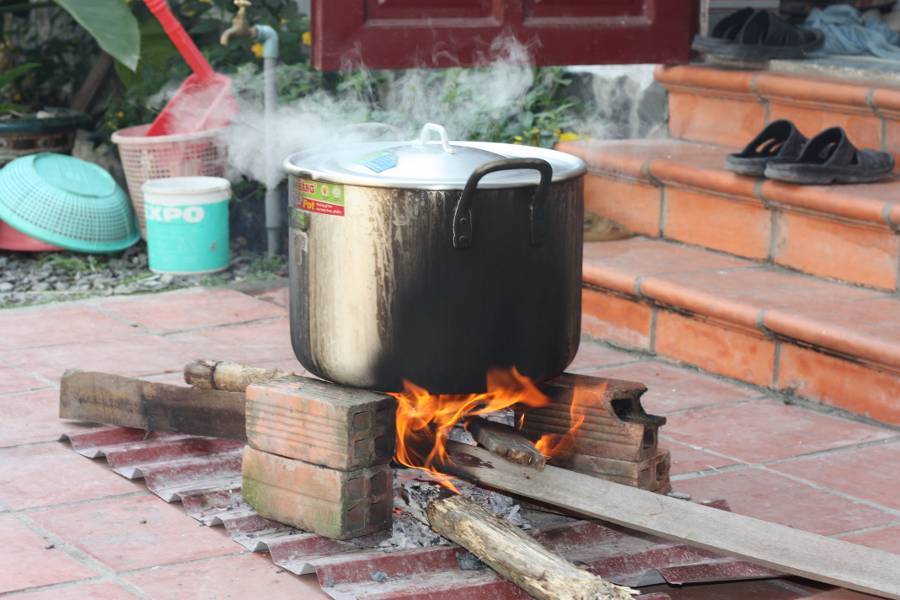
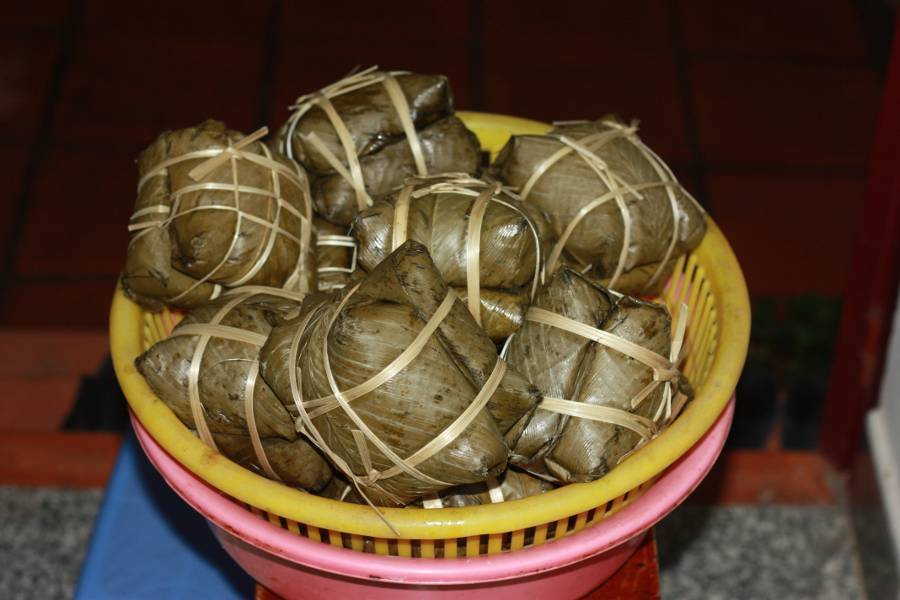
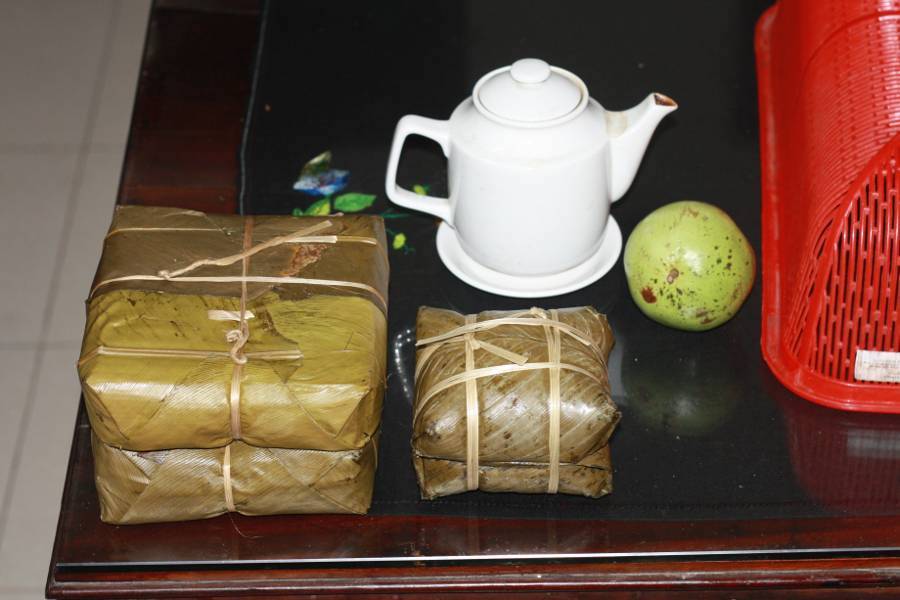
Nhưng càng năm càng bớt dần, với tất cả mọi người, thời gian càng lúc càng ít lại. Thế nên Tết nhứt cũng bớt về số lượng, bớt luôn cả sự cầu kỳ, những năm gần đây thì chỉ còn làm tượng trưng vài loại. Nhưng cũng mất hẳn một ngày gói và nấu bánh chưng, bánh làm theo kiểu Huế, bé tí ti vừa đủ cho một người trong một lần ăn, kích cỡ mỗi cạnh vào khoảng 10 cm.

Ở Huế có những nhà thậm chí còn làm nhỏ hơn, chỉ khoảng 8cm. Có thể so sánh với cặp bánh chưng làm theo kích thước điển hình kiểu miền Bắc do nhà bên cạnh làm tặng (16 ~ 17 cm). Đem cặp bánh nhà làm tặng đáp lễ thì hẳn người ta sẽ ngạc nhiên phải biết! Bánh chưng làm kiểu miền Nam thậm chí còn có thể to hơn đến 20 ~ 22 cm.

vectorial

The classical SVG example rendered using a thin OpenVG layer on top of OpenGL (or Quartz) on a Mac. This is also to say goodbye to the old Lunar year (year of the tiger) that is ending!

Finished with my survey on vectorial graphics, in details, about rendering SVG using Quartz, OpenGL (ES) on Mac, iOS and some Android flatforms. I’d had the chances to systematize more my knowledge on vectorial: path, stroke, anti – aliasing, solid, gradient and pattern fill, etc… Todays, people’s all talking about 3D, OpenGL, DirectX, etc… While few mentions much about 2D stuffs, I’ve traced back some historical evolution paths, since I believe that it’s through history would we understand technologies.

In the beginning, there was… PostScript

It was John Warnock who kindled the idea, he joined Xerox in 1978 and an early version of PostScript (named InterPress) became the language to drive a laser printer. Laser printer was then a revolutionary device, which offers extraordinary graphics compared to the capability of dot or matrix printers. Warnock left and founded Adobe in 1982, the company that produced well – known graphics softwares including Illustrator, king of the vectorial editors.

Then there was DPS, PDF and Quartz

But it was Steve Job who realized the superiority of PostScript and urged John Warnock to popularize it. When Steve Jobs left Apple and started NeXT, he co – developed with Adobe DPS – Display PostScript, a derivative of PostScript – the language that drives the NeXT computer’s graphics system. When Steve has got back to Apple, DPS then evolved into what is now known as PDF, and Quartz is the C binding that bridges traditional Unix programmers to the Mac graphics world.

The X window system

The X’s designers also started with a PostScript RedBook in hand. But due to various reasons including the lack of in – depth consensus about vectorial, X maintains until now low level of PostScript support. The X server can only handle basic PostScript commands (it can’t even draw splines). X took a hybrid approach using both vectorial and raster – based solutions to the problem. Also the Unix root has an impact: X is the only true client/server windowing system to the current day.

Until now, the NeXT computer remains an idealistic symbol, pure vectorial remains a pursuit, perhaps for higher – standard devices, such as with this Backbone:

Backbone is an attempt (our attempt) at creating a Really Good Desktop. The metric we use for “Really Good” is our own. In short, to us, to carry on the NeXTSTEP® and OPENSTEP® spirit!

The Windows’ GDI

Born to be the youngest of all graphics systems, GDI learns nothing from it predecessors. Neither it is device and resolution independent (like Macs) nor a true client/server system (like X). GDI sticks to screen and the pixel unit with quite a lot implementation flaws. These flaws won’t become obvious until we come to serious editing, publishing and printing: text documents and graphics designs would never has the on – screen – display and printing qualities we would expect, though various 3rd party softwares would come to rescue somewhat the situations.

Then, things change with time

The 2D graphics systems on Mac, Windows, Unix… all has different origins, and all targets different real – world problem domains. All has hardware acceleration to various levels and qualities, and it’s hard to compare them in some cases. To the present day, no system is known to keep the original idealistic model that uses pure PostScript: X has been mixed from the beginning, Mac & iOS have switched to raster to some extent, GDI is essentially pixel – based. Then come the wind of change! It would be another story, another evolution path, but today, 3D hardwares has become quite popular with reasonable prices. It’s counter – intuitive to treat 2D as a separate part from 3D, and the trend is merging 2D to become a subset of 3D rendering. However, the process hasn’t been very easy, it would take some more time to reach maturity:

  • WPF (Windows Presentation Foundation): first came with Windows Vista, GDI now runs as part of DirectX 3D rendering environment. Vista was not a success indeed!

  • QuartzGL: Quartz2D runs on top of OpenGL since OS X 10.2 (Jaguar). However, QuartzGL is not enabled by default even in the current version (10.6 – Snow Leopard) since it’s still quite buggy.

  • GLX & AIGLX: both has some implementation problems and is competing to each other to become the official 3D extension for X.

Taken an arbitrary GDI’s API (such as MoveTo, LineTo…) we can see the parameters’ type is integer, which is in reality the pixel unit. The Quartz’s counterparts are always in float, a virtual unit so that the APIs can be device and resolution independent.

The so called “GDI printer” is actually a bitmap device, it lacks a PostScript interpreter and hence need to be attached to a computer to do the actual computing. Reason is obvious: cheapness, adding a PostScript interpreter would significantly raise the cost!
home servers


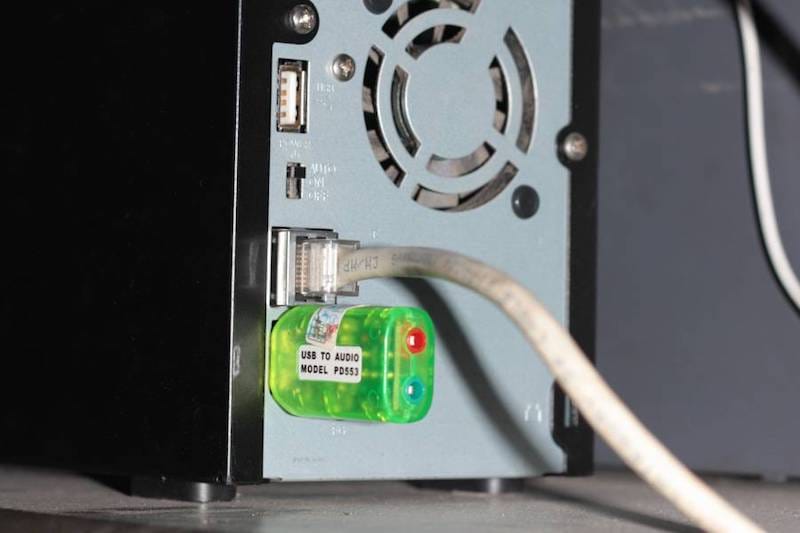
The C-Media usb board adds a cheap (~ $5) sound solution to the Debian box, sound quality is fair enough for “ad-hoc” listening (comparable to that of AC97 on-board chip, and for serious music, there’s already the home media player).
Quite a long time it takes me to finish and “stabilize” all these “home servers”… and finally here it is… On the left, you can see: #1: the 650 Watt UPS that provides about 3 hours of un – interrupted electricity for the whole system, #2: the WAP54G Access Point (hacked with OpenWRT), #3: the Comtrend ADSL router, #4: the LinkStation CHL (Debian Lenny: print server, 1T disk space for samba share, bittorrent server), #5: the LinkStation Duo (Debian Lenny: 1T of RAID-1 disk space for important data, SVN, Web, VPN servers (for remote access) and MPD music servers), #6: speakers.

All these miniature machines help streaming lossless music and HD video to the media player (LT-H90LAN – another Linux box resides in the living room). Except for the router (which is specialized hardware & firmware OEM-ed by Comtrend to FPT – the local ISP), all others devices runs Debian or another Linux variant. The total power consumption of the whole system is less than 50 Watt. Future computers would consume less than 1/10th of power compared to today’s ones… Power is the key, less power means less heat, less noise, more stable and more durable… the factors that make successful home services!

buffalo duo


My Buffalo, a 400 MHz, power-efficient ARM system (it consumes about 17W on average). The duo: two SATA disks (1TB each) running in RAID-1 configuration. The system can also act as a print server: most cheap home laser printer are not stand-alone device (lacking PostScript capability) and need to be attached to a PC in order to print, instead we can connect printer to this Buffalo box via usb and serve printing over network.

My newest toy: a Buffalo LinkStation Duo Network Attached Storage (NAS – or a poor man’s home server). Had thought about this long ago but don’t have time till now to dig a little bit low-level to get the thing to work! Basically what I want to have is a miniature general-purpose home server, which would run continuously 24/7. But you know with the temperature and electricity conditions here in HCMC, most PC would surely break down if let running continuously for a few months. The idea is to hack this NAS device to run Debian and turn it into a hybrid system: NAS (file server, torrent, UPnP…) and a home server which would handle a little more extra tasks. I took me a whole night to figure out how to do it.

1.   Boot the device via tftp, using u-boot, the universal bootloader. We need to to erase the HDD’s partition table (with something like: dd if=/dev/zero of=/dev/sd[a/b] count=1) to force the device into tftp boot.

2.   Telnet to the device and prepare the disks: using fdisk to apply a same partition structure to both two disks (/dev/sda and /dev/sdb) with the usual Linux FS: /boot, /swap, /(root), and /data). The disk structure would appear like this:

Device Boot Start End Blocks Id System
/dev/sda1 1 6 48163 fd Linux raid
/dev/sda2 7 1200 9590805 fd Linux raid
/dev/sda4 1201 60801 478745032 85 Linux extended
/dev/sda5 1201 1329 1036161 82 Linux swap
/dev/sda6 1330 60801 477708808 fd Linux raid

3.   Setup the RAID-1 (one-to-one mirror) structure, you can see that we mirror /boot (sda1, sdb1), /(root) (sda2, sdb2), and /data (sda6, sdb6), there’s no need to mirror /swap:

mdadm –create /dev/md0 –level=1 –raid-devices=2 /dev/sda1 /dev/sdb1
mdadm –create /dev/md1 –level=1 –raid-devices=2 /dev/sda2 /dev/sdb2
mdadm –create /dev/md2 –level=1 –raid-devices=2 /dev/sda6 /dev/sdb6

4.   Install Debian (Lenny) using debootstrap, a very handy tool to install Debian directly from a repository. DeBootStrap pulls the packages over network, build a new rootfs, after chroot-ing to the newly build system, pull and build the kernel from source. After that, we can use regular Debian commands to update, configure network, add softwares, etc… After rebooting, we’d got a brand new Debian with 1TB of RAID-1 disk space, which runs flawlessly and which is ready to serve my various automation tasks!

Notes: installing Debian would void the warranty and could easily brick your device, use the information at your own risk. The steps here are just summary, there’s been various try and fail to get the thing done, e.g: we need priorly to have binutils, wget, zlib and libssl binaries for debootstrap to work (download the deb files from Lenny’s repository, extract and copy over the Buffalo), after debootstrap-ing, I forgot to set the root password, and unable to login when the machine reboot, thus having to start the whole process over again. For further details, please consult the Buffalo NAS community.

UPDATE, Nov 18th, 2010

For a NAS which runs 24/7, it’s critical to monitor system status (temperature and the moving parts). I wrote this little fand script, a daemon to monitor hard disk temperature and adjust the fan’s speed accordingly. HDD’s temperature can be retrieved using smartmontools (most hard disk nowadays has S.M.A.R.T capabilities). And fan control on Buffalo LS Duo is done via the gpio module (thanks to talent hackers on the Buffalo NAS forum), something like this:

# values can be ‘off’, ‘slow’, ‘fast’ and ‘full’
$ echo ‘slow’> /proc/linkstation/gpio/fan

I’ve defined some thresholds, in a tropical country like VN, room temperature around 30° ~ 35° (Celsius) is a common thing, so if the HDD’s temperature is below 35°, we would turn off the fan. If it is between 35° ~ 40°, the fan speed would be ‘slow’, from 40° to 45°, the fan will be turned to ‘fast’, and if temperature excesses 45°, fan speed is set to ‘full’. Well, and even if 50° is reached, we would send a notification email (via sendmail) and shutdown the system. If you find it interesting, here is the fand scripts.

UPDATE, Nov 20th, 2010 (THE REAL DUO)

To pair with the Link-Station NAS is its cousin also from Buffalo, the Link-Theater LT-H90LAN. The LT-H90LAN reads media from Samba shares or DLNA server via LAN and is a 720p and 1080i HD-ready device. Although not Full-HD (1080p), that’s enough for my need (I don’t have a Full-HD TV in my house anyhow, maybe I’m waiting for 3D home video). It’s quite pleasing to enjoy good video quality and excellent audio in your living room, all streaming from a central NAS. The box also runs a variant of Linux (though hacking can be a pain, I would only left the device untouched for safe). This is one further step toward an all-Linux-devices home (thought I should buy an OpenMoko phone then).

kindle and feeds

After years in IT career facing monitors, it’s now time to care a little about your eyes, and I’m now using my Kindle for reading news, documents everyday! However web browsing on Kindle is quite inconvenient, there’s of course no touch screen (imagine how touch would look like with a 3fps responsiveness display), and the 5-ways button make web pages’ navigation a kind of clumsiness! I was thinking about some form of automation, basically we would need to convert some news-feeds into Kindle’s native format (mobi) for the ease of our reading, the steps below:

We’re going to use Calibre, the famous ebook-converting tool: sudo apt-get install calibre. Or you can install it (binary or source from) on Linux as guided here. The very nice feature of Calibre is that it can fetch news-feeds, parse and format them following a pre-defined rule-set called “recipe”, there’re hundreds of built-in recipes as well (“recipes” are actually python scripts used to parse and layout the data in html and some css). Below is how I fetch feeds from Engadget and VnExpress and convert them to .mobi, the native format that layouts very well on your Kindle:

$ ebook-convert /opt/calibre/resources/recipes/endgadget.recipe endgadget.mobi –output-profile=kindle
$ ebook-convert /opt/calibre/resources/recipes/vnexpress.recipe vnexpress.mobi –output-profile=kindle

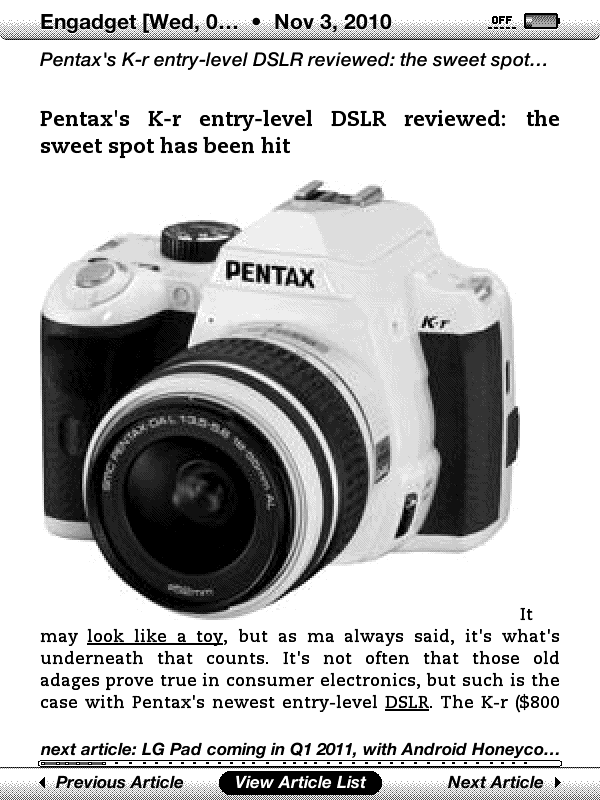
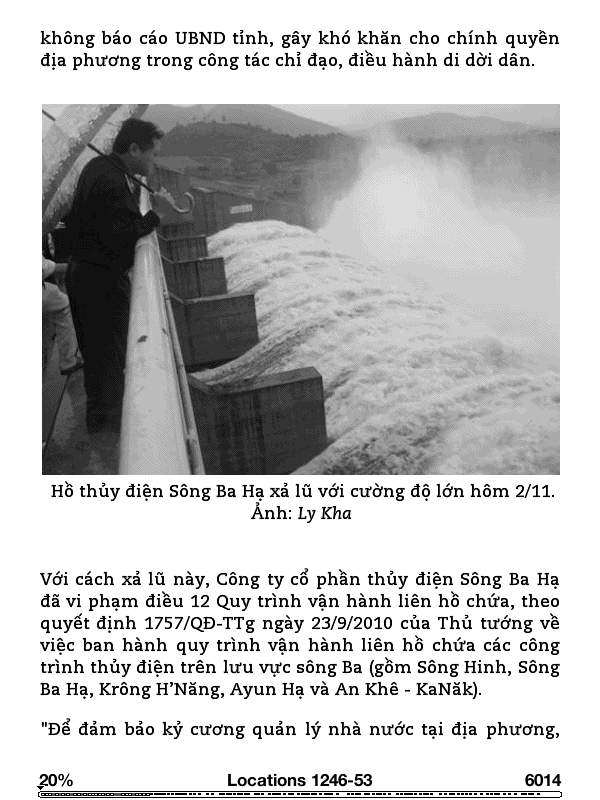
Copy the files over your Kindle, the news feeds read out very very nice! (images on the left, click to enlarge). The next step is of course some further automation, you don’t want to do the whole thing manually everyday, do you!? All these works can be accomplished by a shell script, scheduled by crontab! Just have your home server prepare the documents and sync it to you via Dropbox, from which you can download and view on the device (Kindle naturally permits downloading .mobi documents). I’m using this way to serve myself latest news with coffee every morning!

kindle development without kdk

KDK, the Kindle’s Software Development Kit has been released for quite some times but Amazon still strictly restrict accessing to it, many many software developers (like me) have registered and received no reply. It is understandable that Amazon could be skeptical on what to put on Kindle’s app store, but it should not be that conservative toward the developing community. KDK is basically just a PBP (Personal Basic Profile) J2ME (Java Micro Edition) with Amazon’s extension, a Kindle emulator, and some tools…

Having no KDK doesn’t mean that we can not develop software for Kindle! Below are my notes on building, deploying an example application for Kindle. This would make cleared the steps needed to write applications for Kindle without the KDK. Please notes: the information is collected from many different sources, jailbreaking could be considered “illegal” according to some Term Of Use. Use the information at your own risk!

1.   Jailbreaking and usbnetwork

Download kindle-jailbreak and kindle-usbnetwork from here. Choose the files that is suitable for your device, e.g: for my Kindle 3 (wifi + 3G), it would be the jailbreak_0.4.N_k3g and usbnetwork_0.27.N_k3g. Copy the jailbreak_0.4.N_k3g file to your Kindle, then proceed to updating the system. The jailbreak exploits a hole in Busybox implementation to gain root access. Next, do the same thing with usbnetwork_0.27.N_k3g, which provides a secure shell via USB connection.

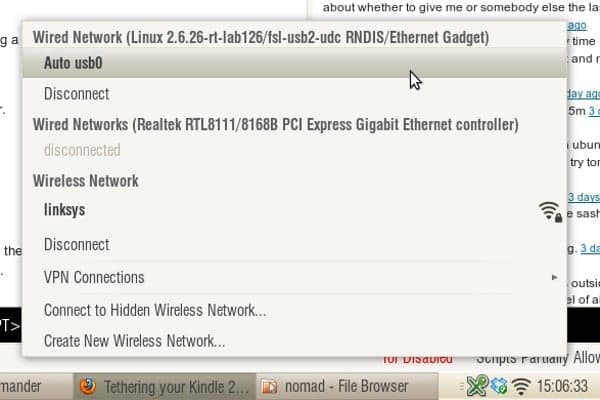
Launch the Search box on our Kindle, type ;debugOn, press enter to execute the command, then do the same thing with ~usbNetwork to start the sshd daemon. The default configuration would set Kindle to 192.168.2.2 and expect the connected PC to be 192.168.2.1. Now we’ve got root access and the entire FS (file system) in the palms of our hands. Spend some times exploring it, when done, put the Kindle back to normal use by issuing ~usbNetwork again, then ;debugOff.

2.   Key and file signing

This is the most important part! Kindle’s “kindlets” are exactly Java’s jar file with .azw2 extension, however, we can’t just simply copy and run it. The applet is linked against several system libraries located at: /opt/amazon/ebook/lib/Kindlet-1.1.jar and /opt/amazon/ebook/sdk/lib/*.jar (copy these files to your PC for local jar building in place of those provided by the KDK).

The .azw2 file must also be signed with 3 different keys located at: /var/local/java/keystore/developer.keystore and the security policy is defined at: /opt/amazon/ebook/security/. For more information on signing, please refer to this post. If you’re tweaking your Kindle and writing apps for it, I suggest that we would just use the signing key of Andrew de Quincey, the first one to figure out about this, so that free softwares can be easily shared among Kindle’s users.

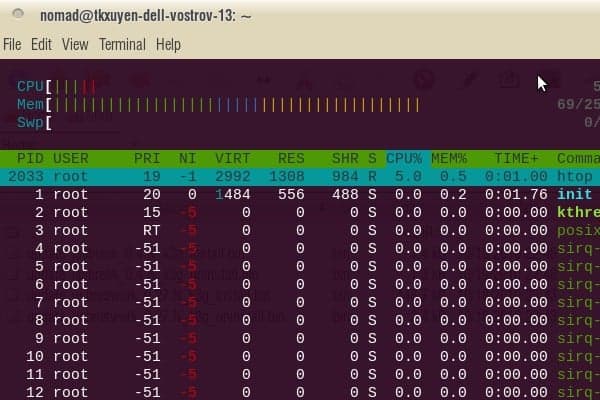
Configure the usbnetwork interface and access Kindle via sshd. Image below: the command htop running on Kindle’s ssh console.

When finished with hacking, we can un – install these two exploits to restore Kindle back to original state (and receive official updates from Amazon), but that would be after the next section, when we’d been able to deploy our own software on it!

3.   KindleGoban – an example app

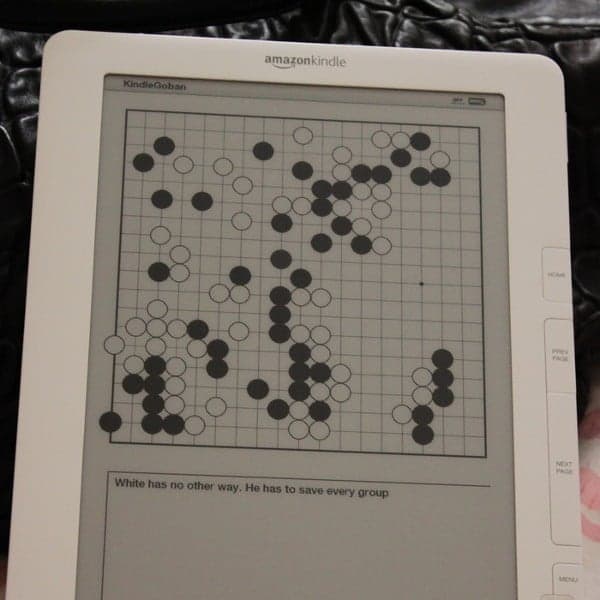
I’m going to deploy KindleGoban, a Go (weiqi) game viewer, as an example app. Adrian Petrescu, the man behind this open source game, is perhaps, an insider of Amazon’s KDK project. But technically he’s under a NDA (non disclosure agreement) and won’t be able to say anything except the publicly available information. However, he did indirectly provide valuable resources.

First, copy the developer_keystore (mentioned in #2) to your PC & Kindle (at /var/local/java/keystore/developer.keystore). Then download KindleGoban (and its dependency library KWT. Make some changes to the build.xml to include KWT (adding several widgets) and get rid of the KDK’s stuffs (which we don’t have). Then build, sign and deploy the .azw2 file to your Kindle. And there you are, a nice Go game viewer!

# first, build and sign the jar file
$ ant build.xml
$ jar cvfm KindleGoban.azw2 KindleGoban.mf bin/*
$ ./signkindlet developer_keystore KindleGoban.azw2
# copy the file over to your Kindle, also need
# to copy an example .sgf file for testing
$ scp KindleGoban.azw2 root@192.168.2.2:/mnt/us/documents

4.   Resources

This section gonna be regularly updated on the availability of documents, tools.. for development on Kindle. Please note most of these are from third – parties rather than Amazon, which are the results of hacking, reverse – engineering… and some other information indirectly available from the KDK. At the moment, we only have this official javadoc from Amazon which describes the KDK’s APIs.

  • Savory: a native ebook converting daemon for Kindle.
  • Kindle emulator: need to double check this.
  • KWT: Kindle Widget Toolkit.
  • Mangle: a manga viewer for Kindle.
  • Qindle: a Qt port for Kindle.

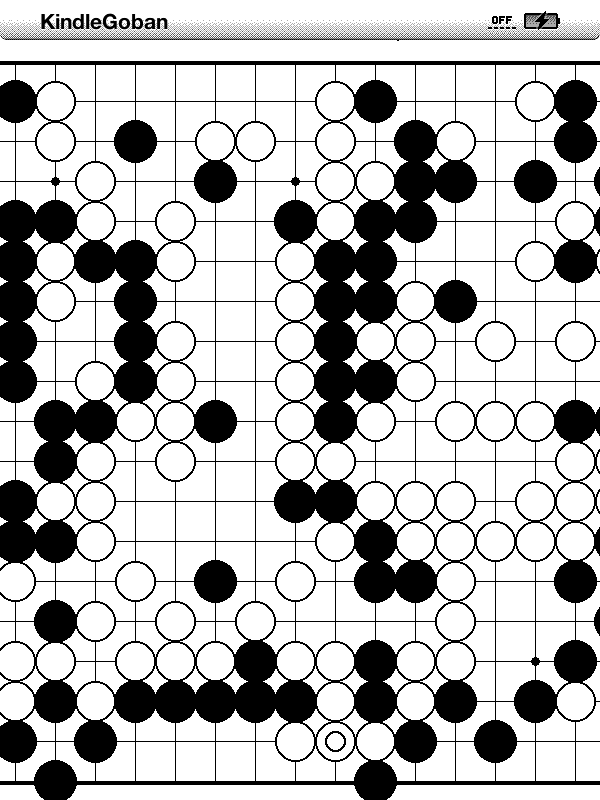
KindleGoban screenshots, this is, like most Kindle projects at the moment, is just starting, would expect more features in the time coming.
vietnamese dictionaries for kindle


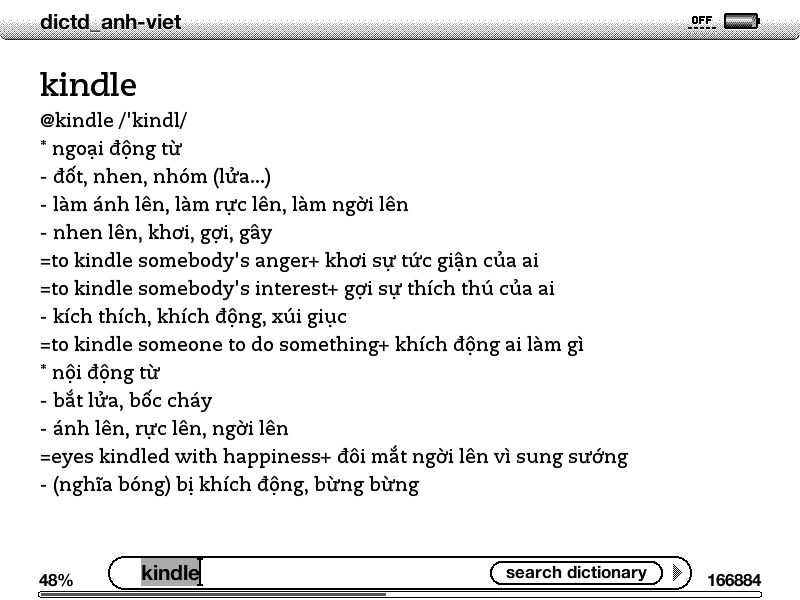
The dictionaries’ screen-shots

Kindle in my idea, is a very promising device, and I’m compiling, for the purposes of reading, some Vietnamese dictionaries for it. For the Chinese language, there’s no non – trivial solution at the moment, but it’s simple for the cases of English and French. Below are the steps I note down for remembering, it’s just a matter of data conversion and packaging. Non – technical readers can skip directly to step #5 below to download and use the dictionaries.

Dictionaries on Kindle have Mobipocket’s format (Amazon bought Mobipocket in 2005). The data set we’re going to use is available on StarDict in which the English ↔ Vietnamese and French ↔ Vietnamese data was originally created by the author Hồ Ngọc Đức. The data set has some minor holes and errors, but it’s the most usable set for Vietnamese at the moment (many Vietnamese softwares, websites… use this data).

1.   Download the data from StarDict, e.g: stardict-dictd_anh-viet-2.4.2.bz2. Extract it, there will be a .ifo (info) file, a .idx (index) file, and a .dz file which actually has .gz format, rename to .gz and unzip to get the real data file (.dict).

2.   Convert the data to an intermediate format, we’re going to make a tab – delimiter file. Fire – up StarDict utility: stardict-editor, jump to the 2nd tab (Decrypt), browse to the .ifo file and have it convert the data to something like: dictd_anh-viet.txt.

3.   Convert to Mobilepocket format: python tab2opt.py -utf dictd_anh-viet.txt. The python script used to convert data is available at this site and would produce a file like: dictd_anh-viet.opf.

4.   Package the final .mobi file: wine mobigen.exe dictd_anh-viet.opf. The mobigen utility is available from here, for convenient reason, I would just use this Windows’ binary via wine.

5.   Connect your Kindle using USB cable and copy the anh_viet.mobi or phap_viet.mobi files over to the ‘documents’ directory. The dictionaries should be available for use right now on Kindle’s home page. We can also set one of these to be Kindle’s default dictionary so that we can lookup words’ meanings without leaving the document we’re on!