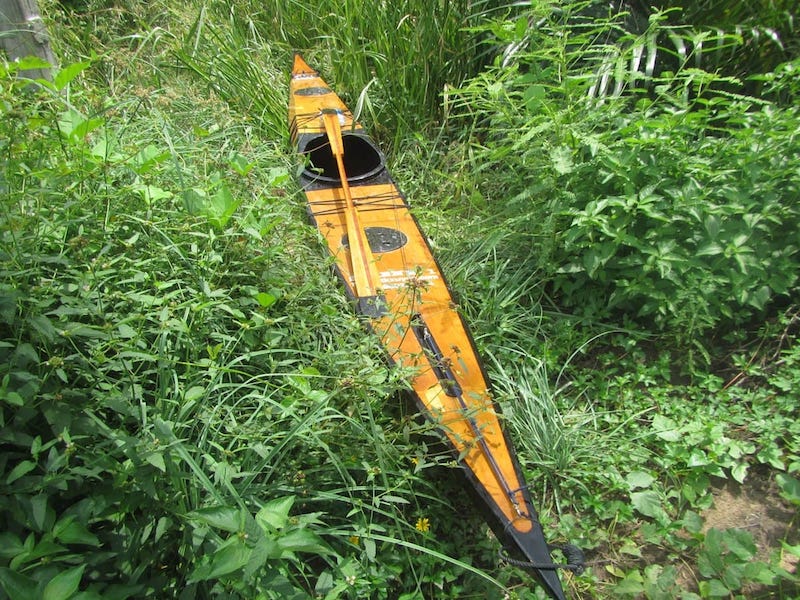
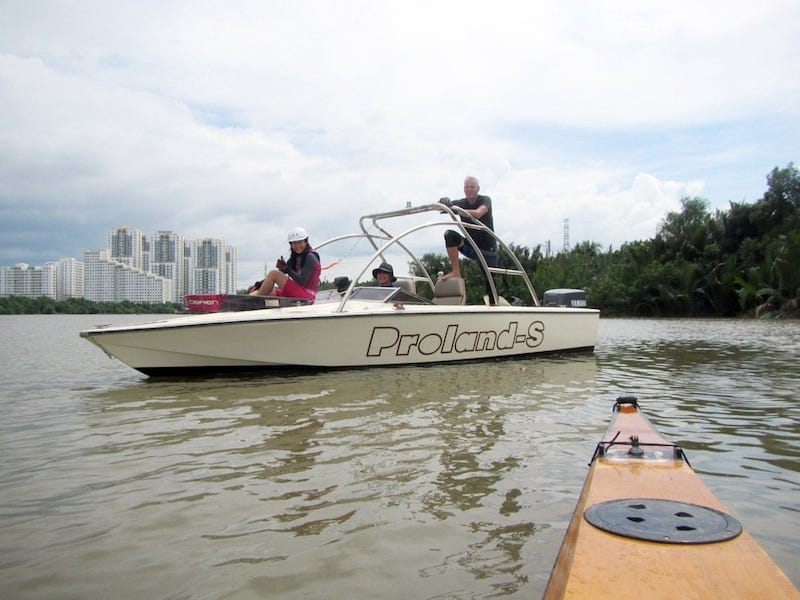
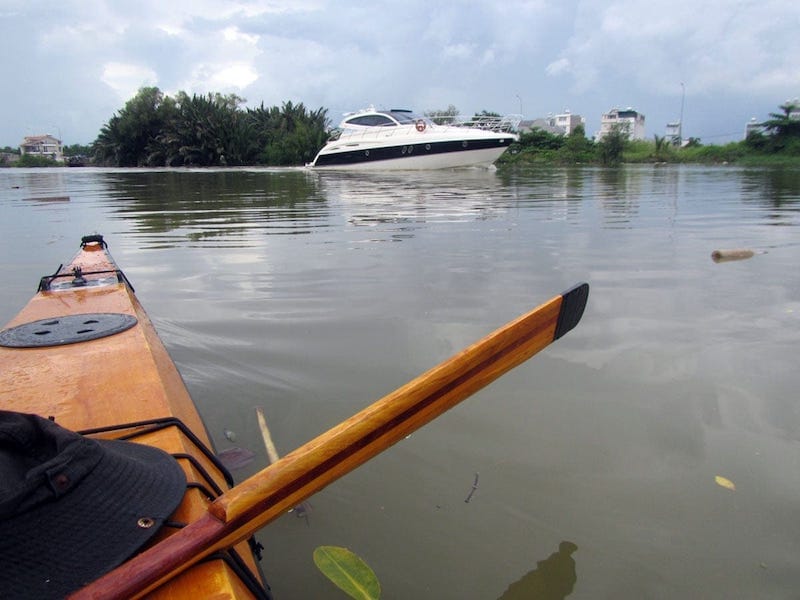
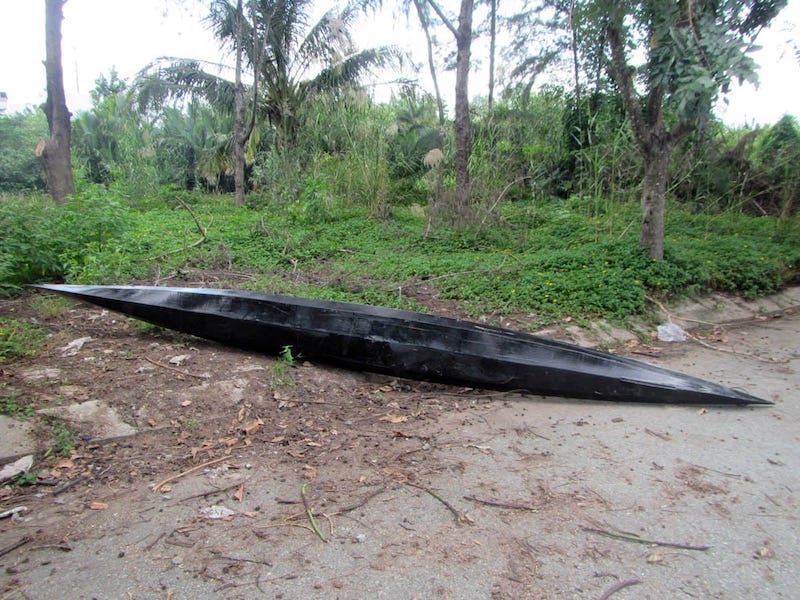
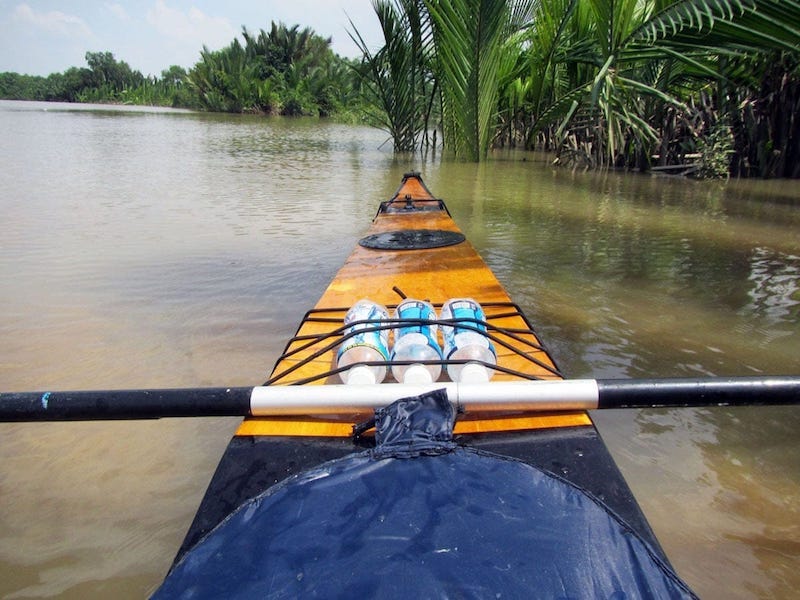
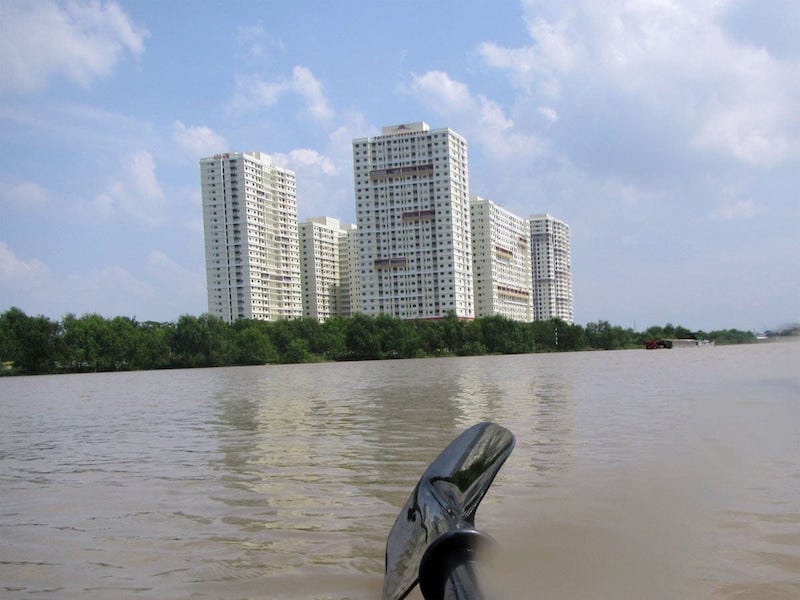
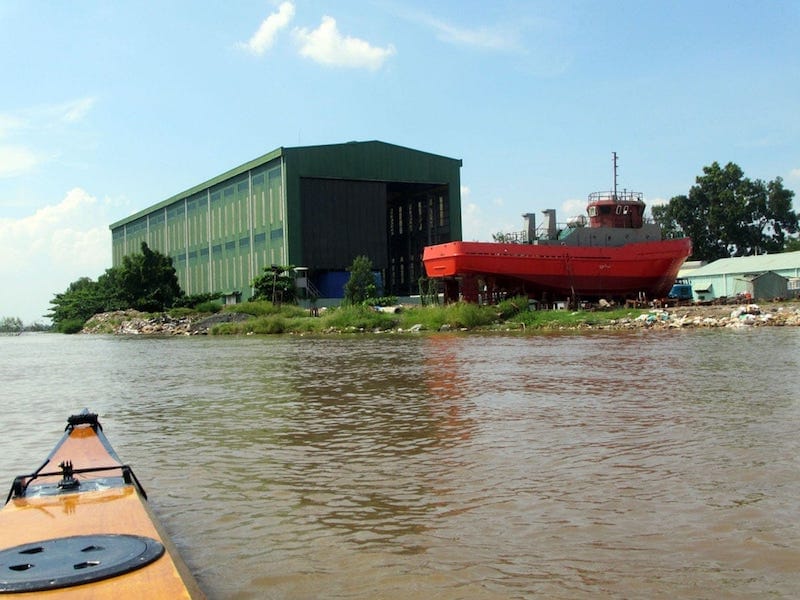
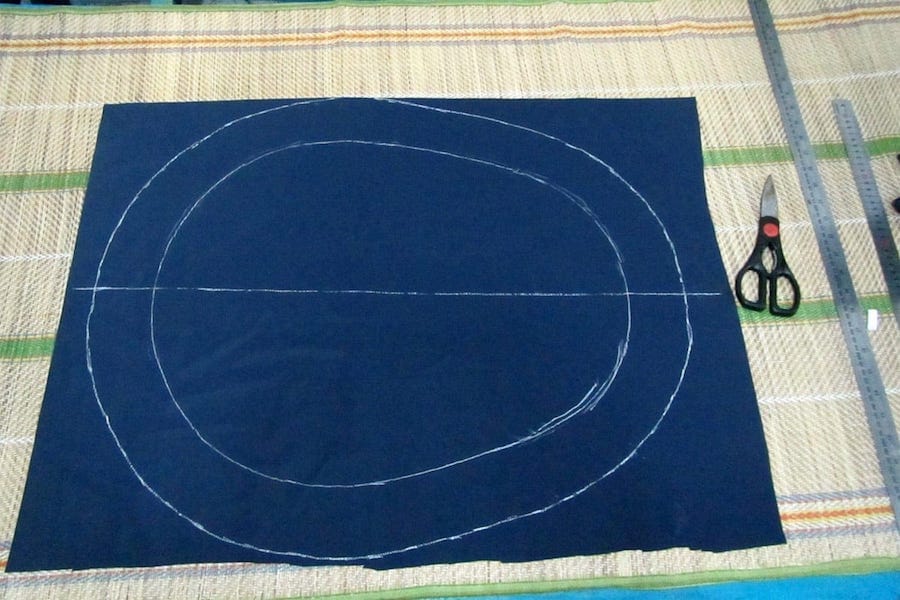
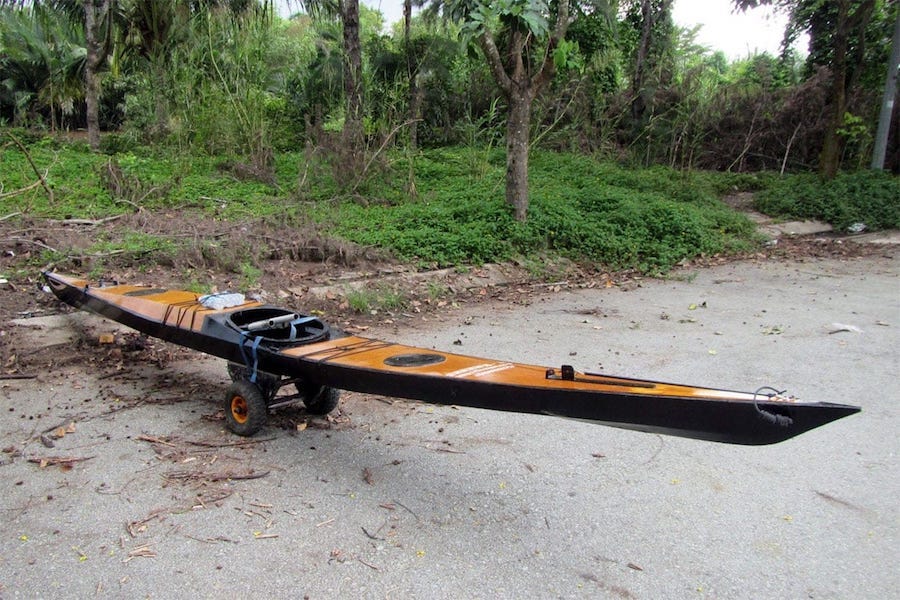
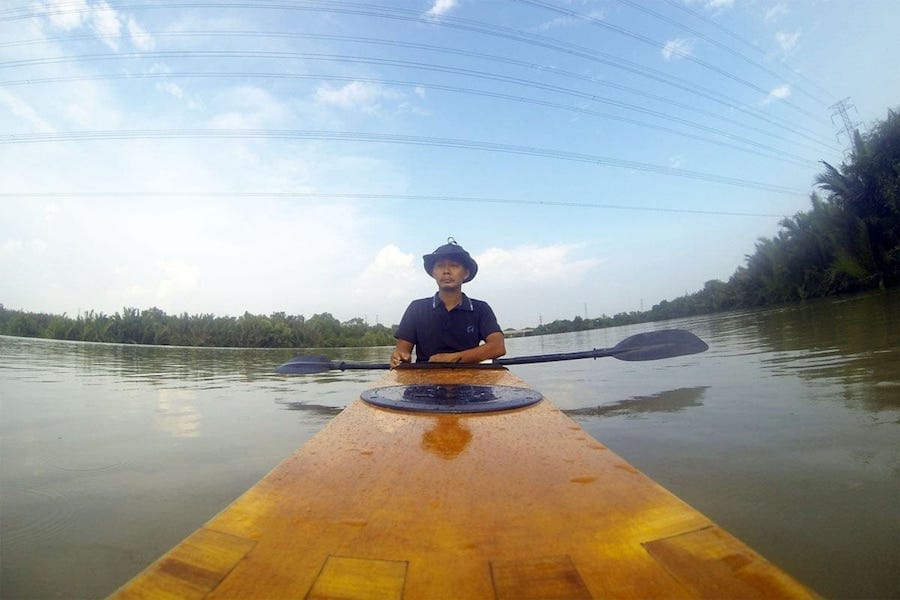
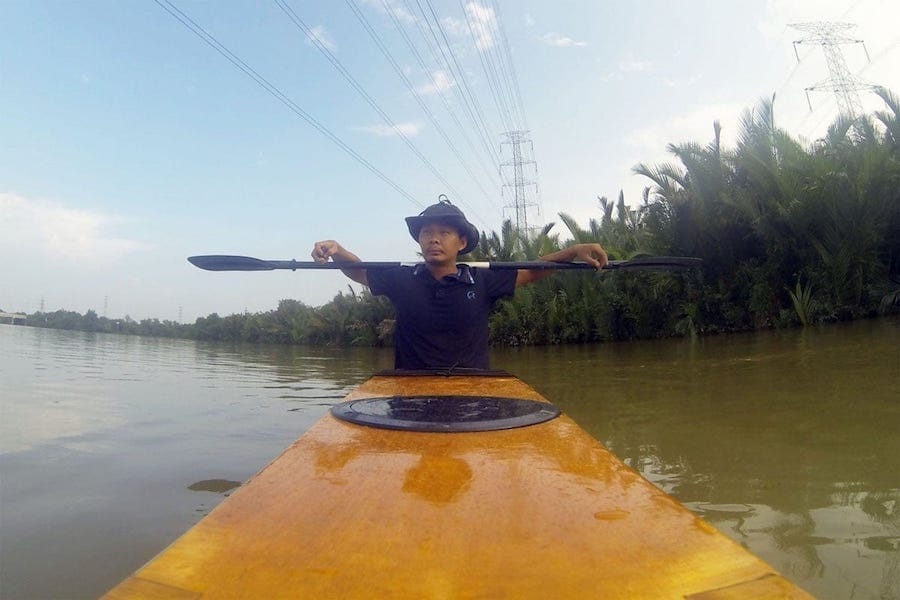
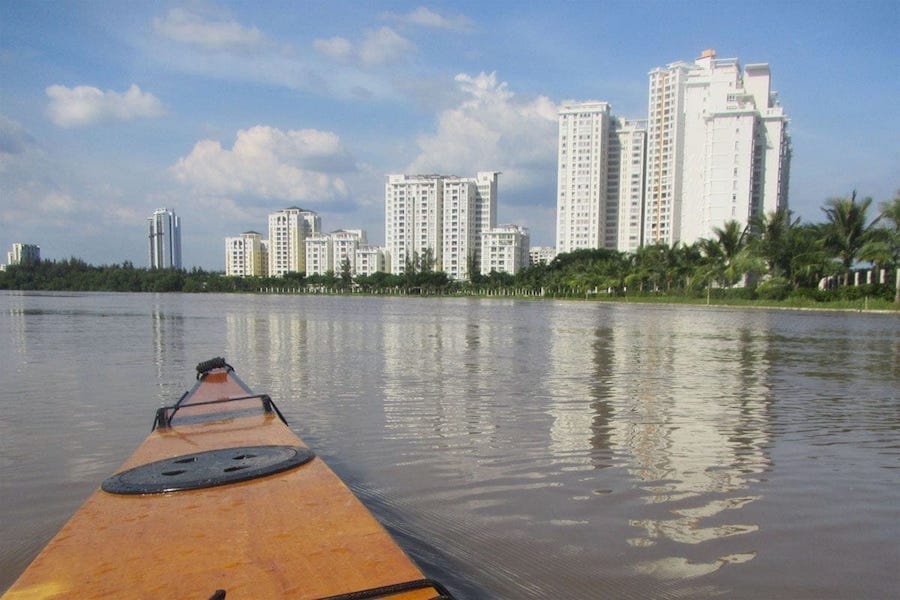
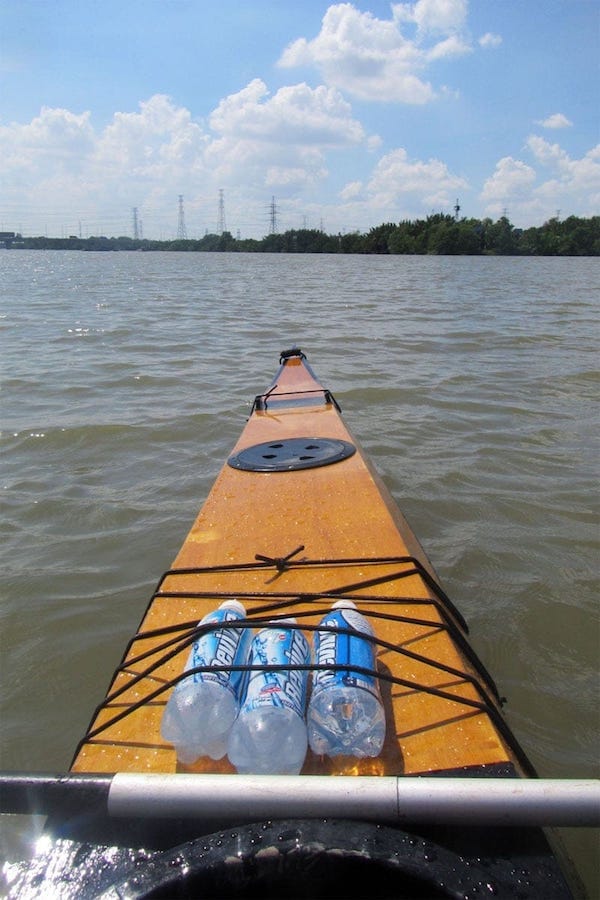
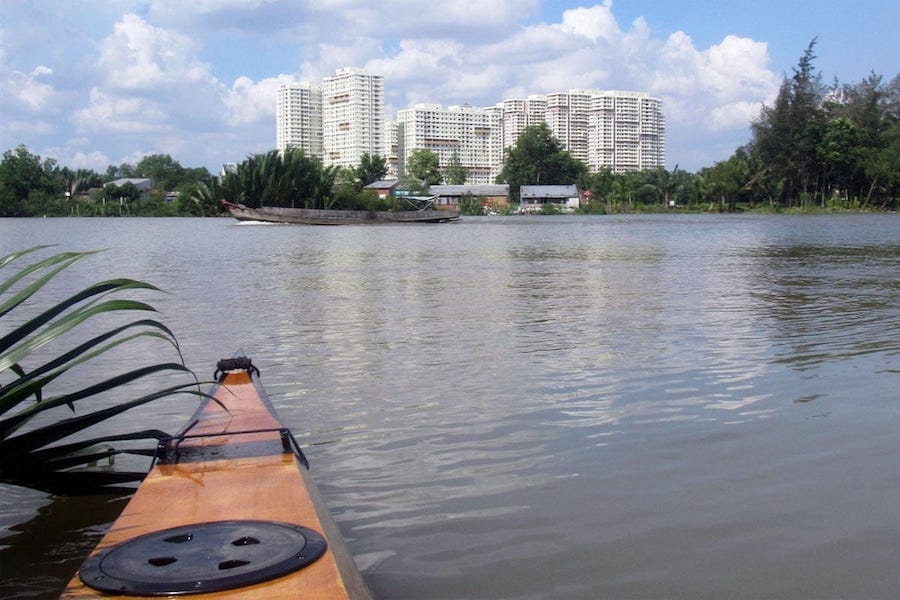
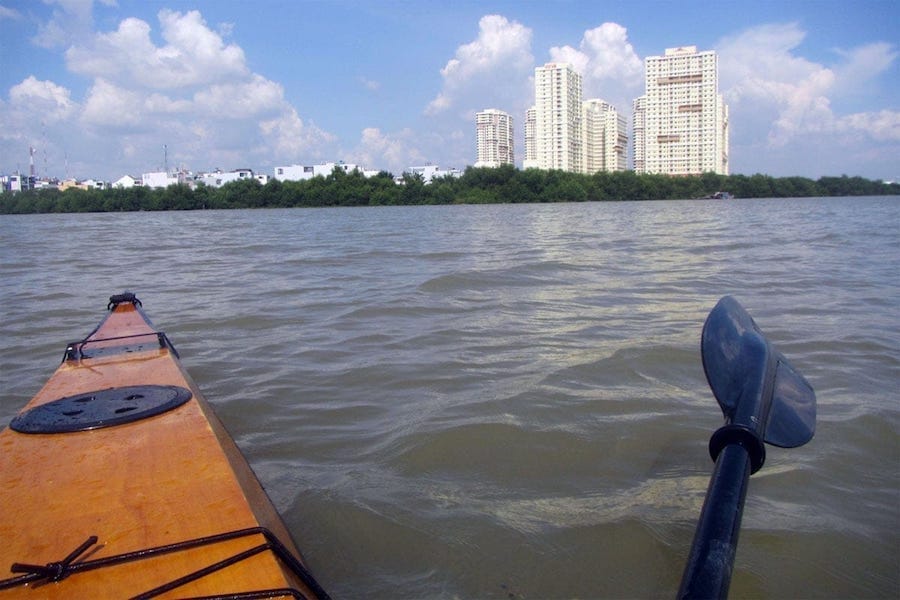
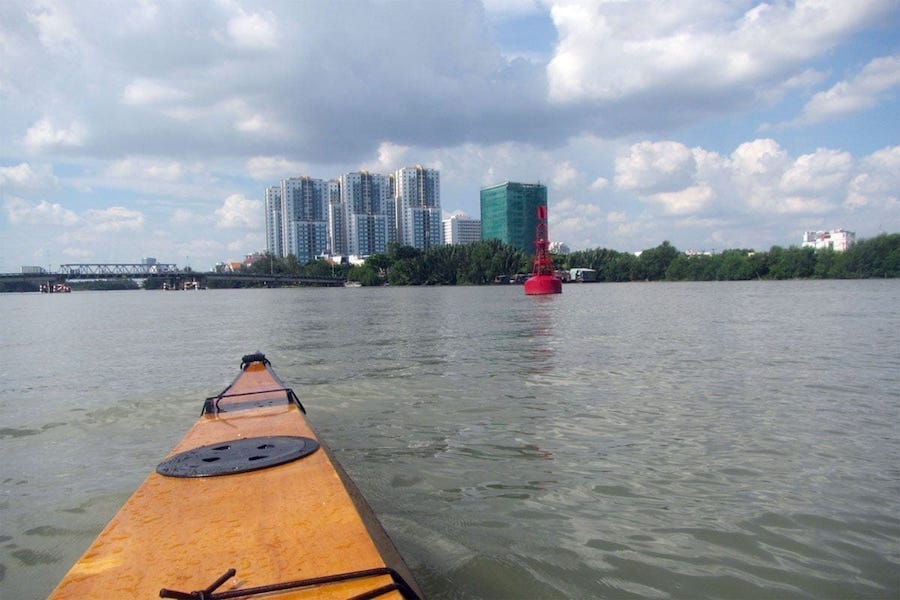
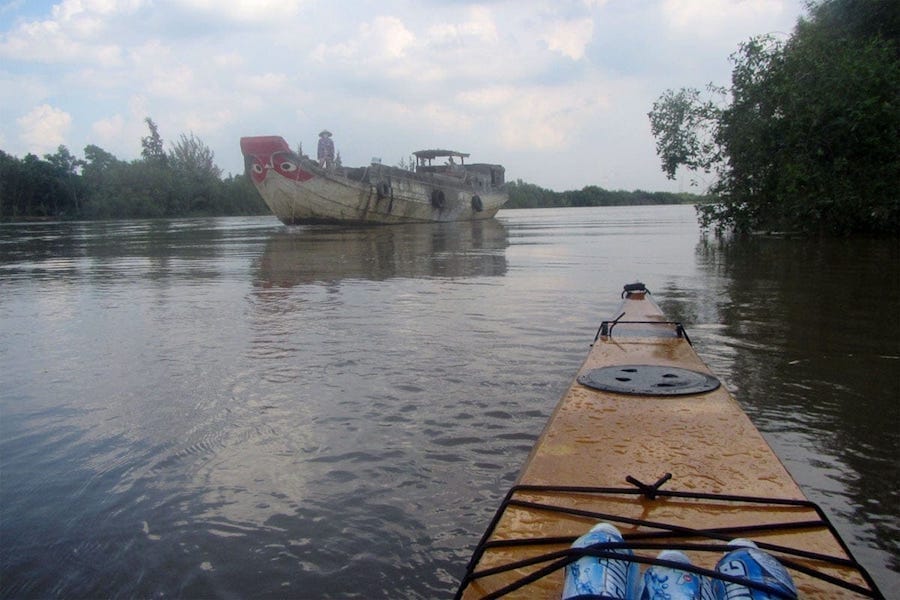
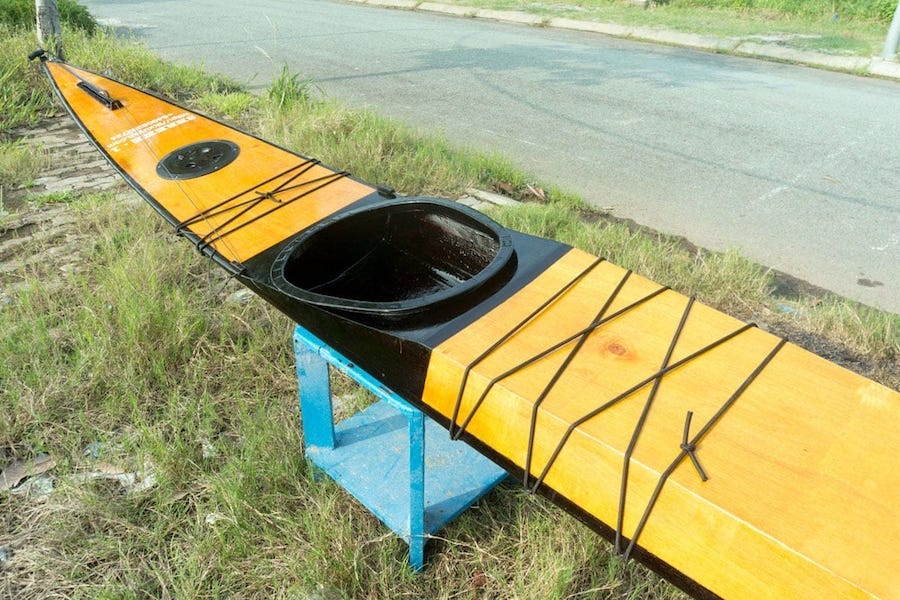
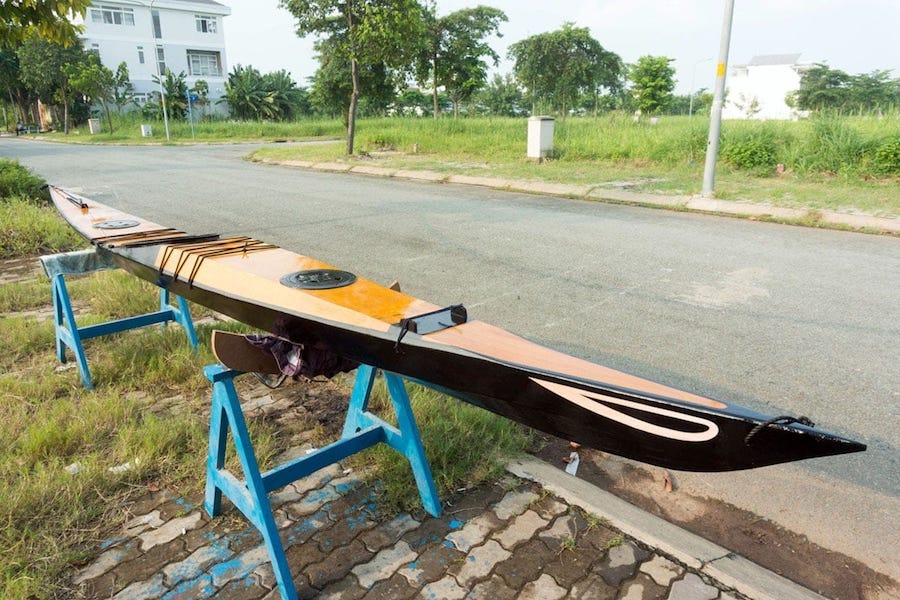
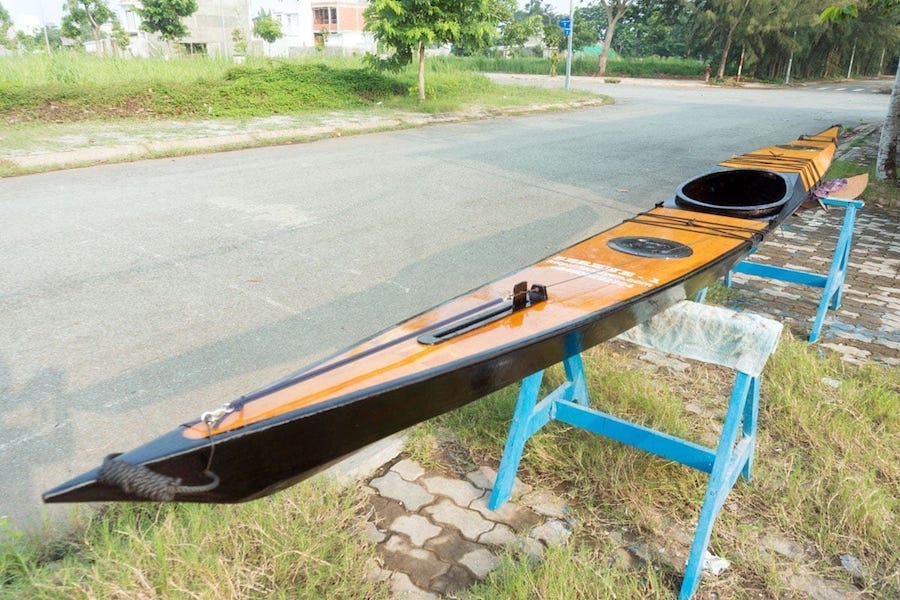
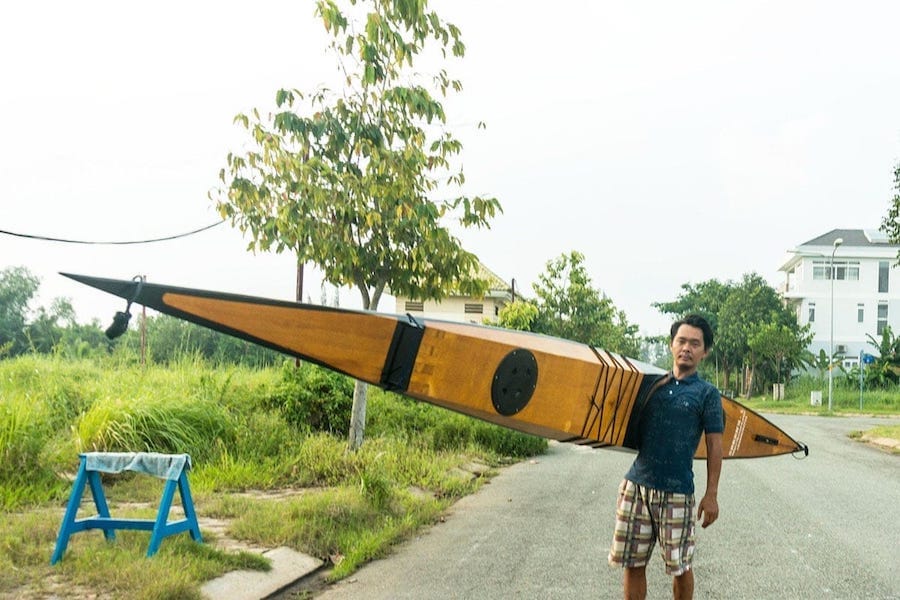
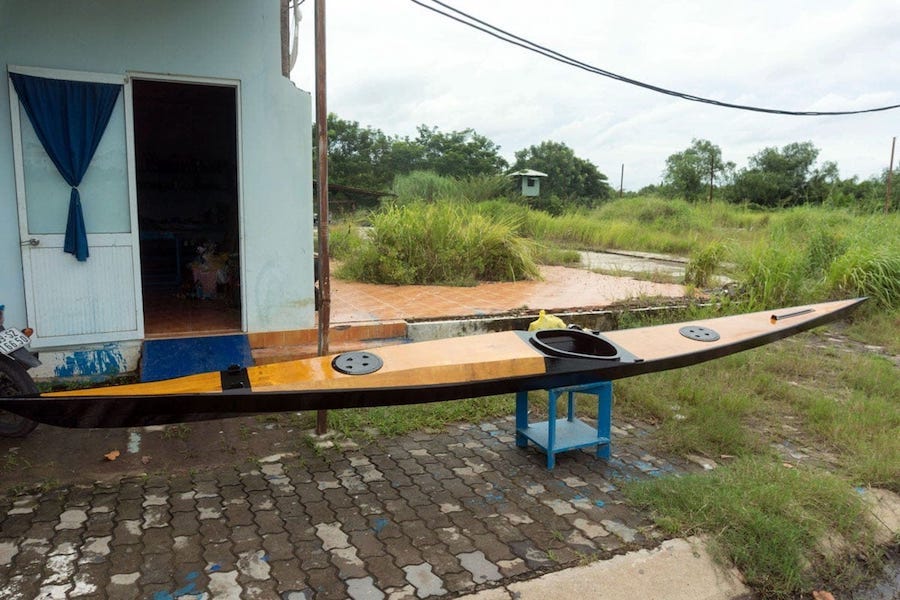
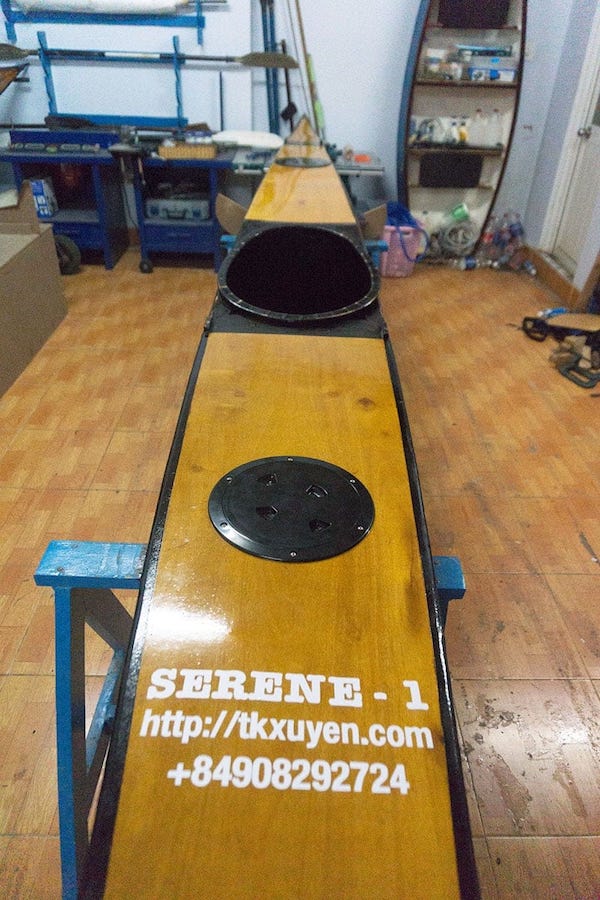
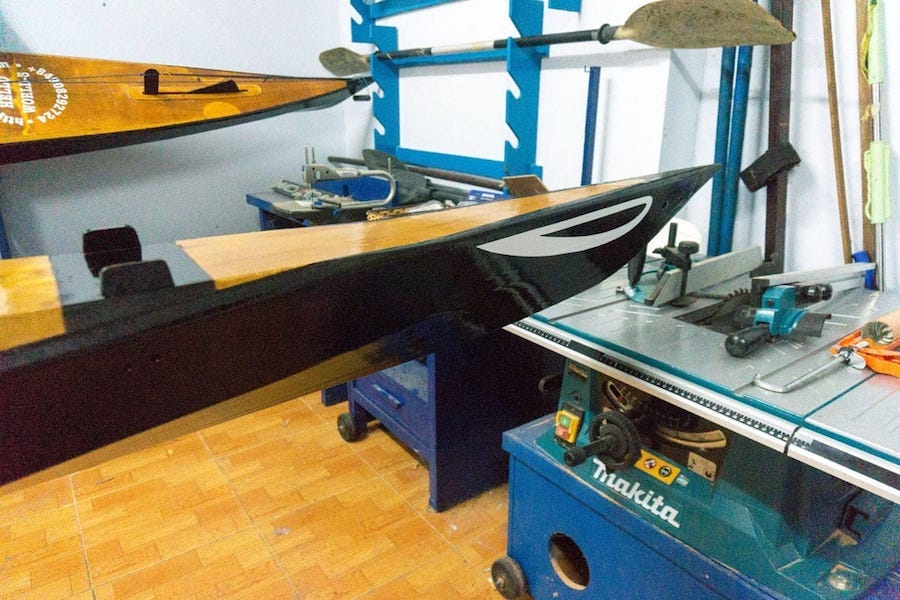
hello world – 3, part 16

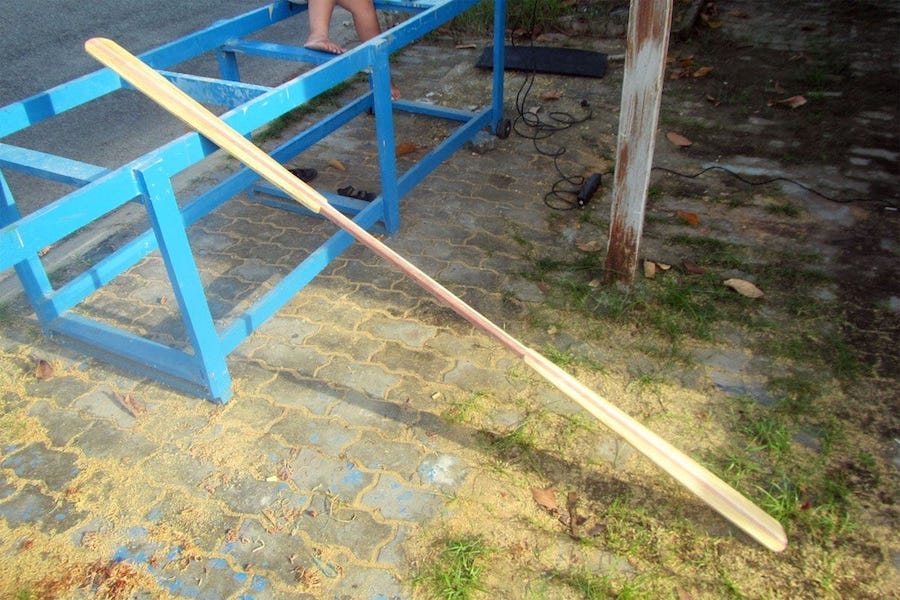
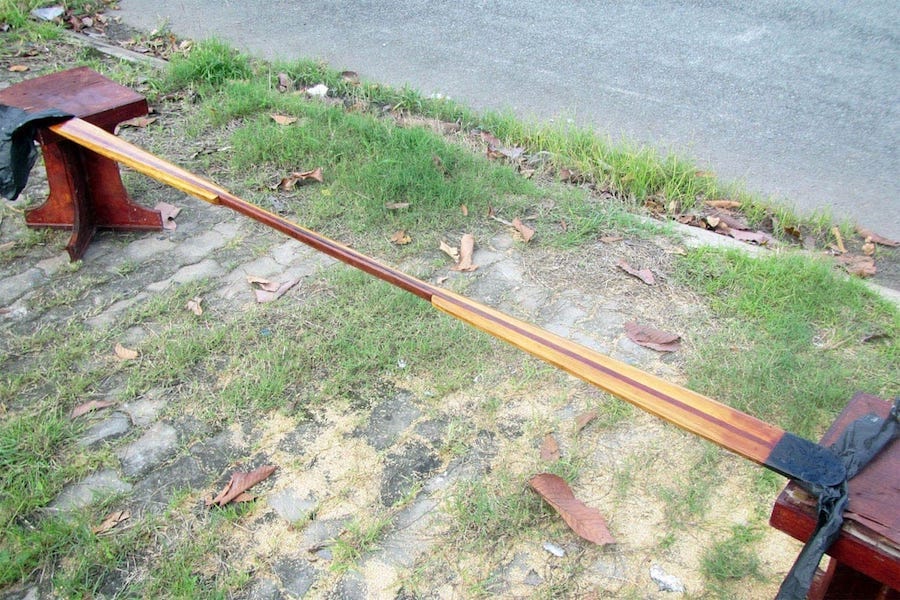
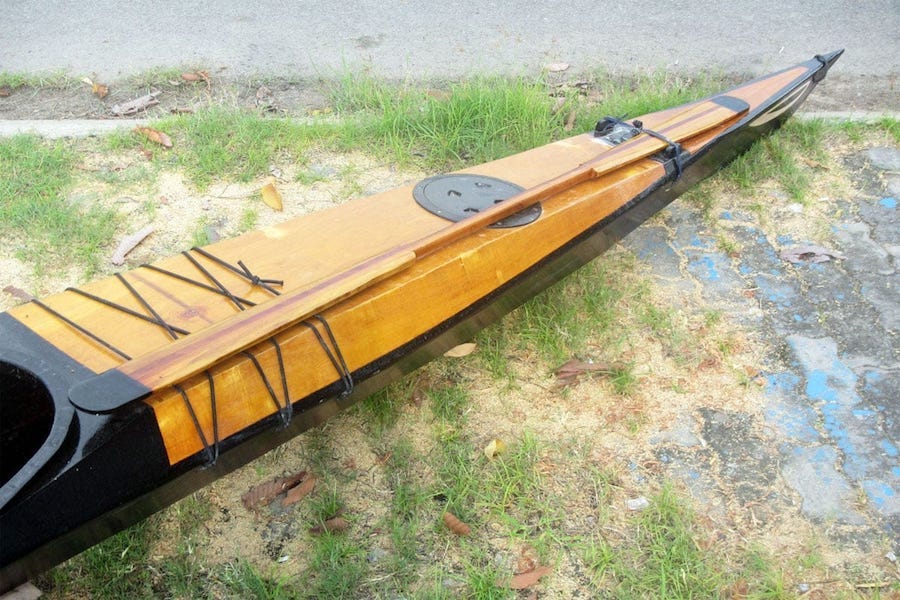
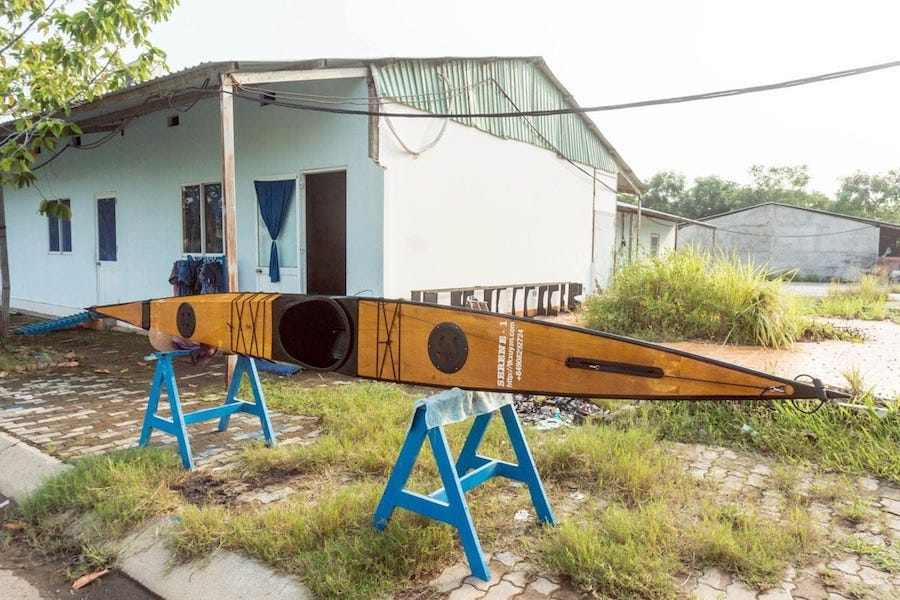
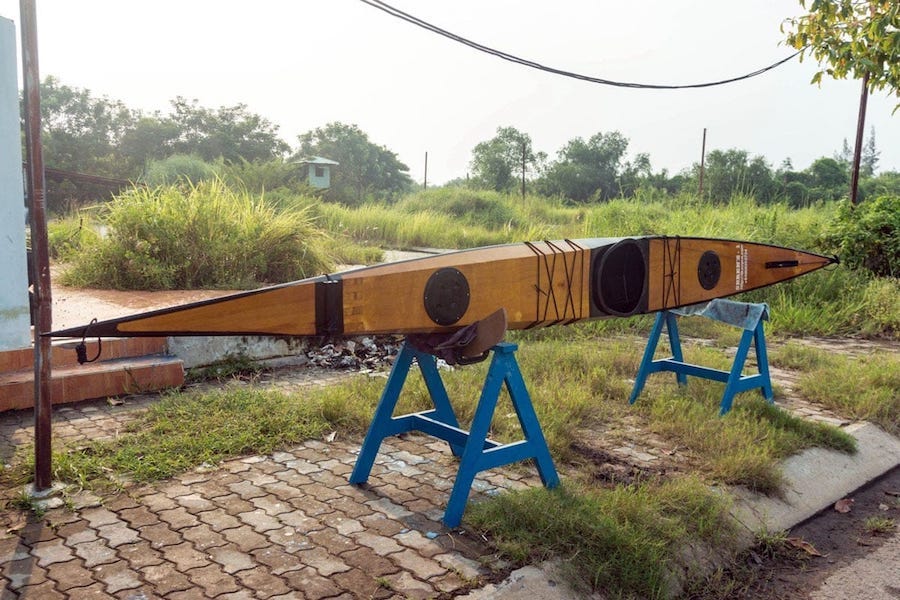
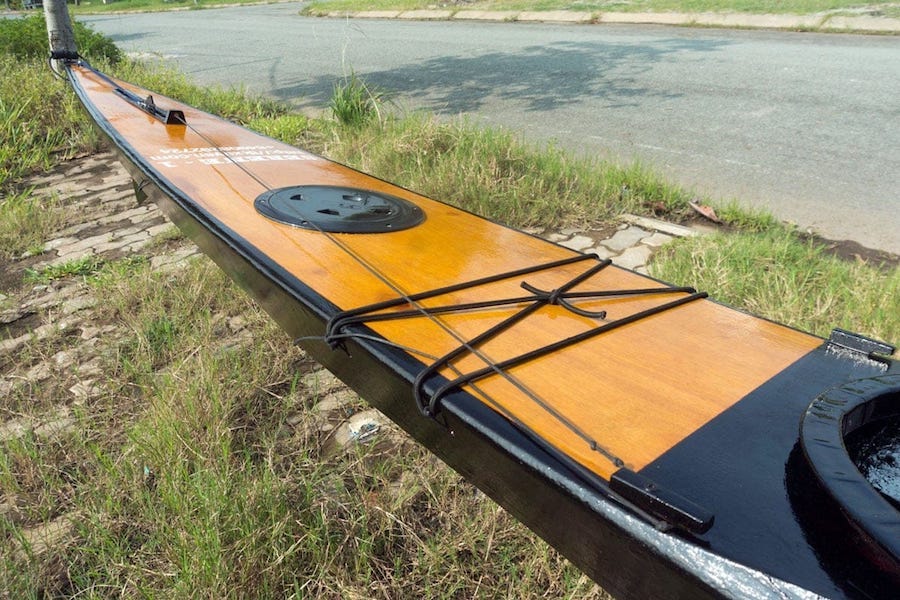
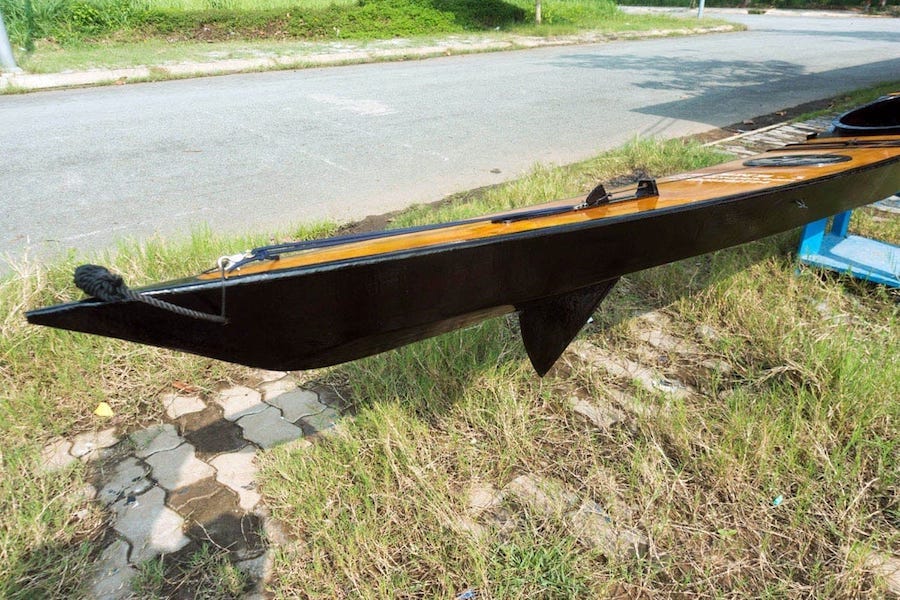
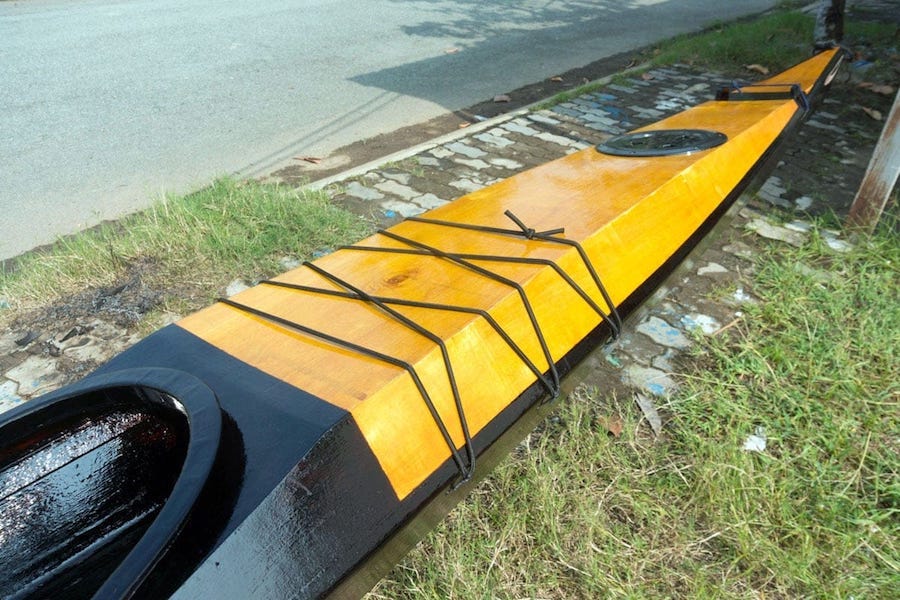
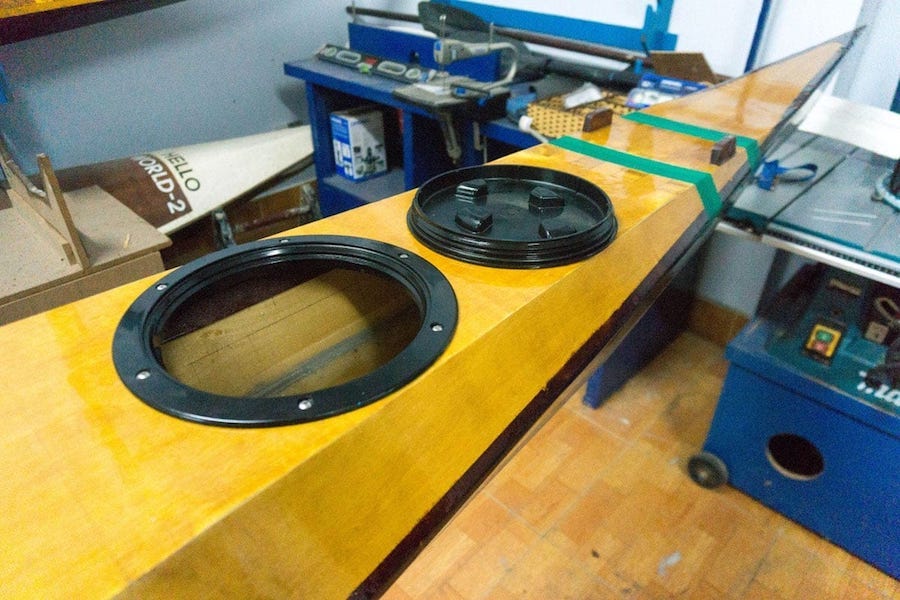
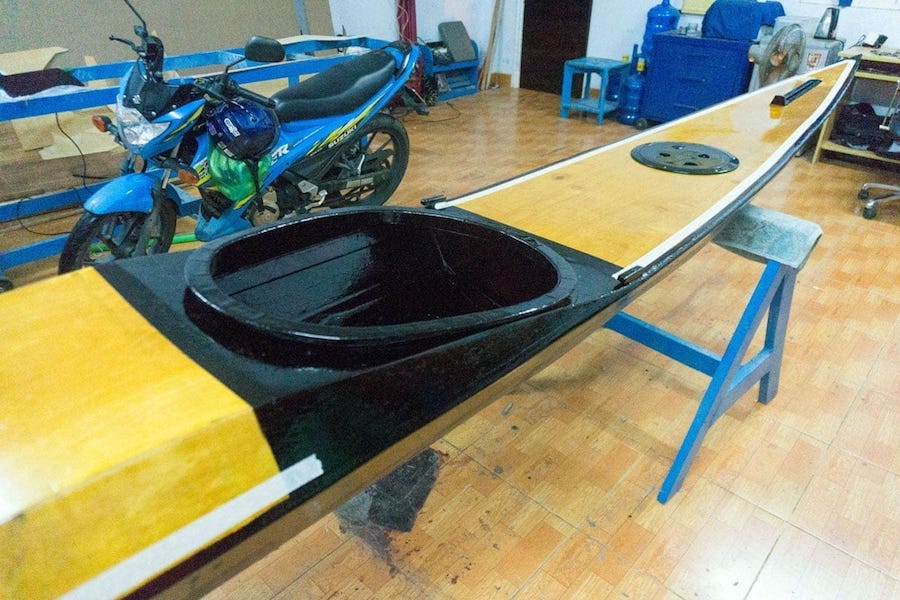
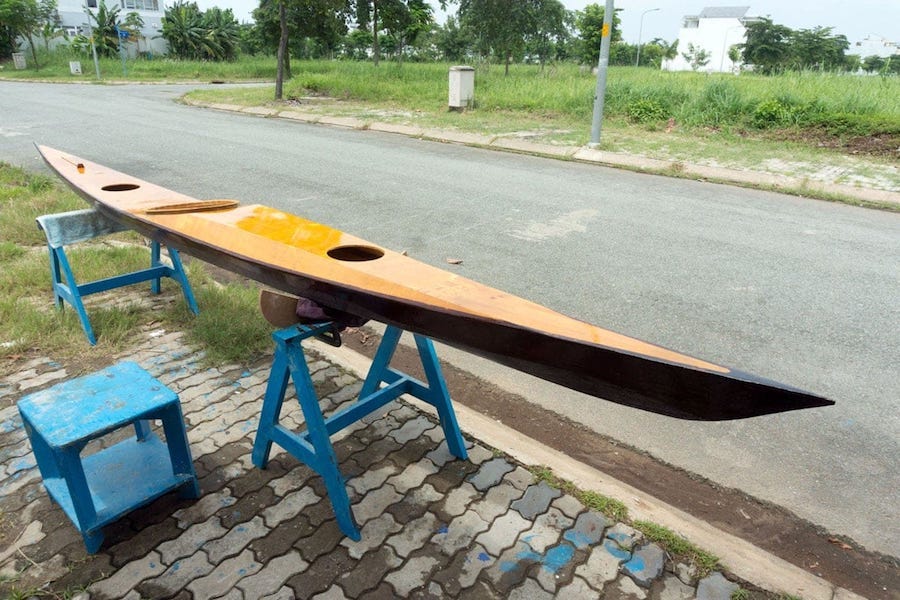
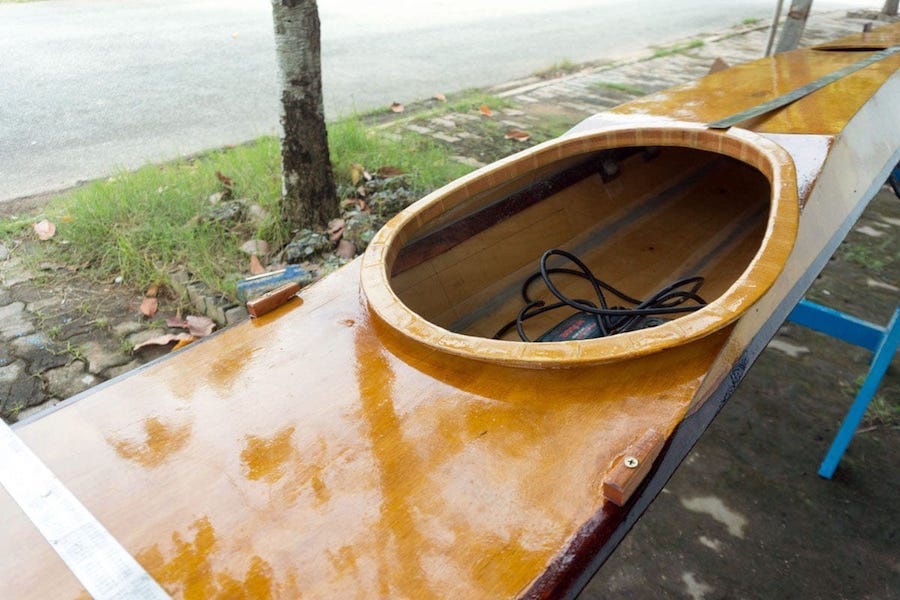
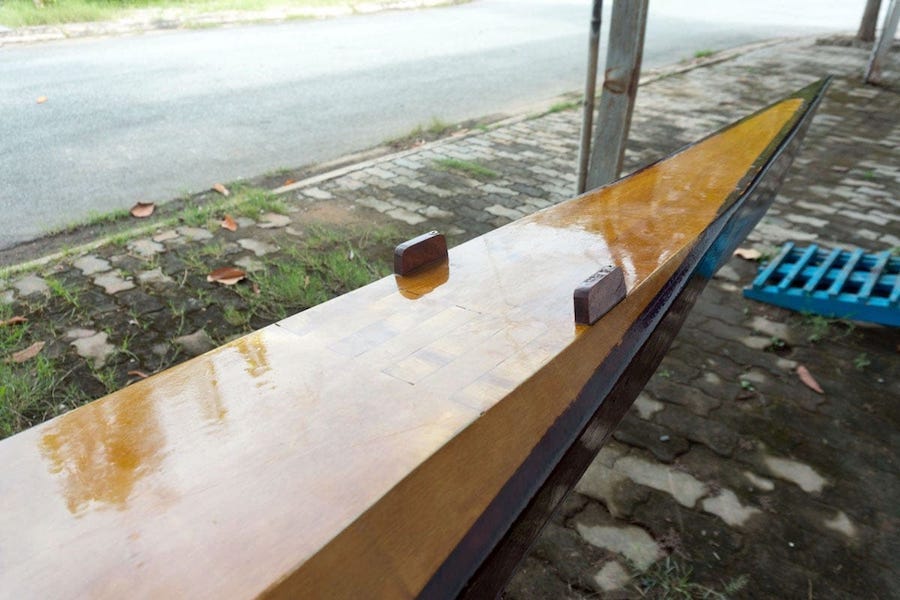
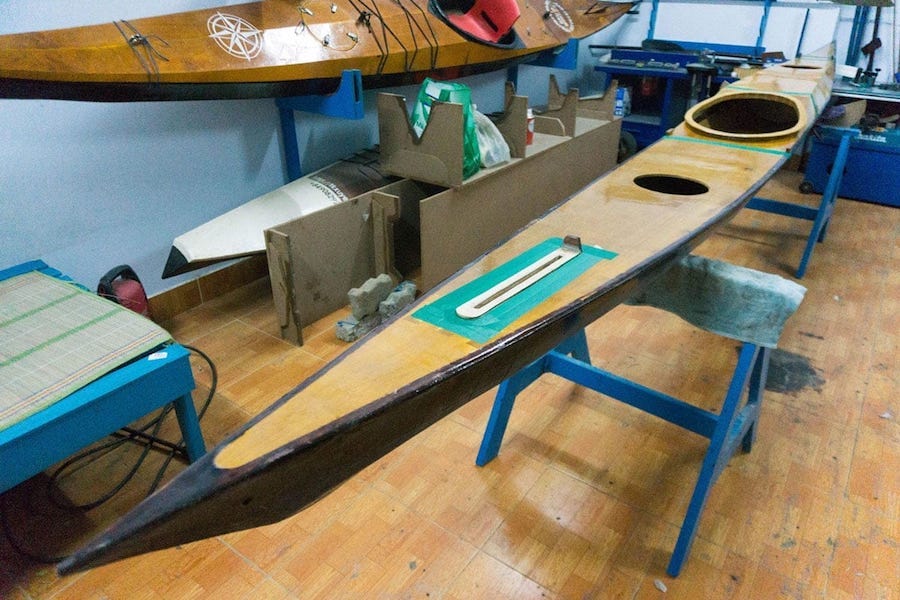
Finishing works on the mast base. Although sail is something not included in this “version” (intended to be installed sometime next year), the mast base need to be ready for now, before the deck and hull are joined together, or else it would be very difficult to work on later. It takes me lots of time shopping around to find the appropriate hardwares to be used as the mast base, and I found some good ones, all made of stainless steel (shown in the 3rd image below).

There’s absolutely no kayak accessories store of any kind in Vietnam whatsoever, so by “kayak hardwares”, I mean I was seeking for something that can be equivalently used on a kayak. Also, it’s very hard to find the parts, cause there’s no common “terminologies” used to name them. When I want to find something, I usually go to the vendors with a picture of the thing I want to have, and they would come out with something similar, that’s how the communications go on!

For the mast base, I glued a small wooden plate under the deck, right at the base position. The base is then bolted down through deck onto this plate, which in turn, glued to a supporting cross – shape structure linking deck with hull. That would be strong enough to withstand the mast and its sail. The mast would be stepped, and rotatable on the base, with four stays to hold it upright. Well, sail when you can, paddle when you must sounds to be very pleasing on my future journeys.

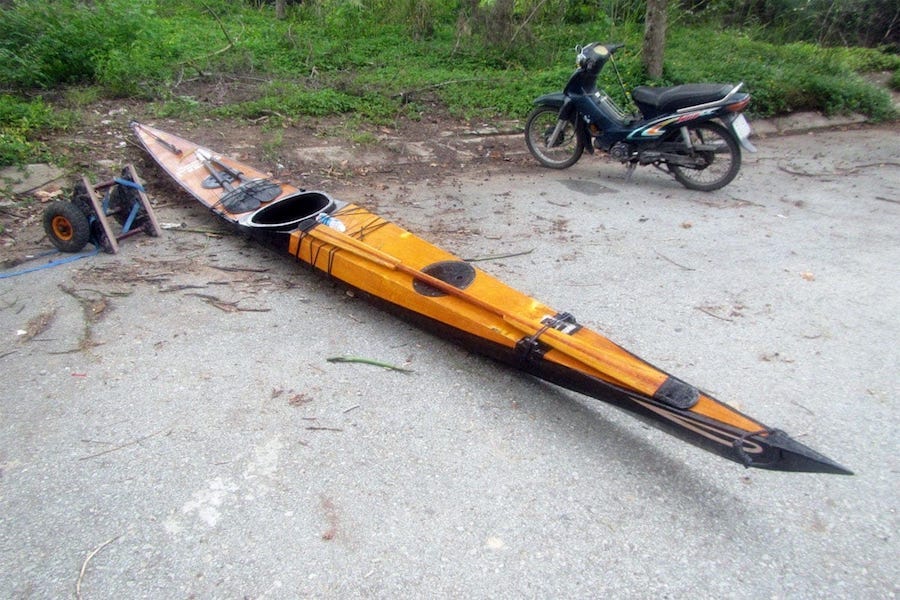
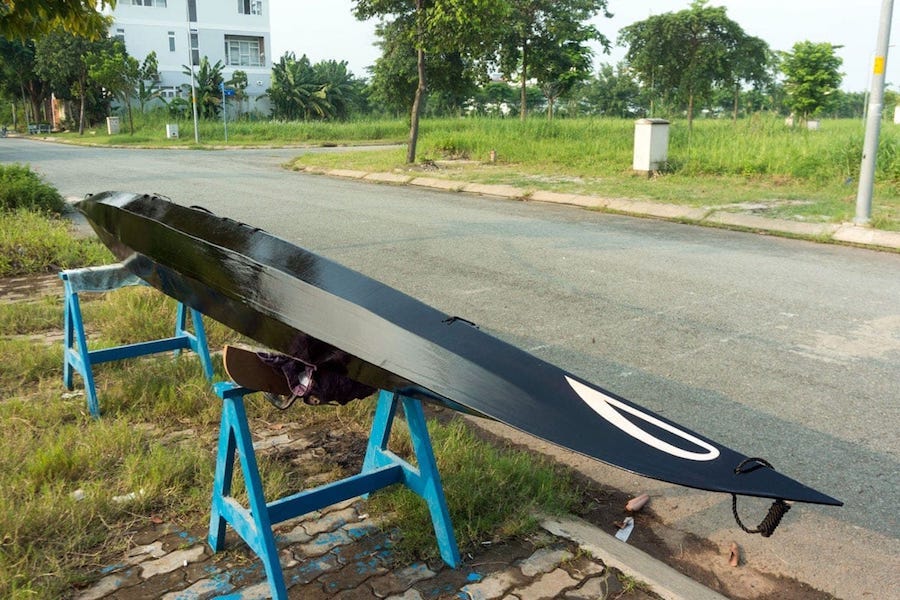
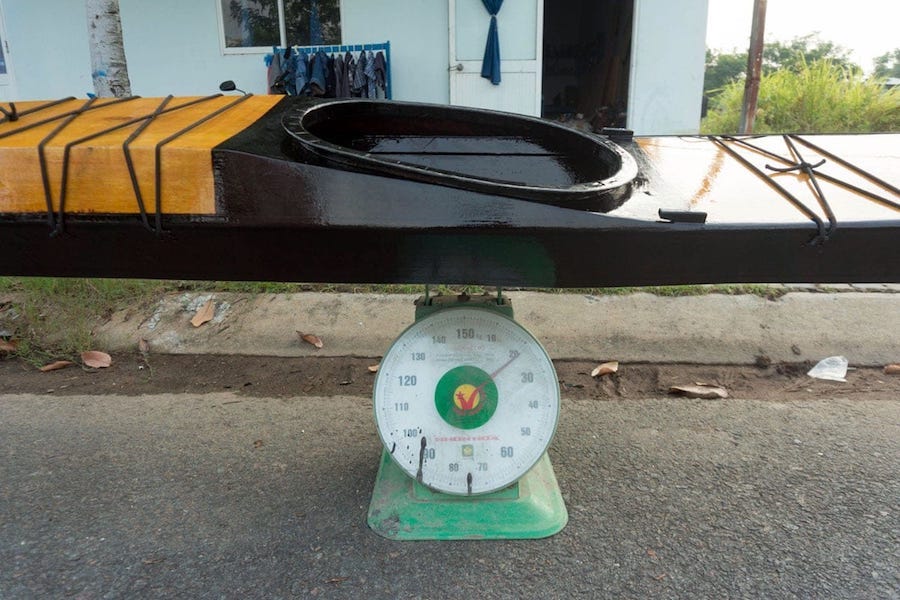
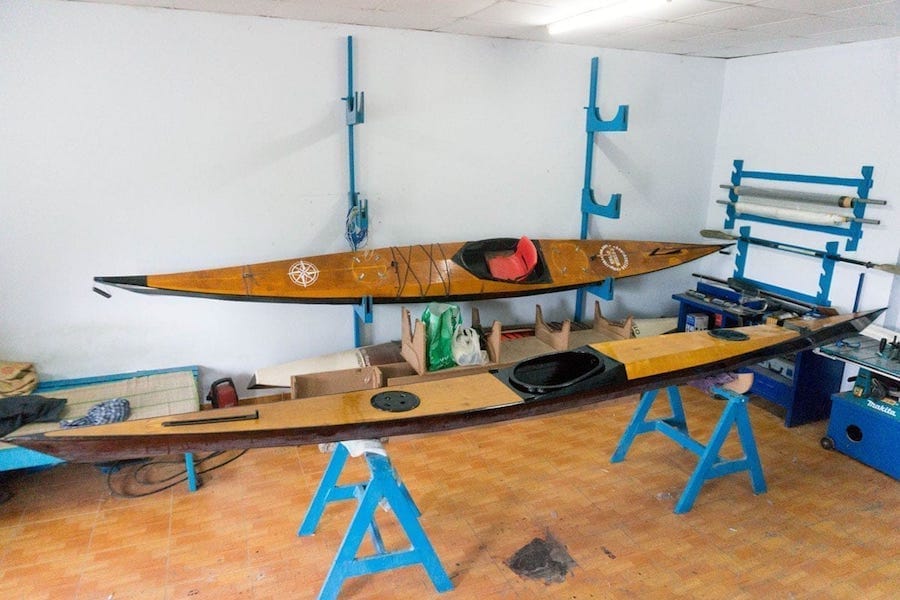
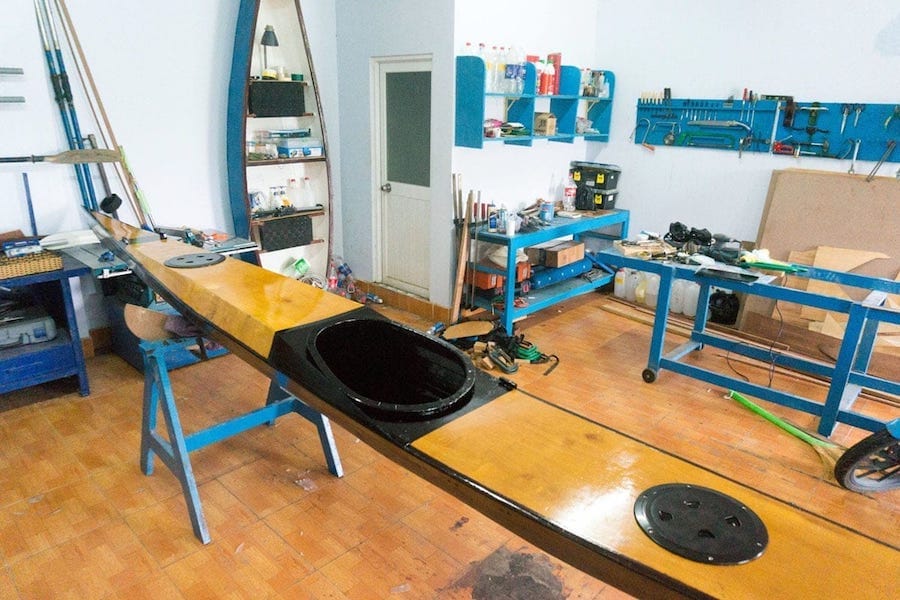
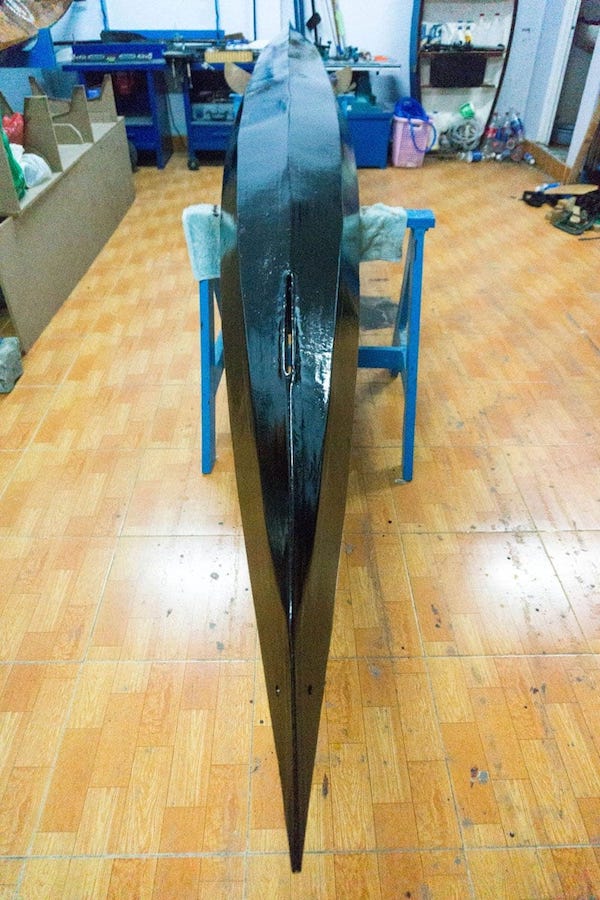
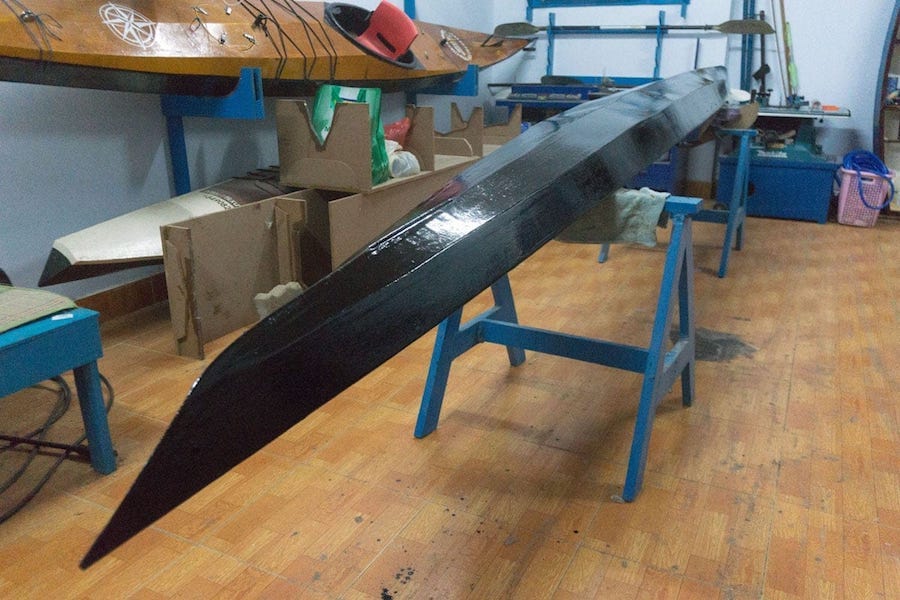
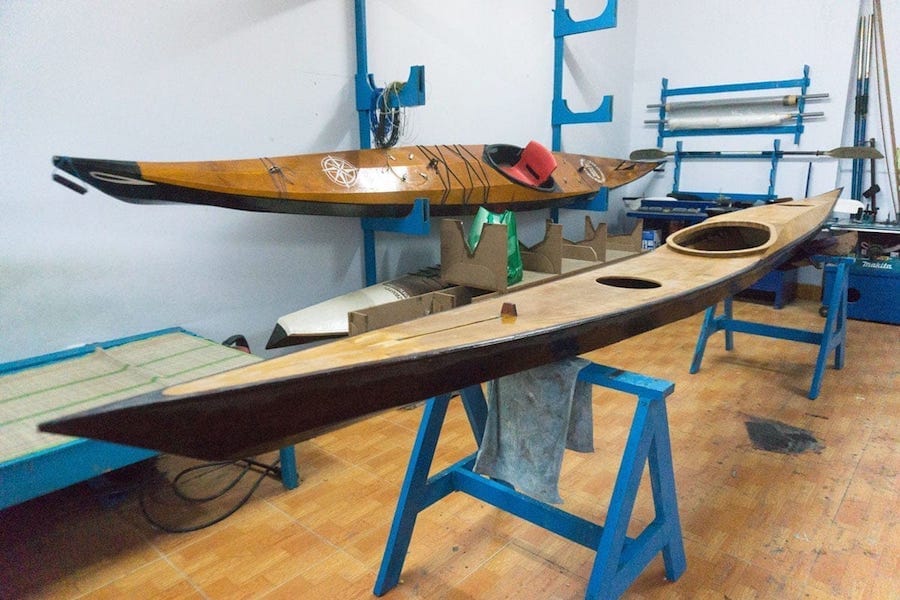
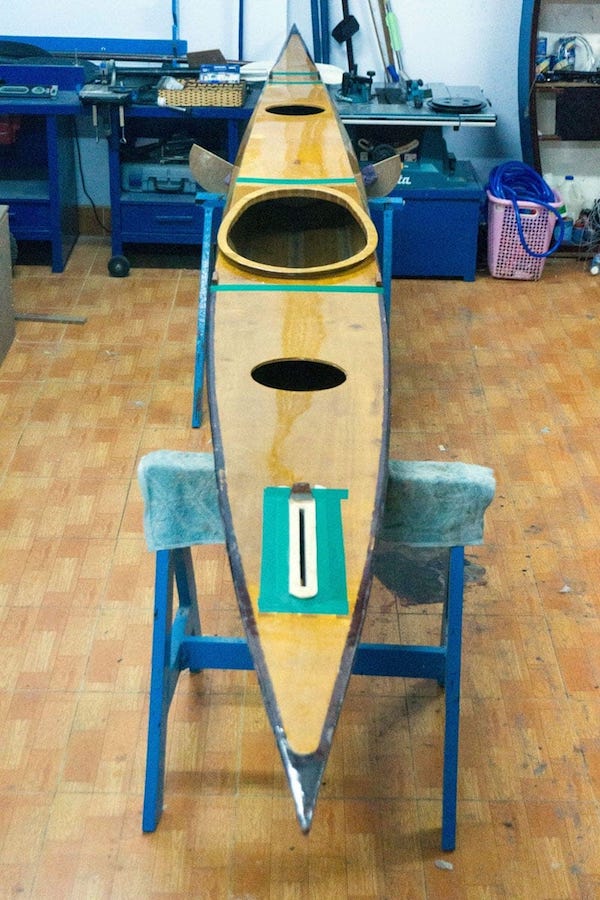
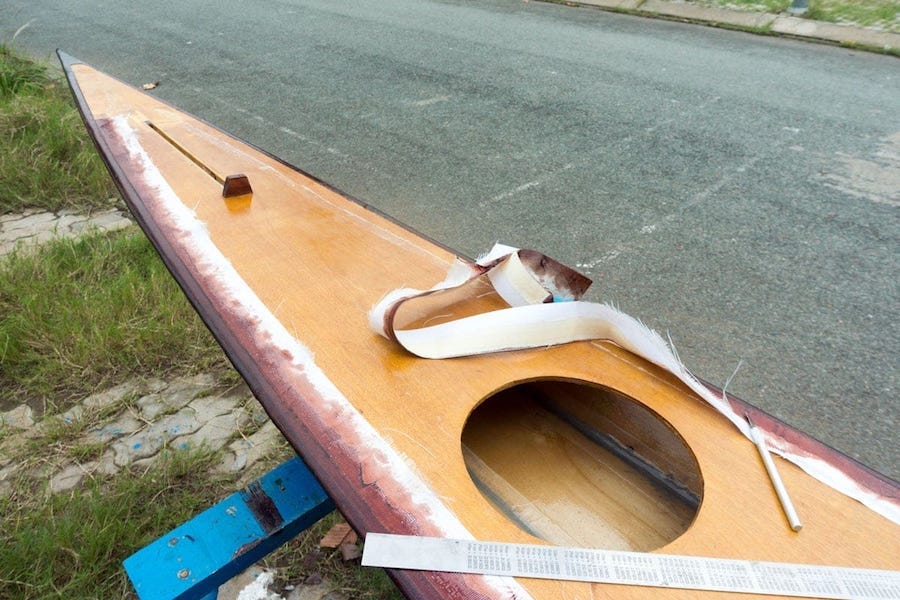
I covered the hull and deck’s internal sides with a thin layer of white paint. With bright white color, it’s easier to find things in the storage compartments. Then I slightly sanded and painted the bottom with two layer of transparent paint mixed with the puce pigment. A few more miscellaneous jobs needed before the two halves could be joined together. The 5th image below: test fitting the hull and deck, check fitness and some small adjustments here and there.

hello world – 3, part 15

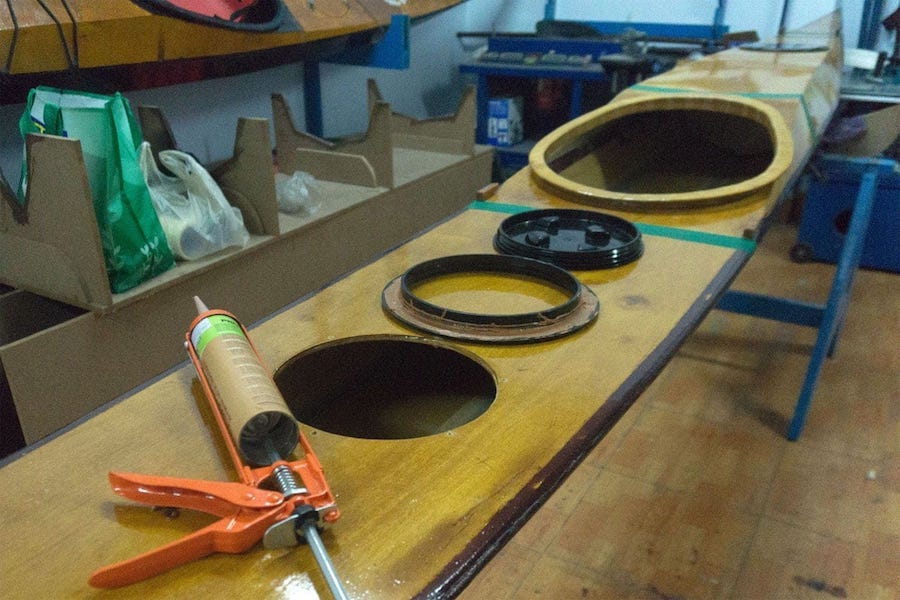
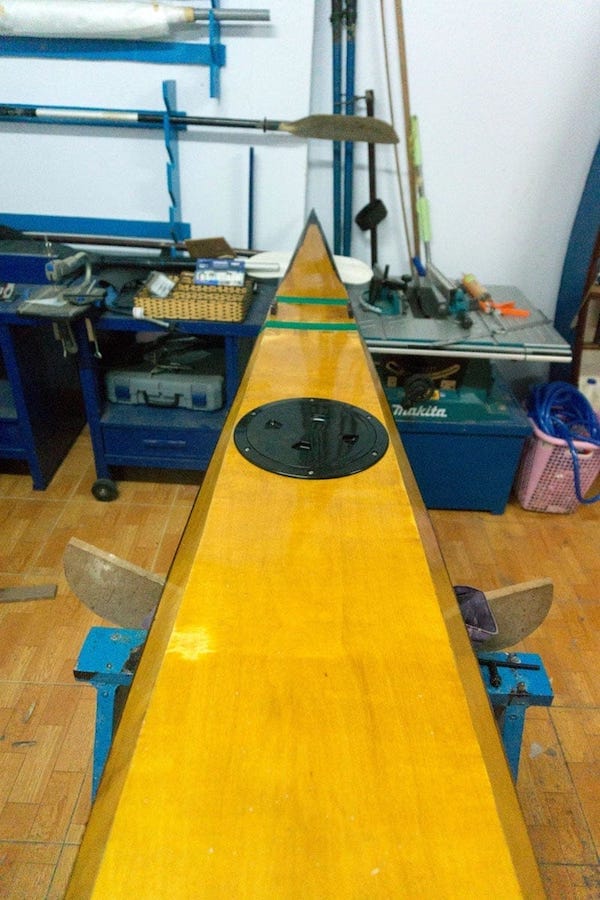
Continue to work on the hatches… In my thinking, using the hasp locks is a nice way to hold down the hatches: secured and easy lock / unlock, tight fit, no hassle of lines or bungee cords. But still I have a little concern that those small metal parts could affect the operation of the magnetic compass, which would be mounted nearby. But most good modern compass nowadays should probably resist well to those small ferromagnetic interferences.

Initially, I intended to install three locks per hatch, but after some considerations, I installed four. With three locks, only one failure could easily let the hatch open, while with four, it would take at least two failed locks to make the hatch unsecured. It takes me a few hours to check fitting the hatches’ grooves, then using 3mm – diameter bolts to nail down all the parts (all is made of stainless steel). The result is quite pleasing: all hatches is tightly fitted and well secured.

Next, I make some slots to install the rigging. These are intended for some “heavy – duty” lashing used for the sail. The idea is simple, but it took me some times to figure out how it works: drilling two small holes near each other, then pull a short piece of plastic tube through those holes, then fill the inside with epoxy putty (the tube is waxed to prevent it sticking to the putty). When the epoxy cures, pull the tube out, that would leave behind a “tunnel” to push your lashing line through.

I make only four “anchor points” like this, as it require some “strong holdings” to rig the mast and sail. The other deck riggings, I would just use some screws, bolts and bungee cords. I would try to keep the deck rigging to minimum, no perimeter lines, as I don’t feel very comfortable with a cluttered deck with too much lines and cords and other hardwares, the sail plan would add a bunch of them in addition later on. Also, I don’t really want to punch too many holes through the hull anyhow.

hello world – 3, part 14

Proceed on making the aft and forward hatches. I’ve changed my mind to make those hatches as simple as possible: all will be flush – deck, rounded hatches hold down by some hasp locks. (The plan proposes making a twist – lock one for the aft hatch, but that would take considerable effort to get done right). Also, I’ve decided to move the forward hatch further aft, to get the deck space to install some sailing hardwares (compass, blocks, cleats…) later on.

I’ve cut some plywood rings: one spacer ring, one lip ring, and two groove rings (to prevent water leaking in) for each hatch. The forward hatch is quite small indeed, 22 cm in diameter, and 34 cm for the aft hatch. Actually, I prefer shapes that can be geometrically defined, so abandon the egg – shape forward hatch as proposed by the plan. Next would be the simple task of glueing them together. Also, I’ve cut a slot on the aft deck section to get the skeg box through.

After glueing the hatch lips to the hull, I put small fillet lines at the seams before glassing the internal side of the lips. Then I apply several layers of penetrating epoxy (epoxy thinned with xylene) onto the hatches’ rings, grooves… before applying another layer of un – thinned epoxy, then would come the painting in a later phase. All these parts could easily wear out after some times of use, so they need some special cares. Then come the hasp locks, four locks per hatch.

I was thinking over about the use of hasp locks. Usually, on sea kayaks, they avoid metal part, cause it could get corroded by salt water. But good metal part plus proper maintenance can prolong the service life to years, before it can be replaced. The only problem with these locks is that putting them on deck could cause you some small injuries in self – rescue actions, e.g: if you’re thrown out of the boat in heavy sea, the locks could scratch your skin when trying to get in again.

hello world – 3, part 13

Finished most jobs needed on the hull part, next come the deck part, which has even more things to do. First is the cockpit’s coaming. With Hello World – 2, it was intended to be a river kayak, so I made the cockpit very spacious to allow a comfortable seat. A sea kayak has a much tighter cockpit, to prevent water pouring in, with the coaming to fit a spray skirt, the thigh braces, the cheek plates… It’s less comfortable, but it just has to be like that, a “keyhole cockpit”.

I cut 5 rings of plywood, then join together to make the coaming. The upper 2 layers will be the coaming lip, and the next 3 layers as the coaming riser. Here, I choose an approach which differs from the plan’s suggestion (using a thin wall of plywood placed vertically as the coaming riser seems too fragile to me). I used the Dremel tool to bevel the edges, so that glassing would be easier later, but also the bevelled edges create more space to fill the putty in when joining the coaming to deck.

The plywood pieces are so delicate until they’re joined together into a rigid ring. I recall when first ordered the 5 mm plywood sheets for HW – 1 & 2, they’re actually measured at 5.3 mm. This time, I ordered 4 mm sheets, but they turned out to be 3.75 mm indeed when I checked with a thickness gauge. Once again, no standard can be assured or trusted here in Vietnam, and lots of cares, compensations and adjustments have to be made, if you want your quality under control.

The coaming is then glued to the deck, with putty filled at the seam line. The edges are bevelled so well that glassing is easy and smooth. I apply the same kind of epoxy mixed with color pigment, wait for it to cure, then slightly sand it, then apply another fill coat. The cockpit coaming now is ready for painting. There’s quite some epoxy messing around, even though I’ve used duct tape to mask, cause I still can’t find a good type of duct tape that won’t let epoxy & paint leaking through yet.

hello world – 3, part 12

Decided to try a new technique when glassing the hull’s external side. I add some color pigment into the epoxy used for glassing (and later, also to the transparent paint when painting the bottom). The pigment I used has a dark brown with a bit of reddish wooden shade. If this technique works, then the lower part of the boat will have a very deep brown and reddish, semi – opaque, lacquer like finish. And if the technique fails, I’ll paint the bottom in black.

My idea is to contrast the hull with the deck: deck will have a brighter light yellow wooden color, and hence the whole boat would have a wooden outlook, especially the upper part. But it’s too early to say at the moment, I don’t have too many choices on the painting products (e.g: wood stain) available for wood working here in Saigon. Like the internal side, I glass the seams with 6 cm – width bands of bias – cut fiberglass, before glassing the whole bottom, all with epoxy mixed with the pigment.

The result is not totally satisfactory, but quite acceptable, the dark puce (a little bit too dark), lacquer – like shade is pleasing, at least to my eyes. Wooden working boats in Vietnam until today are usually oiled (not painted) in this color, it creates an “endurance feeling”. I applied one layer of epoxy fill – coat, then sanded the hull thoroughly with 80 grit sand paper and my random orbital sander, then applied another thin layer of epoxy fill – coat, lightly sanded again at 120 grit.

Next would come two layers of transparent paint mixed with that same color pigment. I’d lost all my confidence with most painting products I could find here, my previous experiments with painting in HW – 1 & 2 were not satisfying at all. That’s why I came up with the decision to use color pigment in epoxy, then use a kind of good top coat called: 2K gloss, it’s transparent, when mix with a dark pigment, it can offer a good protection to the epoxy layers underneath!

hello world – 3, part 11

Continue to work on the skeg… but something I want to tell, not directly related to boat building though. A few days ago, I had a dream, a strange thing cause I often have good sleep and rarely have dream: a private house, a reading cabinet with lots of books, I found a small notebook hand – written in French, black ink, and annotated in Chinese, blue ink. I was skimming through the first few pages, which have drawings on boat construction, then I woke up.

Can’t remember much of the dream, except for a boat silhouette on the first page, a big phrase as notebook title: Jiang Long, and smaller Chinese annotated text underneath: 降龙 (Vietnamese phonetic transcription: Giáng Long), obviously it’s the boat name which means: a descending dragon. Well, strange enough, at least I’ve never thought of such a ‘flowery’ boat name. What a pity that the dream was just a hint and didn’t tell me more on boat construction though!

Let quit all night dreams and day dreaming, and let get back to work now! The Dremel Multi tool comes with a ton of accessories, including a router base with some miniature router bits, small enough to operate well within the 10 mm gap of the skeg box. I use a small round bit to bevel the edge of the skeg box before glassing (glass doesn’t like sharp edges though). Then I carefully apply a layer of glass over the edge. The skeg box job is properly executed and looks really great!

Some more miscellaneous tasks before moving to the next step: sanding the hull and deck’s external sides, adding two more thwarts at the bow (to better match the hull’s curve with that of the deck, for later, it’s gonna be easier to join the two parts). Thwarts at the bow would also help supporting the mast base, but for now, I have not yet come up with a good idea on how to implement the mast base yet. Just leave it there to a later phase, and go back to the thinking box!

hello world – 3, part 10

Next comes in the skeg, a critical element of any serious kayak (you can go without a rudder, but better have a skeg for troublesome water and weather). The region I go paddling is extremely muddy, mud frequently gets into the skeg box and jams it, so I need a design that is as convenient for maintenance and repair as possible. After lots of thinking, I come up with the idea of an L – shaped skeg placed in a through hull, through deck well, controlled by a line and bungee cord.

This way, cleaning up and maintenance could be done with ease. I also make an extra skeg blade, carried with the boat, so that if the main skeg brokes, it can be replaced in the field with minimum tools. This is a lesson learnt from Hello World – 2, where the skeg, though functional, it’s often jammed and can’t be controlled while you’re already on the water. This is very important since you would be going virtually nowhere with lots of weathercrocking and without a working skeg.

I use my MultiMaster oscillating tool to cut the slot for installing the skeg box, which does the job nicely and cleanly (the tool is my only “Made – in – Germany” one, hence expensive, the others are all made in Malaysia, China). The box will be clamped between two small thwarts bridging the port and starboard inwales. Then I putty – fill the inner joints, then apply one layer of glass over them. The harder part would be glassing the outer bottom joint, which has to be done very precisely and carefully!
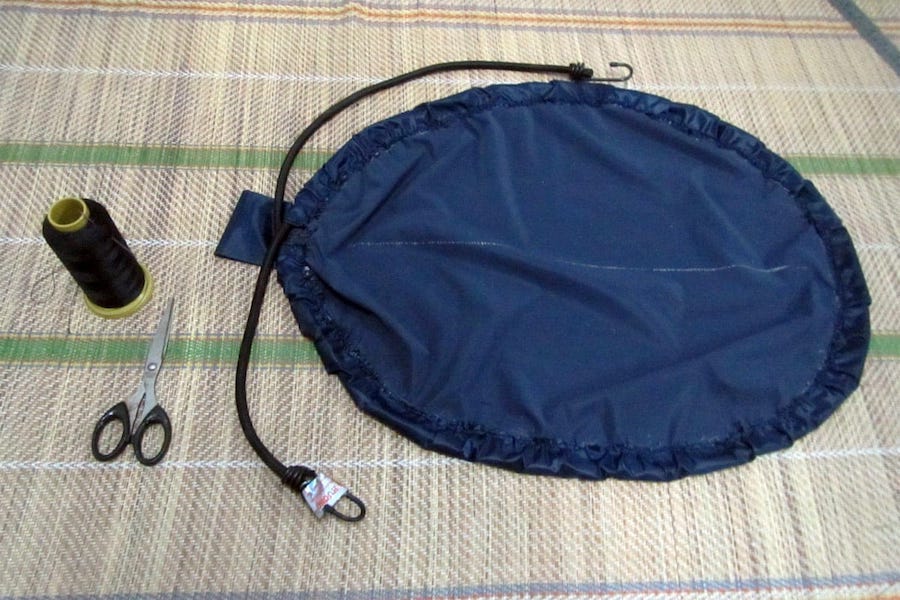
I made the skeg blade extra large, approximately 16 x 38 cm, the previous one of Hello World – 2 (14 x 32 cm) didn’t seem to be large enough, the boat still “shakes” a bit in turbulent water. More over, my plan is to equip HW – 3 with some kind of sail at one point in the future, so hoping that a larger skeg would provide more lateral force to counter balance the pulling force of the wind, in a relative sense, similar to a sailboat’s centerboard, but placed much furthur aft.

hello world – 3, part 9

Before installing the inwales, I expose the hull and deck into the afternoon tropical sunlight for a few days, for the epoxy to completely hardened. Noticed that for the currently used epoxy, it takes time (several days) for the “amine blush”, a wax like substance, to appear on the surface of the cured epoxy, like drops of dew. I need to wash & brush them with hot water & soap thoroughly, then giving it a slight sanding, then I would be able to install the inwales.

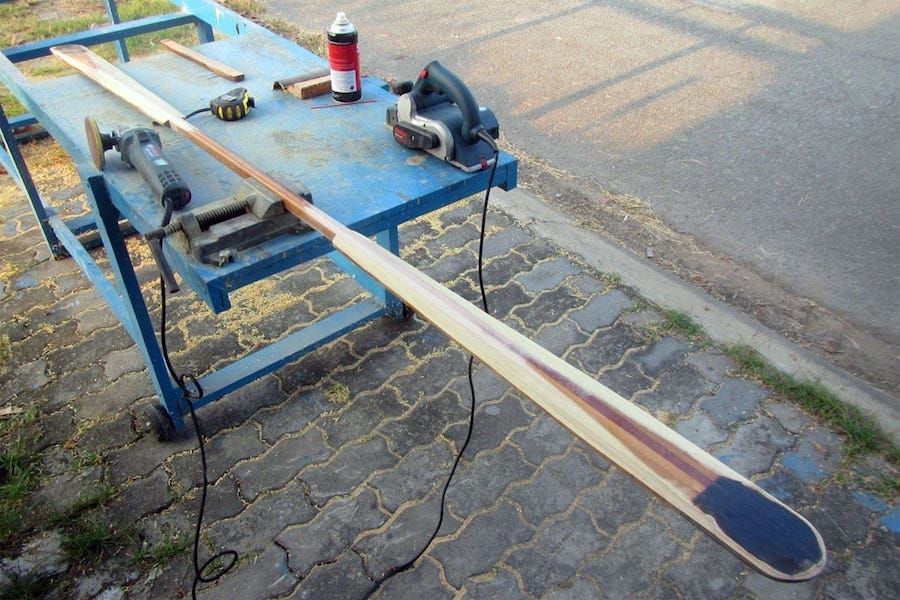
I cut thin wood stripes, 3 m long, 1 cm thick, and join them to the 5.5 m length of the inwales. The inwales just serve to join the hull and deck together, and as a frame to install the deck rigging hardwares later, so they don’t have to be too thick and strong. Next is to bevel the inwales, I used my table saw to make a 45° cut, then split cutting the two ends into halves, for it to easier to bend into the bow & aft curves. Later, I would use the angle grinder to bevel it more precisely.

Next, fitting the two forward and aft permanent bulkheads would stabilize the hull into it final shapes. The plan places the two bulkheads about 1.45 m apart, but my legs are not that long, I decided to reduce the cockpit size to 1.25 m, that is also counted the space reserved for a small bilge pump. It happens that the 3rd temporary bulkhead is approximately at that position, so I just use the temporary bulkhead as the permanent forward bulkhead, plus a newly – cut aft one.

The bulkheads fit well with some minor whetting on the edges, I decided to glass them on one side (the cockpit side) to prevent water leaking through. Having noticed that the curve profiles of the hull and deck (along the gunwales) slightly differ with each other, I’m gonna install some temporary spacing thwarts into the hull, to make it better match with the deck. Those are just temporary and would be removed once the two halves are joined together.

hello world – 3, part 8

Noticed that the hull’s plywood scarf joints happen to be closed to the seat and (sail) mast base position, I decided to reinforce those places with a narrow (20 cm) stripe of glass. Also noticed that a small paint roller helps distributing the epoxy more even and quicker compared to a brush, though it does absorb (and hence waste) a considerable amount of epoxy. Saigon this season is so hot, all glassing need to be done at night, precisely and quickly.

Next is glassing the hull’s seams, and internal glassing for all the hull and deck (I don’t glass the deck’s seams, feeling that one layer of glass is enough). I use epoxy with the B5 hardener for the seams, it’s slow curing and somewhat elastic nature is more suitable for all glueing, joining, better bonding to some tropical hard wood (compared to the TETA). And I use TETA for the overall glassing, its hardness helps creating a rigid external shell, and it is also cheaper to be used in greater quantity.

I can’t find fiberglass tape suitable for boat work of any kind here, so decided to use bias – cut fiberglass (cut along the diagonal line) instead. At this point, I tried to bend the side bilges a bit, it’s really really tough, with the internal glassing only (the external is not yet on). Feeling pleased with my epoxy and glassing work, and by my estimation, I’ve put about 1.8 ~ 1.9 kg of epoxy on (for both the deck and hull), I’m now counting the epoxy to help reducing the final boat weight.

Next is installing the gunwales (the inwales), just learnt that these are British English, for American English, it’s called the ‘sheer clamp’. The plan suggests joining the hull and deck using fiberglass tape, but since I have no such, and since I have less confident in that method, I resort to the known technique of using the inwales instead. This gonna be a bit tricky, since the inwales need to be bevelled differently along their length, the good side is that there would be little difficulty in bending them.

hello world – 3, part 7

The 511 putty comes in 2 parts: the resin and hardener, both premixed with a certain kind of thickening agent (filler), one has a dark gray and one has a yellowish color. Just stir them until you have a consistent light gray, highly viscous mixture. Since the hull and deck are tied to the framing boxes, I can easily slant the boxes to get the putty cured into the exact position, resulting into very clean seam lines. No need to use duct tapes to mask the lines though.

Fill the seams, wait for the putty to cure, cut the wires, then fill the remaining, repeat that for both the hull and deck parts. My precautious nature steps in as always, I made the seam lines of the hull much bolder and thicker, while the deck has very thin lines only. It’s easy, but it would take a few days to finish all these glueing tasks. After this, I would dry fit the two halves, to see if they match each other well, and to produce an initial impression of the final product also!
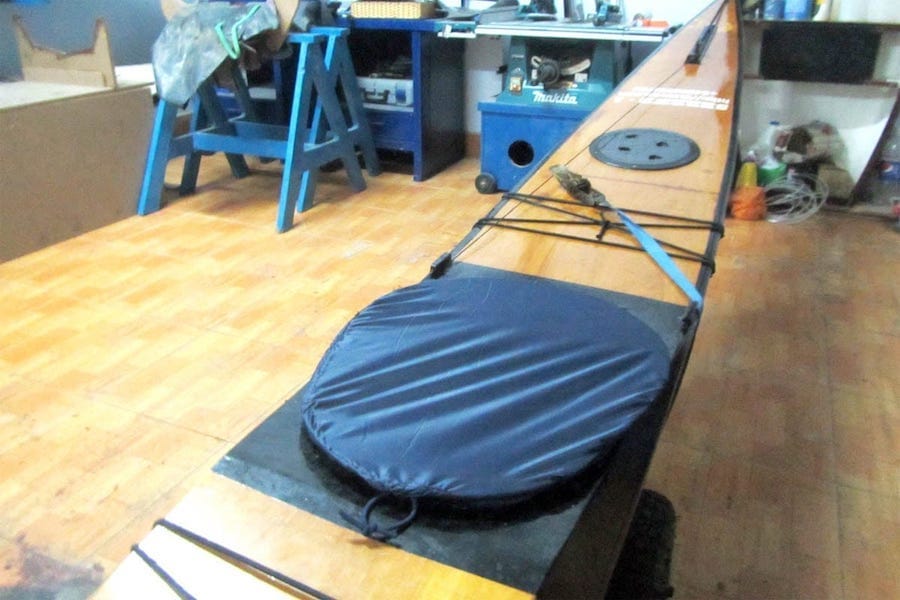
I recall glueing the seams of Hello World – 1, my first build. I used a small masonry trowel to apply the putty, about 1/2″ thick, and epoxy is all messing around. Now it’s much tidier and cleaner, and I don’t even need a pair of gloves and just work with my bare hands. Well, lots of little know – hows, skills and experiences that you could never learn if you don’t just really do it. About this time last year, I was so doubtful if I could even finish myself a boat, now it’s (almost) the third!

A bit off topic here, but the thinking has been in my mind for a long time. About educational methodology, they’ve been arguing all the time, about knowledges, information, attitudes, practices, etc… But for me, it works a different way: if you want someone to build a boat, show him / her the immense beauty of the sea. Similarly, you don’t have to learn all those maths and algorithms to become a good coder, seek the inspiration in something else, e.g: the art of hand writing calligraphy!
hello world – 3, part 6

The game of paper cutting and glueing again! The efforts of building all those framing box and temporary spacing bulkheads now come into fruition, seeing the bilges fit perfectly, not any noticeable gaps between them. All temporary bulkheads fits well to the hull and gives you an assured feeling that the boat is taking a good shape. It’s a real pleasure to see things properly executed and the building quality is under your control.

I use smaller wires and drill smaller holes into the bilges’ edges, as the 4 mm ply need less fastening force compared to the 5 mm one. The ugly thing about the “Stitch and Glue” method is that there’re so many small holes to be drilled into the hull, about 250 for this Hello World – 3, and later, you would need to check and re – fill each of the holes before glassing, a tedious task indeed. The bevelled edges leave a good space for putty to go into, making very clean seam lines.

Contrary to my initial thought, the sharp edges stand together pretty well, they need some adjustments, some dots of Cyano Acrylate glue here and there, and some little wires fastening too. But overall, both the deck and hull part shapes are very satisfactory to me. My boat building workshop has been becoming too overcrowded and cramped with three boats, and many kinds of machineries, to get some good shots showing off the boat shapes. Oh, those gorgeous curves and shapes!

I proceed slowly as I would have little free time this week: check the geometries, fasten the wires, then glue the seams. I use a good local epoxy putty called: 511. The 511 came into my favor since it has long curing time, don’t have to worry about epoxy burning in pot anymore (it’s a real problem in hot tropical climate). It also has a constant viscosity giving you a consistent, predictable working behaviors (unlike the fillet I manually mixed with wood flour, which differ from time to time).

hello world – 3, part 5

The S & G Night Heron plan calls for beveling the bilges’ edges, and I follow it exactly, the bevels will help forming the boat shape more precisely, and also help to strengthen the putty joints. At first, I intended to use my routers to do the edges’ beveling, but switch to the frequently – used angle grinder instead. With the angle grinder, it’s harder to do the job, but it allows you to adjust the angle along the bilges, it’s steeper toward the boat’s aft and bow.

Next, I would add several layers of ‘penetrating epoxy’ onto the joined planks. This is my own experience in dealing with plywood, epoxy, and glassing. ‘Penetrating epoxy’ is nothing more than epoxy (with slow hardener, the B5) thinned with a solvent, I use xylene, which works best for me, mixed in 4/6 ((resin + hardener) / solvent) ratio. The plywood I could find here in Saigon is usually not of very high quality, I can see it absorb lots of thinned epoxy cause the veneer is so porous.

Using a slow hardener plus a solvent (applied in 3, 4 layers) causes the epoxy to cure slowly, usually within 12 ~ 18 hours. This prolonged time allows the plywood to absorb a significant amount of epoxy, and hence strenghthen the veneer. I estimate that the ‘penetrating epoxy’ adds up about 1 ~ 1.2 kg to the boat’s final weight, but that also helps glassing in the next steps to be more clean and strong, no more ‘white spots, white areas’ in fiberglass cause the wood is already well – saturated.

‘As usual’, I have the unpleasant feeling working with these long, narrow stripes of plywood. At this stage, they are very fragile and delicate, easy to break at any moment. But all would gradually build up strength once stitched together into a structure, have the seams filled with putty, and especially after being reinforced with fiberglass and epoxy. Nevertheless, it’s a very good feeling at this step to see the boat takes its initial shape, I work first on the hull, then proceed to the deck part.

hello world – 3, part 4

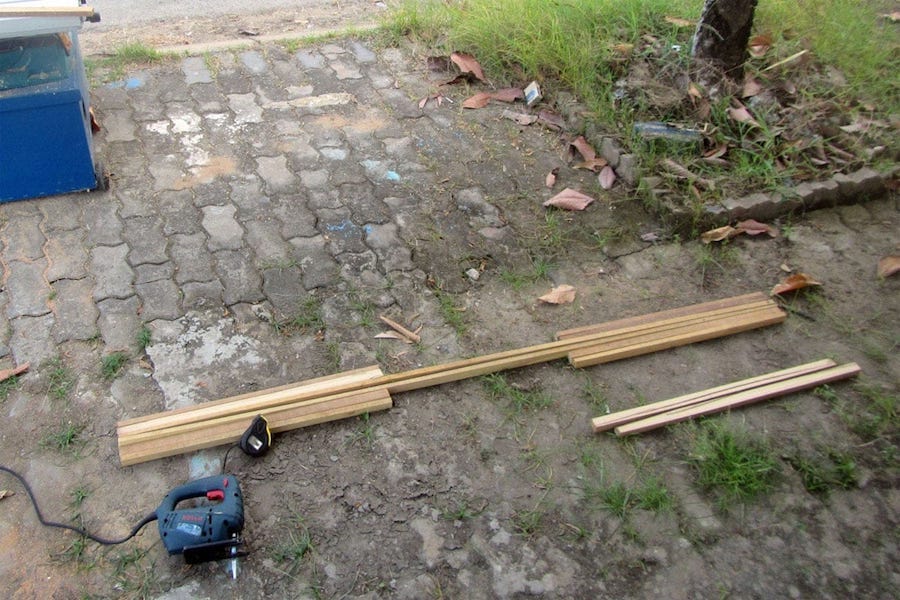
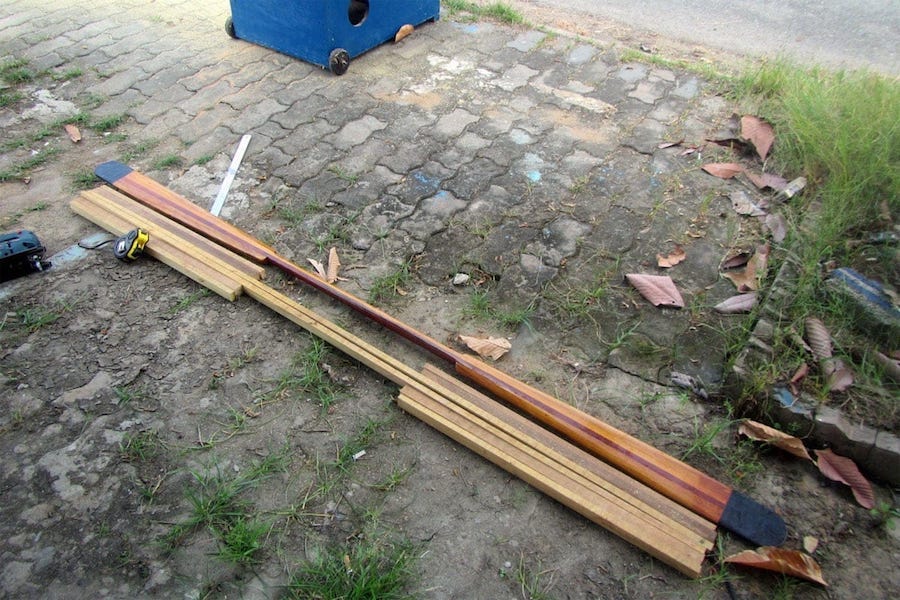
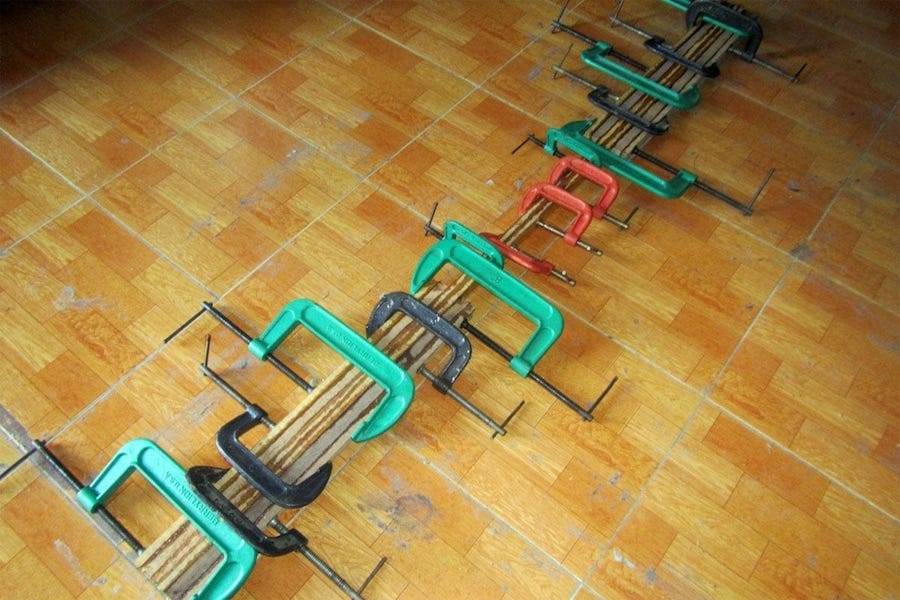
Initially, I’d planned to use dovetail joint (or finger joint) to combine the plywood pieces together, but after cutting them, the 4 mm ply is quite thin and fragile to work on, so decided to use scarf joints instead. I used this Bosch laminate trimmer to remove 2 mm of ply on the surfaces, apply the TiteBond 2 glue, then clamp them together overnight. The Bosch fixed base router is an excellent tool, easy to adjust the bit’s depth, small enough to be handled comfortably.

I’ve finished the scarf joints with almost no mistake. Next I would slightly sand the joints, bevel the edges, then apply a few layers of thinned epoxy (epoxy mixed with xylene solvent, that is what they call ‘penetrating epoxy’, more about this in the next post). A layer of fiberglass with un – thinned epoxy over the joints would make the scarf joints strong enough. Some notes about epoxy below, and I hope the information would be useful for anyone having to work with the resin in Vietnam.

There’re several kinds of epoxy resin, the ‘component A’, but for most tasks, the vendors will sell you the correct, most – frequently – used one, just say ‘epoxy resin’ and they will understand. For the ‘component B’, or the hardener, there’re at least 3 types that I know, named (after the local nomenclature): TETA, B5 and T31 (guess they’re the abbreviations of some chemical formulas). The TETA can be called the fast hardener, would cure within a few dozen minutes (in tropical weather).

TETA can be mixed by any ratio from 1/1 to 10/1 by weight (I usually mix in the 2/1 ~ 5/1 range), it produces a very hard but brittle output. The B5 can be called the slow hardener, it takes hours to cure, and need to be mixed at the exact 2/1 ratio. B5 produces a hard, but flexible result, with very little bubbles (but it’s more expensive than the TETA), also it has to be stored in the dark to remain its chemical behaviors. Both has a light ammonia odor. For the T31, I haven’t tried to say anything about it.

hello world – 3, part 3

Having put no pressure on a launch day, I spend my free time thinking over about the implementation details, trying to apply lessons learnt from my previous boats. From what I’ve learnt from the internet, boat building forums, books… to the reality is a quite different thing. Here in Vietnam, the materials, tools are not the same, no West System epoxy, no marine grade plywood, no good carbon fiber, even the vendors don’t know what is S – class fiberglass.

“The epoxy can be mixed at any ratio”, said the seller, no reliable way to mix paints to the correct desired colors, etc… even the “words”, the “terminologies” used to communicate between the seller and buyer is kind of mess, no standard, no common understanding. Well, a bit off topic here but, Vietnam has always been a very bizarrely unorthodox country, anyone has the same thinking as me!? At least I’ve been feeling so ever since I was 17, 18 years old or even younger.

Hence, my boat building progress has been a tedious learning curve, as I have no trustable standards here, and many trials and fails have to be done. Anyhow, after 2 builds, I’m quite confident now, to start the third boat that I think will meet my quality standards. Begin to measure, draw, and cut of the plywood today, then joining the parts together, then stitch them up. Stitch and Glue is no longer a challenger for my skills now, maybe with the next boat, I’ll try another different building method.

But that’s another thing, just concentrate on the building of Hello World – 3 for now, simple things that need to be properly executed! In total, 22 pieces cut, and 15 joints need to be made just for the hull and deck. The overall structure of this kayak is like nutshell, you will be building 2 halves, then stitch them together. Cutting only takes me half a day, but joining will take considerably much more time. I used 4 mm plywood for both the hull and deck, as I had difficulty purchasing the 3 mm ones.

hello world – 3, part 2

I am making a slow start, working mainly on the implementation plan. It’s better to think out all building details beforehand carefully and thoroughly. Unlike a software project though, which is more flexible, in a hardware project, you would have little chance to correct something that went wrong, or correcting it would cost much time, effort, materials… There’re many things to be considered, and require experiences to get done right! One important concern is weight.

HW – 1 weighs at 35 kg, HW – 2 is roughly 30 kg. With my previous two boats, and with my inexperiences, I did put lots more materials into the building, hoping for strength, but they turned out to be really heavy indeed. If HW – 3 could be built at 20 kg, it’s a great success! Imagine that your boat is 10 kg lighter, and that 10 kg saved could be used for additional food, drink on longer trips! And of course, the weight saving should come without any compromisation on quality and durability!

HW – 3 is a really complicated boat, the hull will be stitched together with 4 plywood bilges , while the deck has 5 main bilges. And since the 5.5 m hull length exceeds twice the standard plywood sheet length (2.44 m), there will be 2 joints in each of the hull’s bilges, which I’ve decided to be dovetail joints to further reduce weight and increase strength. In all, every parts of this boat will be more complicated (compared to my previous boats), and hence requires ‘astute’ planning and execution.

Below, I’m building the two halves (hull and deck) of the framing box that would help forming the kayak from plywood planks into the precise desired shape! With the new air compressor and nail gun and glue, all these frames are just quick and easy task which takes just several hours to complete. I’ve switched to using the excellent TiteBond 2 wood glue instead of other normal Polyvinyl Acetate (PVA), which has much better water resistance capability.

hello world – 3, part 1

All preparations is almost finished, to “lay the keel” and start the building of Hello World – 3, my next boat, a Nick Schade designed, 18 feet (5.55 m) S&G Night Heron sea kayak. Many would ask why building another boat, while I’ve already had the Hello World – 1 & 2. Actually, HW – 1 is just a simple, slow canoe for poking around, HW – 2 is a recreational kayak suitable only for short trips, as proved in my last paddling to Vũng Tàu in June this year.

First, consider some facts, many of Vietnam islands are around 100 km off from shore. Phú Quý island is about 85 km from Mũi Né, Phan Thiết; Phú Quốc island is 110 km from Rạch Giá, Hà Tiên; Thổ Chu island is another 100 km from the southern most point of Phú Quốc; Côn Đảo island is about 95 km from Hậu Giang estuary, Sóc Trăng; Bạch Long Vỹ island is also 100 km from Cát Bà, Hải Phòng… Some are nearer such as: Cồn Cỏ, Chàm, Lý Sơn islands… all around 30 km.

Second, consider some other facts. If your sustained paddling speed is around 5 ~ 6 kmph, it’s not really possible to reach those islands, at least with a coastal – cruising small kayak which is, by design, not suited for multi – days sea crossing without resting, 14 ~ 16 hours of continuous paddling is almost the upper limit for an average man like me, after which you would need a good sleep to recover. Obviously a boat capable of sustaining 8 ~ 9 kmph and beyond is very much needed.

Third, is the target of 100 ~ 110 km in 24 hours really feasible!? The answer is: ça dépend! It depends on too many things: the weather, the wind, waves, the current, the temperature, all of the unknown factors. And for the known factors: your boat, your equipments, your physical preparation, your planning and strategy… all need to be the – very – best – of – class to push the limits and reach the target. That’s why I would invest lots of time and efforts into the building of this HW – 3 kayak.

passages

     Offering 
    Sadhanipa 
 Channels and Winds 
 Ragas in minor scale 
Meetings along the edge 

Partly presented very long before, some compositions that’s highly inspirational to me, the Ravi Shankar and Philip Glass album: Passages. I particularly like the Meetings along the edge and Ragas in minor scale pieces. It’s a real pleasure to enjoy the profound sounds of the Indian sitar, sarod, tabla… in conjunction with the Western instruments violin, viola, cello… For so long, my mind has been too dull and monotonous… for such a delicate and elegant music.

a watery saigon – 3

Móc ngang sông phau phau làn trắng,
Nước in trời loang loáng vẻ xanh.
Buông theo chiếc lá lênh đênh,
Đè muôn đợt sóng mông mênh cõi ngoài.

Some more updates for the A – Watery – Saigon photo album, some miscellaneous thoughts. I’m no real photographer to say anything insight about photography, most of the time, I have the camera in automatic mode and make quite random shots just to show I’ve been there, done that… For the last few years, I’ve been watching many young Vietnamese ‘professional photographers’ who made great efforts in capturing landscape pictures, e.g: waiting for multiple days on a mountain top to catch the right moment, etc…

And they showed me their photos, ‘really beautiful’ I must say (compared to my well – under – average images, and I do wish my pictures could be like that, technically): perfect color and arrangement, unique point of view, etc… But let me get this straight, and don’t get me wrong on the topic: they lack a spirit, a sense of movement, a sense of selfness, they are just plain boring! In order to become great photographer, you should stop taking photos and do something else, see the world through your eyes first, before seeing it through those expensively distortional lenses!

workshop, 1

Almost finished with upgrading my woodworking workshop, just some more painting, fitting and cleaning up jobs needed! This would be a “well – equipped, well – organized” place to carry out my upcoming projects, which is getting more and more sophisticated! Several assets showed below, including my new Makita MLT100 table saw, the Dremel power tools and other wood carving tools, the Maktec MT362 router and its home – brew routing table, the air compressor and nail gun, a dozen types of chemicals for epoxying and painting, etc… basic things for what could be called a boat – building – workshop!

Drawers for storing various hand held power tools, all these tools need proper care and maintenance.

Makita MLT100 table saw, with this, I can cut wood to the desired sizes, without having to have them cut at the wood mill nearby.

Dremel’s MultiTool and MotoSaw, suitable for small wood working. These are intended for some marquetry works later on.

Maktec MT362 router and its being – built routing table. I used the router itself to install the steel center plate holding the machine underneath.

Various chemicals, the excellent Titebond II wood glue, the 511 epoxy putty, wood carving tools, air compressor, the new Bosch circular saw.

Some more shots around my workshop. Sooner or later, I would need a dust collecting system, or maybe just a vacuum cleaner.

craftsmanship

Tôi đang đi, đi trên sông chở đầy nắng hồng.
Đêm nay nghe tiếng sóng biển Đông,
Tôi đang nghe, tôi đang nghe..

Often, I’m not quite pleased with my boat building products, it’s not up to the quality level I’m expecting. And quite regularly, I’m in a dilemma situation that I don’t know what I should improve on: my craftsmanship or my seamanship. (Well, I know, all sound big bold words: craftsmanship & seamanship, but let use them anyhow). The fact is that I’ve just turned to woodworking and boat building for around a year, there’re lots of things still to learn and to improve.

I’ve decided to invest on improving my ‘craftsmanship’. Many hours spent on reading documents and browsing woodworking, boatbuilding forums. Also decided to upgrade my small workshop with more professional tools: a table saw, jig table saw, router and a routing table, air compressor and nail gun, etc… I’m in the preparation process of building Hello World – 3, my next boat, a boat I can trust my life on in the upcoming journeys, and I want to do it as good as I can.

As for Hello World – 3, there’ll be no fixed schedule. All boat designs and boat buildings is kind of compromisation, there’s no such thing as “ultimate perfection”, but I’ll do it until it’s good enough, with no pressure on a launch day, and as my free times permit. There would be lots of new things built into this Hello World – 3: electric pump, battery, electronics, and solar charging system, etc… That’s still a long way to go, concentrate on the basic task of building woodworking tools for now!

It looks like that I’m turning into a cabinet maker for now, of the 3 pieces of “cabinet”, one will be the pedestal for my new Makita MT100 table saw, one would be a routing table (to be fitted with the Maktec MT362 router), and the other table will be used for small cutting and carving tasks with the Dremel’s MultiTool and MotoSaw. I’m adding more and more into my tool collection: Bosch (and it’s subsidiaries Dremel & Skil), Makita (and it’s subsidiary Maktec) and Fein.

These ‘furnitures’ are really basic things built with plywood, some wooden frames, and all painted, so I put ‘aesthetics’ aside and focus on usability. One day, I’ll build all my wooden household objects in finer quality myself, but for now, just these simple woodworking facilities, which I need to complete within this month. The plan is to have Hello World – 3 building started somewhere next month, a huge pile of planned works to be done before the rainy season returns the next year…

Additional assets for the workshop, a small coffee table and 4 chairs, for taking a beverage in the hot tropical afternoon. All built from cheap plywood, and painted with wood color, this is also to test my new idea of painting and color pigment mixing, all takes only a day to complete, a quick and dirty job indeed. Building fine and good looking furniture, like building a good boat, takes lots of time and labour, so I’m pleased with these crude but functional things for now.