hạc thành

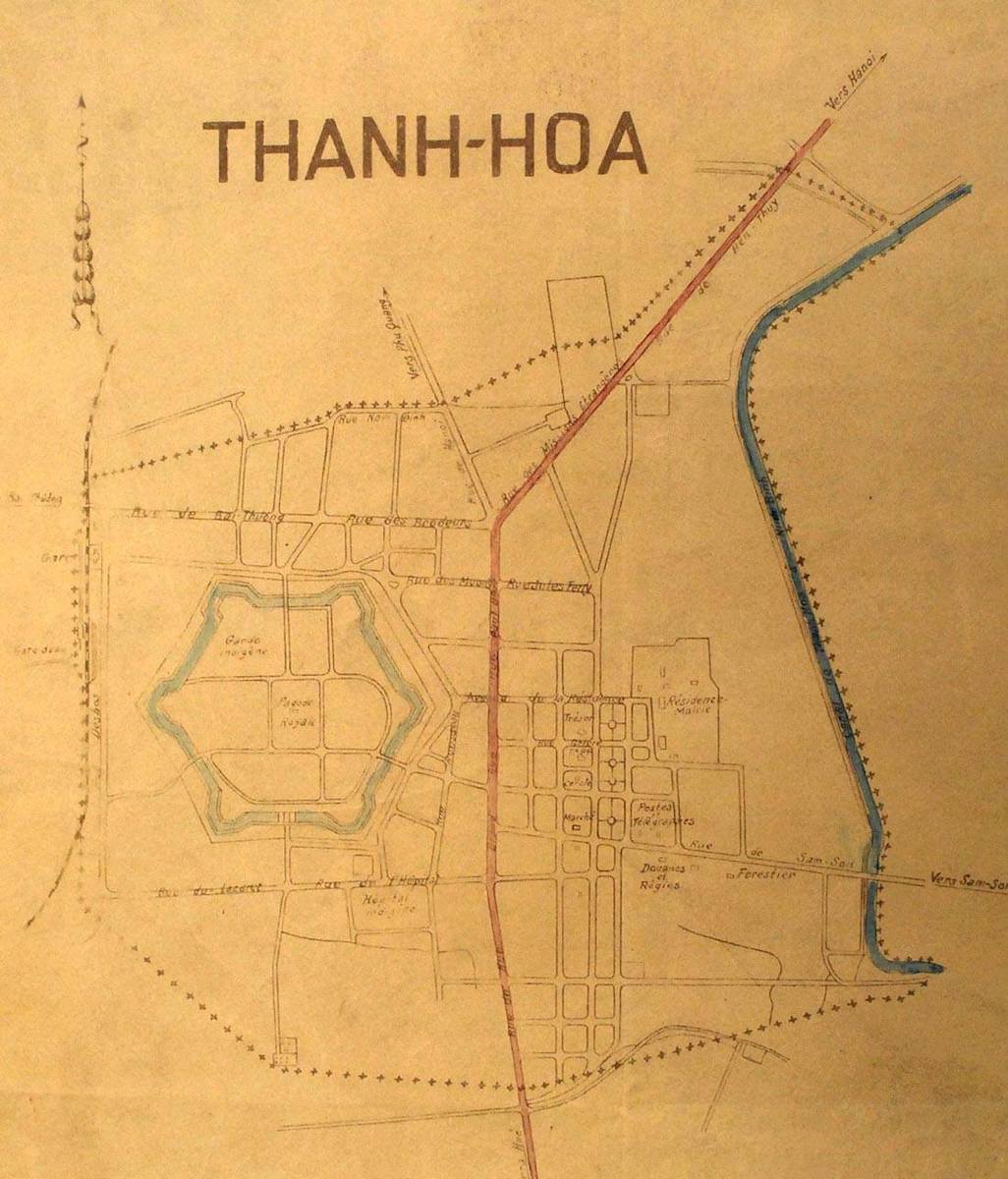
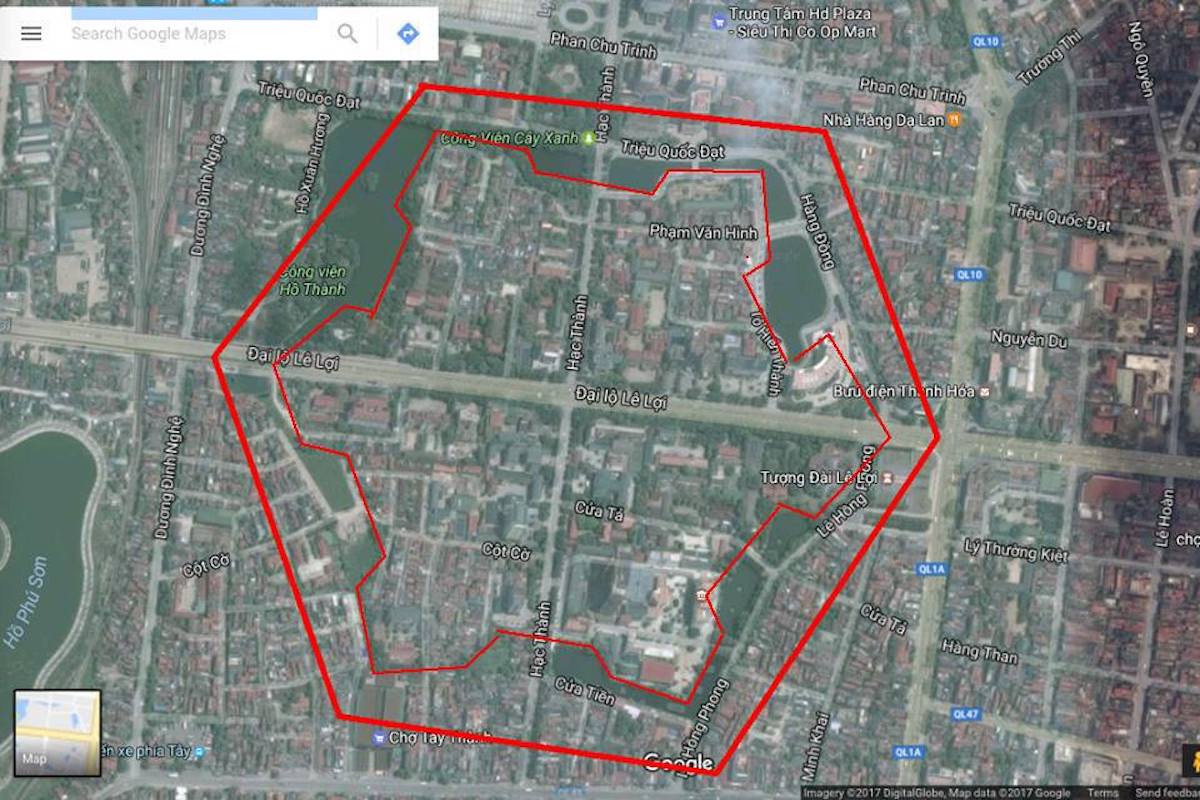
Hình ảnh Google earth của Hạc thành, hình lục giác đều, trung tâm tp. Thanh Hoá, kiểu kiến trúc Vauban điển hình, nay chỉ còn vết tích. Sau khi vua Gia Long lên ngôi, kiểu kiến trúc thành Vauban này trở nên phổ biến khắp VN, thay thế nhiều thành quách trước đó. Được thiết kế bởi kỹ sư quân sự người Pháp, Sébastien Le Prestre de Vauban, dạng hình học của những “star-city”, cấu trúc góc cạnh hình sao này cho phép không có góc chết nào suốt dọc theo tường thành, bất kỳ đoạn tường nào cũng có ít nhất 1 vị trí có thể đặt súng để bắn tạt sườn bên tấn công (xem hình).

Không hiểu sao một thời, người Việt học hỏi nhiều công nghệ ngoại lai đến thế, chỉ để giải quyết mâu thuẫn nội bộ, nghe đồn là có cả tàu chiến lớn loại 74… dù tôi cho là chỉ là “đồn”, vì tàu 74 nó trên 3 ngàn tấn, thời hiện đại bây giờ VN cũng chưa có tàu chiến lớn đến như thế… Chợt nhớ ra năm đó là mùng 10 Tết, ngồi uống cafe dưới chân thành này, bên bờ hào… …Thành quách suy di nhân sự cải, Kỷ xứ tang điền biến thương hải. Tây Sơn cơ nghiệp tận tiêu vong, Ca vũ không lưu nhất nhân tại…

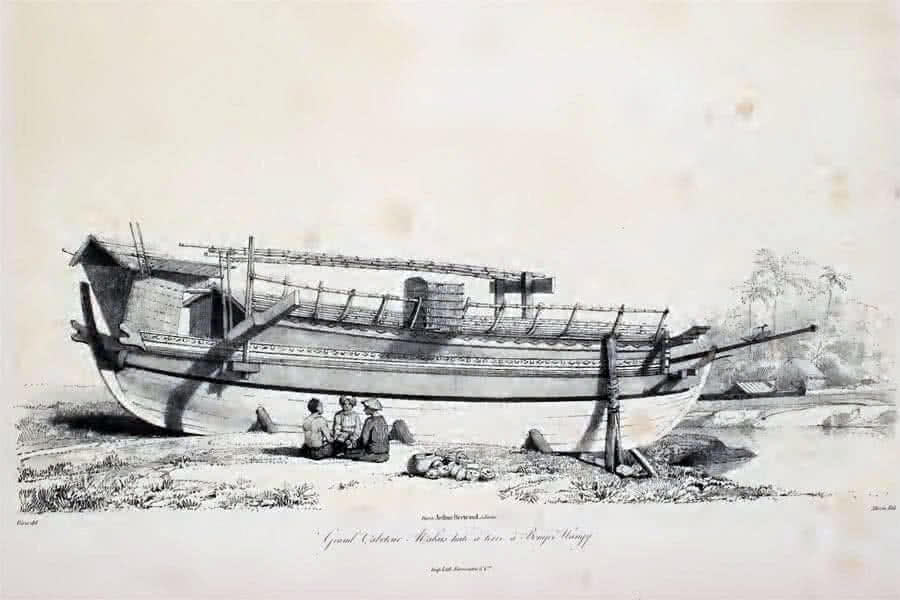
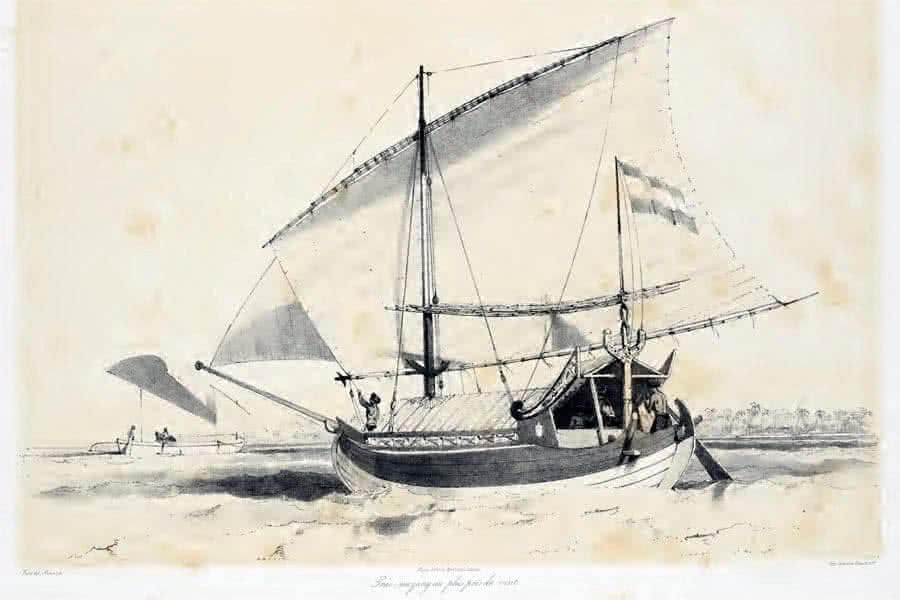
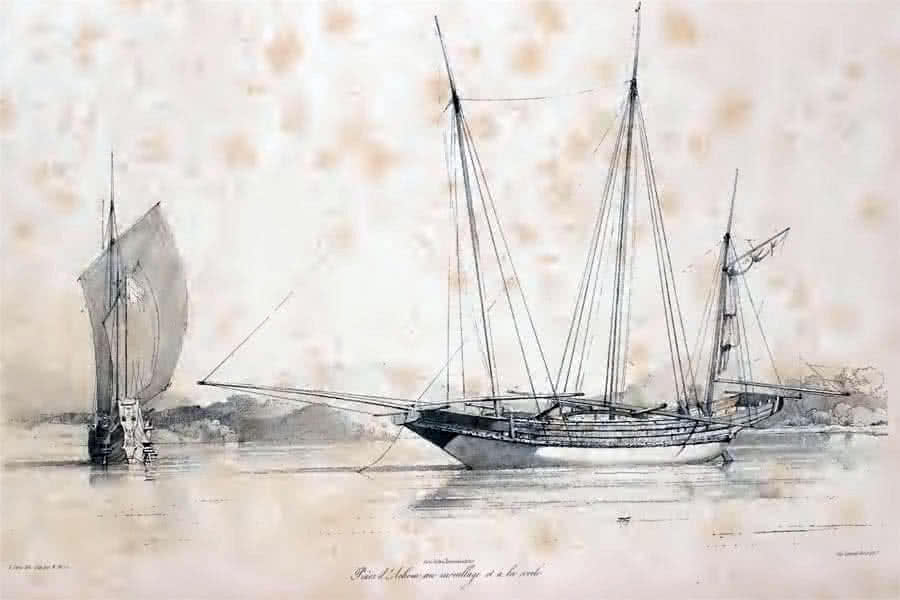
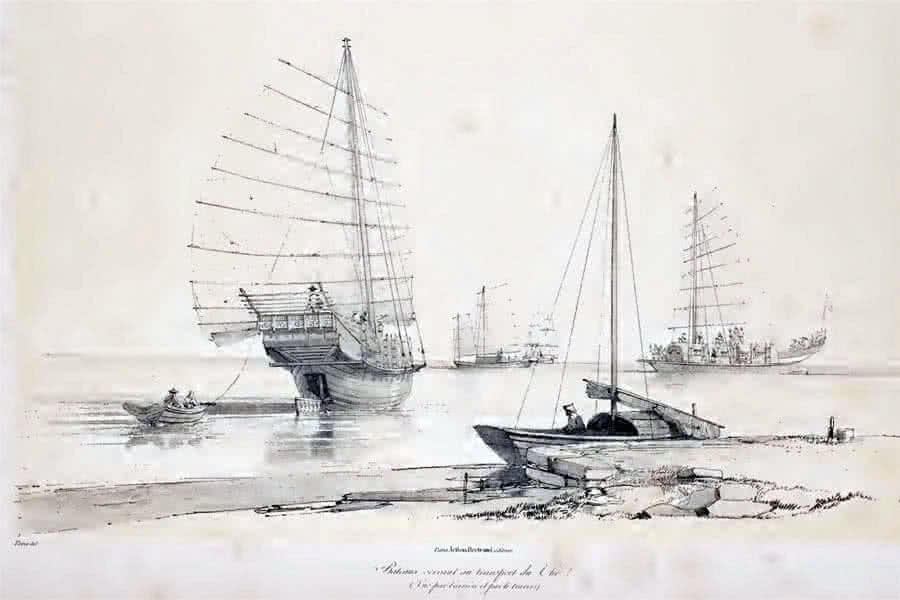
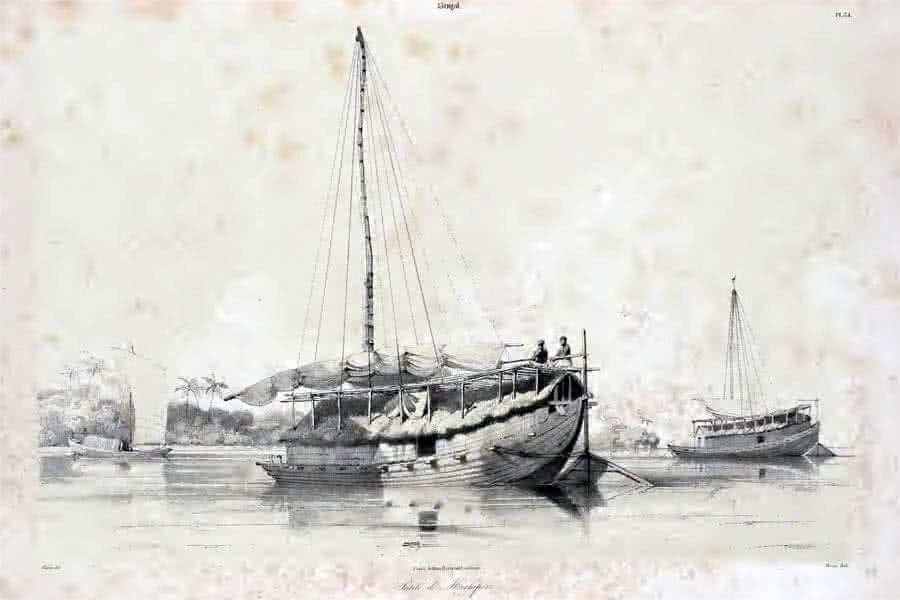
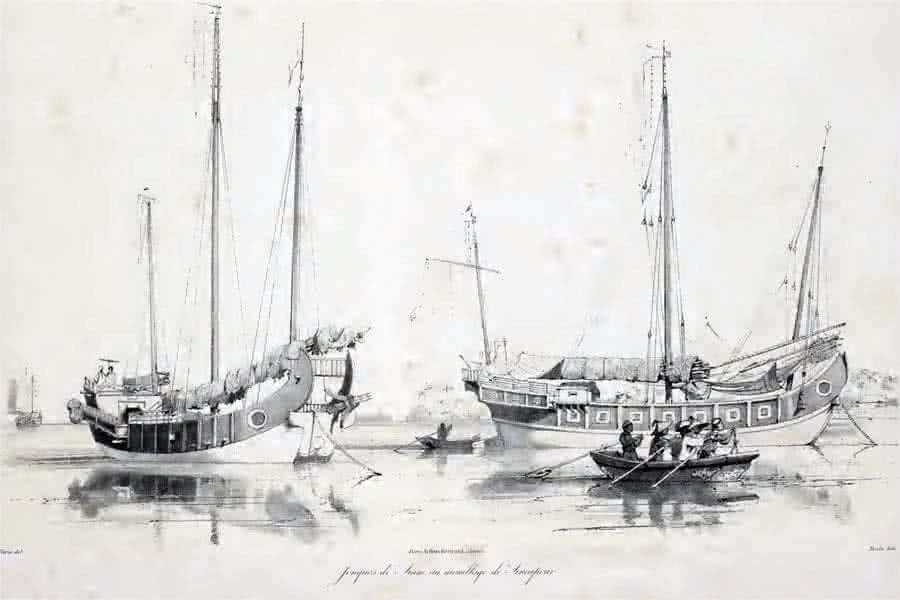
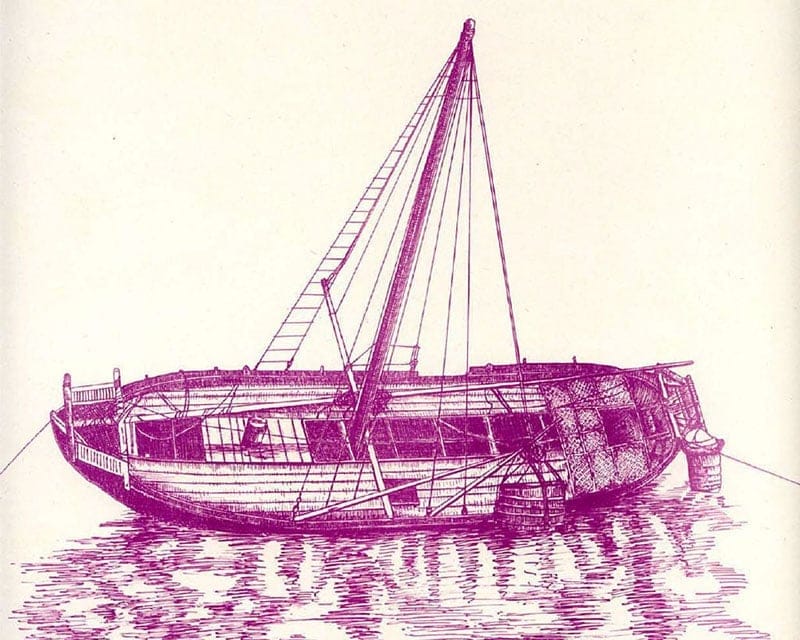
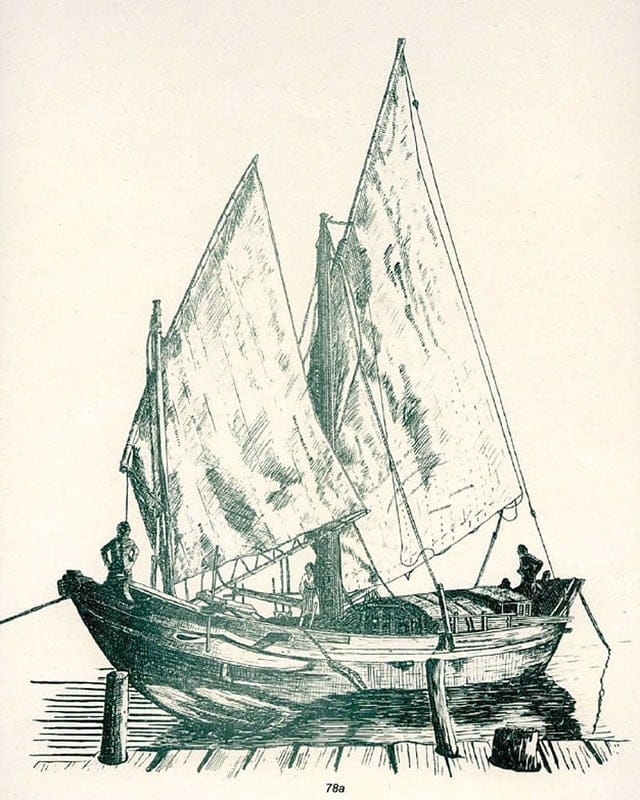
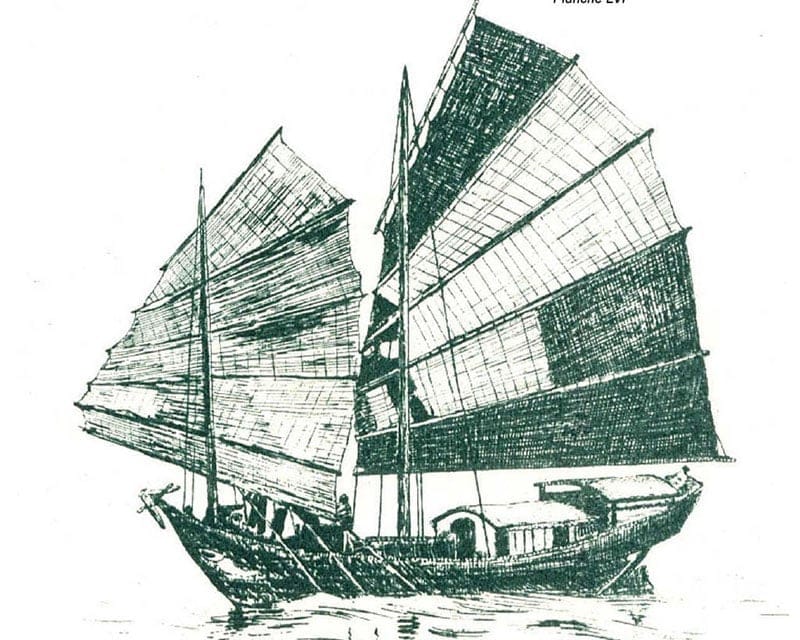
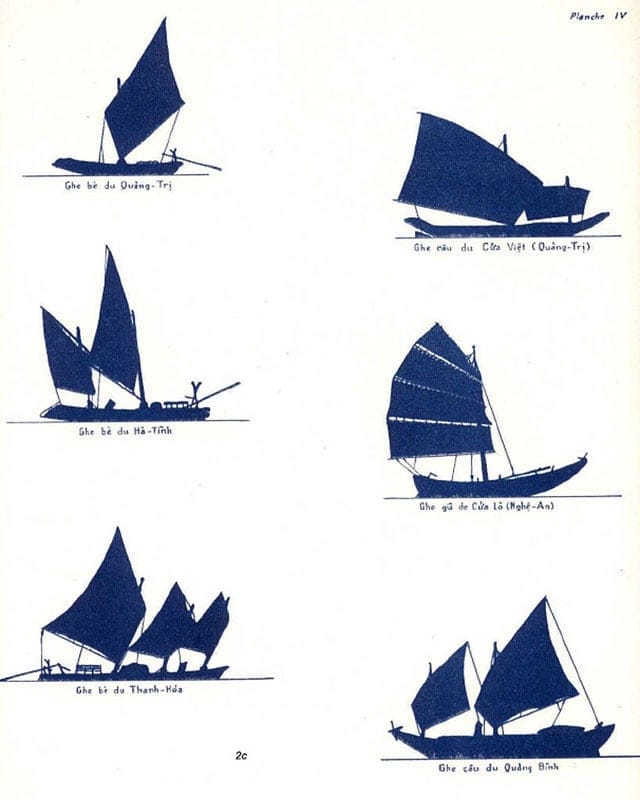
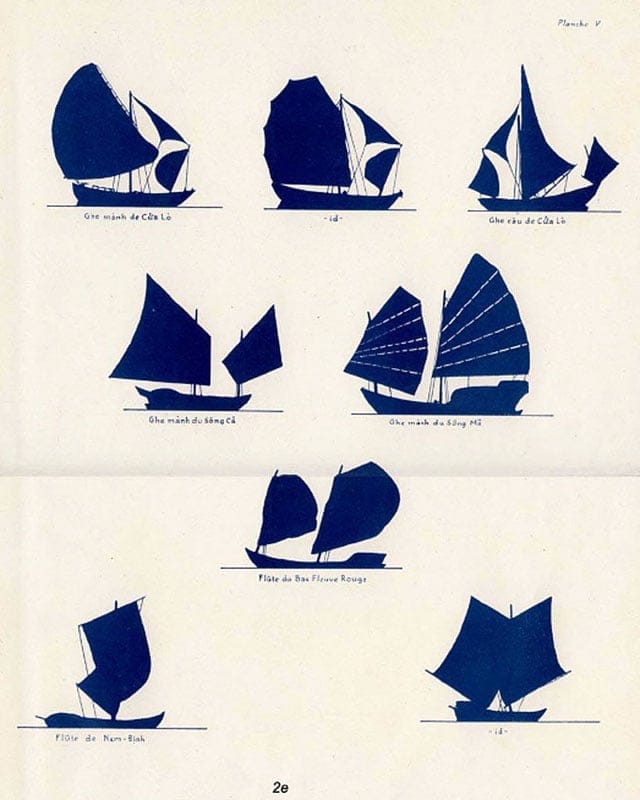
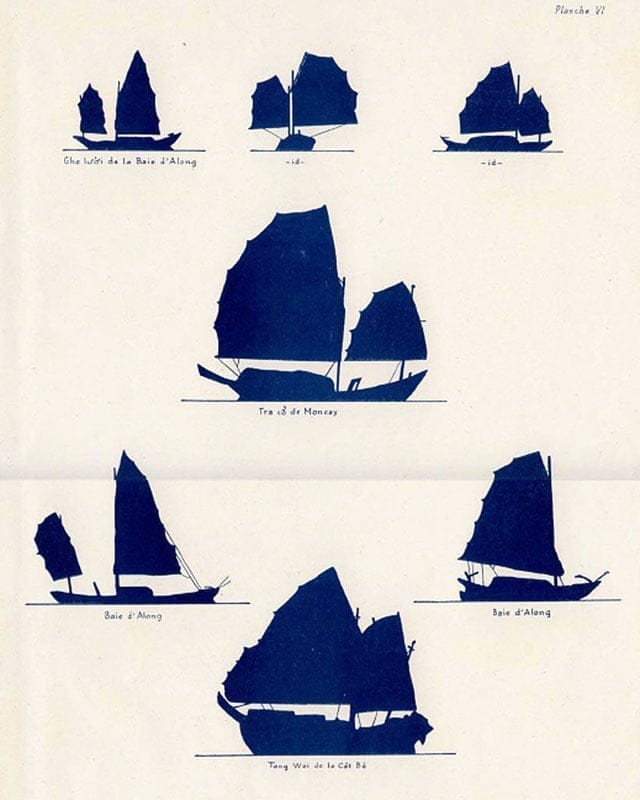
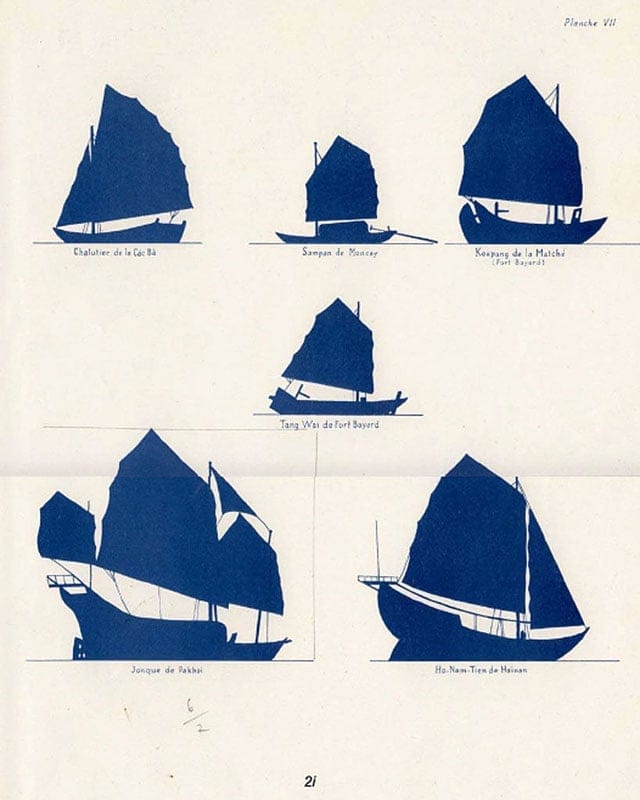
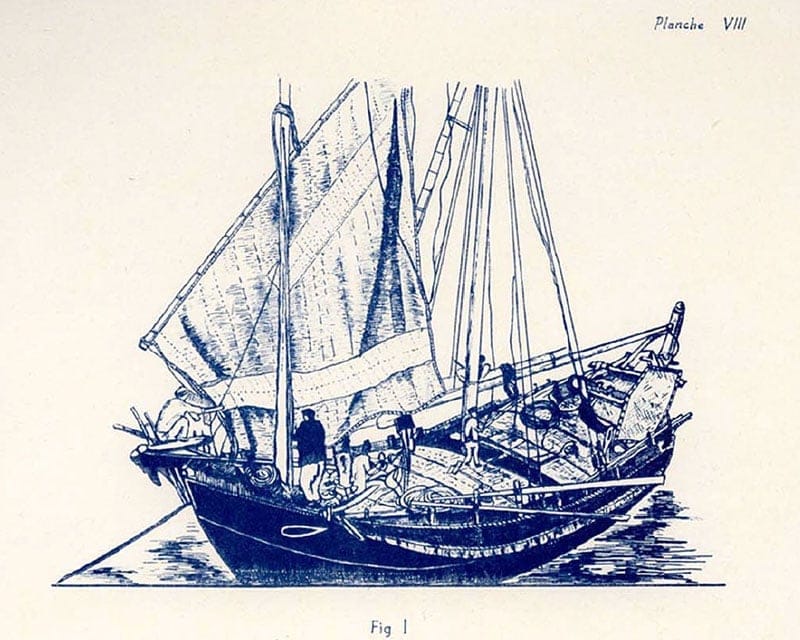
essai sur la construction navale des peuples extra – européens

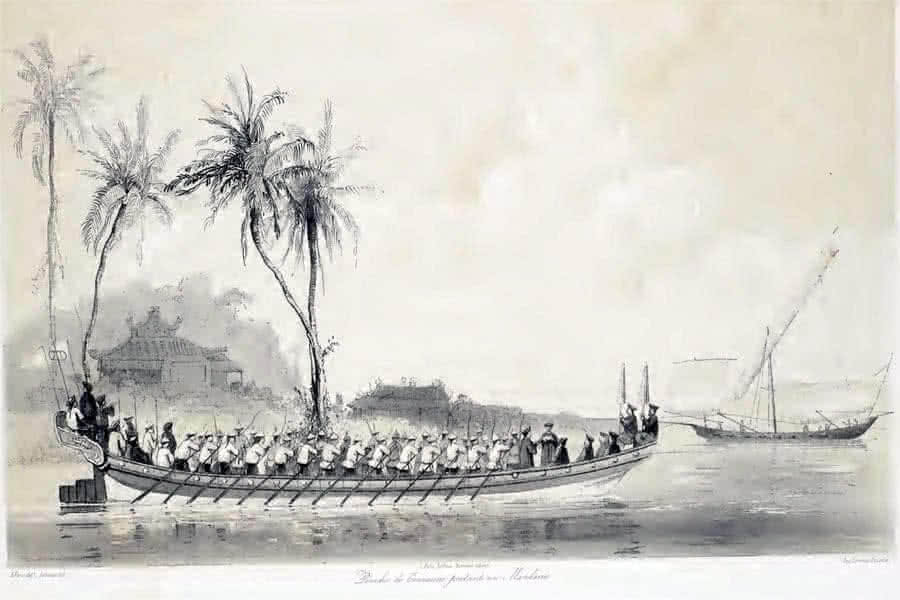
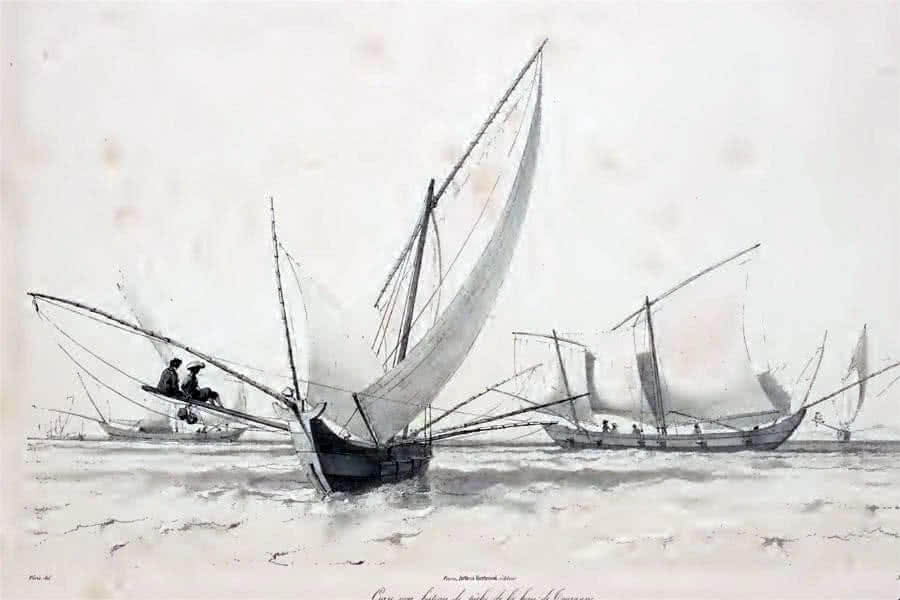
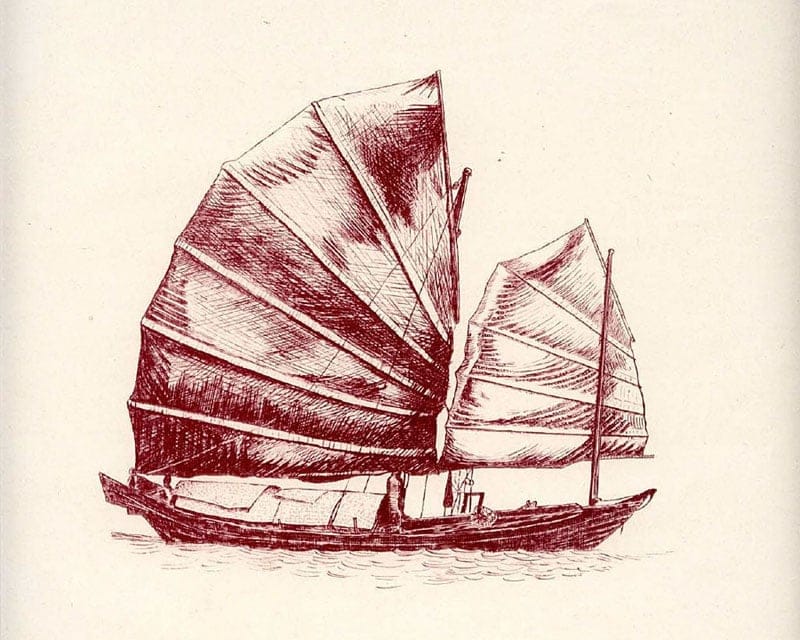
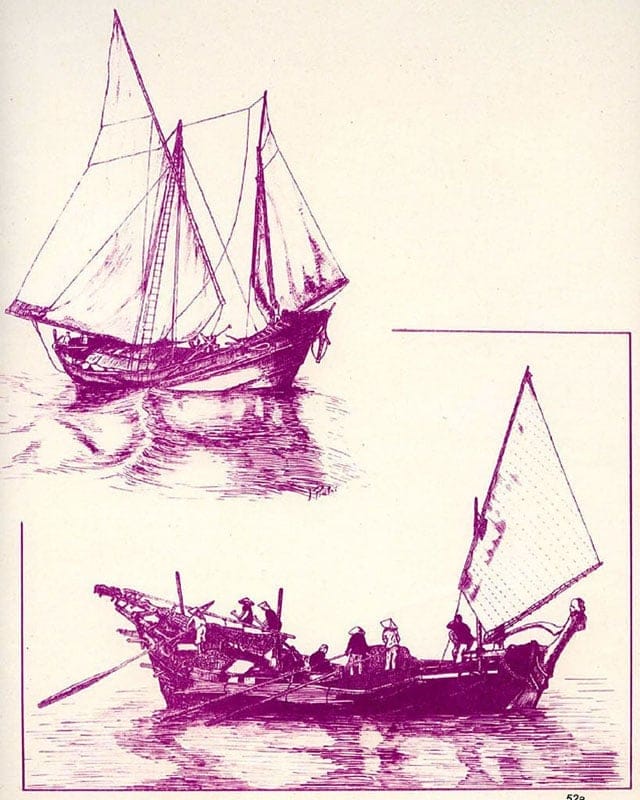
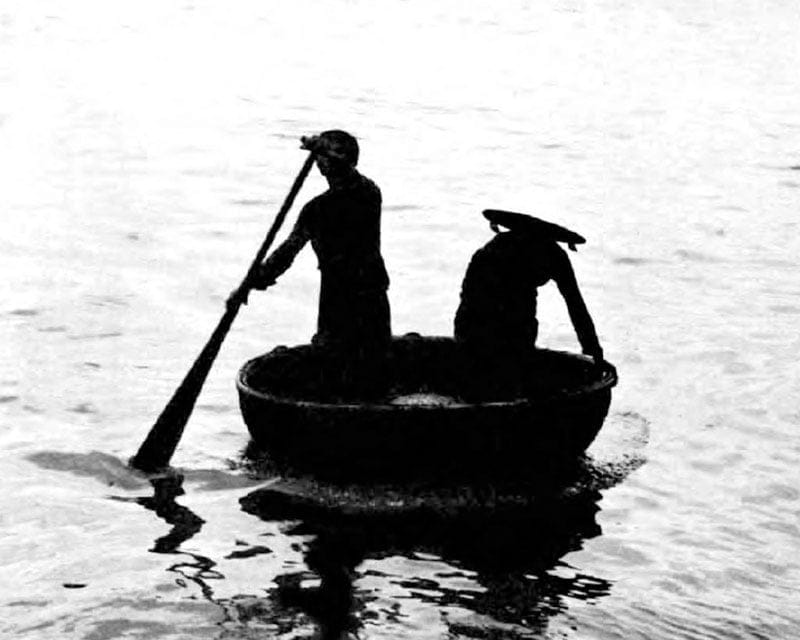
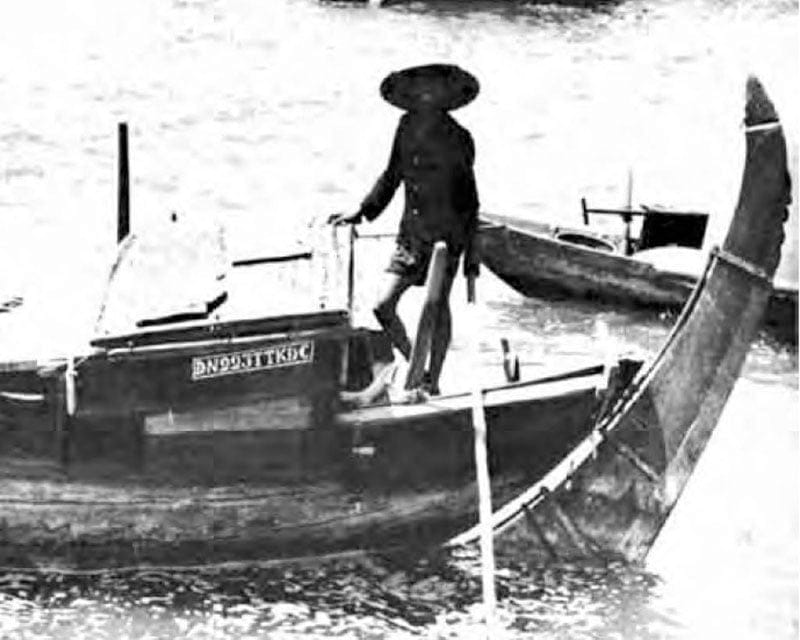
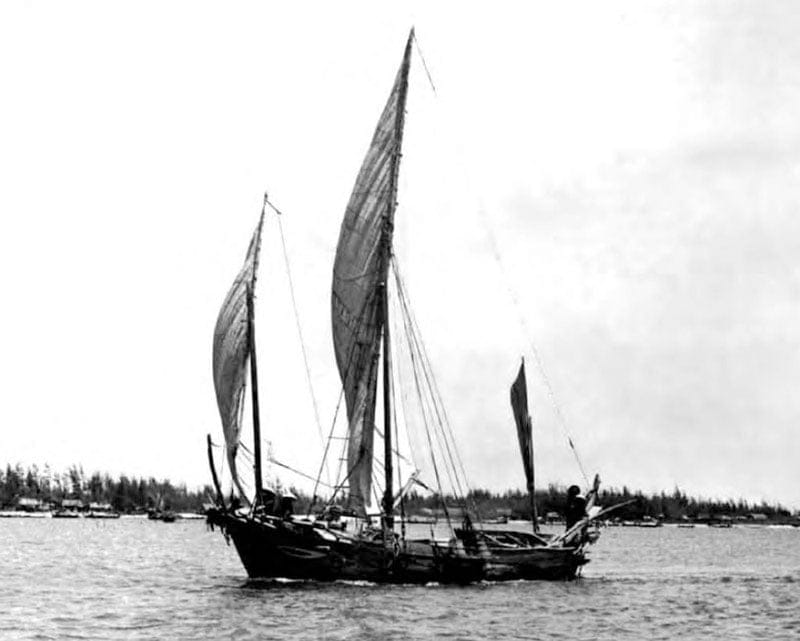
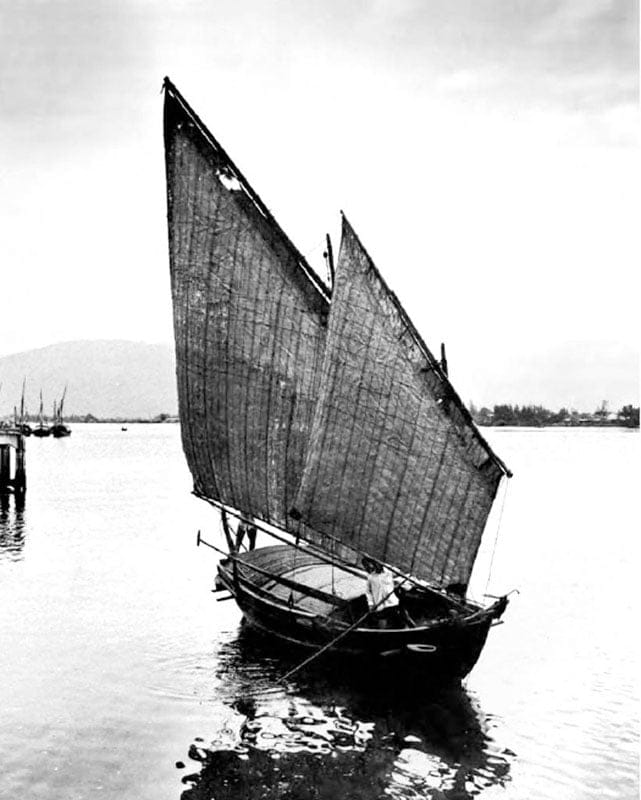
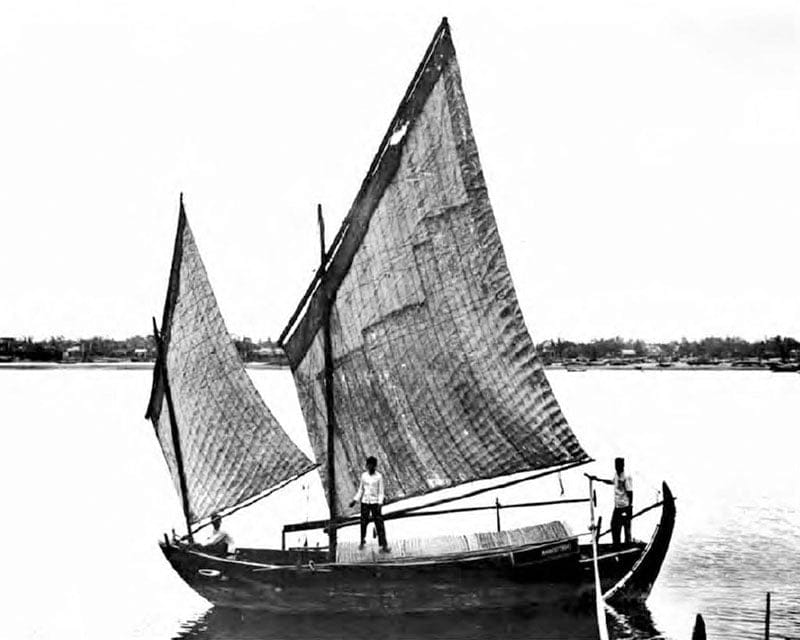
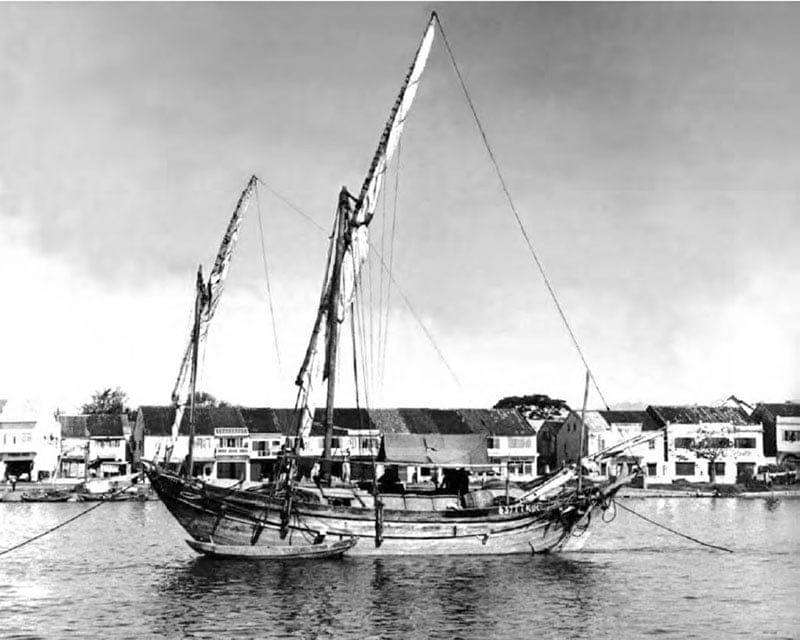
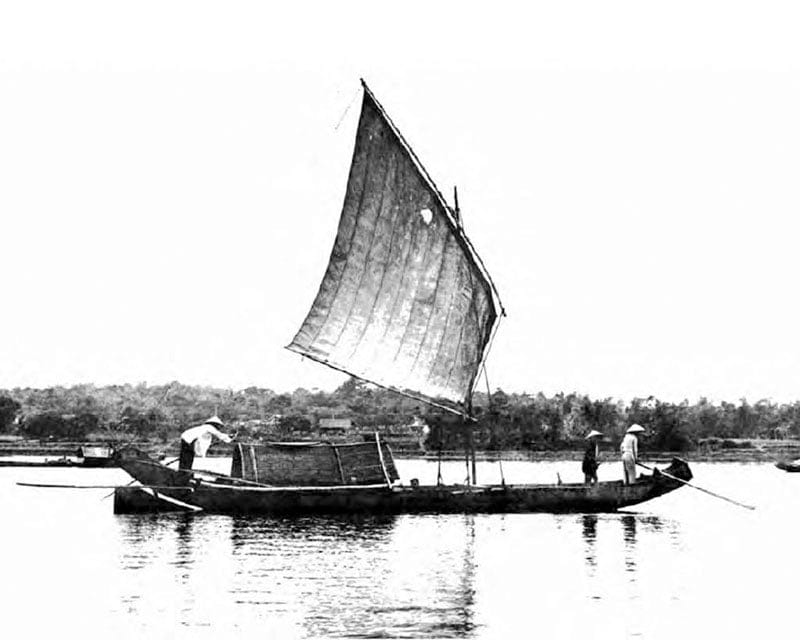
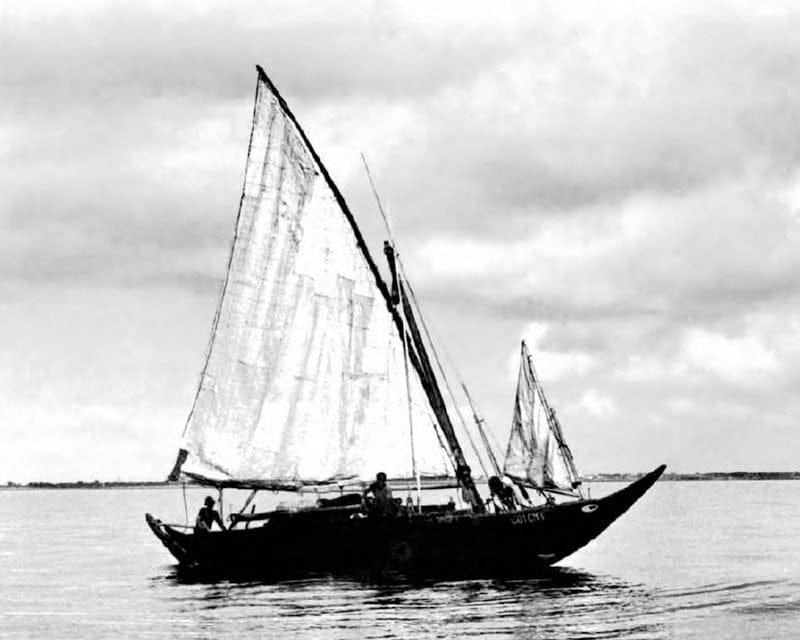
The first 2 images: a rowing boat and a sail, fishing boat of Touranne, Cochinchine, which is today Đà Nẵng, Việt Nam.

Some time ago, I posted several entries about The Junk Blue Book. What’s a small world of the internet that lately, I had my honor to be contacted by Capt. Robert Whitehurst, the collector, editor who made the original, rare book written by Capt. Marion C. Dalby available for us as a free ebook today. Mr. Whitehurst is kind enough to correct a mistake in my postings, and sent me various documents that he’ve spent times and efforts to collect and digitalize them. I would say a thousand thanks to him, an old captain who spent his younger years on the Mekong delta’s rivers, who loves Vietnamese boats, who has closed – relations with Vietnam in many ways.

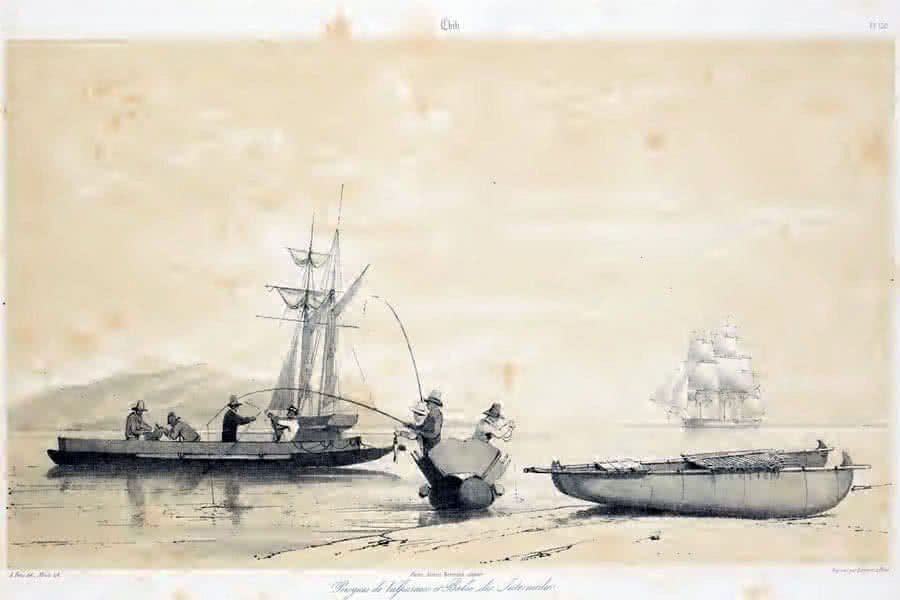
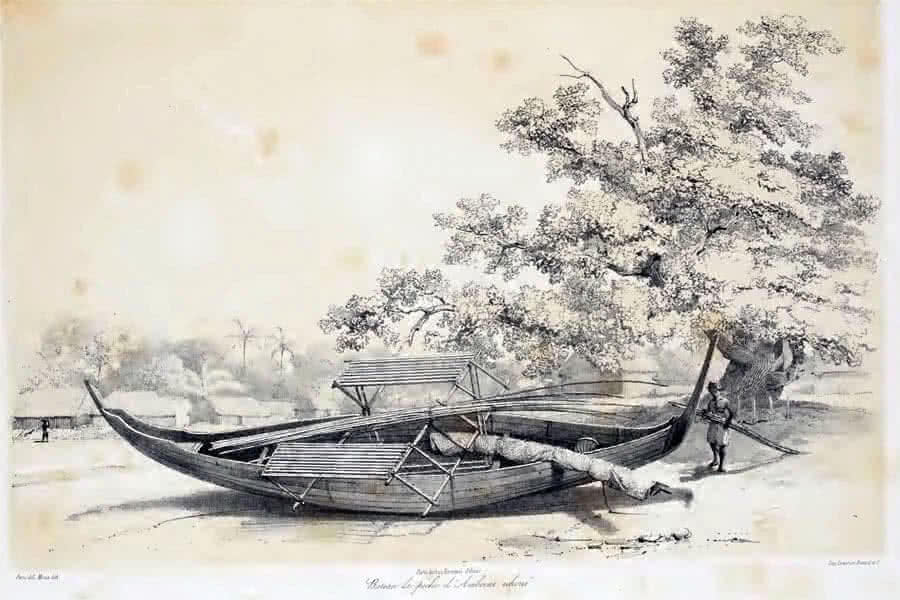
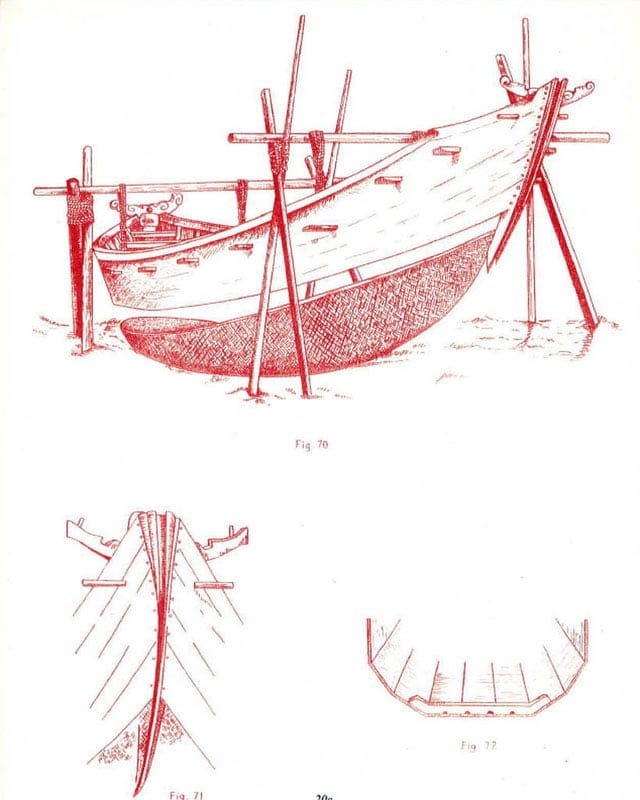
Among the documents Capt. Whitehurst sent me was this invaluable copy of Essai sur la construction navale des peuples extra – Européens, (literally translated into English as: Essay on naval construction of peoples outside of Europe), a tremendously amazing work by French’s admiral François – Edmond Pâris, published in Paris in 1841. The work consists of two volumes, 160 pages in textual volume I, and 132 illustrations in graphical volume II, introducing boats and boat constructions from various parts of the world. I’ve just started my reading, but can’t suppress my eagerness to made some excerpts here to show the extremely beautiful illustrations below.

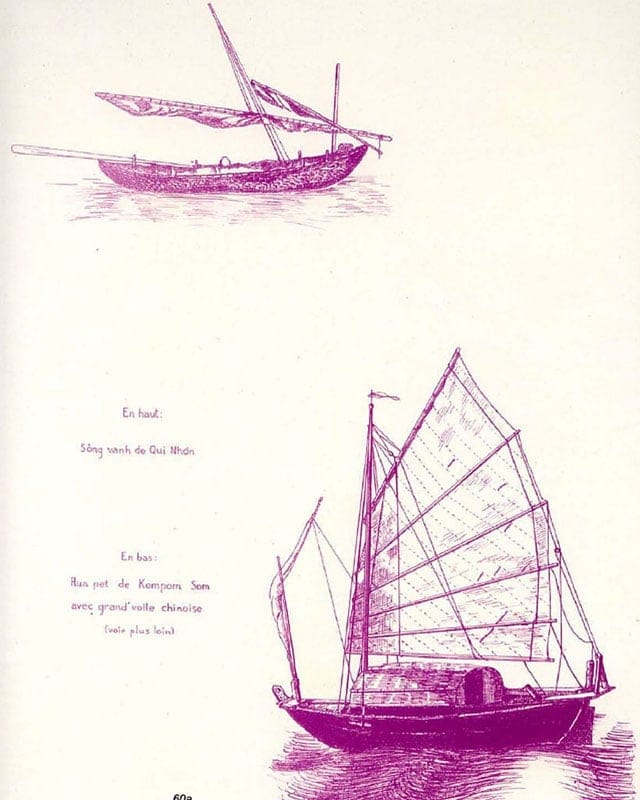
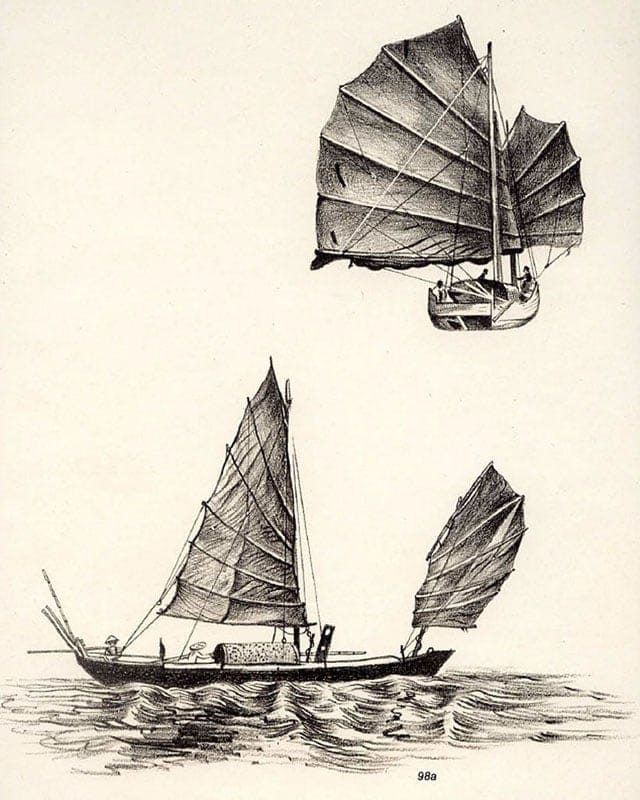
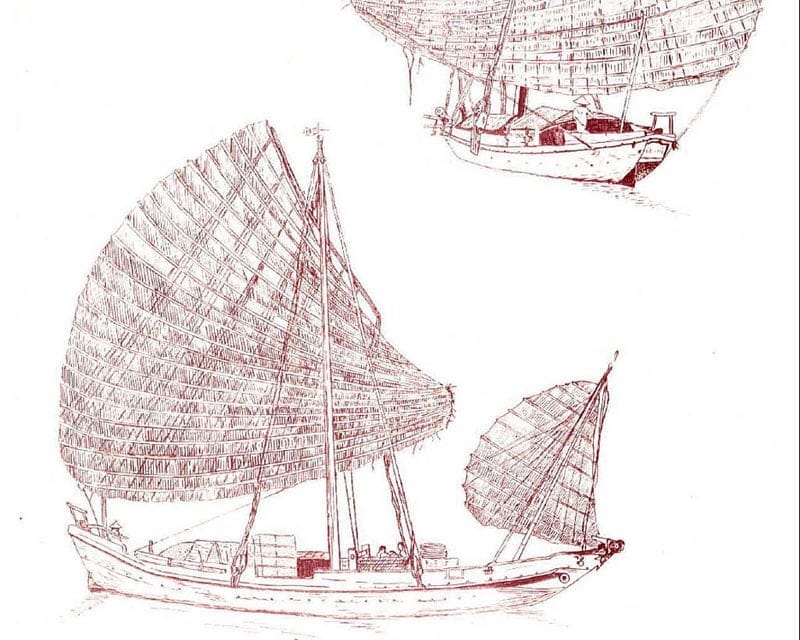
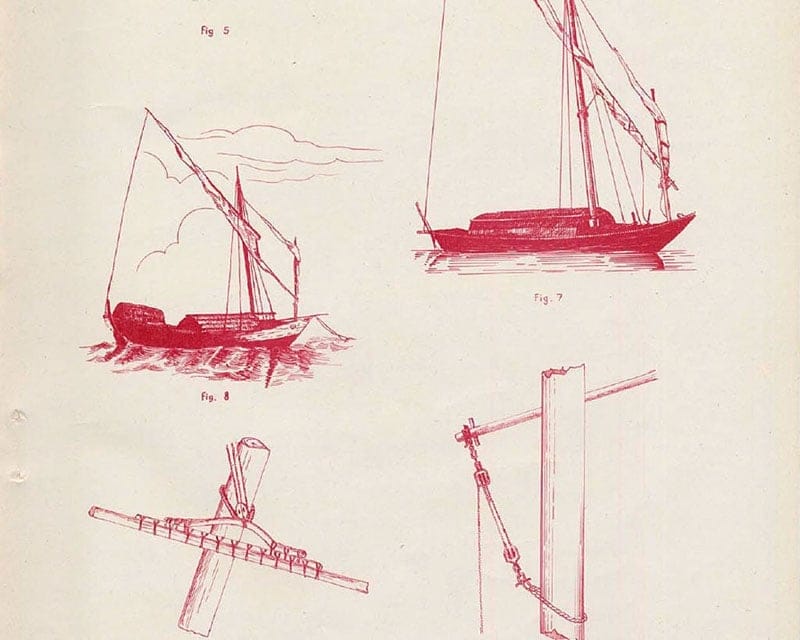
voiliers d’indochine, 3

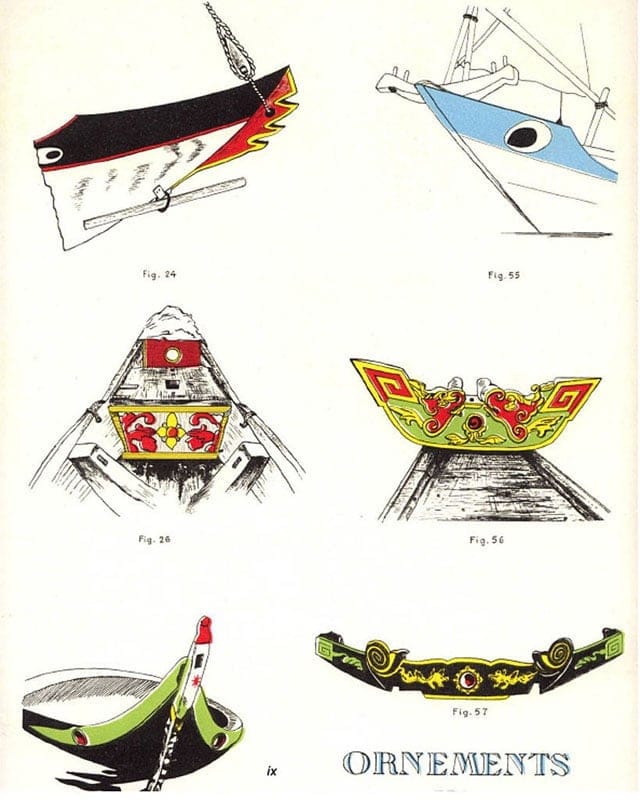
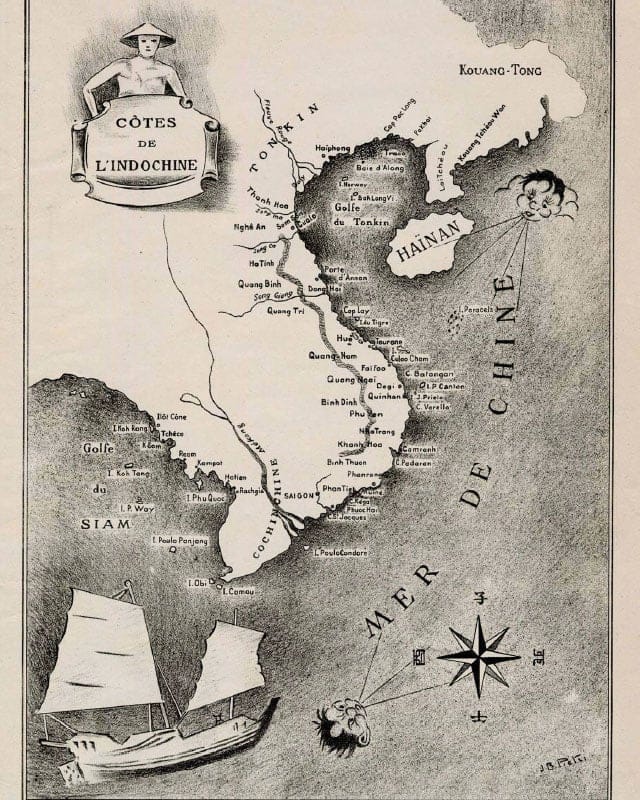
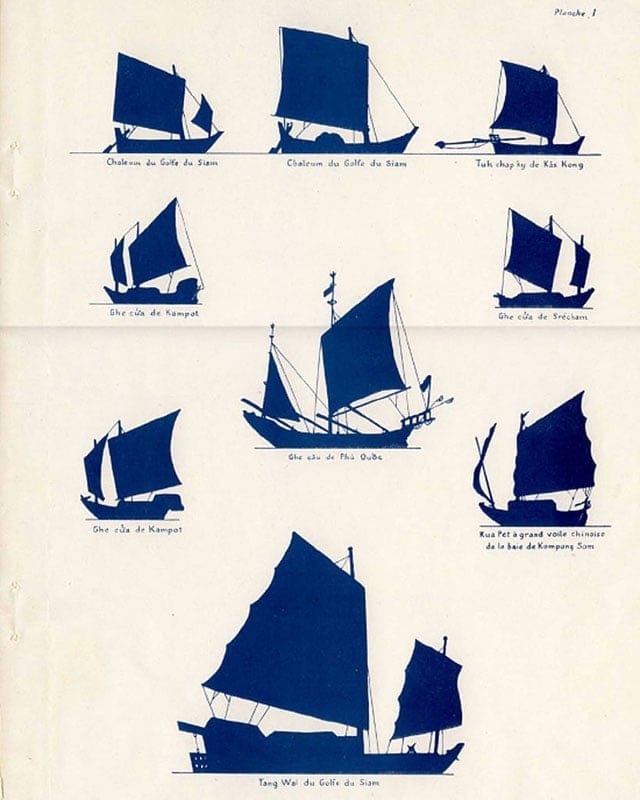
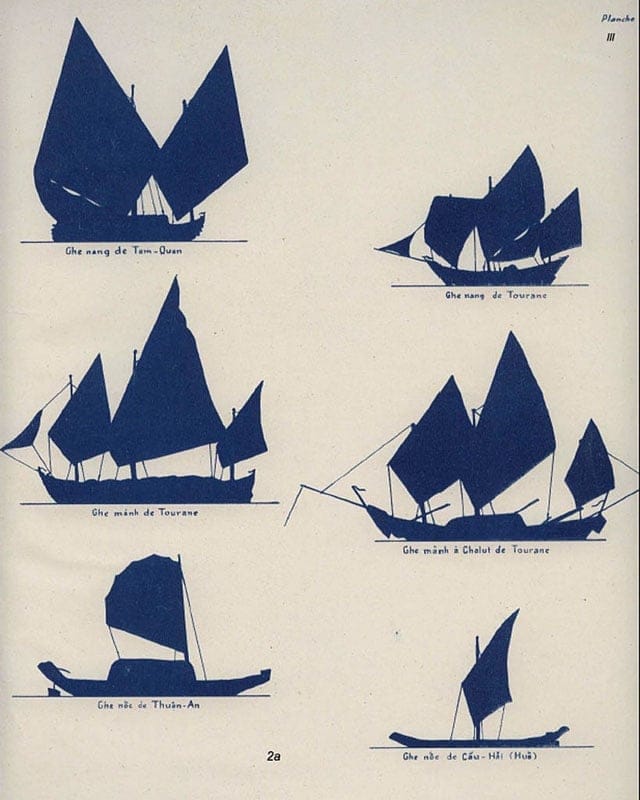
Some texts quoted from the book, the English translation can only partially convey this old, romantic French writing style: if there is one region in the world where the picturesque ancient sailboat has sheltered and prevailed in its multiple facets, it is on the coasts of Indochina. A vast array of colours, the old scent of wood from the past… Nautical Indochina shows contrast especially in its fishing boats: each province has its own type of boat, all shapes of hulls, all the varieties of sails do their utmost to give us an image constantly renewed of maritime culture too regrettably ignored by the French and the Indochinese themselves. Very few are those who attempted to preserve their images, to describe their shapes, to speak of their poetry!

voiliers d’indochine, 2

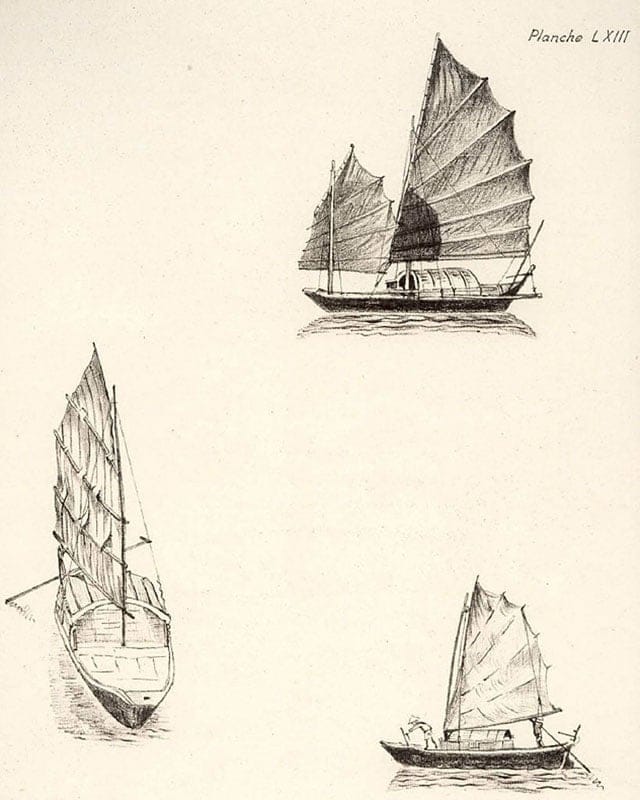
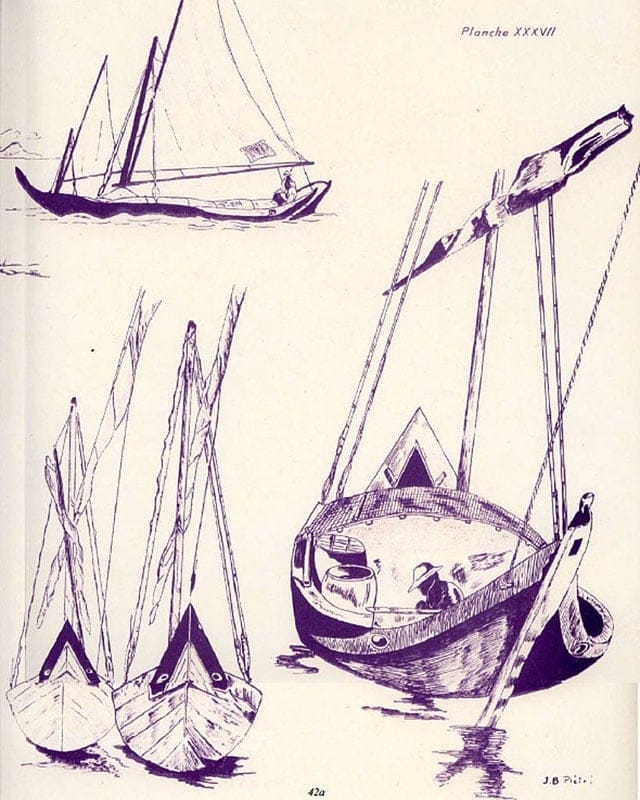
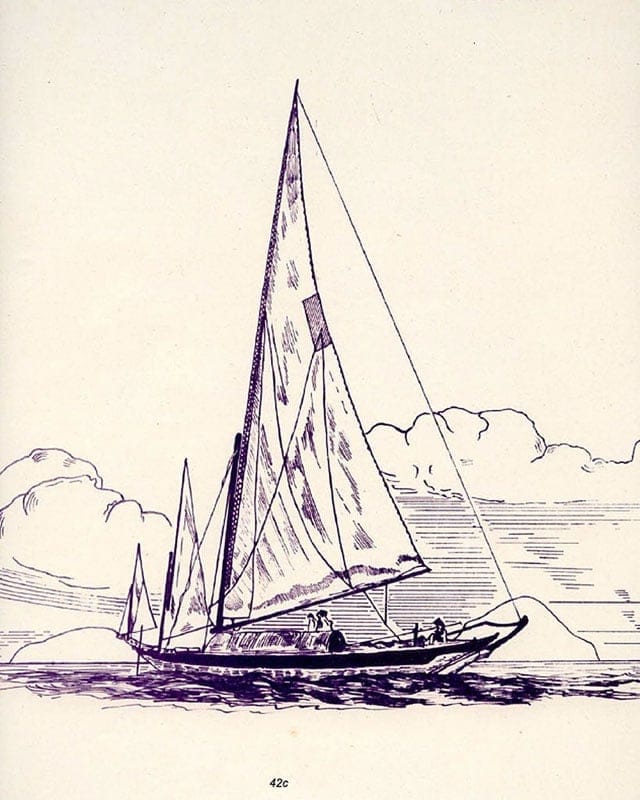
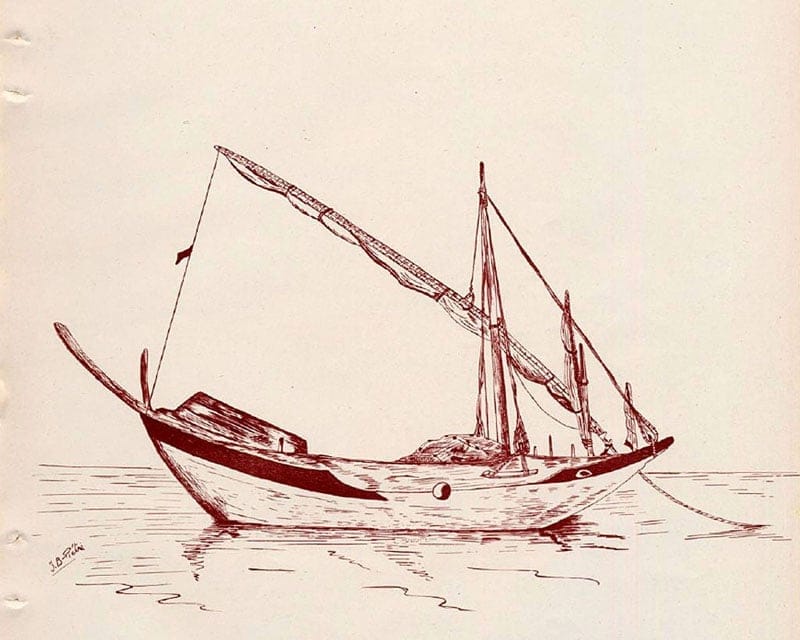
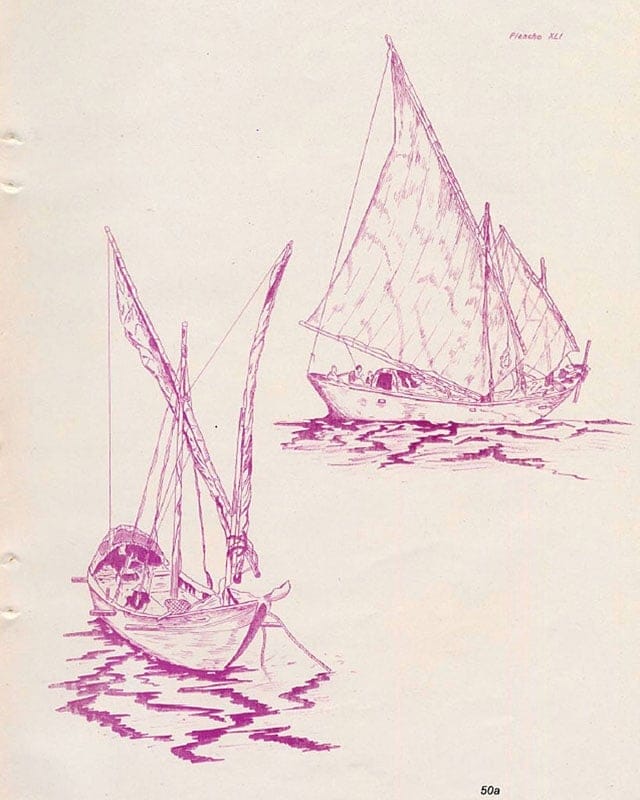
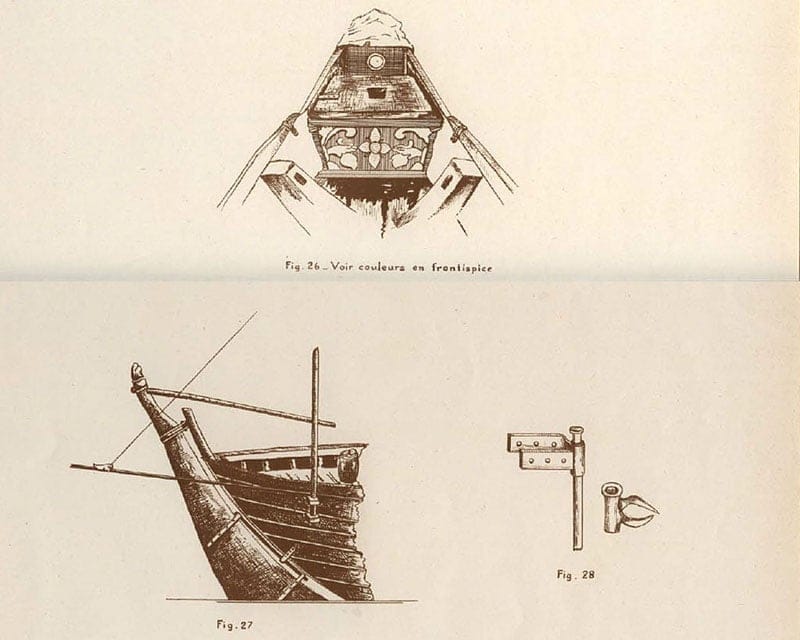
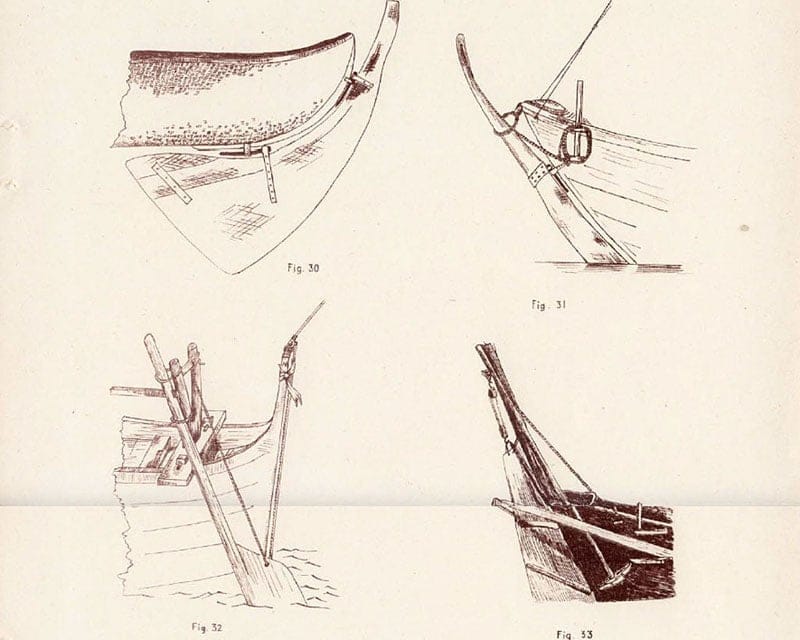
Mr. Piétri was a biologist, and a biologist in the old days was trained in pen, ink anatomical drawing. His skill came into great uses for boats illustration. His writing style is that of a romantic, nostalgic, old – school sailor, he was describing something that would soon pass away in Indochina, as it already had in the Western world: large fleet of sailboats in their daily activities: fishing, cargo transporting… He provided various information into a beautiful world that has now gone, even today we still can find wood – workers who possess the knowledge of building traditional hulls in VN (the number of them can be counted with fingers on your hands), some in – depth details like blocks, tackles, shackles, lines, sails, rigging… can only be found in his book.

voiliers d’indochine, 1

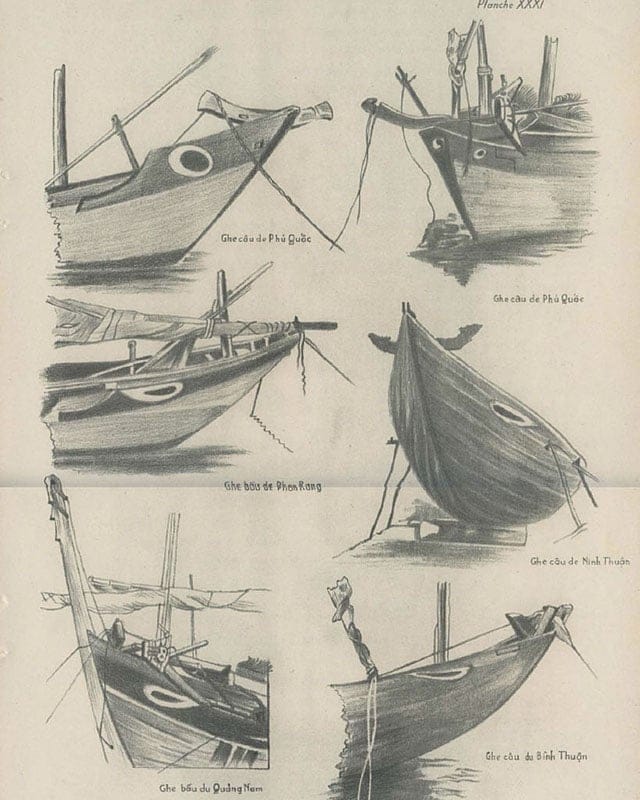
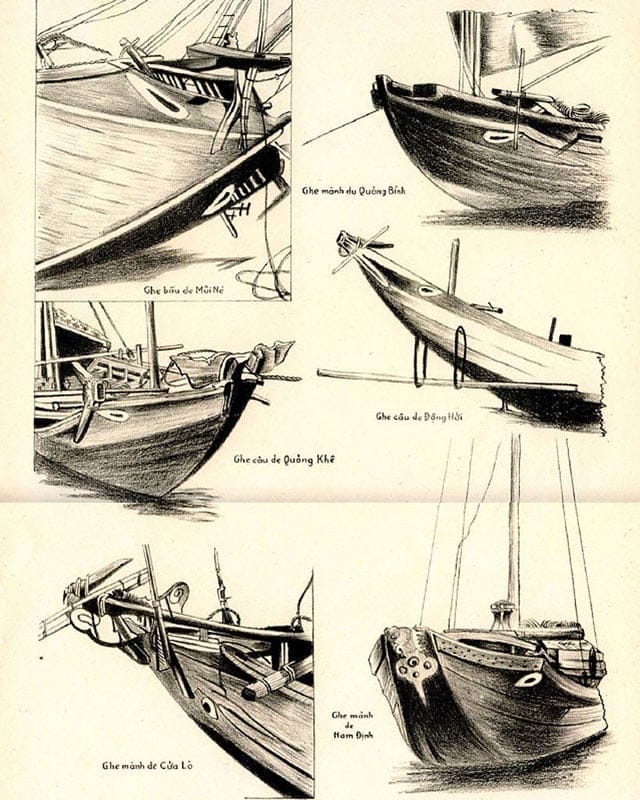
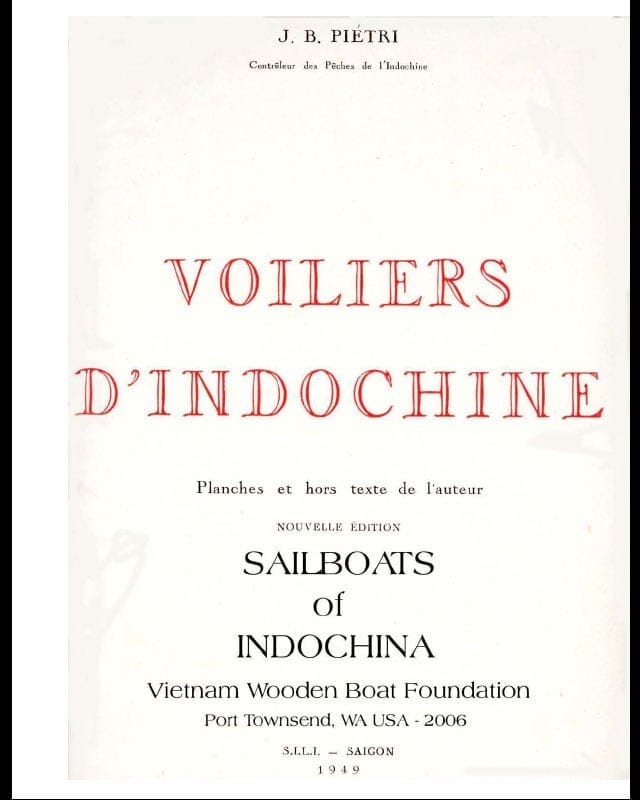
Monsieur Piétri was Director of Fisheries of Colonial French Indochina (Vietnamese: Giám đốc nha ngư nghiệp Đông Dương), his career may had taken him to many watery parts of Vietnam, but only his passion for boat and sailing that resulted in Voiliers d’Indochine (Sailboats of Indochina), a book he’d spent many years working on, in the 30s the previous century, first published in Saigon, 1943, two decades ahead of The Junk Blue Book. I was reading it through an English translation of The Vietnam wooden boat Foundation, and its foreword: dedicate to Mr. J B Pietri in recognition of his passion to accurately record the creativity and ingenuity of the Vietnamese people in the building of unique wooden boats…

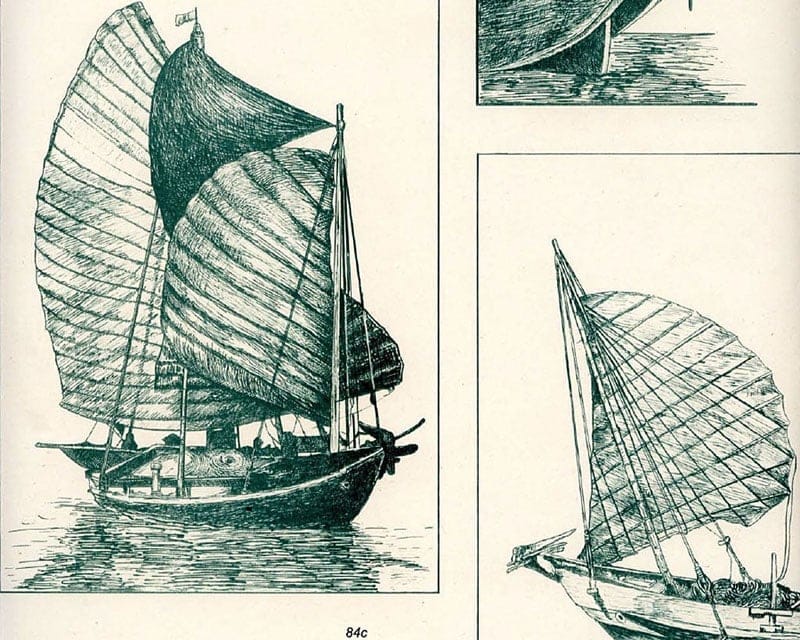
the junk blue book, 3

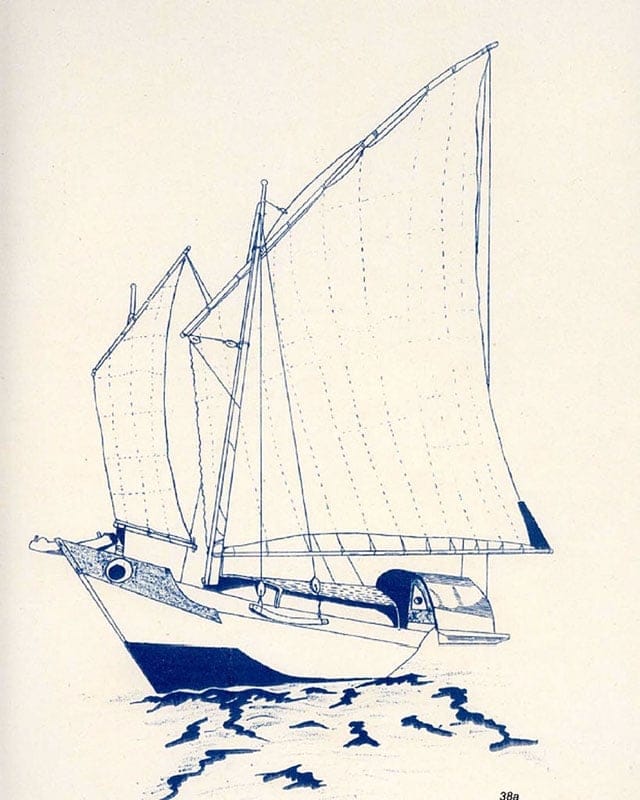
the Junk Blue Book – Marion C. Dalby, by its mission definition, is to provide knowledge to help identifying various Vietnamese indigenous boats, a military technical manual to be precise, not a book about boat design and construction. However it’s among the very rare well – written and fully – illustrated documents available today for us to know how, just half a century ago, our ancestors were operating sailing crafts. As in most of the world the working Vietnamese seamen had little interest in chronicling their environment, or perhaps they had no idea that such everyday life would be of interest to anyone… VN people is, as always, extremely easy to forget the past, and we’re today placed at a fait accompli of a now vanished culture!

Around mid 20th century, the Age of Sail has been long over in the Western world, while in Indochina, sailing crafts were widely used still, and Westerners came to VN seeing them from a “recreational sport” point of view. Many of whom were surprised by the diversity in boat designs and constructions, some were astonished by unique features that only VN boats have, some admired the beauty and performance characteristics of certain VN sailing crafts. One such person is J.B. Piétri and his book Voiliers d’Indochine (Sailboats of Indochina). A marvellous book, no photographs, but all beautiful hand – drawn sketches, not only do they clearly show technical details, but also illustrate the other artistic side of the subject. To be presented in my up – coming posts!

the junk blue book, 2

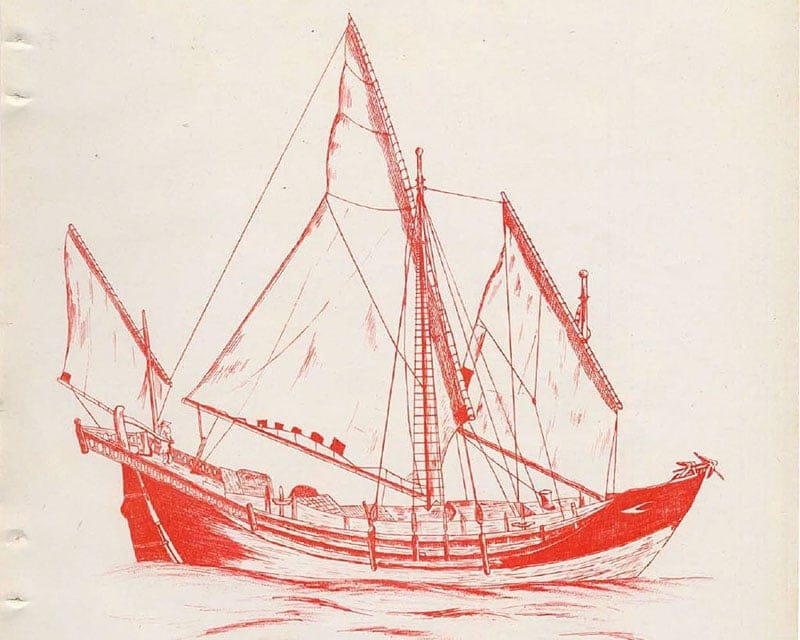
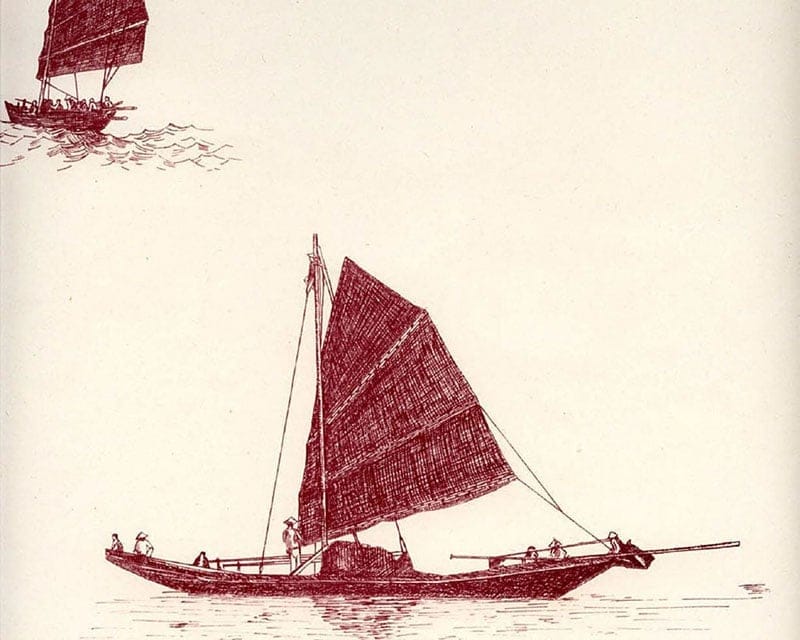
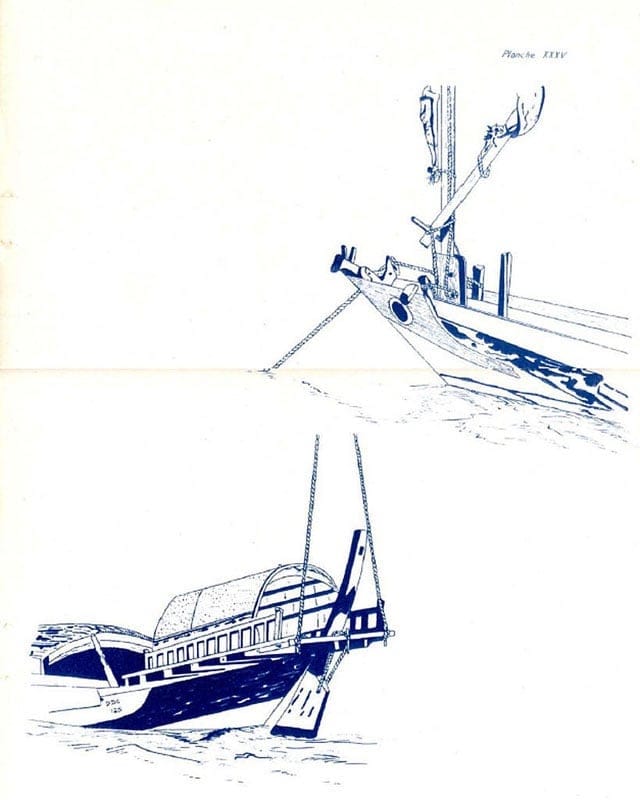
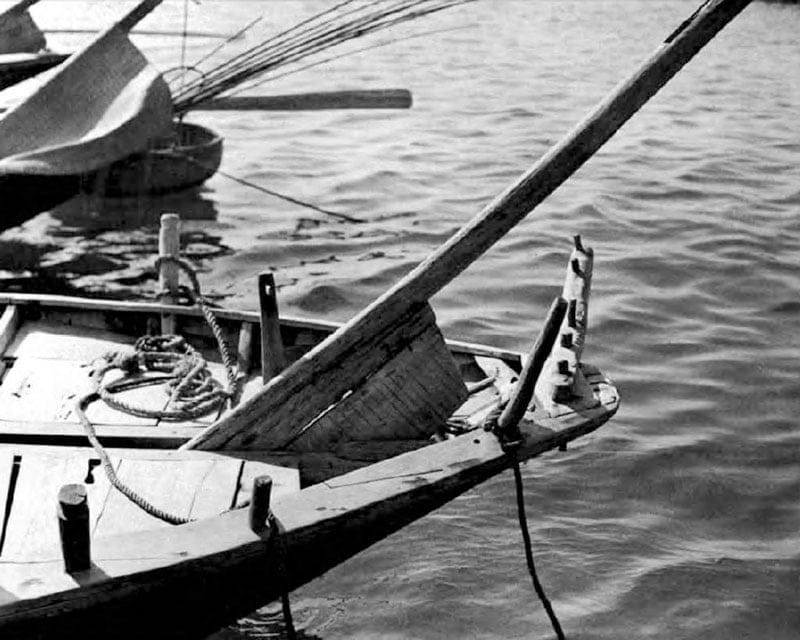
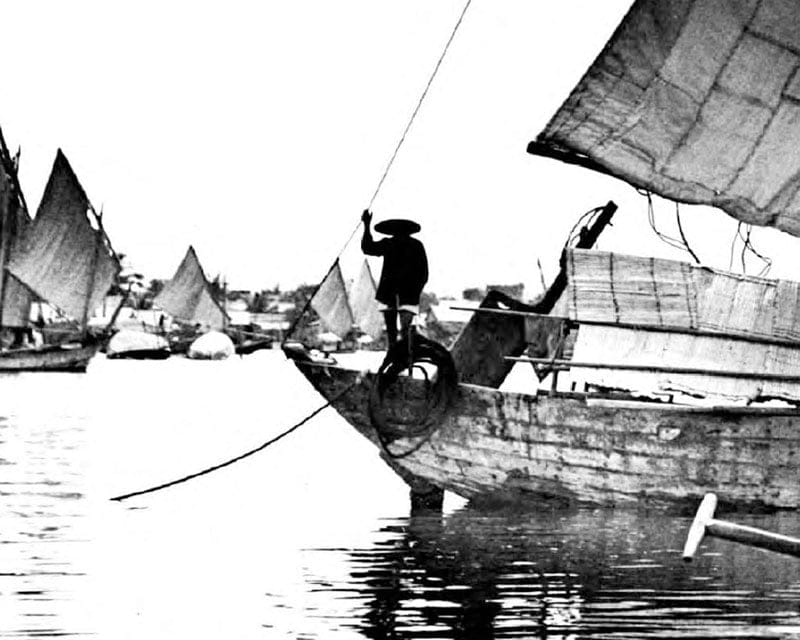
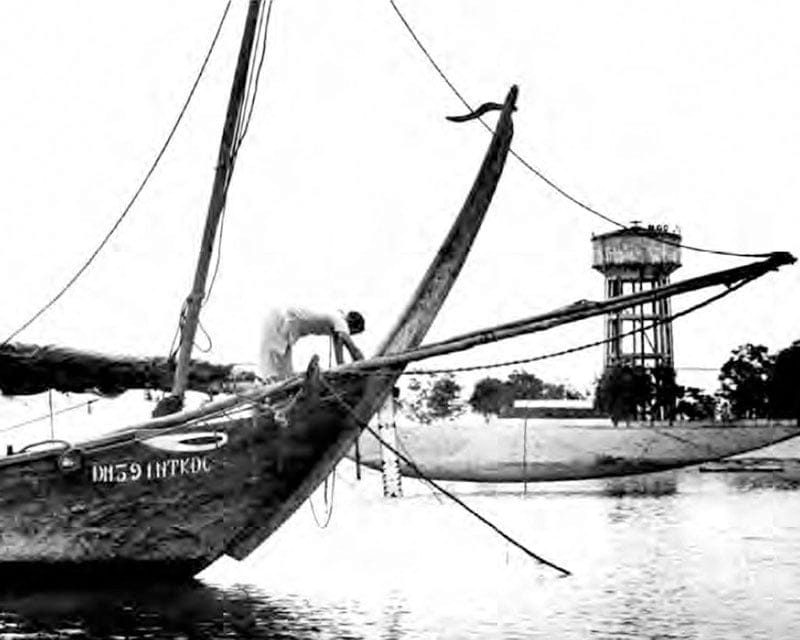
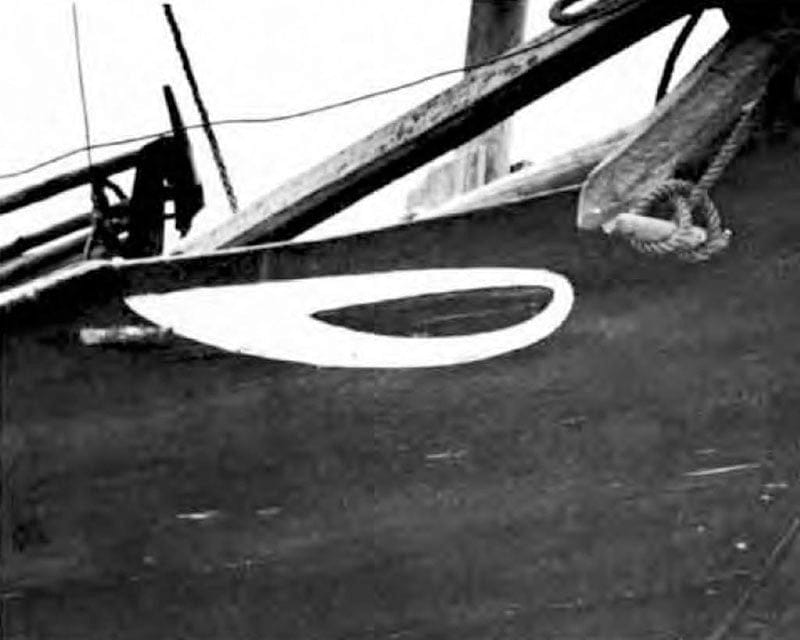
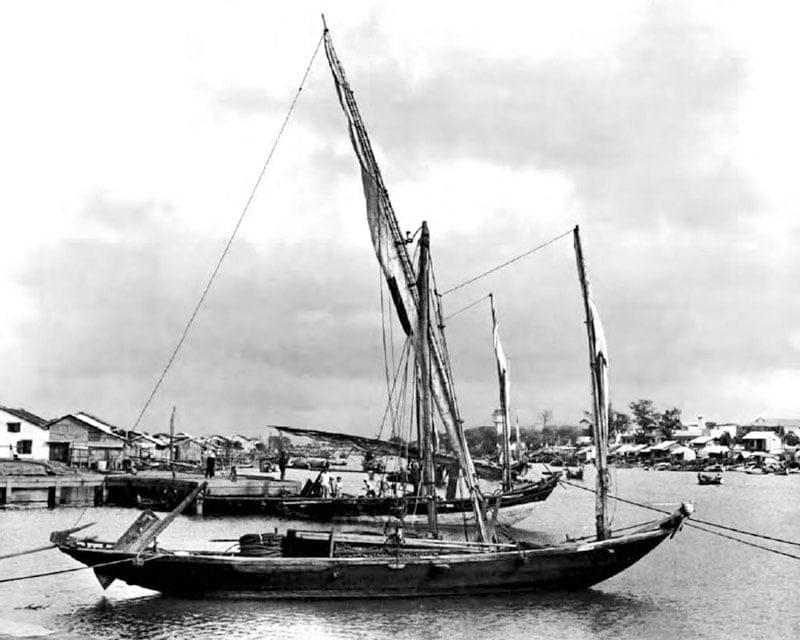
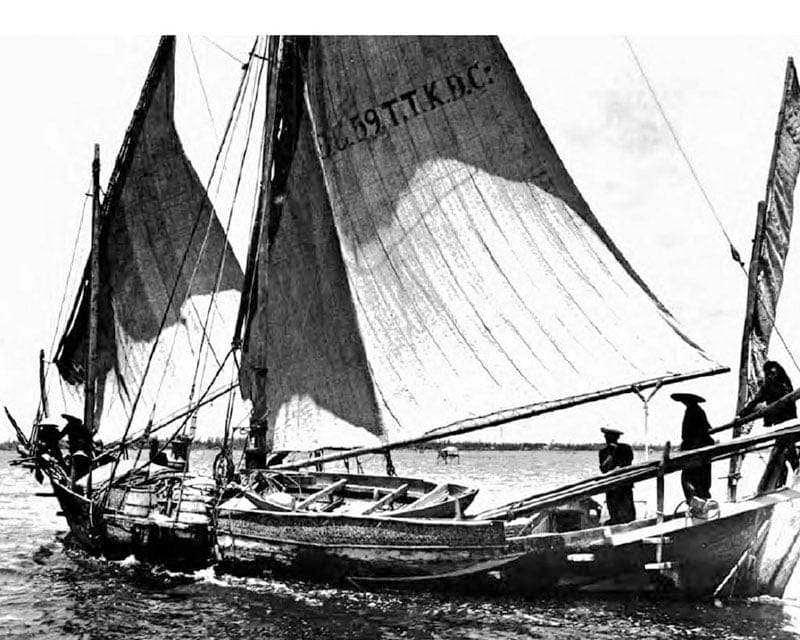
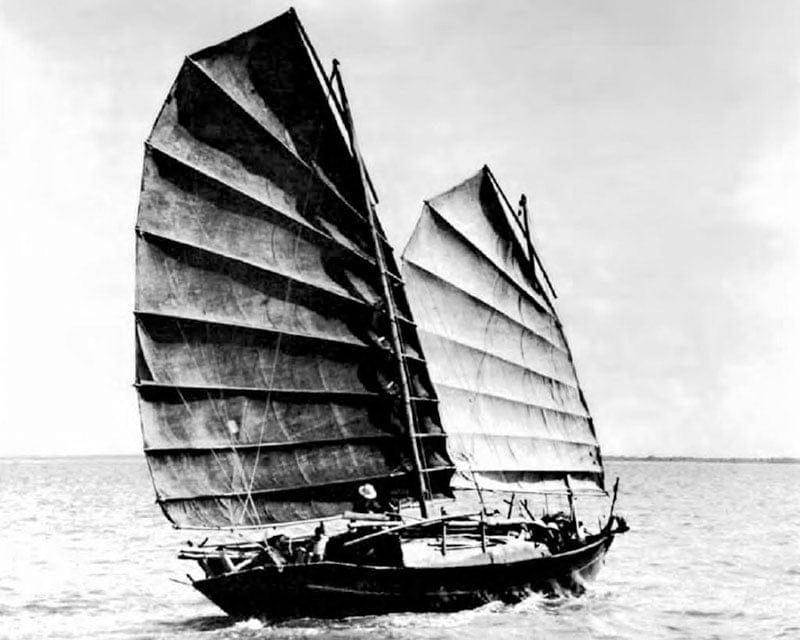
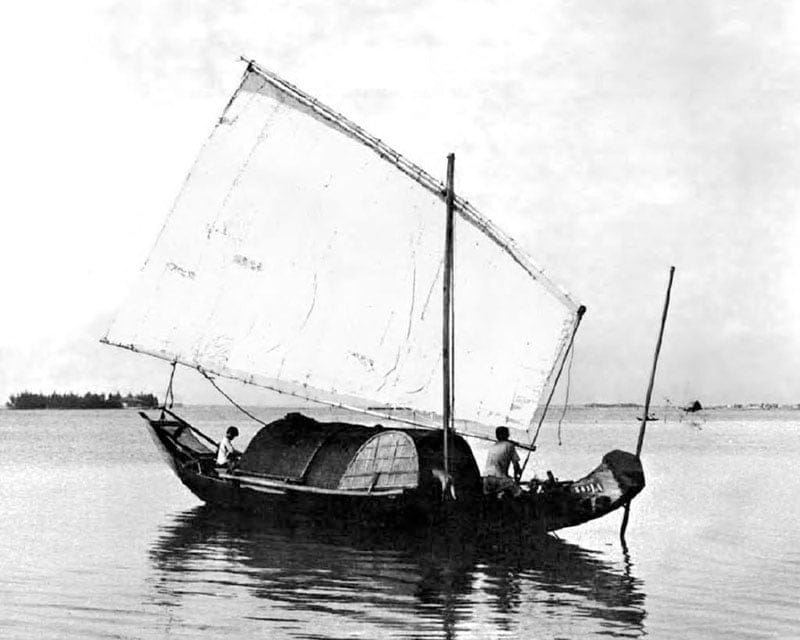
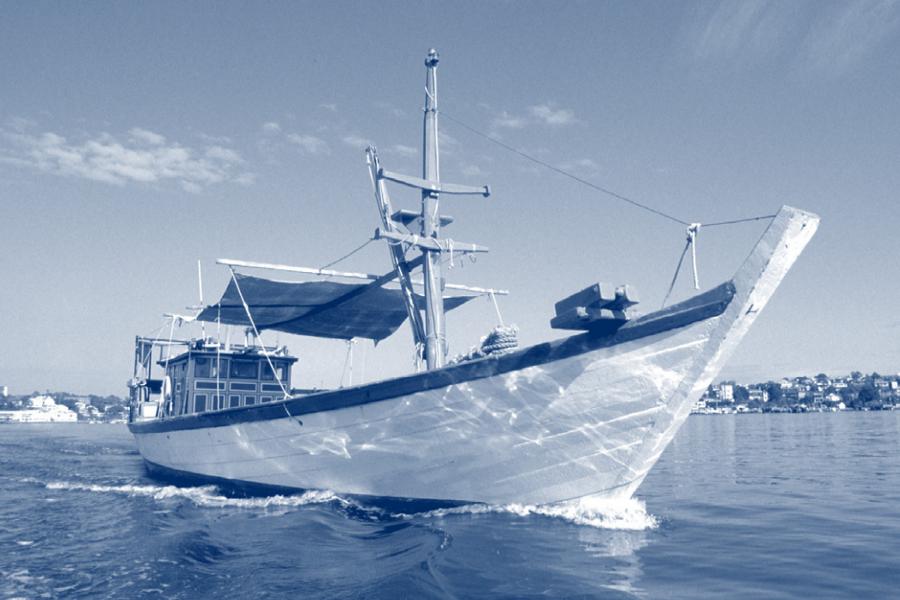
M ore pictures from The Junk Blue Book – Marion C. Dalby, more about cargo boats (the previous post presents mainly fishing boats). First image in the series: a typical ghe bầu, the main “work – horse” of Southern people in the old days, ancestor of cargo boats usually seen in the Mekong delta nowadays (though the hull shape has changed significantly with introduction of combustion engine, I suppose). At the time of The Junk Blue Book, boats of this type were usually found around 100 ton in displacement, though in previous centuries, they were often constructed bigger at a few hundreds ton to be used for both trading and naval purposes. Ghe bầu composed the ‘spiral – cord’ of Vietnamese landlords’ navies in feudal time.

According to records of Western missionaries, adventurers, soldier – of – fortunes… who worked in Vietnam in the late 18th century, the Nguyễn and Tây Sơn lords’ navies both had a few 70 – guns mans – of – war, built and equipped to Western designs, but the majority is of ghe bầu type, with 20 ~ 60 guns mounted, capable of transporting upto 700 troops. Though these facts are likely, they’re still vague descriptions, there’s a lack of details and evidences. 50 – guns warship is a very strong frigate indeed, could be classified as 4th – rate ship – of – the – line, par the Royal Navy rating system, and should have the displacement at least at 1,000 (metric) tons, a question mark whether Vietnamese traditional boat building at the time was having such a capability.

the junk blue book, 1

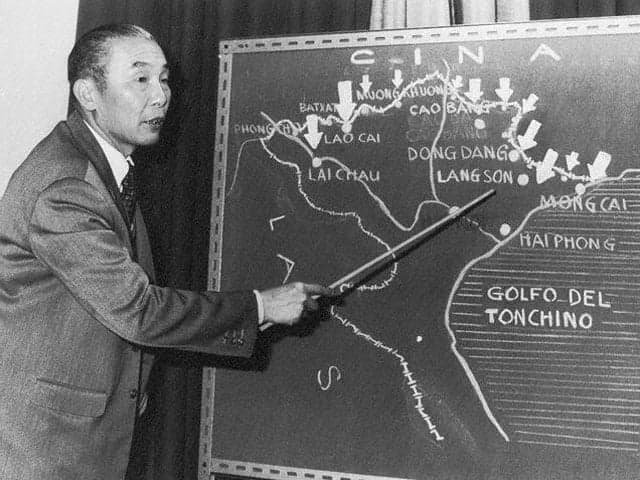
More pictures from The Junk Blue Book – Marion C. Dalby. Some history background: in the early 60s, Northern Vietnam government (DRV) started an infiltration campaign to support the Southern communists by way of sea. The task force, designated: Group 579, deployed numerous boats, built and camouflaged as Southern fishing or cargo boats, smuggled weapons and war materials onto various spots along southern coast below the 17th parallel. The advantages of secret lines of boats are obvious: only need a small number of well – trained sailors, much larger cargo capacity, harder to trace and intercept (compared to e.g: transporting by trucks, which required lots of labours for road building and protecting, which is hard to keep secret).

The US Navy took countermeasures, first by carrying out a study on VN indigenous boats: designs and constructions, outer appearances, sail plans, navigational equipments, operational zones and routes, methods and habits of fishing… in an effort to help identifying which are real Southern VN boats, and which are camouflaged Northern ones. The result is The Junk Blue Book, the study was taken place at a time when the majority of VN boats (over ~ 70%) was still operating primarily on sails. Ironical facts of history, that a work conducted initially against Vietnamese people, has now turned into a record of knowledge on Vietnamese sailing tradition, a tradition that has been long forgotten by its owner, very few people still care or even aware of it nowadays!

17 tháng 2…

Anh ở Lào Cai, Nơi con sông Hồng chảy vào đất Việt. Tháng hai mùa này con nước, Lắng phù sa in dấu đôi bờ. Biết em năm ngóng tháng chờ, Cứ chiều chiều ra sông gánh nước. Nên ngày ngày cùng bạn bè lên chốt, Anh lại xuống sông Hồng cho thoả nỗi em mong. Đài báo gió mùa em thương ở đầu sông, Đỉnh đồi cao chiến hào anh gặp rét. Biết mùa màng đồng quê chưa cấy hết, Tay em ngập dưới bùn lúa có thẳng hàng không? Nếu chúng mình còn cái thủa dung dăng, Anh thả lá thuyền xuôi về dưới ấy. Em ra sông chắc em sẽ thấy, Chỉ nỗi nhớ chúng mình đủ ấm mọi mùa đông… Thì hỡi em yêu ở cuối sông Hồng, Nếu gặp dòng sông ngầu lên sắc đỏ, Là niềm thương anh gửi về em đó, Qua màu nước sông Hồng, em hiểu chiến công anh! (Gửi em ở cuối sông Hồng – Dương Soái)

Gởi em ở cuối sông Hồng - Anh Thơ, Việt Hoàn 

Đêm tháng Năm vào bình độ bốn trăm, Đoàn xe trôi êm êm, tầm đại bác. Thuốc súng tanh lá rừng kêu xào xạc, Chúng no máu rồi không cắn nữa đâu!? Lắc lư xe quan tài vượt về sau, Máu dỏ xuống đường cuốn vào cát bụi. Lại xe quan tài vượt lên lầm lũi, Tốp thương binh bê bết máu mặt mày. Đám cướp kia Thánh, Phật dạy ăn chay, Chẳng kiêng gì ngày rằm mùng một. Đạn cày xới đất tơi trồng cây tốt, Tưới máu người cướp, giữ đất biên cương. Tư lệnh Hoàng Đan trận này cầm quân, Ông bảo rằng: sống chết thời vận số. Cả trung đoàn ào ào như thác lũ, Bình độ Bốn trăm bình địa trận người. Những chàng trai sống chết trận này ơi! Mưa đổ xuống ông trời tuôn nước mắt. Ơn nhớ mãi thân người đi giữ đất, Người trở về ăn, sống, ở ra sao? (Bình độ bốn trăm – Nguyễn Mạnh Hùng)

trường ca hòn vọng phu, 2


Tôi muốn được nghe một loại nhạc Việt như thế này!!!

Bản nhạc thuộc top những bài thường nghe trên iPod của tôi thời gian gần đây, là một bài rất cũ nhưng mang một trình bày rất mới, một bài mang âm điệu dân ca “bình dị, thân thuộc” nhưng là trường ca mang tính sử thi kỳ vĩ nhất của Tân nhạc. Cách đây đã khá nhiều năm, tôi từng mơ ước được nghe trường ca Hòn Vọng Phu trình diễn, phát triển, biến tấu… bởi một dàn nhạc lớn thật lớn, vì tầm vóc bản nhạc không phải ở mức một “khúc hát ru con” bình thường.

Nhạc trưởng Lê Văn Khoa đã soạn lại Trường ca Hòn Vọng Phu cho dàn nhạc và đồng ca dựa trên căn bản hòa âm ban đầu của tác giả Lê Thương, nhiều đoạn nghe rất thấm! Là một chiếc bình mới đẹp cho món rượu cũ, một loại rượu lâu năm, càng lúc càng hiếm và có giá. Nếu như âm nhạc đương đại có nhiều yếu tố mới, kỹ thuật hiện đại, hòa âm tốt, thu âm hoàn hảo bao nhiêu thì về tính tự tin trong sáng tác càng kém tiền nhân bấy nhiêu!

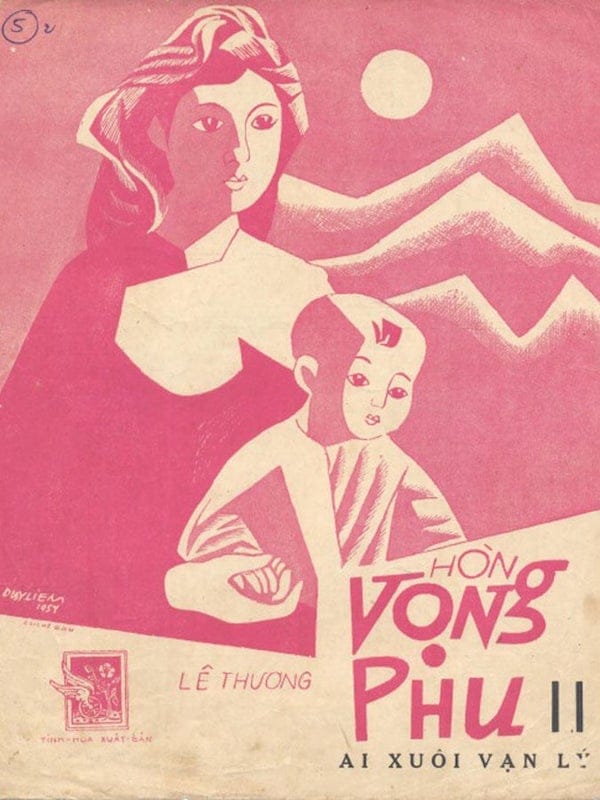
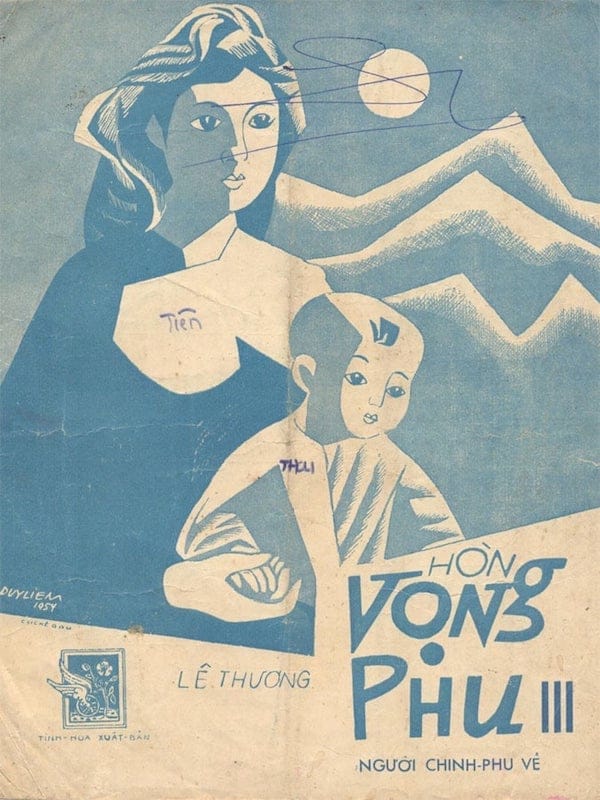
Hòn vọng phu 1: Đoàn người ra đi

Hòn vọng phu 2: Ai xuôi vạn lý

Hòn vọng phu 3: Người chinh phu về

cq – 88

Bức tranh này do cậu bé TKXuyên vẽ năm 1988, màu nước trên giấy, hiện vẫn treo trong phòng làm việc của mình (mọi người đừng cười một người chưa bao giờ có khiếu vẽ vời gì dù chỉ là một chút xíu). Dĩ nhiên là tôi còn nhớ rất rõ là vẽ vì những lý do gì, trong bối cảnh như thế nào. Mọi người hẳn chưa thể nào quên sự kiện CQ – 88 mà ngay cả một cậu bé 9 tuổi là tôi lúc bấy giờ cũng từng ngày dõi theo. Nghĩ mà buồn, đến nay hơn 20 năm rồi mà mọi chuyện vẫn thế. Dòng chữ đề trong bức tranh: Cũng có lúc mưa dồn sóng vỗ, Quyết ra tay buồm lái với cuồng phong, cụ Nguyễn Công Trứ có sống lại mà nhìn bối cảnh bây giờ…

bare feet, iron will

One more item in my to – be – read list: Bare Feet, Iron Will, by James Zumwalt, a retired Marine lieutenant colonel, son of the Vietnam war’s time US Navy’s Admiral. The book has recently been translated and published in Vietnamese. Though I haven’t got an English copy in hand, my interests rose after reading this interview with the author. Just like Archimedes Patti’s book Why Vietnam?, I would expect stories from intermediate – level officers to contains a lot of facts, events, numbers… that gives details into the things that happened, and offers closer, truer look into the figures involved, unlike those of high – level cadre supérieur (a.k.a politicians).

The author recently gave an interview with Vietnamese presses, in which he confirmed that his book was inspired by The sorrow of war, Bảo Ninh’s novel. He loves the novel and dedicates part of his book to write about this Vietnamese fiction and its author. I knew some 20 years ago that The sorrow of war would be a very profound impact (read more about it in my another post here). It’s just ridiculous that the VN government once forbade (and still limits) the novel, permits it to be appeared on news on occasions only to serve some political purposes, this time is a step toward tighter relation with the US. Below is some notable remarks from the author, James Zumwalt interviews:

Was the loss of a loved one any less significant just because it occurred on the other side of the battlefield? …It just opened my eyes to the fact that we have to recognise that our suffering is mirrored on other side.

When I made my second trip, one of the first places I went to was the Hanoi war museum. And there they had a section devoted to war criminals – one of whom was my father for his use of Agent Orange. (Asked: How did he react to being a war criminal?) He kind of smiled and said: Well it’s a good thing they didn’t arrest me when I was there.

In one case, a doctor told his wife he would probably be gone for six months to a year. He was gone for eight years, and only got back to visit his wife once… Many of those I interviewed had difficulty pinpointing particular years, but they could tell me if it was in dry or monsoon season. That was the way they looked at it. The year didn’t matter. That shows the mindset they operated under.

There were some 1,400 mothers who lost three or more sons in the war. I think we’d be hard pressed in this country to find more than a handful of mothers who lost more than one son in Vietnam. They considered it a sacrifice they had to make.

In the interviews I did with hundreds of NVA / VC I asked them what their motivation was. It was not communism but rather it was nationalism and the desire to reunify the country… I believe it is part of the Vietnamese people’s DNA. To them, there was never any alternative, they just had to prevail.

Look at the Vietnamese who defeated the Japanese in 1945, the French in 1954, the Americans in 1975, and again the Chinese in 1979, I don’t think we realised we were probably fighting against Vietnam’s own Greatest Generation. (yes we sacrificed our best seeds in those wars, you know what the sh… is left as of today!)

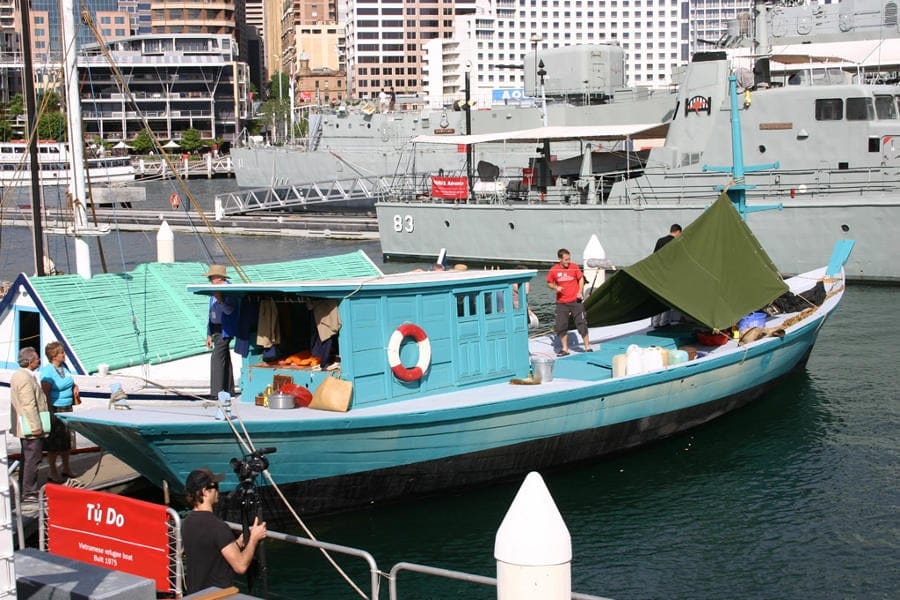
the tự – do boat


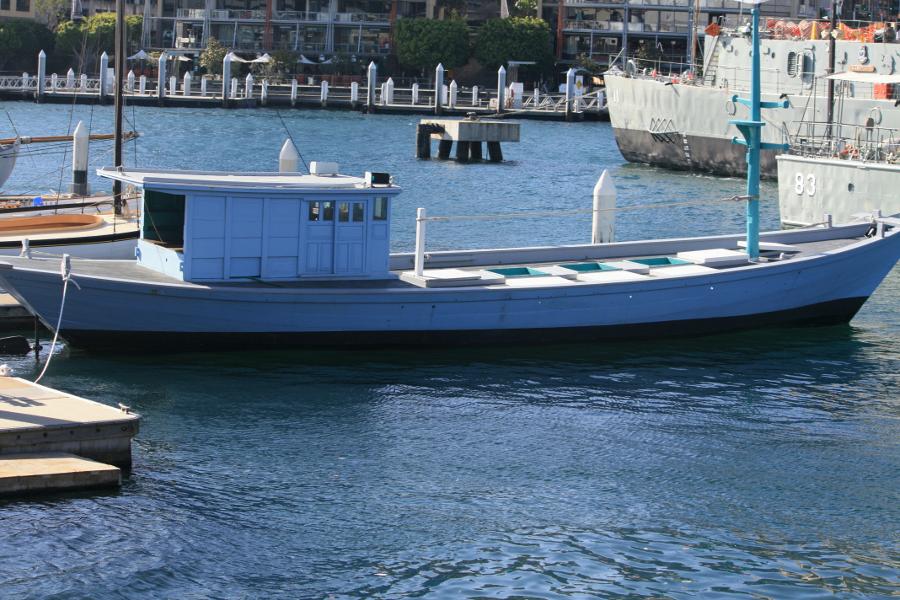
The boat now belongs to the Australian National Maritime Museum. It has been refurbished and restored to the original design with the help of the Lu family, and preserved as a museum’s fully – operational object to demonstrate the country’s immigration history, the whole story is recited here.

Interesting story about a Vietnamese boat – people‘s vessel, the one dubbed: Tự do – Freedom. In 1976, the boat was laid down at Phú Quốc island as a dragnet fishing vessel, a construction built just for the escape from the newly – formed regime (1975). Mr. Tan Than Lu planned his escape meticulously along with his family, relatives and friends.

The hull (as seen in the images) still incorporates in it some Vietnamese indigenous ship building features, the registration number reads: VNKG1062, which indicates that the boat originally had its home port in Kiên Giang, Việt Nam. Hull dimensions: 19.4m (length), 5.2m (beam) and 1.8m (draft). It must be noticed that the Lu family is a very rare case among almost half a million of Vietnamese boat – people at the time, very few could afford building such a boat for escaping, and few had had such a lucky and successful trip.

The boat involved in fishing for half a year to allay government’s suspicion. Then pretended to have an engine breakdown so that surveillance of them would be relaxed, a more powerful replacement engine was installed during the night, children were given cough medicine to make them sleep and keep silence, the crew of 38 departed on Aug 16th, 1977. They arrived at Mersing, Malaysia, where 8 passengers were disembarked as refugees.

After one month of unsuccessful approaches to the US Embassy, Mr. Lu decided to set sail for Australia with the remaining 30 people on board. They were resupplied and encouraged to move on by the Indonesian authorities. They reached Darwin, Australia on Nov 21st, 1977 after a 6000 kilometers journey guided only by map torn from a schoolbook and a simple compass.

un vietnamien bien tranquille

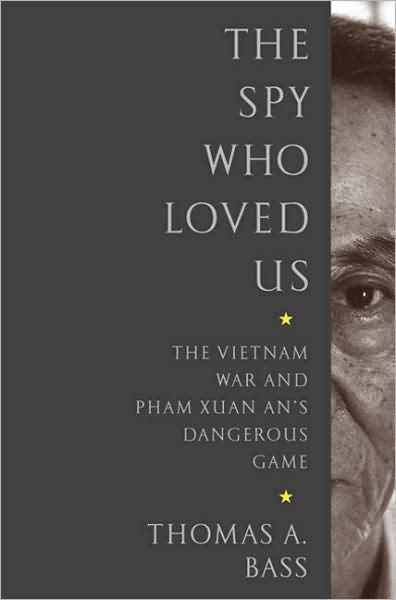
Having a time to read some notable documents: The spy who loved us – Thomas Bass, and The perfect spy – Larry Berman. At first, I’d thought: oh, all these stories I’ve knew quite well already, there’s no need to read more. But then I considered it’s good to be reflective, reading the same stories in another language, from other points of view.

I’d read these two books (in English), which contains quite some interpreting errors (most of them are unintentional I think) then I proceeded to their Vietnamese translations (which are really bad, lots of linguistic mistakes), but again another reflections of reflections. All readings confirmed my understanding about the Vietnamese legendary intelligence agent Phạm Xuân Ẩn, whose role is now recognized as crucially decisive in the second IndoChina war.

Espionage and Journalism

As the first IndoChina war was approaching its end, the Việt Minh leaders knew that it’s just a matter of time before the American get their hands in. They had lived and fought with the French long enough that they had extensively well understanding on their enemy, the same is not true for the Americans. During the 9 years of the first IndoChina war, Ẩn had already worked against the French, under his cousin Phạm Xuân Giai, head of South Vietnam’s Cinquième Bureau – department for psychological warfare, who was working for the French’s Deuxième Bureau.

In 1957, Phạm Xuân Ẩn was ordered to go to the States, studying journalism (as a cover), learning their language, culture, their way of thinking… a preparation that later turned out to have devastating effects. During the time in America (and even long before), Ẩn has developed a sympathy (if not admiration) for American people and culture, and at the same time, touting his horns in a war to come against them.

These two professions were very contradictory, but also very similar. The intelligence job involves collecting information, analyzing it, and jealously keeping it secret, like a cat covering its droppings. The journalist, on the other hand, collects information, analyzes it, and then publishes it to the world. (Phạm Xuân Ẩn)

Information and disinformation

Upon coming back (1959), Ẩn worked for several presses: Việt Tấn Xã, Reuters, Time… Among all journalists in Saigon at the time, Ẩn is considered to be the best informants: new – comers introduced with him for guidances, seasoned ones seeked him for tips. He had various sources in the governments, army officers, secret polices… he had the best ears on the ground for everything. He is dubbed: “the weatherman” who foretell the political atmosphere, generals consulted him before planning coup d’état, the Buddhist monks informed him in advance if they prepare a protestant self – burning.

He made very good friend and closed cooperation with Edward Lansdale, head of IndoChina CIA division, the legendary agent nick – named: the king – maker, who manipulated every puppets on the Southern political stage, yet Lansdale had never doubted it. People was thinking he could be a CIA agent, a French sûreté, a South VN secret police, or he could be both. But none ever thought of him working for the Red NLF.

After the war, upon learning about the fact, some of his colleagues have tried to prove that Ẩn could had been giving disinformation at times. In fact, all his written records at the Time magazine (where he worked for 10 years) proved the opposite. Had he done it, with all the overwhelming clandestine agents among the presses, things could have easily been cross – checked and that would betray Ẩn, the espionage. And he of course hadn’t made those preliminary mistakes.

The source had given me the story on condition that I shouldn’t reveal it before it happened. These are the ethics of the press. You have to observe them, no matter how tough it may be. These are also the ethics of an intelligence agent who knows the propaganda value of burning monks. (Phạm Xuân Ẩn)

Balance and Objective

One thing Ẩn learned in American news career is that: a writing must be well – balanced, not biased in any directions, and at the same time it has to be objective, giving useful information to help coming to some helpful conclusions. Yet the two are usually contradictory. Similarly, questions have been raised about the nature of a man who lived an extremely dangerous double life for 30 years, about the one who deeply admires American culture but fiercefully fights against them.

In fact, Ẩn made true friend to many American journalists, help them in many cases, many of whom still love him even after learning that he was a spy. Many would recall how he saved the life of Robert Sam Anson, the war correspondent who was arrested by the VC in Cambodia. Ẩn came closest to getting discovered when he promised to Anson’s wife (who was begging for help) that he would do everything he could, a dangerous remark which implies he really could do something. Anson was later released as per request Ẩn made to his superiors, a truth Anson would only know for sure years later.

He was a man of wisdom, courage, and clear – headed patriotism. He was also – even if it seems ironic to say this under the circumstances – a man of extraordinary integrity. He loved us at our best even while confronting us at our worst. (Daniel Ellsberg)

Strategy and Tactic

A pattern in Ẩn’s stories, as usual, as an amusing raconteur: I’m a strategic analyst, I was concentrating on background information and situation assessment. Yet it’s a reason he gives in order not to get into too much details that he wouldn’t want to release even in the next 50 years: that’s related to too many people, many have died, but some still alive with their relatives, there’s no reason to cause harm to them anyway (Ẩn has always been loyal and protective to his information sources, from either sides, many of which is built upon personal relations).

But Western researchers found this an “undeniable fact”: he’s been awarded with 16 medals, among which 2 are general (one “Hero of the People’s Army” medal, the highest military award in VN, and another medal for “50 years of Party’s service”), the other 14 are all credited to specific battles, 4 of which is apparently known: the Ấp Bắc battle (1963), the Tết offensive (1968), the Lam Sơn 1972 operation, and the final 1975 campaign. That gives some obvious hints on his role as a tactical adviser who devised detailed tactics to be used in various battles.

He would have had enough knowledge of the battlefield tactics, rules of engagement, logistics and battle – readiness of both the Vietnamese and Americans in that area at that time to give pretty good advice on the way to set up a trap for them. Certainly Ấp Bắc had the hallmarks of a trap. (Nick Turner)

Nguyễn Văn Tào (nom de guerre: Tư Cang), head of the H.63 spy ring, direct ‘boss’ of Phạm Xuân Ẩn, famous for his ability of pistol shooting with both hands, and never miss a shot.
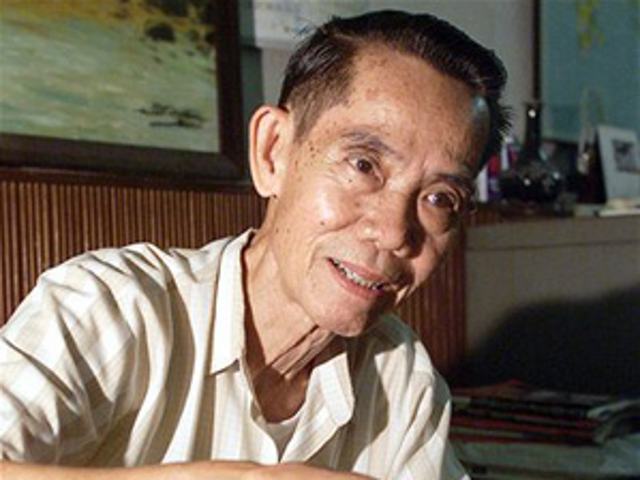
Phạm Xuân Ẩn (nom de guerre: Hai Trung), the strategic analyzer whose information, documents, assessments… greatly changed the pace of war.
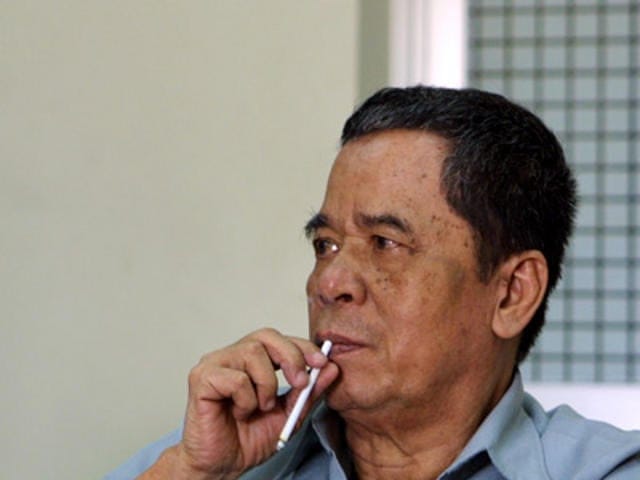
Nguyễn Văn Thương (nom de guerre: Hai Thương), one of the couriers who run Ẩn’s messages. He was arrested, tortured, both his 2 legs were cut off six times, each without any narcotic. He could had saved his life, but he chose to save the network.

How could someone so voluble and open about his life be a spy? How could someone so funny and pointed in his remarks about human stupidity be a Communist? …He was a divided man of utter integrity, someone who lived a lie and always told the truth. (Thomas Bass)

Communists and Nationalists

This is the point of hatred conflicting among Vietnamese communities for so many years. My point of view, which is also reflected tho – throughly throughout the books (can be seen as 2 American views) is that: the communists, they had an ideologue (no matter right or wrong it could be), and they had determinations. On that basics, they’d had detailed planning and extensive efforts to carry it out, and they’d made sacrifices to carry it out to the end. The same is not true with the so called southerners’ nationalism.

As long as the Americans were pumping money in, the Southern government staffs were trying to steal as much as possible, and pretend to be supportive to the Americans’ causes while avoiding fights and casualties on the battle fields. They’d lost, as they presented nothing, not nationalists, not even anti – communists, but only their own personal and family’s interests. The consequence can be seen clearly: the majority of southern people took side, they have always been sympathetic to the Communists’ national independence causes, although they’re not communists.

Communism and Patriotism

It would eventually become clear why so many people have made extreme efforts and sacrifices, it was not because of any ideology. Of the total 43 members of the H.63 espionage network, 25 were captured, tortured, many of them chose to die, but the network remained unbroken. They were couriers, who in 15 continuous years, ran the total 498 messages (reports) from Phạm Xuân Ẩn to the Iron Triangle Củ Chi, from where it would be delivered directly to the Politburo in Hà Nội. Ẩn always kept an poison pill in his pocket, ready for a death that was hanging over him for those 15 years.

Many who survived the war found themselves disillusioned with the post – war living, finding that the new regime has become even more corrupted than the previous one, and that is not what they were fighting for. Yet they were fighting not for any individual, any ideology, any government… Many failed to realize it is patriotism in the truest and deepest meaning! Phạm Xuân Ẩn to the last year of his life, works as an consultant to TC2 (the Vietnamese equivalence of Deuxième Bureau), who doesn’t understand and doesn’t trust him, but badly need his razor – sharp analyses and assessments.

Lessons learnt

If something can be learnt from Phạm Xuân Ẩn’s life, it’s something about cultural understanding. While most VC has very limited knowledge about American culture and values, they’d succeeded in cultivating at least one spy who could think like an American, a spy who loved Americans and was loved by them in return. That way he can get deep into the adversary’s mind and soul, and know the way to defeat them.

It’s all about understanding, the French had stayed in Vietnam for a considerable amount of time, they’d learnt to divide and conquer the Vietnamese, a job they’d done excellently. It took a few generations to absorb their culture, to gain enough understanding to have successful retaliations. What the American had done in Vietnam to some extent was repeating things the French had done already, in a far larger scale.

Those above are indeed the small part of the lessons. Ẩn said: the American are very good at collecting and analyzing information, but they don’t know what to do with them (at least in scopes of the Vietnam war). Similarly, we can say: the Vietnamese know how to obtain a victory (or it supposes to be called so), but then they don’t know what to do with it. Phạm Xuân Ẩn in person is a talkative one, he can talk about his thinking all day.

But as a spy, a strategic analyzer, he is actually a very quite Vietnamese, who had much more profound thoughts and understanding but can’t say it out. Lots of our own problems are briefly reflected throughout the American books, but they’re not recognized tho – throughly by our own people… Things get passed silently in our sleeping – pleasing minds until another war, another revolution that is… just pending.

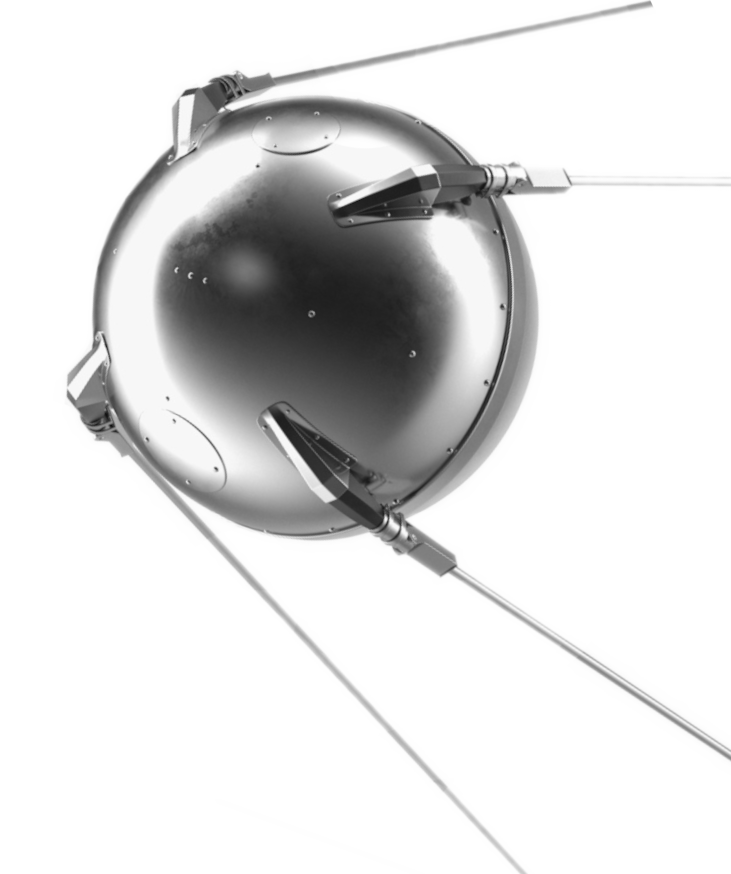
The spy who loved us – Thomas Bass (pdf.tar.gz) (mobi.tar.gz)

Perfect spy – Larry Berman (pdf.tar.gz) (mobi.tar.gz)

hoàn kiếm turtle

Ai về xứ Bắc ta đi với,
Thăm lại non sông giống Lạc Hồng.
Từ độ mang gươm đi mở cõi,
Trời Nam thương nhớ đất Thăng Long!
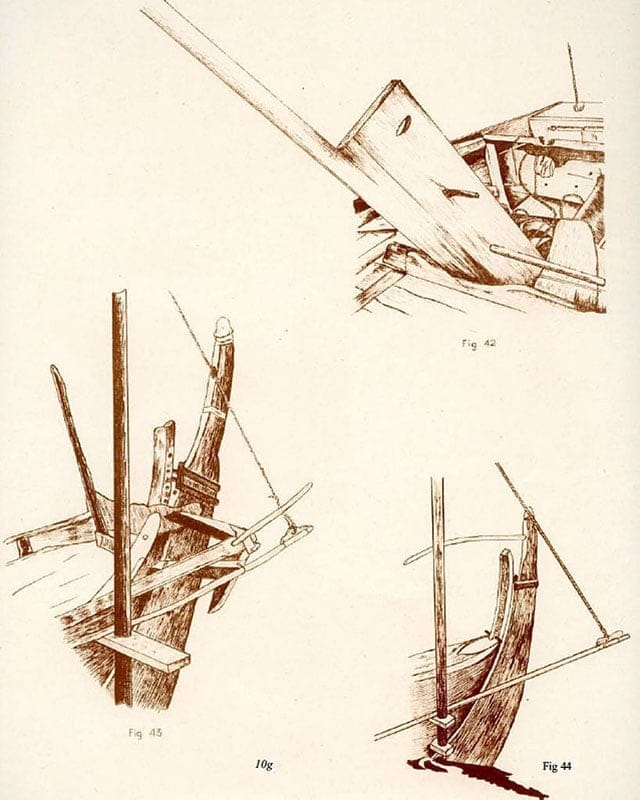
This could be the last living turtle in Hoàn Kiếm lake and among the lone 4 surviving individuals (2 in China and 2 in Vietnam). The specie is known to be the largest soft – shell turtle in the world.

In 1967, this turtle died (the body preserved at Ngọc Sơn temple), leaving the turtle above the last one. His post – mortem measures: 2.1 x 1.2 meter in size, 250 kg in weight, estimated age at 400 years.

Recently, there’s been much activities on protecting the last specimen of turtle living in Hoàn Kiếm lake. Preserving efforts are being taken place to: improve his living conditions and try to mate him with similar turtles in the hope of producing offspring. All Vietnamese was taught at elementary school legends behind this sacred Hoàn Kiếm turtle. And through out our history, the turtle appeared at crucial moments for not just one time… It’s the Golden Turtle who assisted King An Dương Vương in building the ancient citadel of Cổ Loa (~ 257 BC).

The turtle later helped the king in creating a multi – shot crossbow that destroyed the Northern invaders… In the last “known” advent, the Golden Turtle was sent to reclaim the Heaven’s Will Sword, which was given to Lê Lợi who carried out a 10 years resistance war and regained Vietnam’s independence. Much like King Arthur and his sword Excalibur, myths on a sword with super power sent to assist the hero is unlikely. However, the story’s moral is much more likely and profound indeed:

One year after winning, declaring independence and becoming the Emperor (1428 AD), Lê Lợi goes for boating on a lake near his palace. In the mist of the lake, the Golden Turtle appears, advances toward the boat and asks the emperor to return the sword. It suddenly became clear to Lê Lợi that the sword was only lent to him to carry out his duty, as a powerful weapon in war time, but it now must be returned to its owner, lest it would harm him and his country if misused as it’s not the appropriate tool in peace time.

Lê Lợi draws the sword out and hands it to the Golden Turtle, who grasps it with his mouth, then disappears into deep water. Aftermath, the lake was renamed Hoàn Kiếm, which means: lake of the Returned Sword (or Sword lake for short in spoken language), now at the center of Hà Nội, Việt Nam’s capital. Wise old men argue that if this only remaining sacred creature is going to die, then who would reclaim the hammer and sickle – ☭ ?

russian movies

Some recently seen (in the past few weeks) post – Soviet Russian war movies: Admiral (2008), Attack on Leningrad (2009) and Brest Fortress (2010). I can’t say anything rather than: marvelous! Both these three films should be on top of greatest war films, in many aspects: acting, costume and makeup, sound & music… comparable to any other war films ever made in the West. CGI (Computer Generated Imagery) is really good but maybe still a bit after that of Hollywood.

Russian cinema has made excellent advances, less propagandic, less rigid patterns, closer to real people in real life… that the things that made the films worth watching! In my opinion, of the series of three, the later the more interesting ones (though others may have their own different idea and evaluation).

Admiral (2008)

The films recites the life of Aleksandr Kolchak, admiral of the Russian Empire Navy. Kolchak himself was a complex character, living in a complex time: a famed Polar explorer, a valorous naval commander, a passionate lover, and eventually the Supreme Governor of the anti – communist White forces. No longer ruled by a dictatorial doctrine, Russia is now seeking to bring back true images of an extremely harsh period in her history.

The film starts with glorious feats of Kolchak commanding a destroyer in the Navy, his bravery in battles, his love affair with Anna Timiryova… and then the Red October came. Kolchak becomes the Supreme Ruler of the White Russia, who fought against the Bolshevik. Kolchak has far less success as a political leader than as a naval commander, he was finally arrested and executed by the Red. After decades of being vilified by the Soviet government, Kolchak is still now a controversial figure though there’re been rehabilitation movements to restore the place he deserves in Russian history.


Attack on Leningrad (2009)

An English journalist (of Russian origin) was trapped in the besieged city of Leningrad, the war correspondent Kate Davis was assumed dead but find herself among the starving people of the city struggling for their own survival. With the help of a kind and idealistic police women Nina Tsvetnova, they live through the 900 days in that sieged hell where food shortage only permits a ration of 125 gram of bread for each person a day. Encirclement around the city was almost completed, the only supply route through lake Ladoga was called the Road of Life (and also the Road of Death).

Nina Tsvetnova later guides a soldier group attempting to re – establish the supply route across the frozen surface of the lake. As a reward, she is permitted to bring members of her family out of the city. Nina along with the journalist take one child out with them. They succeeded but decide to return to help another child. Both two women died in the terrible city but saved two children out of the 1.5 million civil death toll, half of the city’s population.


Brest Fortress (2010)

Brest fortress was the strong hold which accounts for 5% of total Germany losses in the first phase of their Russia invasion. When German started the war, the Russian was unprepared, under – powered and defeated easily, their army was in all the way to retreat, except for this fortress. Defensed by a small unit, a regiment formation of soldiers along with their families, the fortress stands for almost a month when German has already advanced hundreds of miles into Soviet territory, leaving the point an isolated symbolically heroic fortification.

Yet they fight to the last man without any food, medical and ammunition supply, without any reinforcement. Alexander Akimov, a 15 year old young cadet of the fortress lived through the bloodshed resistance, trying to help other soldiers and his girlfriend Anya. He is the lone survivor to recall the story. The film is indeed beautiful: it concentrates on normal people, their daily lives and activities, their love, hate and humanly feelings… their choices and fates against the brutalities of war!


đường chúng ta đi


Album Đường chúng ta đi – 1976 và Album Tổ quốc yêu thương – 1978

Một chứng tích của lịch sử, album nhạc đỏ (thu âm năm 1976) với sự trình diễn của các ngôi sao nhạc vàng: Lệ Thu, Họa Mi, Hà Thanh, Thanh Tuyền, Thái Châu… Lệ Thu, Hà Thanh thì hẳn ai cũng đã biết, còn Họa Mi, Thanh Tuyền… là những giọng ca chuyên hát cho phòng Tuyên truyền của quân đội VNCH cũ… Một sự kết hợp lạ lùng nhưng vẫn hay trên một khía cạnh nào đó. Biết rằng điều này là khó nghe với khá nhiều người, nhưng âm nhạc vẫn vượt ra khỏi các biên giới chính trị, dù cho cái biên giới ấy nằm trong… chính phần ca từ các bài hát!

Theo như tôi biết, rất nhiều ca sĩ, nhạc sĩ miền Nam cũ đã chọn ở lại VN sau 1975 và phần nhiều cũng đã có những bước đầu hợp tác với chính quyền mới. Chỉ sau đó, khi điều kiện sống quá khó khăn, khi có quá nhiều những ngược đãi vật chất cũng như tinh thần thì họ mới chọn con đường trở thành “boat people” mà ra đi. Như Phạm Đình Chương, Thái Thanh… chỉ ra đi sau khi bị tuyên một cái án “cấm sáng tác và trình diễn vĩnh viễn” tại VN, như Hoàng Trọng còn ở lại VN mãi đến tận năm 1992…

Lá đỏ - Thái Châu 
Cuộc đời vẫn đẹp sao - Họa Mi, Phương Đại 
Hà Nội niềm tin yêu hy vọng - Lệ Thu 
Lên ngàn - Họa Mi 
Bóng cây Knir - Họa Mi 

Thôi thì khoan hãy bàn về cảm xúc trong các bài hát. Riêng về phần hòa âm thì có thể thấy miền Nam đi trước miền Bắc (lúc bấy giờ) rất xa trong chuyện hòa âm nhạc nhẹ. Và riêng về kỹ thuật hát thì một mình giọng ca Họa Mi cũng đã hơn đứt tất cả những ca sĩ nhạc viện được đào tạo chuyên nghiệp của miền Bắc như Lê Dung, Măng Thị Hội… (hãy nghe bài Bóng cây Knir và so sánh). Tôi có cảm giác rằng dù sao với tiếng Việt, lối hát rõ âm rõ chữ, nặng về luyến láy, hơi rung… vẫn là một lối hát truyền tải được tình cảm và phù hợp với cái tai âm nhạc Việt. Sớm muộn gì rồi lối hát này cũng sẽ trở lại…

diệc lạc hồ

双鸟齐飞

黄莺飞到北京都
会遇金鹏亦乐乎
大事未成行小事
双鸟齐飞至善图

Song điểu tề phi

Hoàng Oanh phi đáo Bắc Kinh đô, Hội ngộ Kim Bằng diệc lạc hồ! Đại sự vị thành, hành tiểu sự, Song điểu tề phi chí thiện đồ!

Nhân kỷ niệm 60 năm quốc khánh nước CHND Trung Hoa (1/10/1949 ~ 1/10/2009), trích đăng lại ở đây bài thơ của một nhân viên ngoại giao đoàn Việt Nam (đăng trên Tạp chí Sông Hương, 2002): Bài thơ thể hiện tình hữu nghị cao quý của nhân dân hai nước Việt – Trung. Bài thơ được làm năm 1991, sau một thời gian dài 10 năm (kể từ 1981), khi hai nước tuy không còn những đối đầu quân sự lớn, nhưng hai bên vẫn tiến hành một đường lối tạm gọi là artillery diplomaticngoại giao pháo binh – chân lý, lẽ phải đứng trên đầu nòng đại bác.

Các địa danh đẫm máu như Vị Xuyên, Ngọc Đường, Lũng Cú… những người từng bám trụ 10 năm ở đó đến nay vẫn nhiều người còn sống, vẫn còn kể lại chuyện ngày xưa ở đâu đó quanh đây. Trở lại với bài thơ, năm 1991, một đoàn ngoại giao VN sang TQ, những bước đi đầu tiên của tiến trình bình thường hóa quan hệ. Trưởng đoàn phía VN là ông Vũ Oanh, trưởng đoàn phía TQ là ông Lý Bằng.

Cả “Oanh” và “Bằng” đều là tên của hai loài chim (không giống nhau), như được thể hiện rất rõ trong bài thơ trên đây: Song điểu tề phiĐôi chim cùng bay. Không cần phải biết chữ Hoa, đọc phiên âm Hán Việt hẳn mọi người cũng sẽ dễ dàng hiểu nội dung bài thơ! Chúng ta thấy lại cái điệp khúc Diệc lạc hồ ở đây! Diệc lạc hồ (hay Bất diệc lạc hồ) đều có thể hiểu theo nhiều kiểu: vui lắm thay, há không vui hay sao… hay theo phương ngữ miền Nam: vui quá hén!

văn cao – hải quân việt nam


Nếu nhạc sĩ nói chung là những con người mơ mộng thì Văn Cao là con người mơ mộng siêu việt. Ông toàn mơ về những thứ mà mãi 60, 70 năm sau chúng ta mới bắt đầu có! Có 5 bài hát được viết trong những năm 1944, 1945, trước Cách mạng tháng 8. Ngoài Tiến quân ca đã được chọn là quốc ca thì Bắc sơn là bài ca viết cho các đội du kích, Chiến sĩ Việt Nam là ca khúc cho các chiến sĩ bộ binh, Hải quân Việt NamKhông quân Việt Nam là hai bài hát cho hải quân và không quân.

Hải quân Việt Nam 
Không quân Việt Nam 

Quốc ca được viết khi tác giả Văn Cao chỉ mới nghe phong phanh về mặt trận Việt Minh, còn những bài ca cho hải, lục, không quân thì được viết khi bộ binh còn là những guerrilla bands, còn hải quân và không quân hoàn toàn chưa có một chiếc canô hay tàu lượn nào, chưa nói đến những máy bay hay tàu chiến hiện đại. Mãi gần 70 năm sau khi hai bài ca được viết, VN mới bắt đầu có cái có thể gọi là Hải quân.

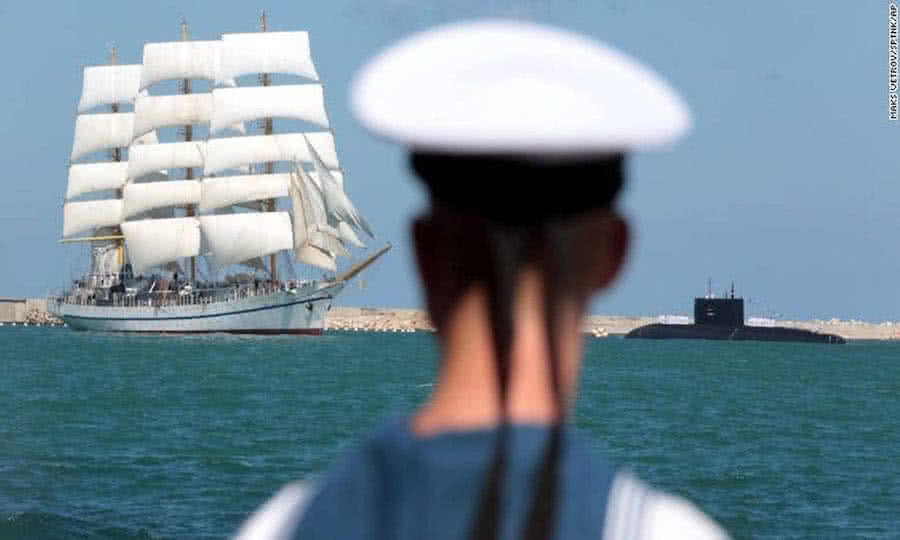
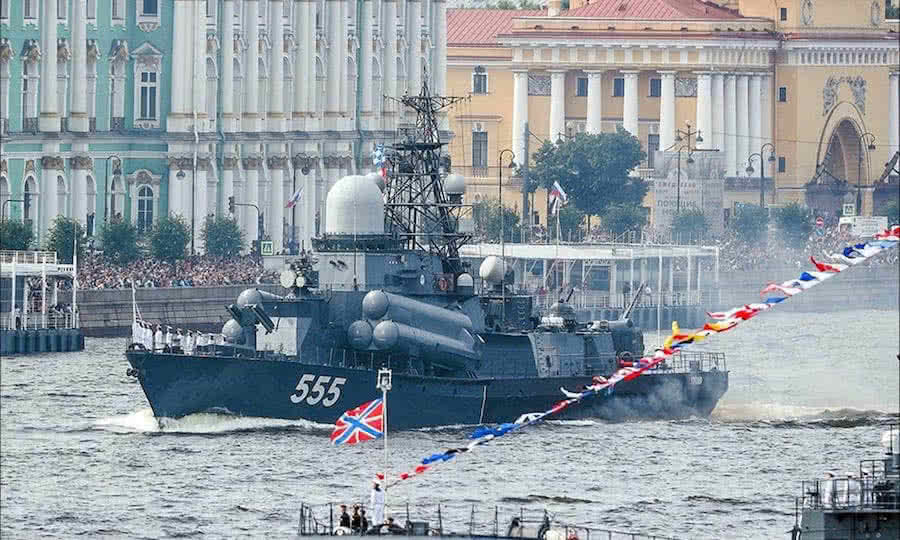
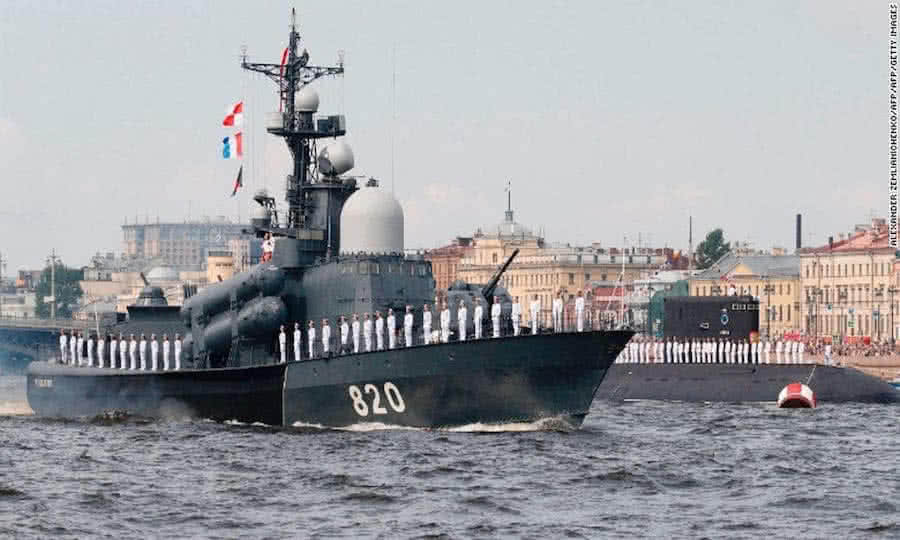
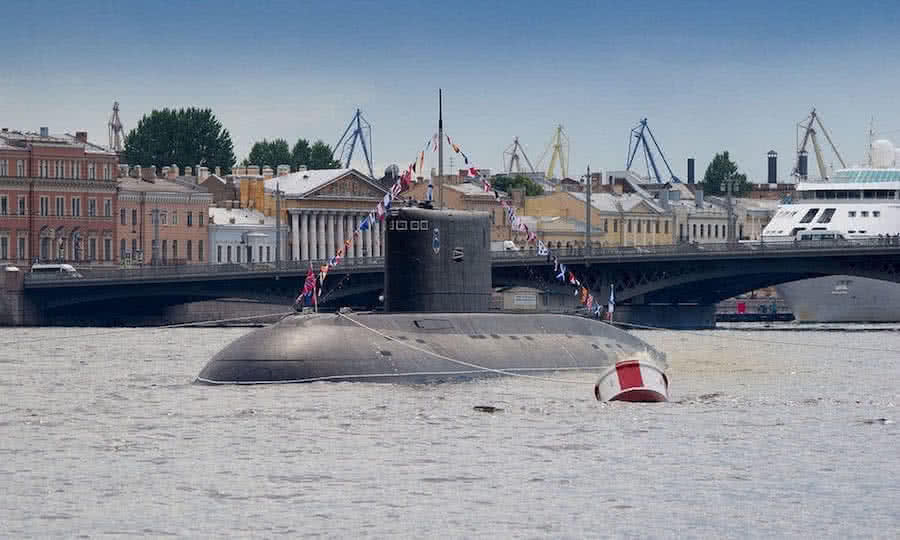
Việc Nga bán cho VN 6 chiếc tàu ngầm lớp Kilo, cộng với những tàu chiến đã và đang được đóng tại xưởng Ba Son (theo hợp đồng chuyển giao công nghệ từ Nga) đã chính thức hoá những tin tức đồn thổi lâu nay về việc thành lập Hạm đội biển Đông bao gồm khoảng 30 chiến hạm tương đối hiện đại, 6 tàu ngầm (Kilo-class submarine là lớp tàu tiên tiến) và vài chục máy bay đời mới. Thảo nào dạo gần đây, đài báo nói về biên giới, Trường Sa, Hoàng Sa có vẻ rõ ràng mạnh bạo hẳn lên, có đâu cứ “giấm giúi” như trước mãi!

the sorrow of war… film?

“Better to die than surrender, my brothers! Better to die!” – the battalion commander yelled insanely; waving his pistol, and in front of Kien, he blew his own brains out through his ear. (The Sorrow of War)

An un-put-down-able novel. It should win the Pulitzer prize, but it won’t. It’s too gripping for that. (The Guardian)

Dramatic… Will force American readers to acknowledge how little they still understand of the long war that left such a legacy of grief and guilt in their own country. (The Washington Post)

The Sorrow of War has won worldwide acclaim and become an international best-seller. (Amazon.com)

A good news: 8th, May, 2008, The Sorrow of War novel will be turned into movie by an American director: Nicolas Simon. After 10 years of discussion and negotiation, Bảo Ninh, the novel’s author finally permitted making of the film based on his famous book. The producer, Dominic Scriven, a very passionate admirer and friend of the author, who now holds the book copyright and want to transfer it onto the silver screen. An even better news: 9th, Aug, 2008, author of The Sorrow of War novel stated that he wouldn’t have any further connection with the The Sorrow of War movie project.

The reason given is: film’s script is not aligned with the author’s ideas. In fact, many people is doubtful that an unnamed director would be capable of working on such a great novel, although the producer (Dominic Scriven) ‘s goodwill is widely recognized! The movie project is now paused, in searching for another director! That’s a very good thing in my opinion, in the fear that we would have another history distortion (or even worse)! A picture is worth a thousand words? That’s not always true, think twice (or read the book)! In this case, words are worth thousands of pictures (or a movie)!

The novel is, more or less, an semi – autobiography. Bảo Ninh himself (or the protagonist Kiên in the novel) was a soldier in the 24th battalion, a special formation commissioned to the B3 front (central highland) in 1969. Of the unit’s 500 man, he is among the only 10 survivors. The story is an nonlinear scatter of memories, mixed the past with the moments of post-war time: childhood, a high school’s love story, the battles, and importantly lives after war.

The Sorrow of War is without doubt timeless. Perhaps it is one of the world’s greatest war novels ever written. Imagine the film Apocalypse Now and increase its effect, say by a factor of a thousand – this is the power of Bảo Ninh’s writing. I remember shivers in my spine when first reading the book, some 15 years ago! Just surf around some online bookstores, to see what readers have said about the book:

  • If this book doesn’t make you cry, you have no soul.

  • It’s definitely not a book for everyone, and I nearly put it down during the first 50-60 pages. But, I soon became wrapped up in the story and the language.

  • Books usually lay with me on my bed and after their formal end we sleep together for a few days but after the last sentence I promptly put this right back on my shelf and am having trouble thinking about it again. I had horrible nightmares during the read.

  • This book is amazing. The story progresses thematically rather than chronologically, and leaves you piecing together historical non-fictional events… He succeeds in taking the reader on a difficult journey of emotional and spiritual crisis, right to the core of the human condition and captures a sorrowful despair like no other literature I’ve ever read.

  • Like pouring acid on your moral center…

  • Just an excellent novel. To everybody who considers The Things They Carried the penultimate work of fiction about the Vietnam War: pick up The Sorrow of War and be prepared to be blown away by the stories of a Vietnamese.

  • In fact, my view of just about everything I thought I knew about North Vietnam from the mid-60’s to the mid-70’s was altered by this book.

  • This book is unbelievably emotional. The style of writing is unique: it is not linear or chronological in any way. It is chaotic, a reflection on the subject of the book. The writing style, though chaotic, seems to be a perfected style. The book was written with total disregard to order; there is no doubt that all was deliberate.