serene – 2, part 22

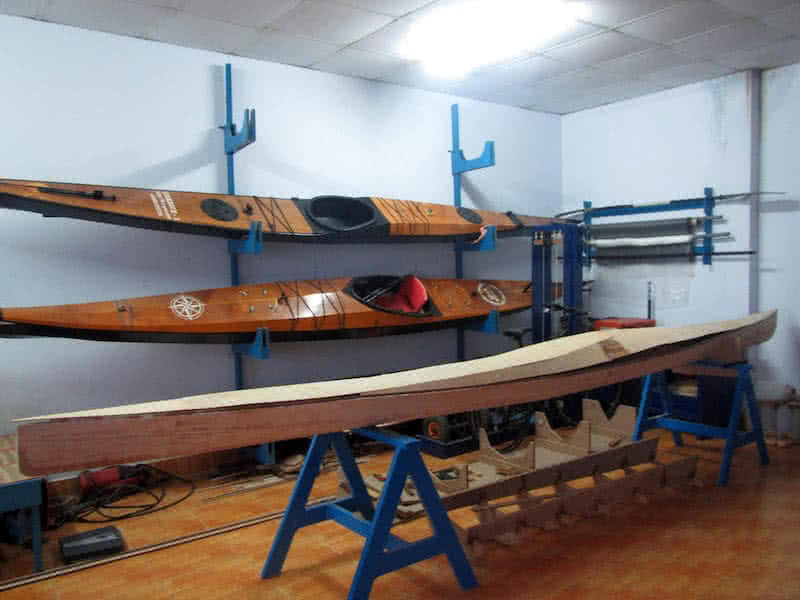
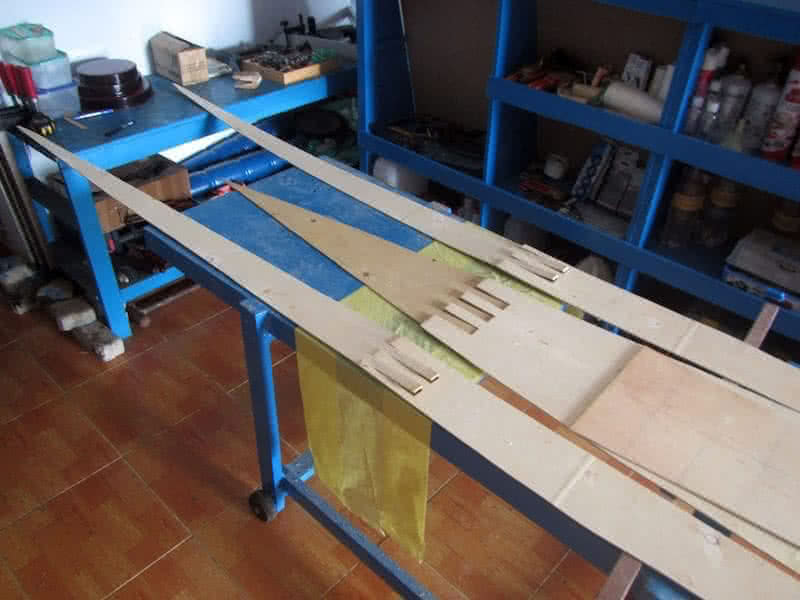
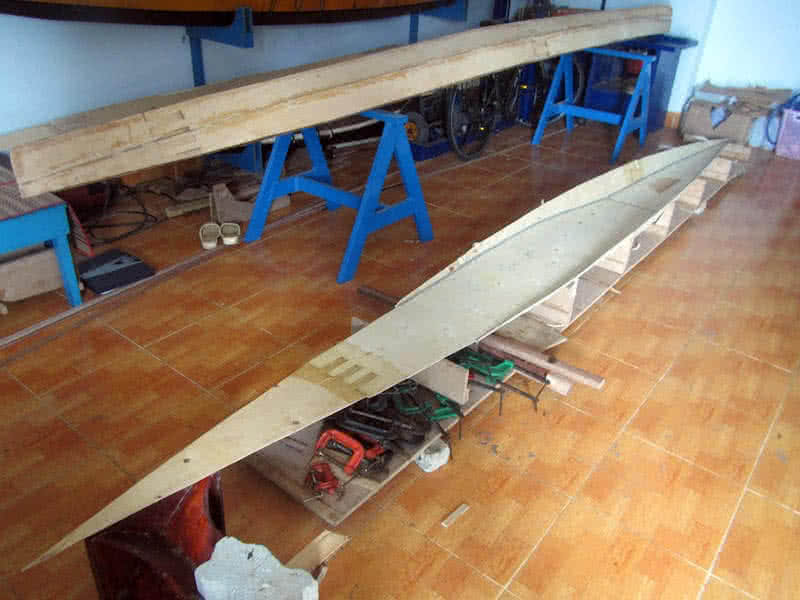
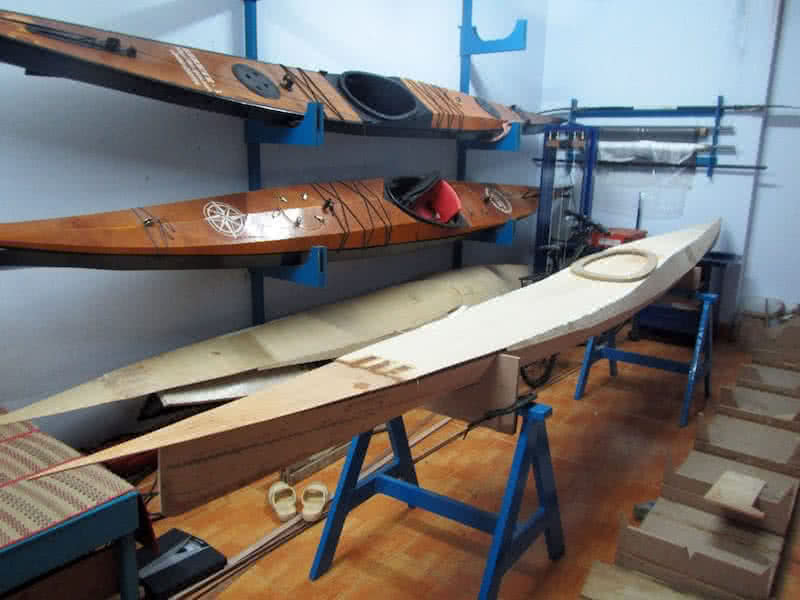
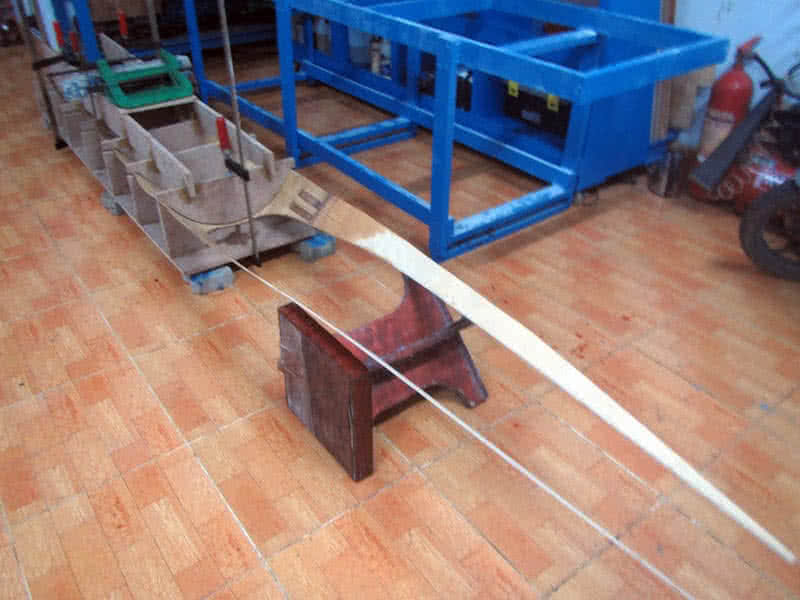
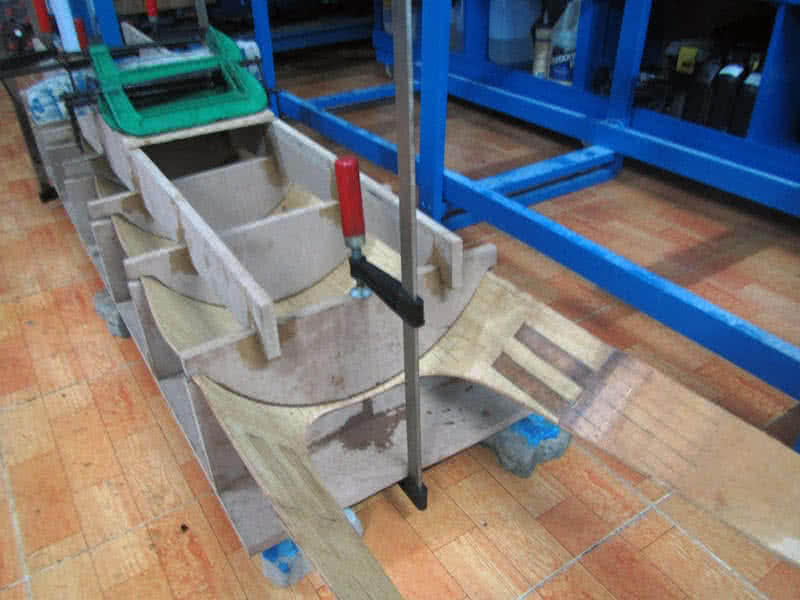
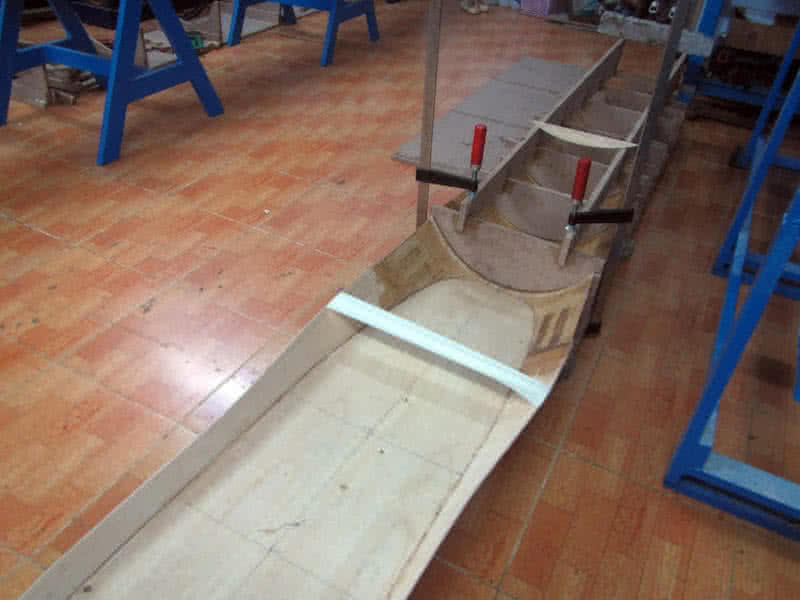
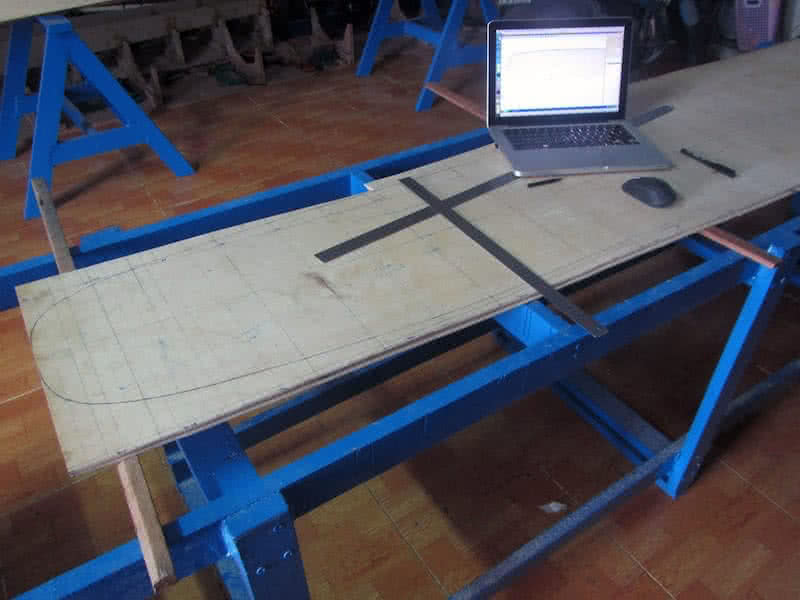
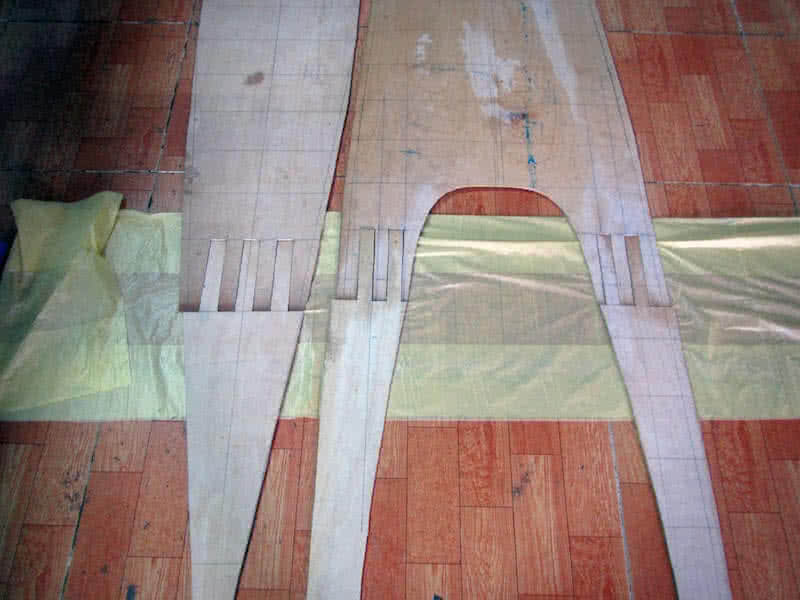
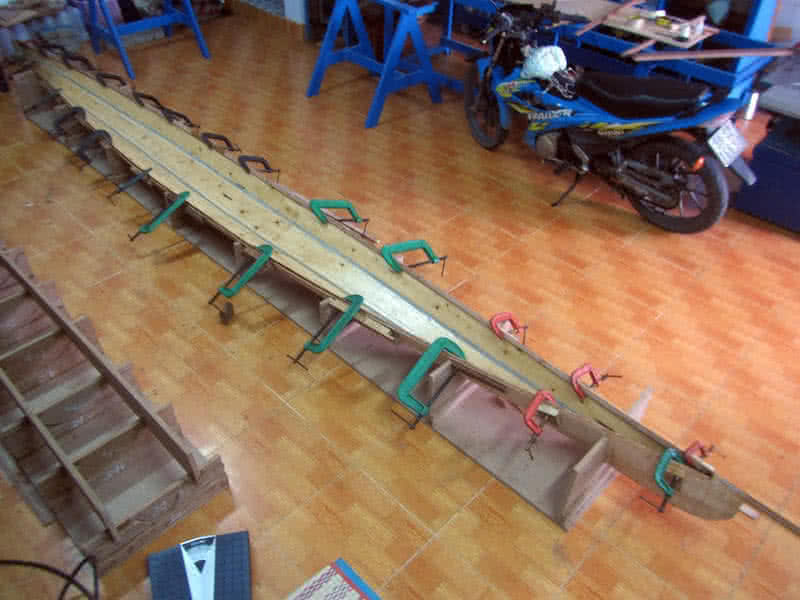
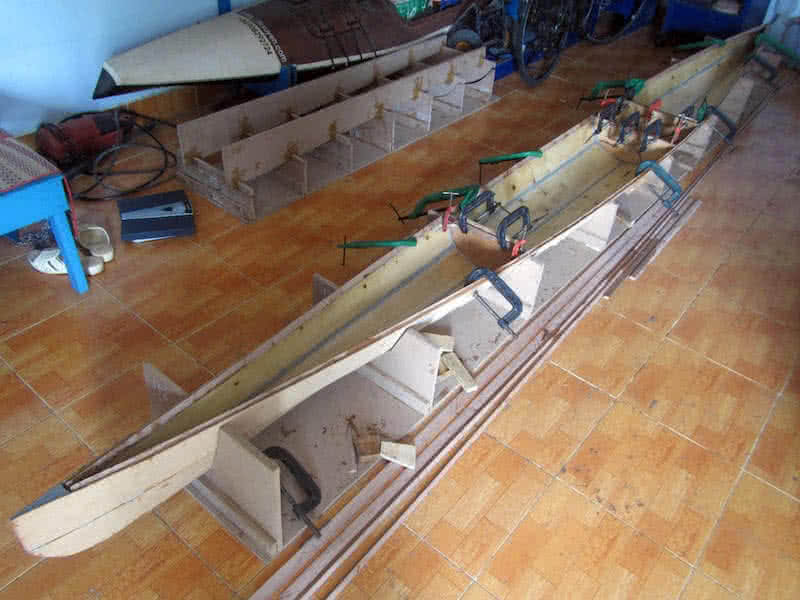
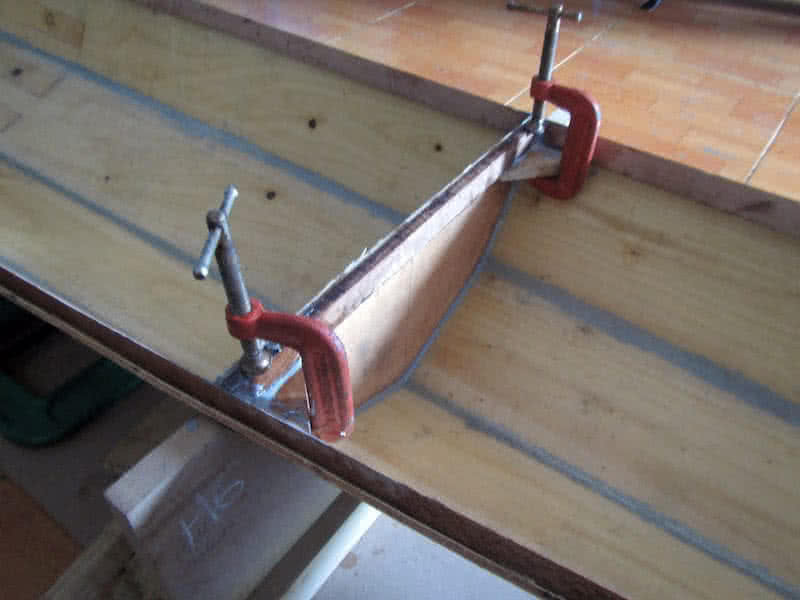
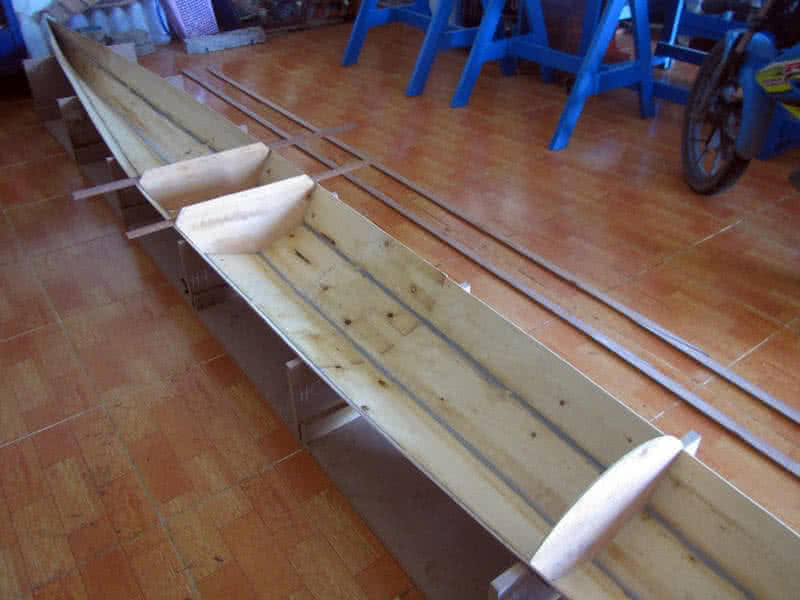
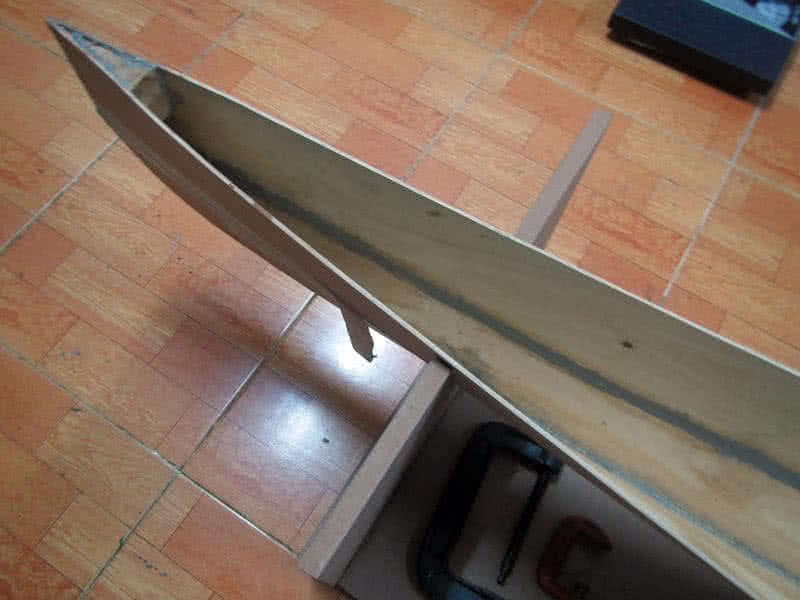
Continue working on the new deck! The deck has 3 bulkheads of its own, corresponding to those of the hull. The two rudder control lines would run inside plastic tubes, which run through these bulkheads via waterproof cable glands. But that would be later, first is installing the cockpit coaming, which is just a thin plywood strip bending around a MDF frame. The coaming lip is also cut from plywood.

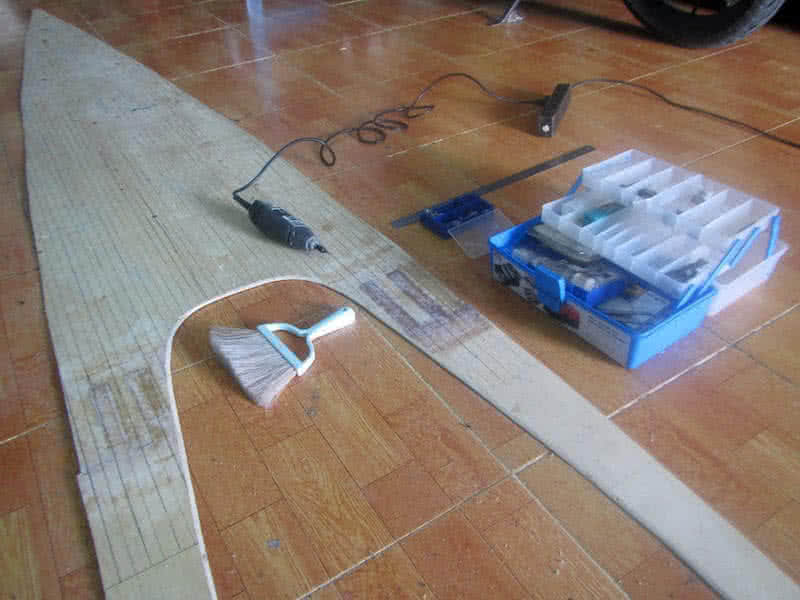
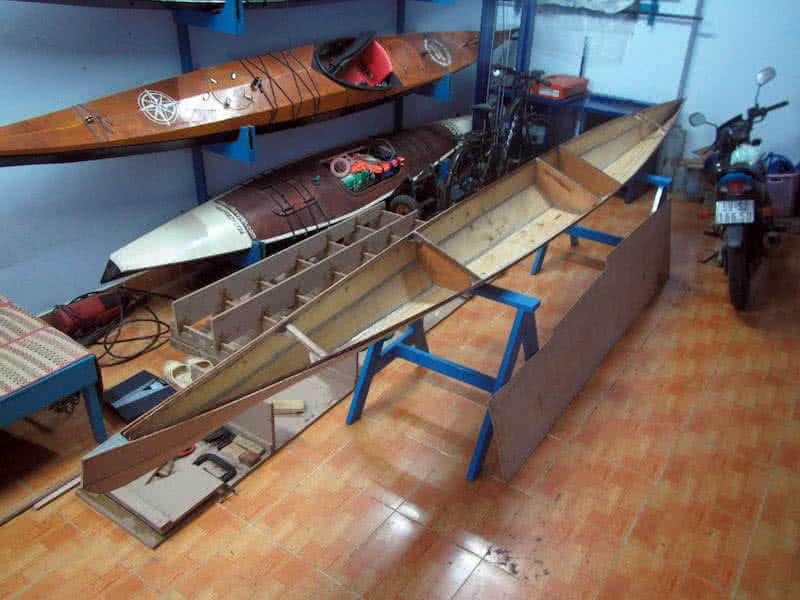
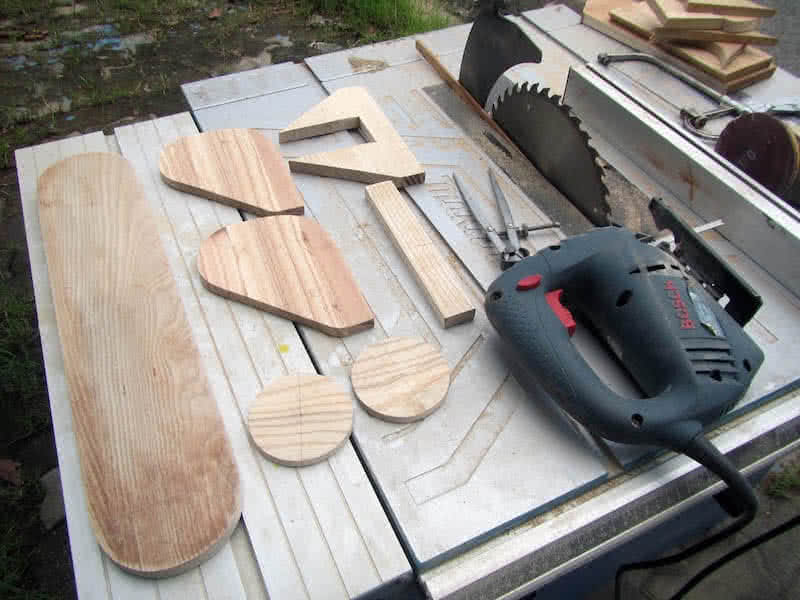
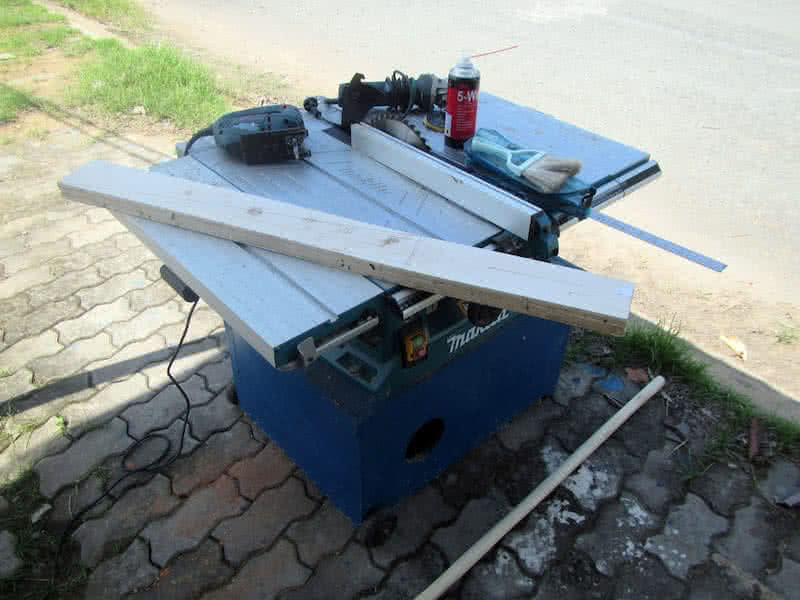
First image: you can see my beloved Fein Multi Master, the renown oscillating tool. Often when I have to cut or do other tasks in tight corners or in positions that are inaccessible or inconvenient to other reciprocal tools, this Fein is my last resort, and it’s always been very helpful to me. Here, I need to trim the already installed, but wrongly – sized bulkheads. Also, really love the tool’s Germany quality.

There’re some other tasks which are not reflected in the images here: fairing the hull and deck’s external seams, then glassing them with my fiber tapes. It’s not until now that I could comprehensively master the skills working with epoxy and glassing, using just the right amount of them. But also, I also gave up the idea of a kayak that’s as light as possible. For a training, exercising boat, lighter is of course better.

E.g: 15 vs 20 kg is a huge different, cause it’s much easier to launch and retrieve the (almost empty) boat for every training sessions. But for an expedition boats, a few kilograms doesn’t make much difference, since a loaded kayak weighs as much as 110 ~ 120 kg, with that mass, you can’t carry on your back anyhow, so a few more kilograms added would worth the value of a stiffer, more durable boat prepared for long journeys!

serene – 2, part 21

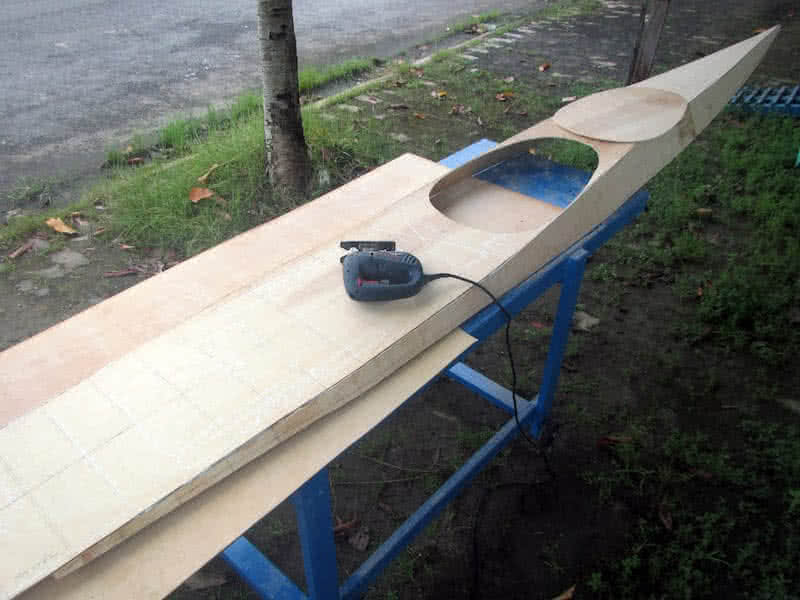
A major setback in the building progress, the curved deck didn’t come out with my expected quality. After released from the molding frame, the deck slowly bend back from its curved shape, especially amid of the boat, off from the desired geometry by 3, 4 cm (first image). That’s really bad… I made a hard decision to discard the rounded deck, and build a hard – chined one (like my previous kayak) instead!

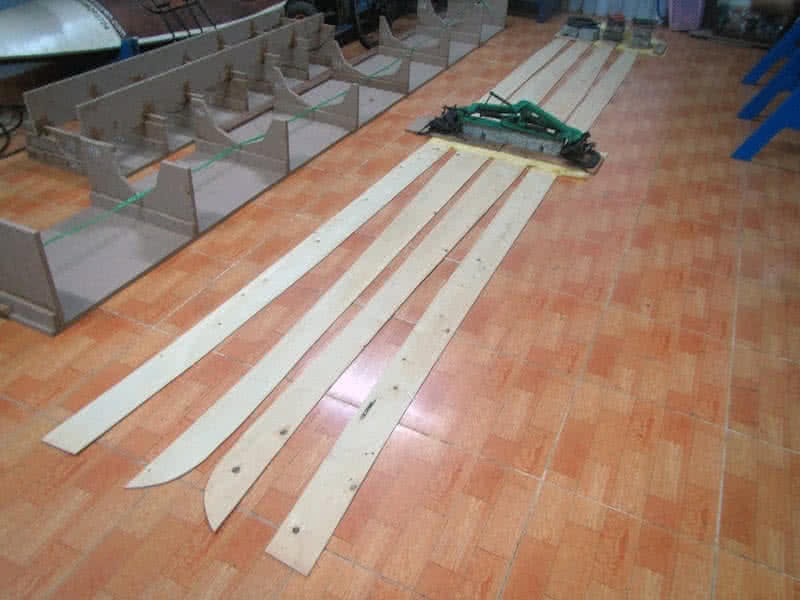
I had an uneasy feeling, lots of work has to be redone, cutting and jointing the deck’s bilges (second image), setup the molding female frame. I took this chance to modify the deck design a bit, raising the aft part by 1 cm, to better accommodate the rudder control lines. A hard – chined deck doesn’t look as good as a rounded one, but it’s easier to build, easier to install other things, and it would fit with the hull much better.

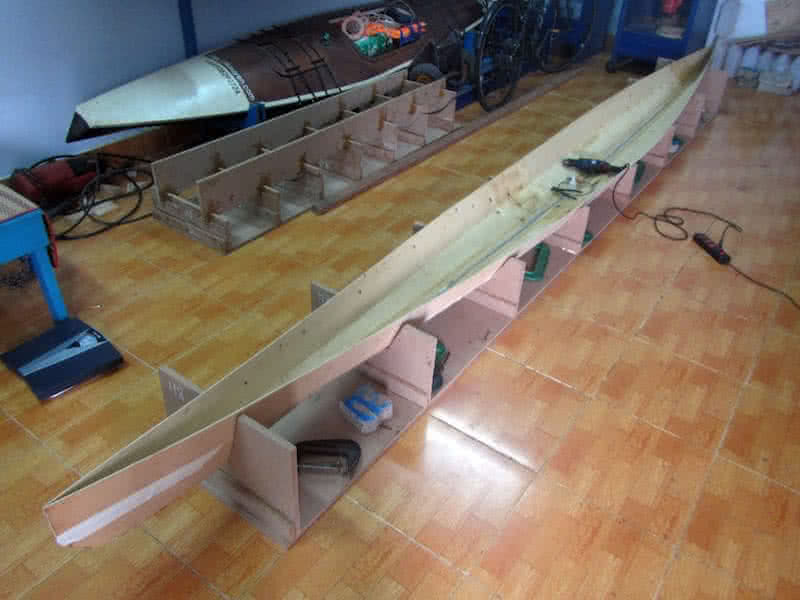
Third image: forming the deck shape, the geometry is so simple that it doesn’t need any wire – fastening, just some CA glue here and there to fit the bilges together, some duct tape on the outside, then putty onto the inner seams. To save weight, I only glass the deck internal side at the cockpit area, where it could be potentially exposed to water. However, the deck would receive a glassing on the external side later on.

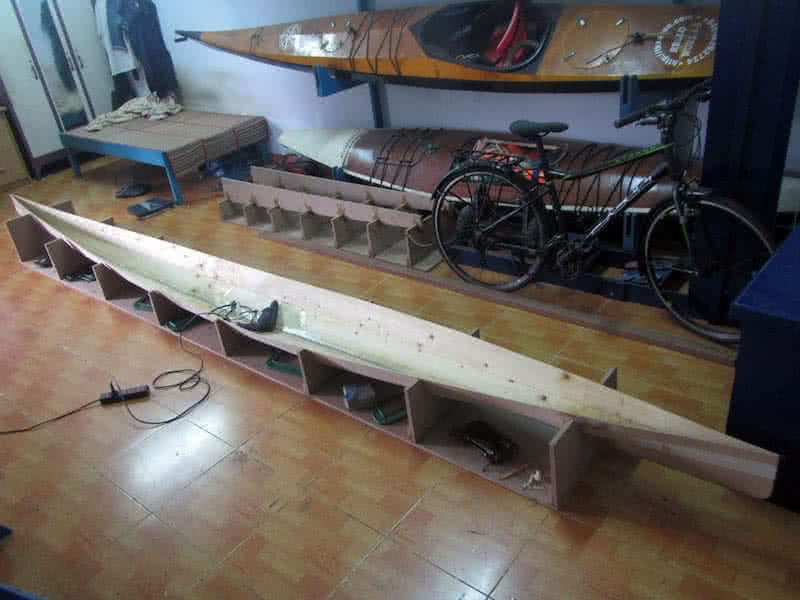
Fourth image: dry fitting the deck and hull… perfect fit! No adjusting, no fastening, no compressing would be required, just fit them together, then trim the edges! In the image, top of the cockpit area, we can see the cockpit coaming template (cut from MDF). That would be a frame for building the coaming lip and ring around, measured 38 x 64 cm in internal dimension. The external dimension would be 44 x 70 cm.

serene – 2, part 20

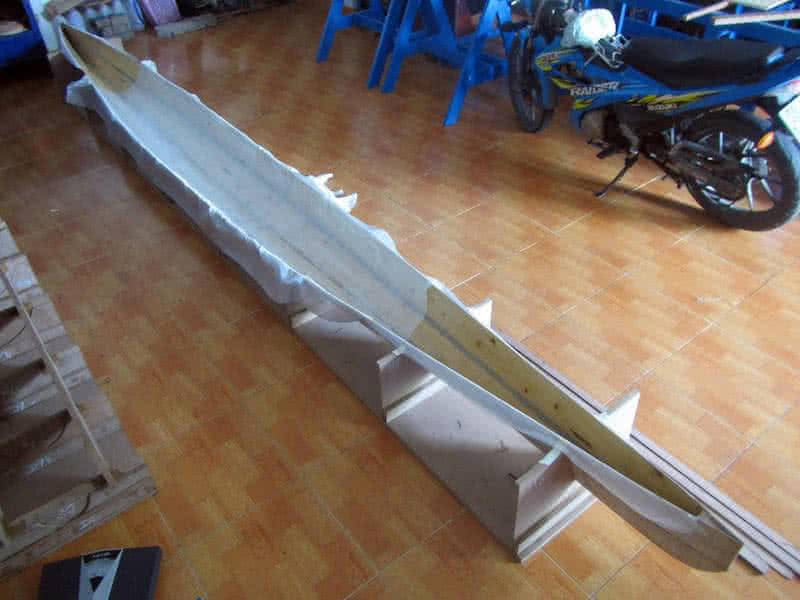
With my Dremel – Multi – 3000 tool, I made lots of parallel cuts onto the deck internal side (see the first image), the cuts are about 1.5 cm apart, and about 1 ~ 1.5 mm deep. Those are not very deep cut, since the plywood is only 4 mm (3.75 mm to be exact). Then I soak the deck with water thoroughly, for the ply to be softened, then put it into the frame and press it down… with my body weight (just sit on it).

With the extra help of some clamps, I press it down, little by little, don’t be too quick, just do it very slowly, then the plywood bends nicely into a perfect curved shape! There’s some minor cracks on the edges, but that’s not too important, cause those parts would be trimmed away when the deck would be glued with the hull. Second and third images: you could see how well done the curved deck is!
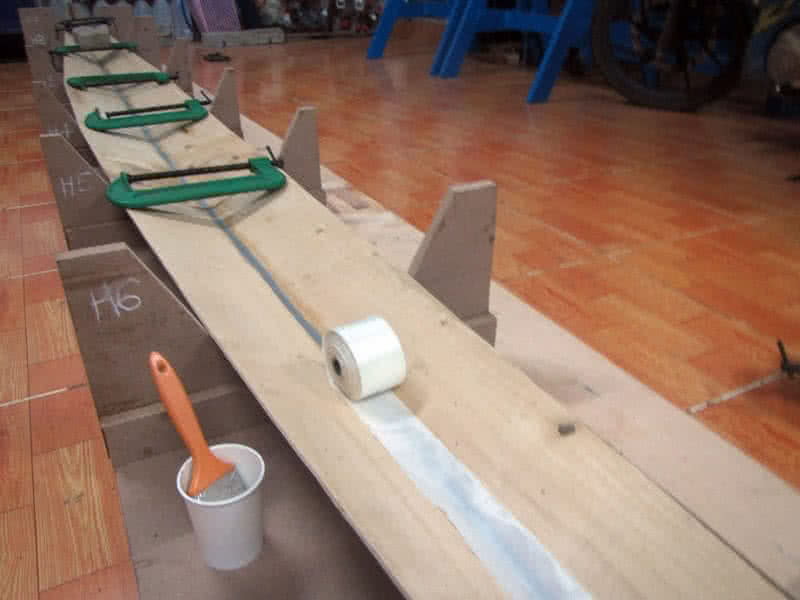
I let it there overnight, waiting for the water to vaporize, then apply some thinned epoxy onto the deck internal side, I also apply a few glass tapes at some places, that way the curved deck would hold its shape once released from the molding frame. Next would be puttying the rear part of the deck onto the forward part, a simple and straightforward job, then again, glassing the seams with my beloved fiberglass tapes.

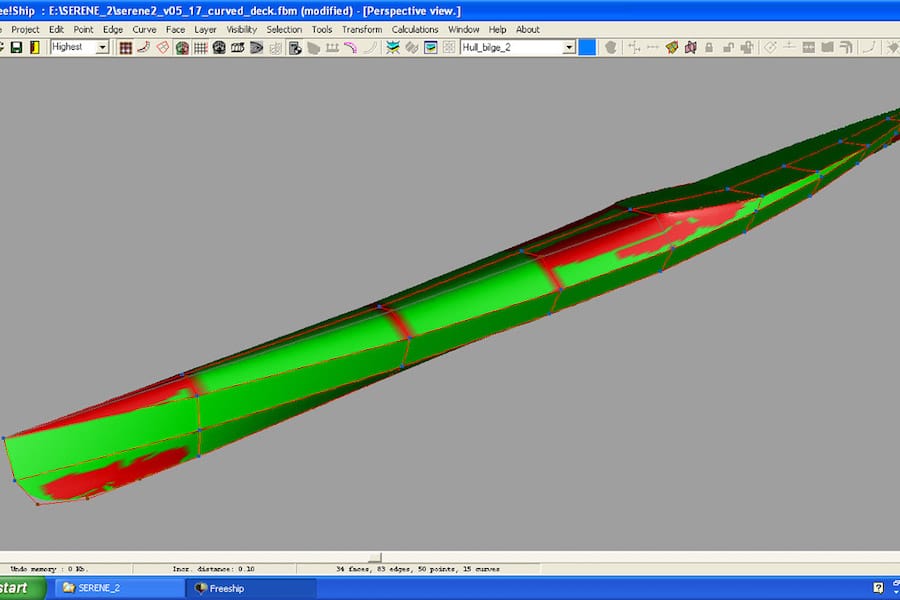
Joining the fore and aft parts of the deck is quite simple, though it required some wire fastening to put everything under order. FreeShip (the boat design software) strangely generates a slightly abnormal curve around the cockpit (had I made some mistake, or didn’t use the software in a correct way?). So I had to manually draw the line by hand, guessing at some places, resulting in not a very good fit.

serene – 2, part 19

First image: the basically completed hull, put aside, now working on the deck part. Compared to the hull, which is… simpler and more well defined in term of geometrical shape, the deck is just loosely draft out in overall shape, it’s cut slightly over size, so that when fitted together with the hull, it would be trimmed to match. The construction is also more complex, due to the rounded shape of the forward part.

I had a hard time thinking about the cockpit and spray skirt size. A width of 44 cm is almost the minimum that could fit a cockpit, that in turn, could fit the smallest spray skirt sold on the market. Ready – made spray skirt (e.g: Snapdragon, Seals, Sea to Summit…) usually have 44 x 75 cm as the smallest dimension, other than that, you would need to order a custom made one, which is an expensive and complicated process.

Second image: drafting out the deck shapes on plywood. Third image: jointing the pieces together, again with those simple finger joints. Fourth image: the two main “components” composing the deck, the aft (far, left), and the front (lower right). I slightly bevelled their edges at places, so that they could fit more precisely together. The white duct tape: pin down the parts so that they’re correctly symmetrical along the longitudinal axis.

Next is the very important job of torturing the deck into rounded shape. By now, I’ve realized that there’s too much curvature on the molding frame, and I wonder if the plywood could bend that much to make a very curved shape, only experiment would tell. In order to help the ply bending well, I would make many longitudinal cuts on its internal side, then wet it completely overnight for the wood to become more flexible.

serene – 2, part 18

After the internal side get glassed, goes in the gunwales (American English: the sheer clamp), port and starboard at the same time. The gunwales are very thin strips of wood, 2.5 x 1 cm in cross section, and are bevelled at 45 degree all along its length (they are bevelled with my table saw), later the bevel angle would be adjusted along the boat hull (with an angle grinder) to better accommodate the deck.

Second image: the 3 bulkheads, the small compartment right behind the cockpit would be the place of the day hatch, to store food, drink and other various things you would frequently need during a paddling day, and could be accessed while afloat (still sitting inside the cockpit). For other hatches, you would need to beach the boat in order to access them. Third image: the bulkheads are filled with putty at the joints and glass on one side.

Fourth image: triangle blocks of wood use to reenforce the joint between the gunwales and the bulkheads. With no need for nail or bolt, the triangle wooden blocks link the squared corners, this way, the kayak’s “frame” would be significantly stronger, stiffer, a simplest, yet elegant solution. There’re two additional thwarts installed near the bow and stern to strengthen the boat’s overall structural stiffness.

Completed most jobs with the hull (there’re some more on the external side of it – puttying, glassing… but that would be a later phase of the project), now moving on to the deck part. It doesn’t seem immediately apparent, but the deck part is a more complex part, compared to the hull, it would house many things: the 3 hatches, the compass, the rudder pedals and control lines, the anchor points for bungee cords, etc…

serene – 2, part 17

Finishing the fist step of forming the hull into shape, then filling the seams with putty and glass them with my 2 – inches fiberglass tape. The glass tape is my life saver, thanks to it helps again, that the seams could look neat and nice. To this day, I’ve acquired enough experiences and skills working with epoxy and putty already, so I’ve been able to mix the very precise (usually very small, e.g: 30 ~ 60 gr) amount required for each task.

Remember my very first days coming to boat building, working with epoxy has been a nightmare, that extremely sticky substance that messes and flows around. I have a very good feeling that everything is completely under my control in this build: the bilges fit tightly, the bulkheads fits very well, there’s no need to adjust here and there, the amount of epoxy and putty used could be estimated with quite an accuracy.

Second image: dry fitting the bulkheads, this time the cockpit would be slightly larger, to accommodate the bilge pump, and the rudder control pedals. Third image: fitting 2 prism – shape wood blocks at the two ends of the kayak, one at the bow for getting the pulling line through, and one at the stern to mount the rudder post. Again, very little epoxy and putty used, the wooden blocks add some saving to the final boat weight.

Fourth image: glassing the internal side of the hull, I’ve been thinking over and over again about this issue, do I really need to glass the hull internal side, consider the glassing seams are quite strong already. Finally, I decided to glass anyway, as my plywood is not of very good quality, it’s better to have some protection in the long run, with the cost of about 0.4 kg of epoxy (plus the fiberglass fabric) added.

serene – 2, part 16

Fitting the bilges is quite straight forward. Compared to my previous boats, this time, due to more careful drawing and cutting, having a good shape, the bilges fit together pretty much better, there’s almost no gaps between them. It requires still some little fastening with wires, but not much, and some dots of CA glue (cyanoacrylate) to help the edges staying head – on. Then I proceed to filling the seams with thickened epoxy.

First image: the bottom pair of bilges fit together. Seeing them fitting so well to the molding frame, I decided to putty – fill and glass the bottom seam before adding the second pair of bilges (second image). I really appreciate my 2 – inches – width fiberglass tapes, they help the seams to be very clean and tidy (and hence less epoxy used). With out them, fiberglass cloth bias cutting would be a nightmare for me…

…As the kind of fiberglass cloth I’m using is not too good in quality. Third and fourth images: the second pair of bilges goes in, also very good fit, requiring little fastening. Due to the sloping sides of these bilges, filling the seams with putty could be tricky, as the thickened epoxy wouldn’t hold shape but flowing down slowly due to its viscosity. So, I apply a small amount of putty, then immediately cover them with duct tape.

This way, the epoxy would hold shape, leaving a good looking seam. After the epoxy completely cures (about 8 hours in my case), I peel off the tape. It’s so good a feeling to see your boat take its initial shape. I spend sometimes standing, watching the bow and stern, its full water line, its slim and sleek lines. Still many things to be done, but this gonna be my Andalusia horse on the wide wild wet water space!

serene – 2, part 15

Proceed to cutting and jointing the bilges. This step is done quite quickly as I’ve now had plenty of experiences. I read the offset – table directly from the FreeShip software, then draw the bilges on the 122 x 244 – cm plywood sheet. For the 17 feet hull, there’re 3 pieces per bilges, and hence, 2 joints need to be made for each bilges. I clamp 2 plywood sheets together and cut the port & starboard parts at the same time.

It takes some little skills and experiences to make the joints perfectly fit with just a jig saw. And I still prefer the straight finger joints as used on my previous boat, they are simpler to cut, simpler to align and to make sure that the jointed bilges are in correct shapes. Too bad, my plywood is of too poor in quality, it’s so fragile, so easy to crack, so I have to take extra cares at this steps, or the “fingers” of the joints could break.

First image: transferring the lines from offset table to plywood boards (with the help of a cup of coffee, be careful not to make any mistake). Second image: all pieces cut, third image: the finger joints (no glueing yet). Fourth image: jointing the pieces together with epoxy (just use many weights to press on), then glassing them (the internal sides) with one layer of 6 – oz fiberglass.

Decided not to bevel the bilges’ edges, though beveling helps making tighter seams, my plywood is quite thin, so the seams wouldn’t be very perfect, they hardly could stay precisely edge on edge with each other (and beveling adds some more works to be done). With Serene – 2, I proceed with the hull first, then the deck, not doing them in parallel like my previous boat, as the deck part could be quite complex this time.

serene – 2, part 14

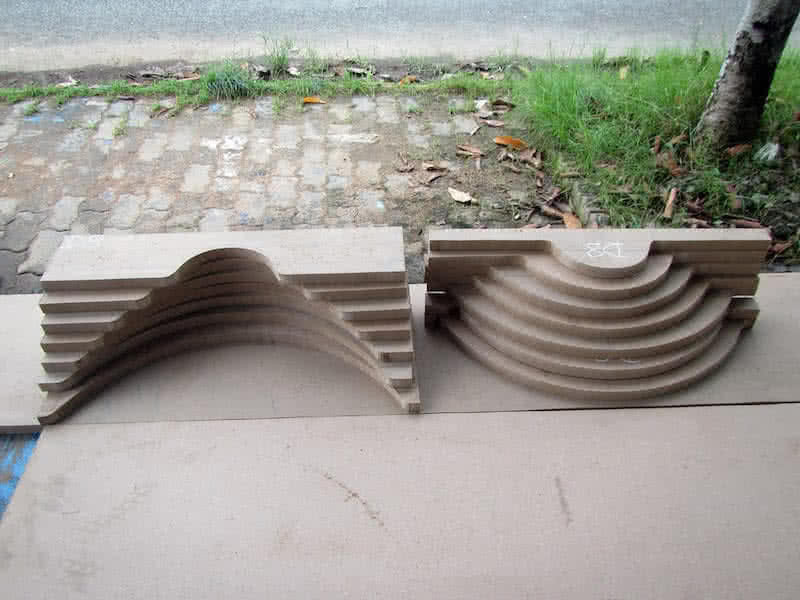
Framing for the deck is more complex than the hull, since the deck would be curved in cross section, it require torturing plywood to a considerable degree to acquire that shape. From my previous experiences with bending plywood panels, I decided to break the deck framing into 2 parts, one is female, the other is male in shapes, then compressing the plywood sheet in between using many G – clamps.

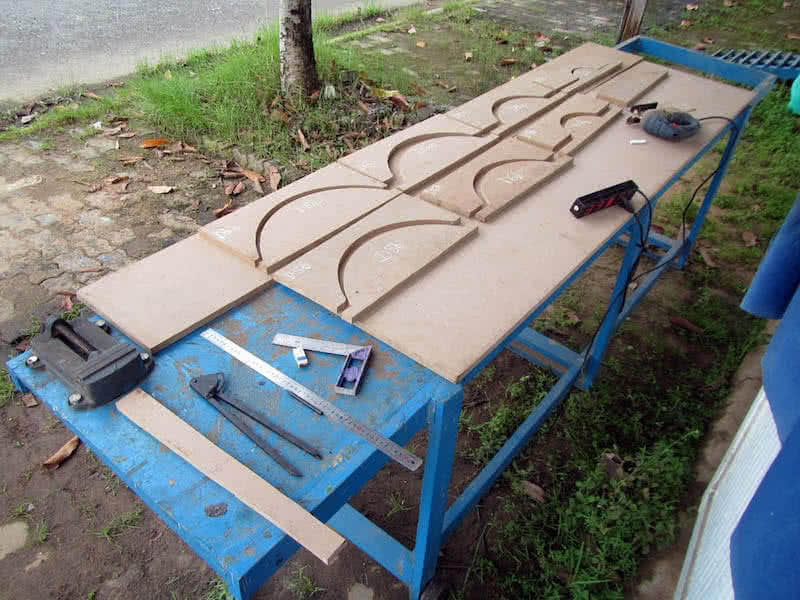
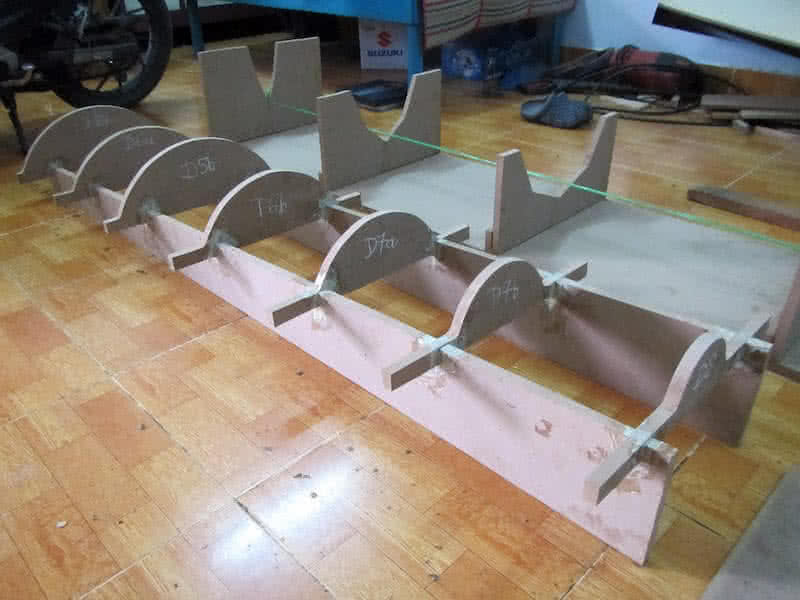
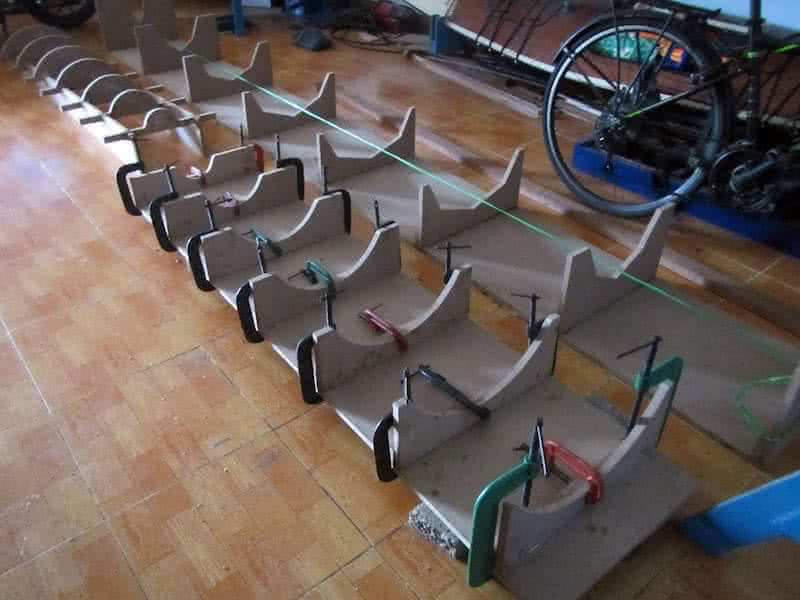
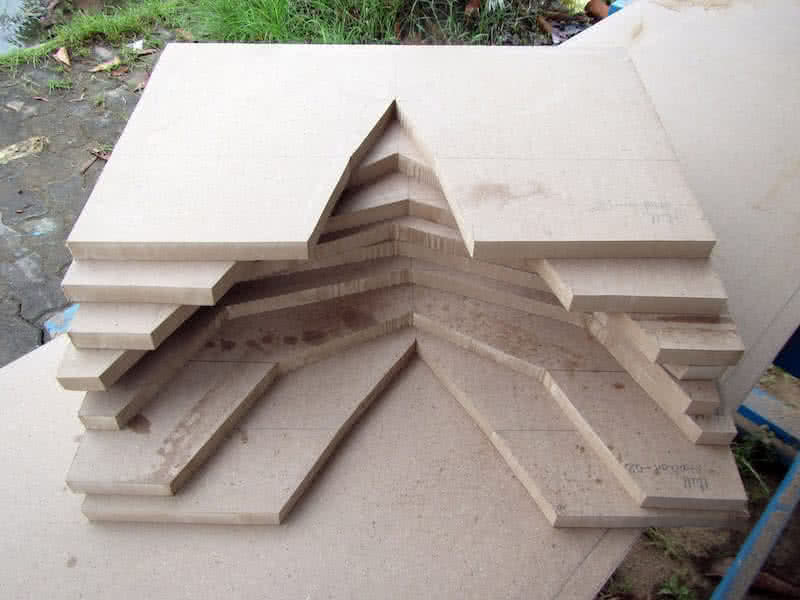
First and second images: cutting the deck framing stations, can see clearly that the upper and lower parts of the deck frame are cut from the shame plywood sheets. Unlike the hull’s stations, which is positioned at an interval of 60 cm apart, the deck’s stations are placed denser, one for every 30 cm. The deck plywood would be tortured between these upper and lower stations to achieve the desired curved shape.

Bending plywood, particularly the 4 – mm thich ply I’m using, could be a hard task (and currently I don’t have any 3 – mm or thinner ply readily for making the deck). More over, the plywood I purchased is not of very good quality, it could crack too easily. So I would need lots of tricks to get the job done: soaking wet the plywood overnight with water to soften it, using hot boiling water to soften it even more.

(Currently I don’t have any wood steaming device, and there’s no plan to build one just yet.) Another trick for bending plywood is making shallow cuts longitudinally onto one side of the plywood sheet for it to bend easier. Fourth image: the curved stations of the deck glued on. Now all jobs related to the framing is done, next would be proceeding to cutting and joining the bilges… the long and hard way is still ahead!

serene – 2, part 13

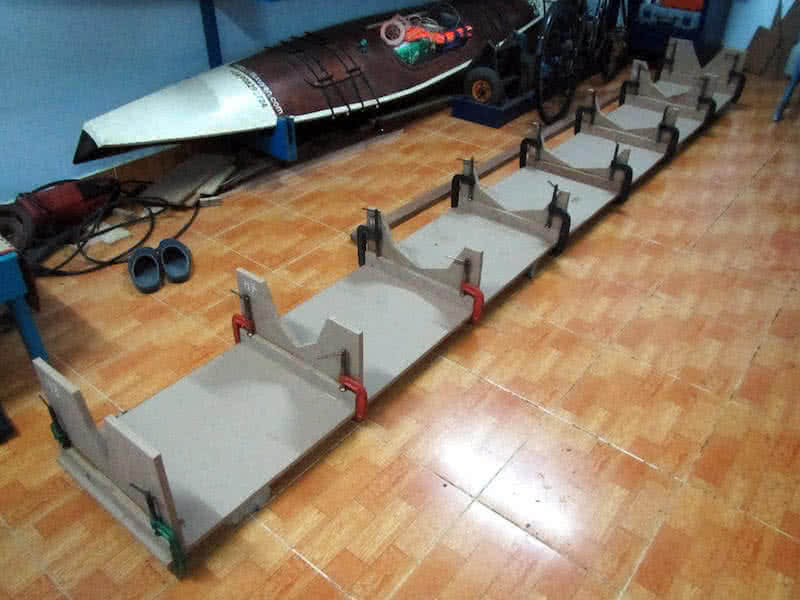
Simple thing that is done many times already, since the very first time I was building the Hello World -3 kayak, so there is nothing special about setting up the “female” frame for shaping up the kayak hull and deck. The stations (as called so by the software FreeShip) are placed evenly at an interval of 60 cm, there are 8 of them for the 17 feet (approximately 518 cm) hull. All is cut from 18 mm – thick MDF.

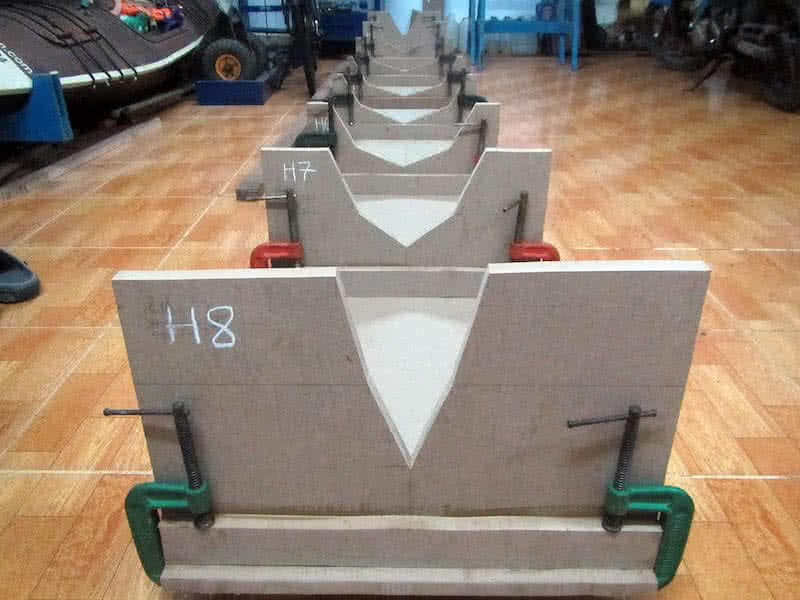
First image: the stations cut, second and third images: since the 18 mm – thick MDF I used is at the maximum that my compress – air staple gun could handle, I simple glue the stations on along a MDF board, each 60 cm apart. You can see the stations numbered, from H1 to H8 (from stern to bow). Fourth image: another view of the completed female frame, looking this way, one could see that the kayak hull is so slim. It’s so indeed!

At 44 cm, this Serene – 2 kayak is just slightly narrower compared to my previous boat. Serene – 1, which was at 45 cm. One of the main reasons why it took me so long to start this kayak building is that, I greatly appreciate my previous boat’s abilities in rough water, it did give me a lots of confidence. I wouldn’t want to lose that very special capabilities along my design progress, while improving some shortcomings…

…That my previous kayak had had. It is a very good feeling watching the “female – molding” frame, which gives me a very first impression on how my future boat would look like. But the long way is still ahead, it would take much efforts in completing my “perfect sea kayak”! By the way, the “rule” for choosing a sea kayak hull is that: build / buy a longest and thinnest one that you could still find it controllable and comfortable!

serene – 2, part 12

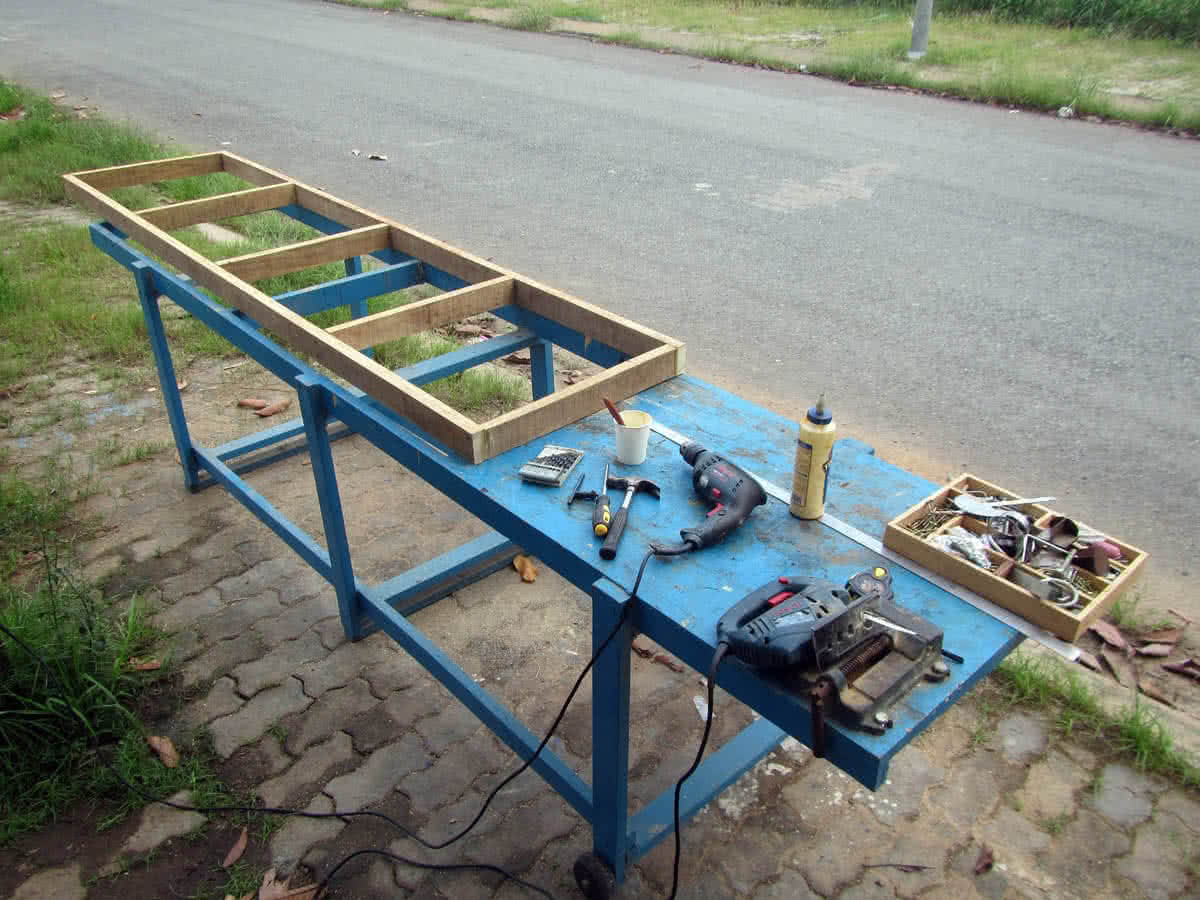
Not entirely related to this Serene – 2 building, but I would want re – organize my woodworking workshop a bit. My working place is quite small in floor area, so everything need to be stored neatly and tidily. Having quit some ideas, but would carry them out only one at a time, since I still have limited free time in the present. First is a shelf to store my plywood and MDF sheets (lots of them), and many other things.

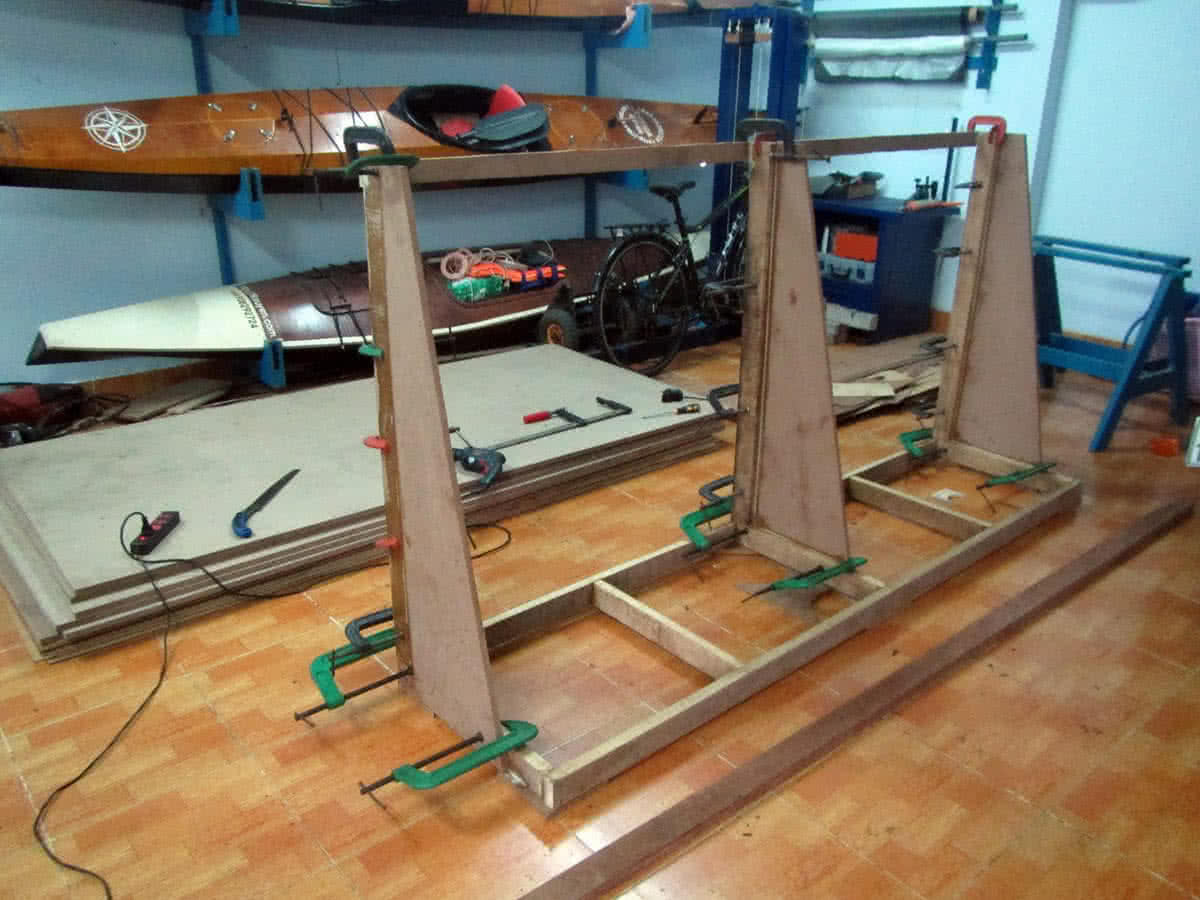
The plywood and MDF sheets need special treatments, they could deform in shape or absorb moisture if stored inappropriately for a long time. The shelf would have two sides, the sloping side is for storing the sheets, and the other side is reserved for other things. The whole thing would be put on 6 small wheels so that it can be pulled and repositioned around the workshop, or moved just for cleaning the floor.

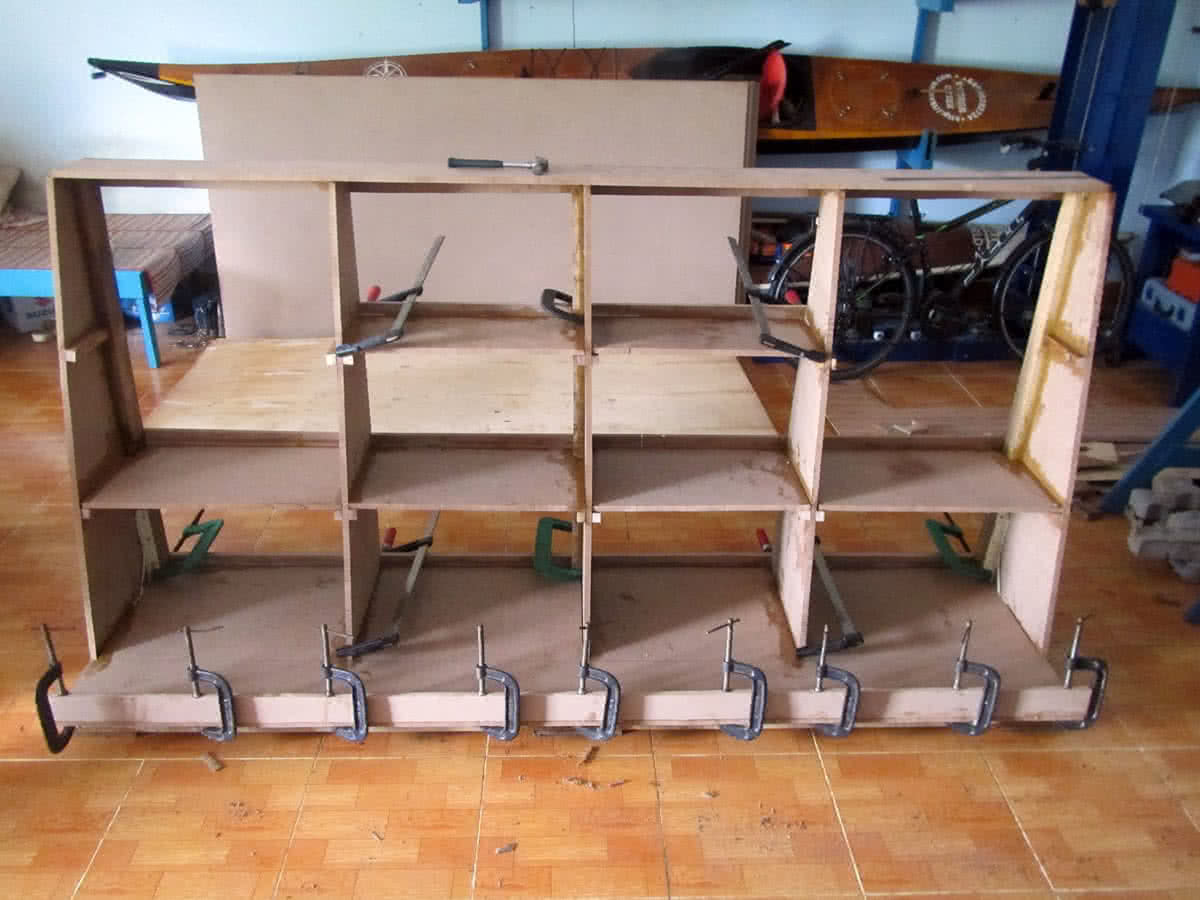
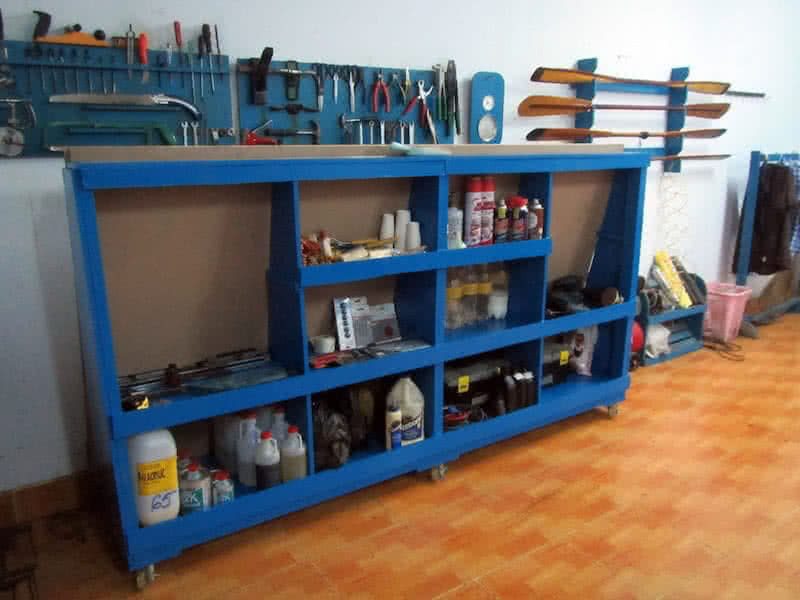
1st image: making the shelf base, 2nd image: the 3 supporting walls (to withstand the MDF and ply sheets’ weight, which could be very heavy). 3rd image: the shelf taking shape, 4th image: the completed and marine – blue painted product, ply and MDF sheets stored on one side (facing the wall). I need lots of shelf spaces to store various miscellaneous assets, which is growing to a unmanageable number.

Sometime, I’ve forgotten that I’ve purchased something just because there’s a huge pile of them around. The workshop looks very tidy now, having more spaces to store various things. It’s very important to keep thing tidy, uncluttered, as you wouldn’t want to waste time finding an item when needed. It’s now time to move on to the main parts of the project, I’ve been lingering around on other issues for long enough.

serene – 2, part 11

First image: assembling the rudder’s components, the rudder in its dropped down position, 2nd image: the rudder in its retracted position. Everything works smoothly as calculated, the blade could be pulled up and down by a pair of line running back to behind the cockpit (but that would be done later, when attaching the rudder to the kayak hull), with two circular ratchets glued on the two side of the rudder blade.

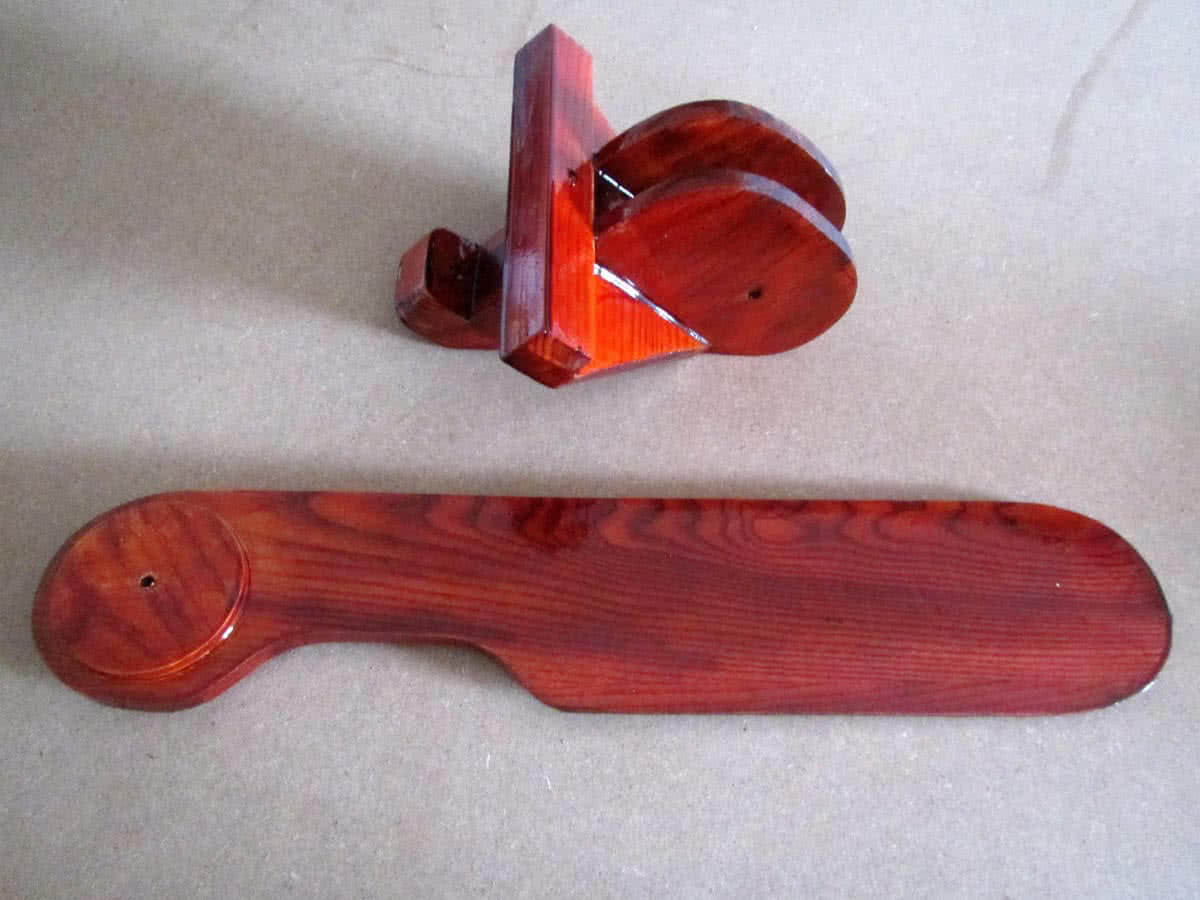
4th image: the rudder stained with colored – epoxy and then painted (with transparent PU – PolyUrethane). It looks so nice, the dark brown color with coarse wooden grains. The rudder control system is another complex problem, but that I would address it later on on the following phases of this building project, as I’m still hesitating between the two styles of rudder steering mechanisms as described below.

One style is the T – bar of those Olympic kayak, and the other is the normal 2 – pedals usually found on touring boats. The Olympic style is simpler, but it’s quite counter – intuitive as you would have to use the left leg kicking the bar to the right, in order for the boat to turn right. The 2 – pedals system is more user – friendly, you simply kick with the right leg to turn right. I also may use kind of a cross between the two mechanisms.

This is the first time I use a rudder, so many consideration and calculation have to be made. First in designing the hull, the hull should work efficiently and independently without a rudder, that is, it should track straight in most circumstances. Only under extreme turbulences that the rudder should be deployed, to save yourself from the extreme fatigue of one side paddling, or to have more responsiveness to the moving water.

serene – 2, part 10

Skeg, rudder or none!? It has always been an everlasting debate among the sea kayaker community. Some advocates using none, as getting the job done with your paddles alone would greatly improves your skills. While I partially agree to this argument, I also think that the argument only holds true on flat water only. When in turbulences, which could be extreme, you would need something to assist in tracking and steering the boat.

All my previous kayaks was using skegs. While a skeg wouldn’t help in steering, it would help a lot keeping the boat on a straight track when underway. Gradually, and especially in my last 9 – days trip, I realize that a rudder could potentially become a great benefit. You could pull it up to reduce drag (with a retractable rudder) and maneuver the boat with your paddle alone when it’s relatively calm, and deploy it down in turbulences.

Not only it helps turning your boat to compensate leeway, it’s also a way to have instant responsiveness, e.g: to deal with large chasing waves. So I decided to overcome my fear of complexity and build a rudder for my next Serene – 2 kayak. Yet, complexity is the reason most pro – skeg paddlers would give, to justify their favor for skeg. But serious sea – paddlers would agree, I think, that rudder outperforms skeg in most situations.

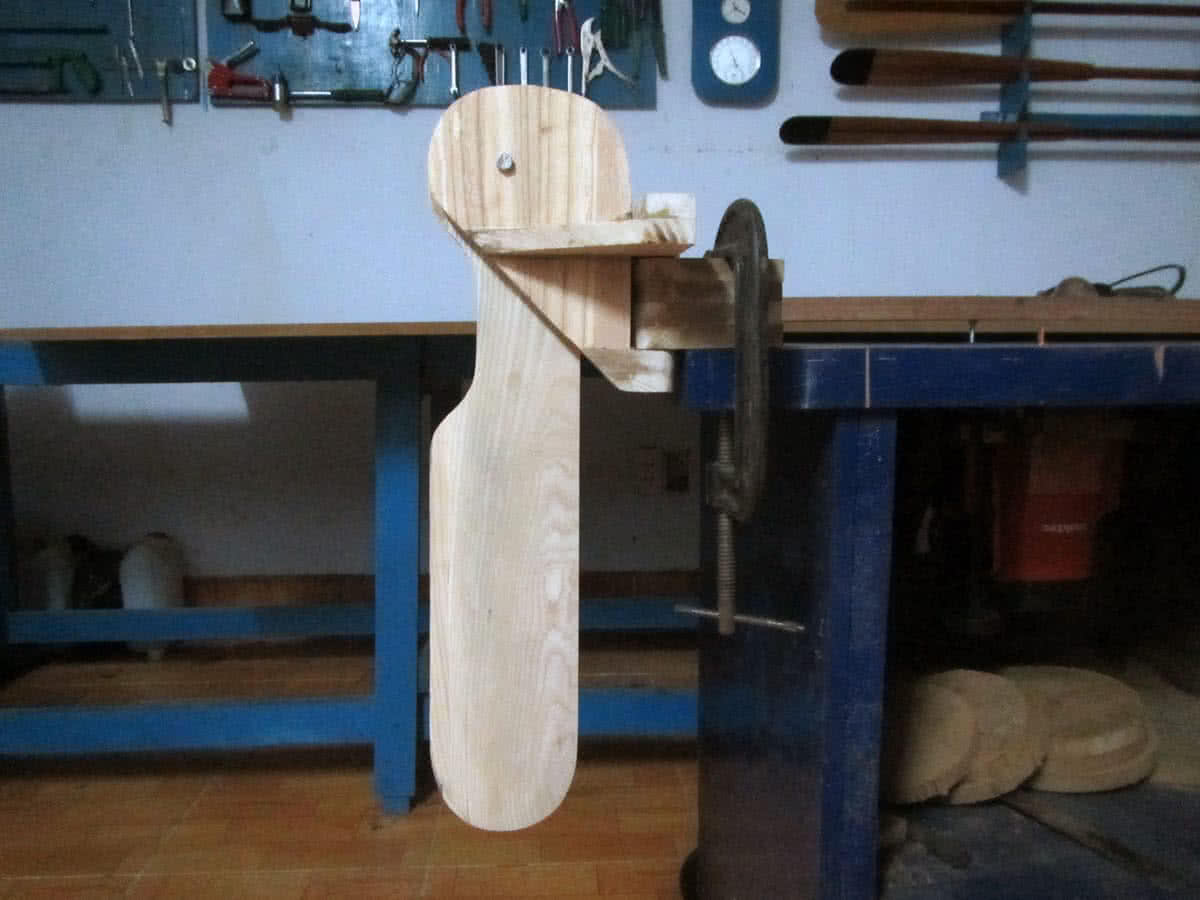
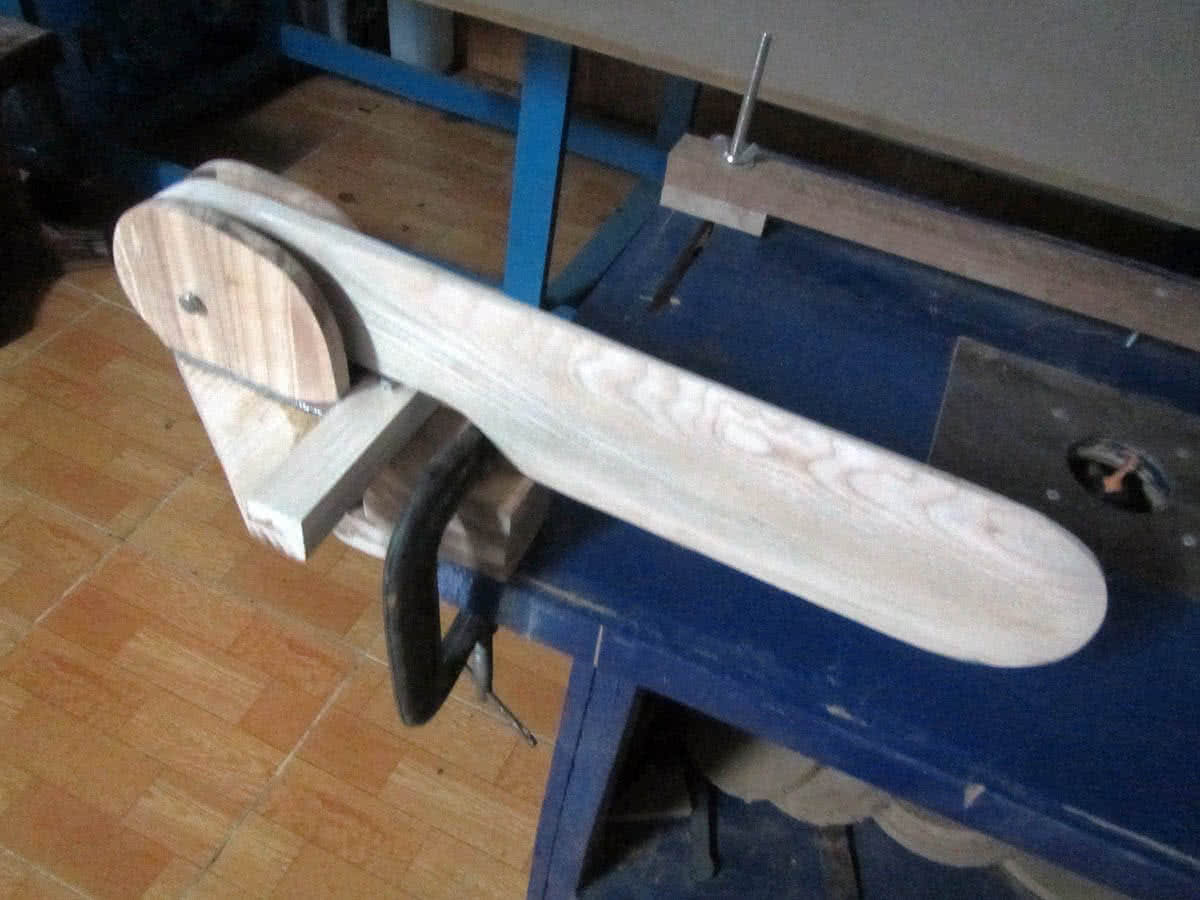
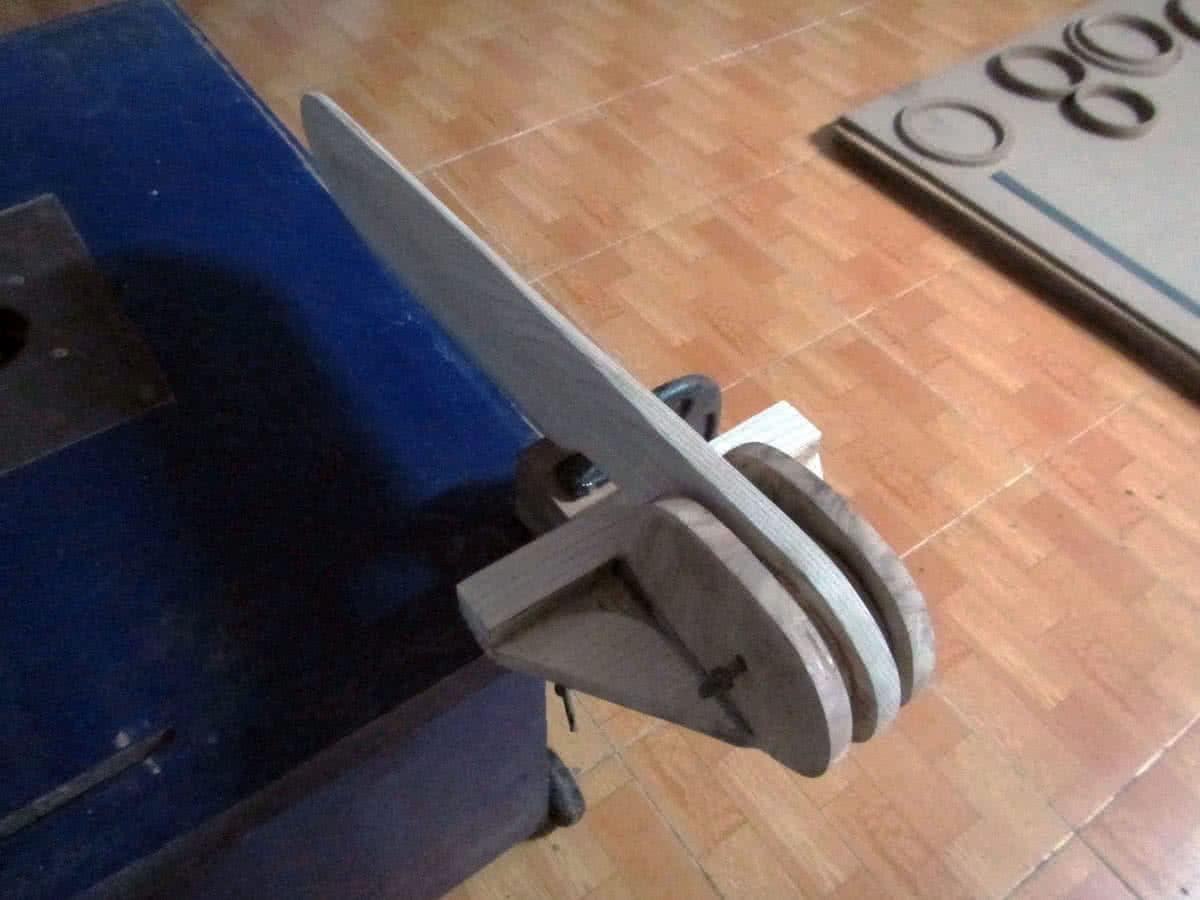
It’s not too complex (as it seems) to draft out the rudder’s parts on wood. 1st image: elements of the rudder, 2nd and 3rd images: gluing them together. 4th image: the rudder blade is (like they usually call) a high – aspect – ratio foil, 10 x 50 cm in dimensions. The 2 circular discs: ratchets for pulling the blade up and down. Now, I definitely think I could build a rudder that would work, both efficiently and reliably!

serene – 2, part 9

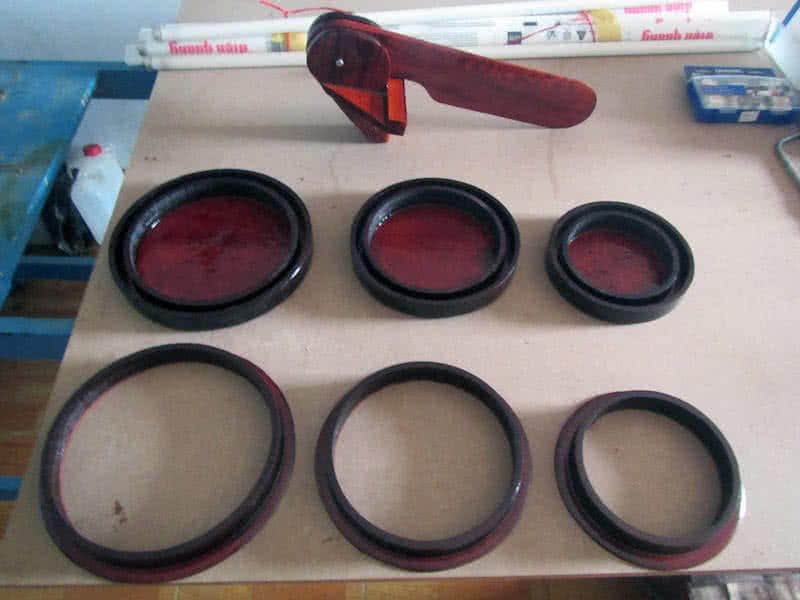
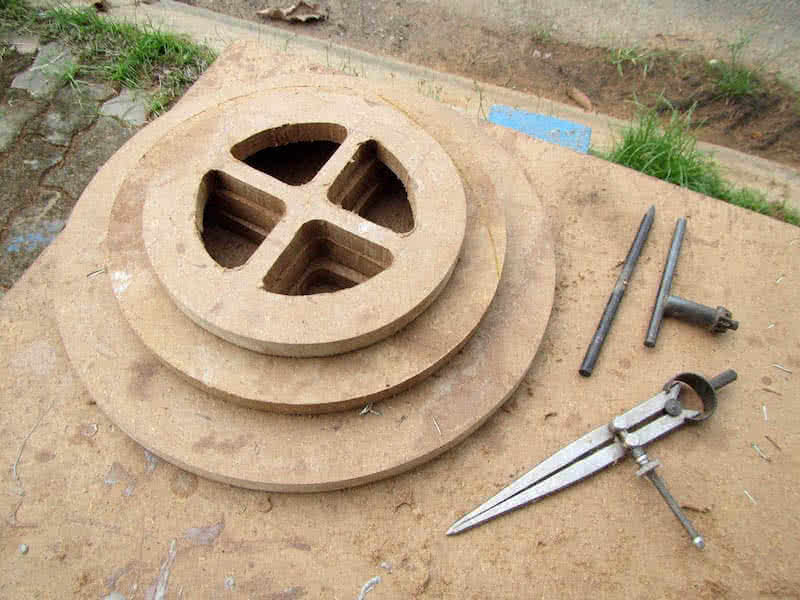
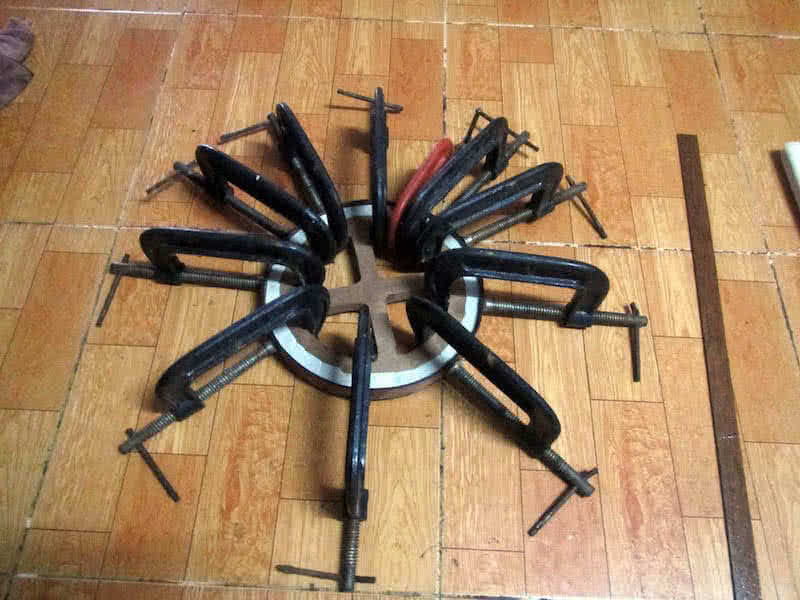
The structure of the hatches is nothing fancy, three tight rings nested inside each other per hatch, two belongs to the lid, and the other would be attached to the base (deck). First image: the 9 rings forming 3 hatches, filled with some thinned epoxy (about 400 gram of epoxy) to harden the MDF. This is not a very good way to make hatches (weight wise), but it would be just as heavy (or lighter) compared to plastic ones.

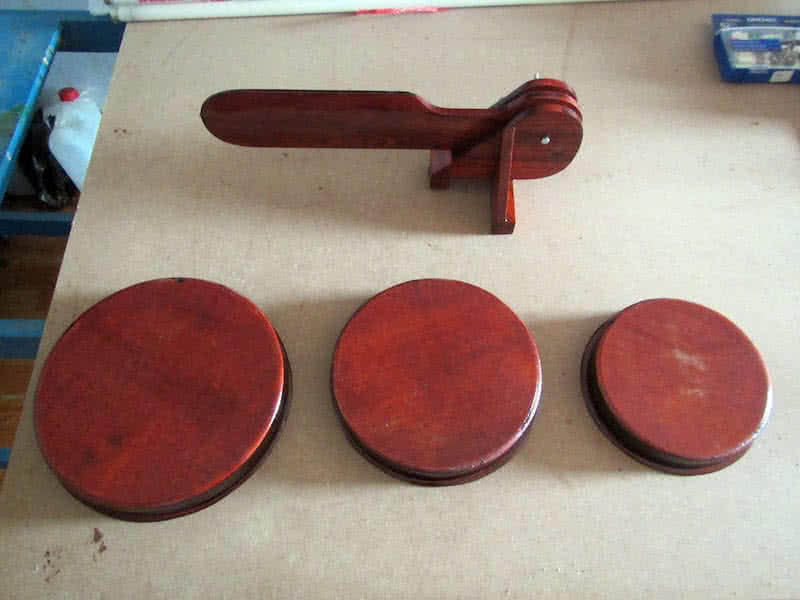
I was thinking a lot about the hatch locking mechanism. But finally decided to just use cords and cleats to tie down the hatches. The metal locks are too complex and fragile, unendurable to salt water. Tying down the hatches is much simpler and secured, and is easy to repair when something breaks. Between the 2 rings of the lid is a thin layer (about 3 mm) of epoxy (the softer, elastic kind) filled in to function as a gasket.

At first, I intended to glass in and out of each of the hatches’ rings, but the 9 mm – thick MDF walls have absorbed enough epoxy, and have become really strong (maybe more than enough, they’re now a bit too heavy), so there’s no need for glassing. The good thing is that once everything is assembled together, they fit very tightly, the lids and the bases, and the dark brown color is stained nicely too!

3rd image: the complete products, lids opened, 4th image: the lids closed. Once I’ll finish building up the kayak’s deck, the hatches would simply be glued on. Only the front hatch needs some special treatments, as the front deck is curved in shape. Also, the compass would be mounted right on this front hatch lid, to save deck space, and to simplify the building process. But that would be another later phase of this project.

serene – 2, part 8

Had a major setback with making the hatches with wooden strips, the strips didn’t make perfect circles as I’ve expected, although they bend quite well, they’re off by small amount (e.g: 0.5 ~ 1 mm) here and there, and that’s an unacceptable precision for hatches, just a small gap and water could leak in. I had to abandon the method of making hatches using wooden strips, and tried to find some alternative ways instead.

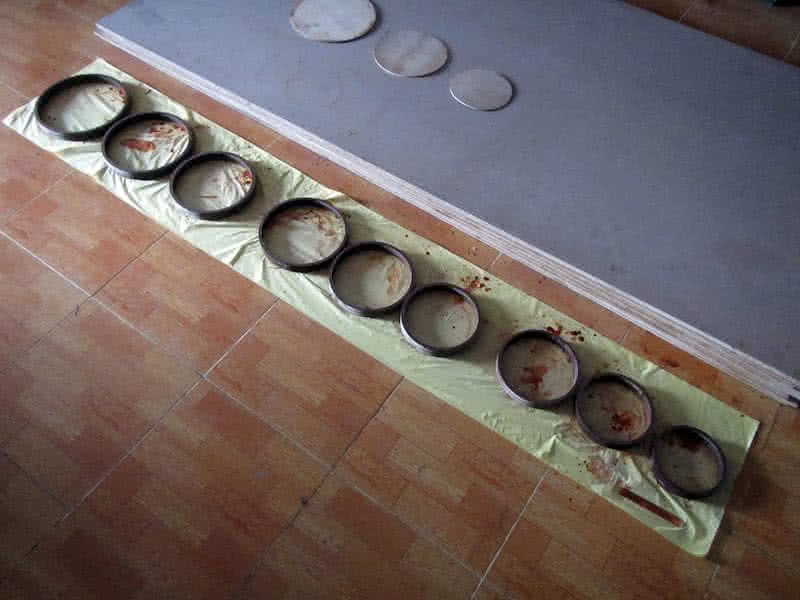
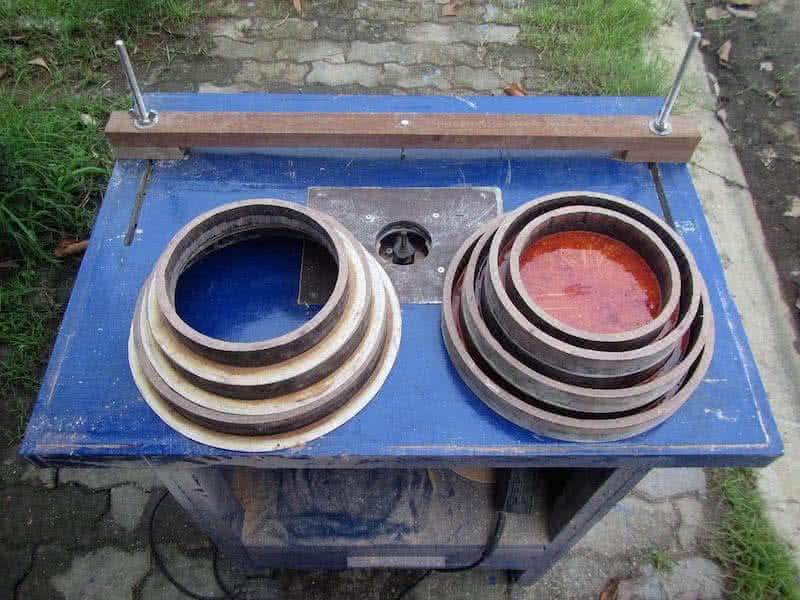
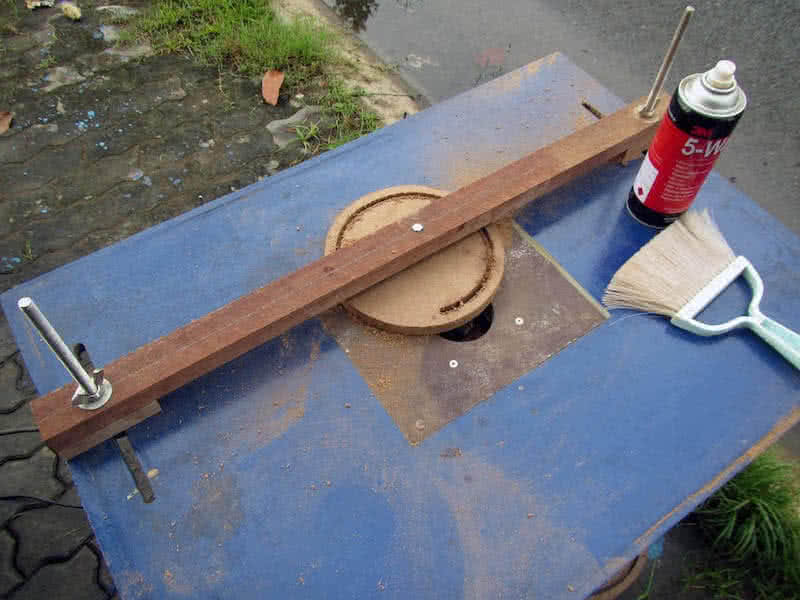
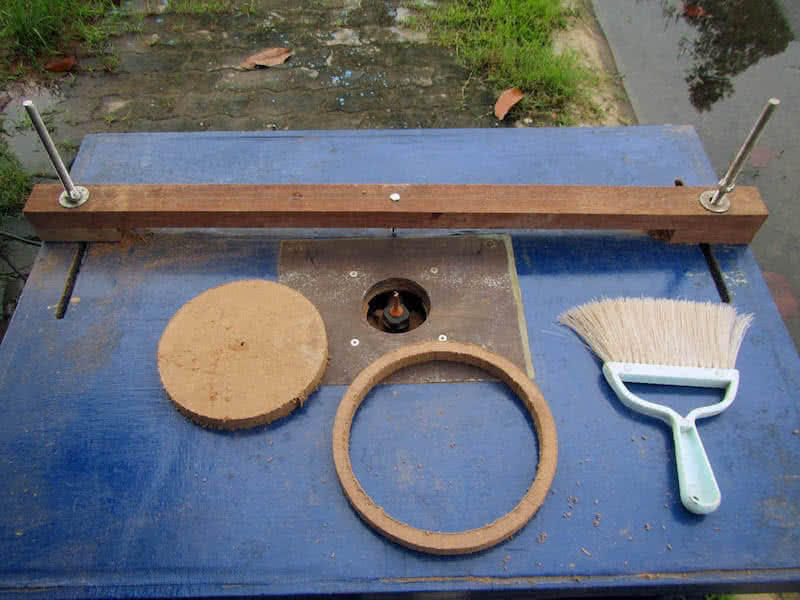
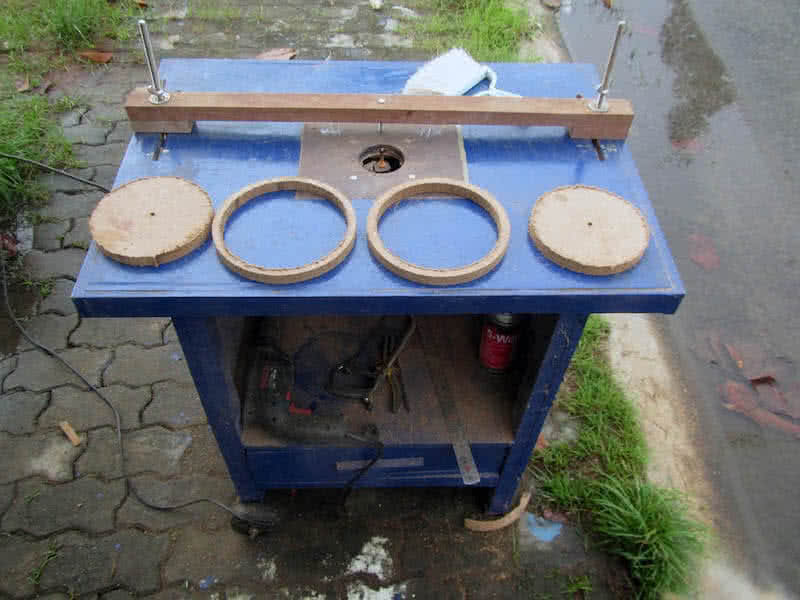
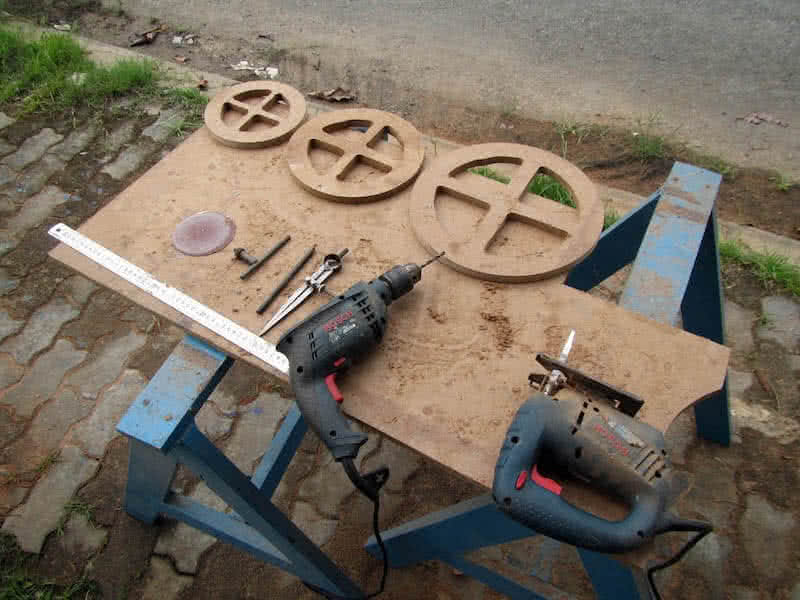
Finally, I resorted to cutting the hatches’ rings (lips) using my routing table. The home – built machine is made quite a long time ago, but this is only the first time making some serious use of it. It’s quick to make a circular cutting jig, as shown in the 1st image: the MDF “disc” would rotate around a pivot point that could be adjusted by sliding the wooden bar. The jig proved to offer good cutting accuracy (sub millimeter).

That’s really good, as I want very tight fits between the hatches’ rings, 3rd image: 2 rings cut, there’re still lots of it to be made. Using solid MDF as hatches’ rings has a serious down side: you would need to fill the MDF with much epoxy for it to be hardened, and waterproof, thus increasing the overall weight. On the other side, MDF is easy to cut into perfect shapes! Decided to go this way anyhow as I have few material choices!

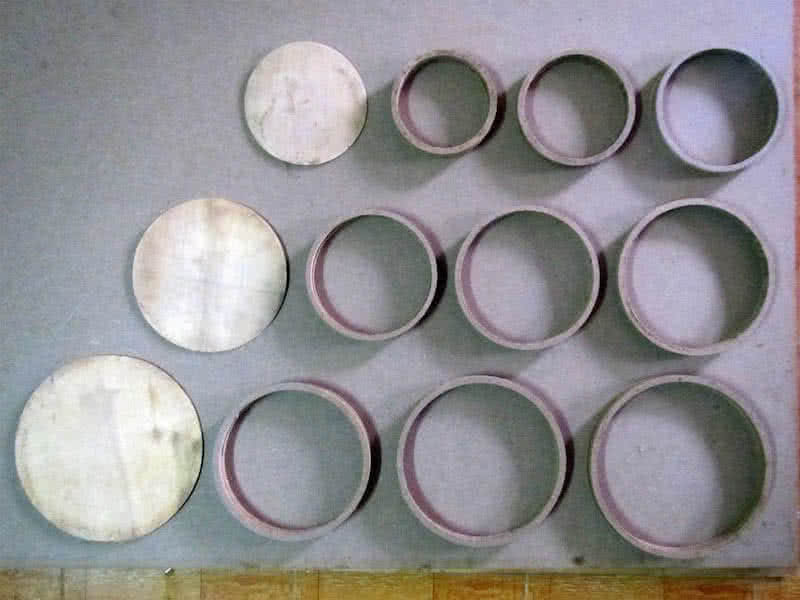
Last image: all the hatches’ rings is cut, 3 hatches, 3 lips per hatch, and 2 rings per lip (since they’re cut in 1.5 cm MDF, it requires 2 rings to form a 3 cm height lip), quite some work to be done, and too much of sawing dust too! And I’ve taken care on “quality assurance” to make sure that each ring is cut at its precise diameter. Though I don’t expect the hatches to be waterproof, it should be watertight as much as possible.

serene – 2, part 7

I’ve been thinking about kayak hatches over and over again. Starting from the very early days with my plywood hatches (in Hello World – 2, 3) which are obviously not watertight, to the Beckson hatches on my Serene – 1 kayak. The Beckson is very good, watertight and even air tight, but sadly that’s only true in ideal conditions. In reality, in multiple days trip, when mud and sand has get into, it would leak by a small amount.

The Beckson is not ideal hatch for kayak in my idea (for other purposes, it may be ok). The reason is that the hatches are built flushed with the mounting surface, and some inner elements are even recessed… When the water washes over (as always happened to the very low freeboard of a sea kayak), and when the O – rings are not properly lubricated, or when there’re some mud, sand inside the joints, water would leak in.

That’s why I decided to build my own hatches for this Serene – 2 new kayak. The idea is really simple: the hatches are raised a few centimeters above the mounting surface, and even when the seals are not too tight, that would suffice to keep most of the water out. Examine many sea kayak hatch designs, I’ve found out that simple thing, that the hatches should be raised (not flushed or recessed) above the deck.

1st image: cutting thin (2.5 mm) wooden strips used to build the hatches. 2nd, 3nd images: the 3 MDF templates for hatch building: the rear, the front and the day hatch, sizes in diameter: 30, 25 and 20 cm respectively. 4th image: building the hatches’ coaming with thin wooden strips around the templates, each coaming consists of 2 layers of strips which bend easily around without cracks and without the need for steaming.

serene – 2, part 6

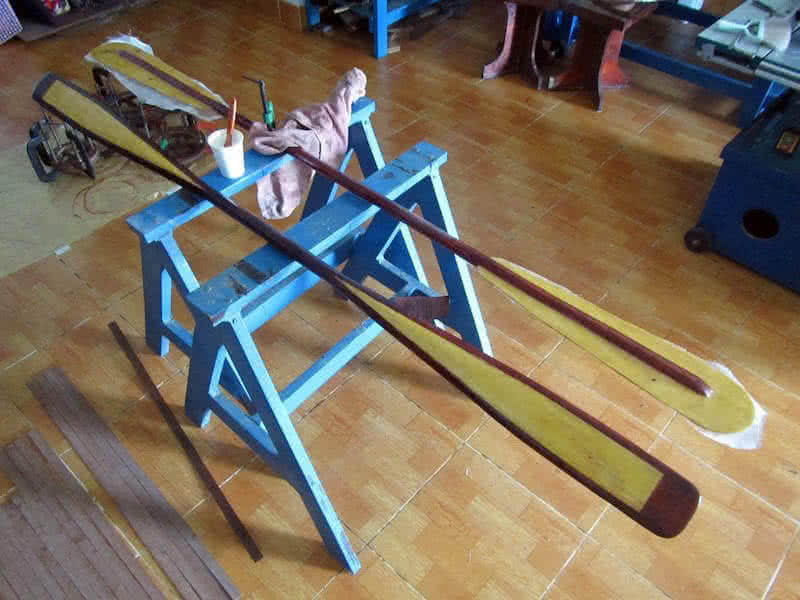
Finished with Serene – 2‘s first paddle, continue to the second one. This would be the pair of paddles, one Greenland style, and one Euro style, that I would use on the new kayak, intended to be slightly smaller in size, and much more lightweight compared to my previous ones. The Greenland paddle is not a typical Greenland one, it’s rather quite short with bigger blades, and the Euro paddle is not of typical Euro style neither.

As it is quite small compared to most Euro style paddles. It’s quite hard to justify my design decisions, but all came from my paddling experiences, that I would need a slightly bigger Greenland paddle for all – round paddling, and a slightly smaller Euro paddle to provide more power in “adversary” conditions. The second one would be lightly & simply built also, with that same kind of rattan shaft, and thin plywood blades.

1st image: the finished Greenland paddle. 2nd image: dry fitting the Euro paddle’s blades and shaft. 3th image: bending the plywood blades, I want them to be just slightly curved around the longitudinal axis, it’s just nearly impossible to bend the plywood around multiple axes, to decided to stay with the simplest blade design. After gluing the blades and shaft together, the paddle would receive a layer of fiberglass all around.

4th image: glassing the second paddle, next to it is the finished Greenland paddle, the pair of paddles near completion, they all need to be “trialled” soon, to evaluate their performances, and to see how they would behave in real world. Final weights, the Greenland paddle: 0.82 kg, the Euro paddle: 0.9 kg, not up to the “standards” yet, but quite near, that’s fine anyhow, as they’re very light (compared to my previous paddles).

serene – 2, part 5

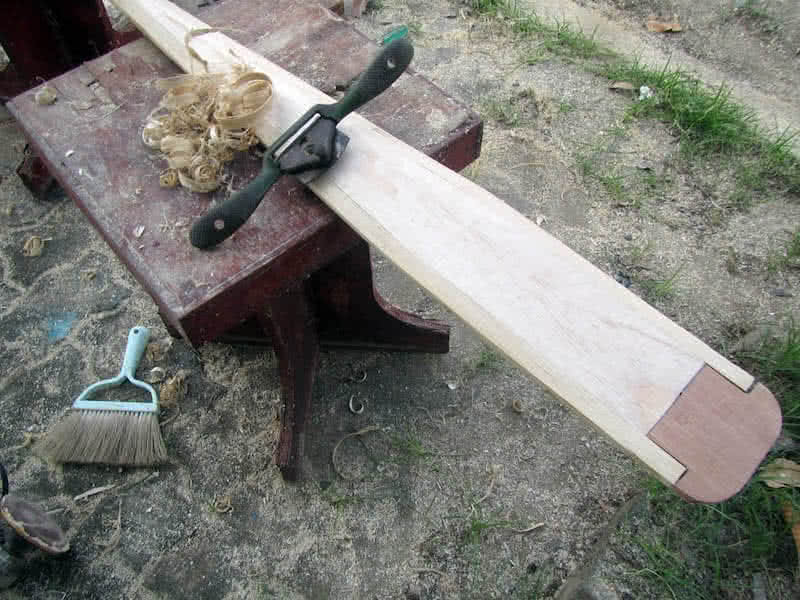
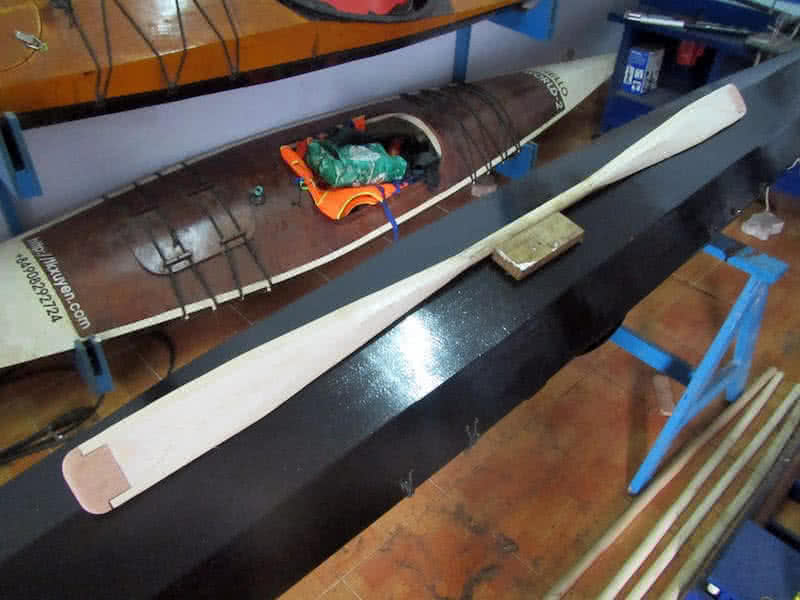
The first image: cutting two hardwood blocks to attach to the paddle’s 2 ends, 2nd image: scraping the paddle blades with a power planer and a spokeshave. 3rd image: the paddle takes its final shape, next it would be sanded, colored (stained with thinned epoxy), glassed then painted. The paddle would receive a layer of fiberglass all over the body, to waterproof the porous balsa wood, and to strengthen the whole structure.

This is only the first of two paddles I’d intended to build. A lightweight Greenland paddle would be my convenient, all – round thing to propel the boat with. But under some particular circumstances, e.g: very strong wind or current, I would need a more powerful tool, that’s why my next one would be a paddle of the usual Euro type, it would be also very lightly built, and has much smaller blades, around 50 x 14 cm in dimensions.

I’ve not yet to really realize which paddle type is better: Greenland or Euro, but thought that they all has their uses in different situations, and decided to build and use… both. Also, my paddles all has become smaller and shorter, their lengths now are around 1.85 ~ 1.9 m. My thought is that sea – kayakers nowadays are using paddles that are longer than needed (around 2.2 m), especially those going for long touring.

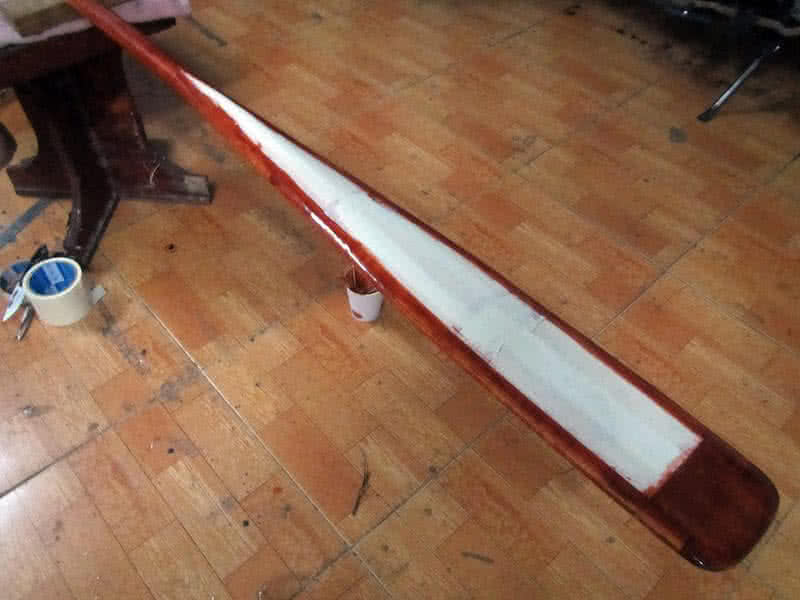
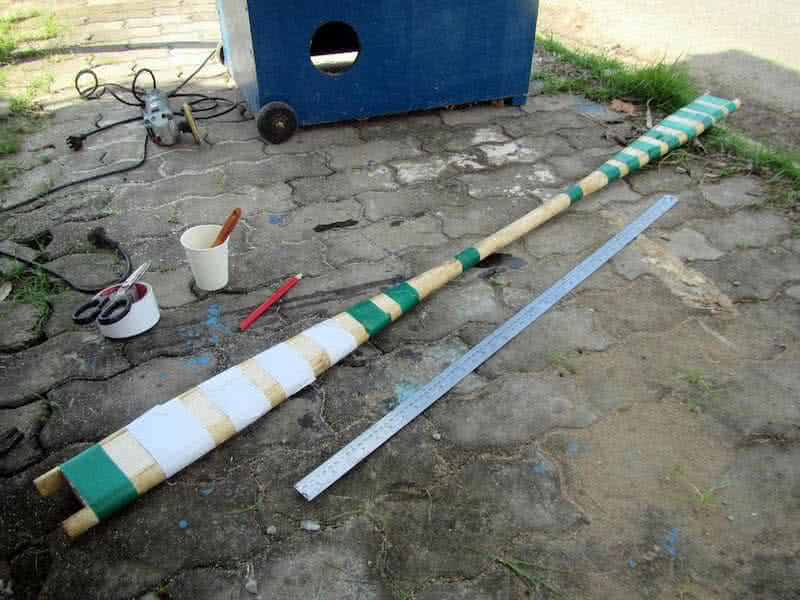
I made a terrible mistake, using the wrong duct tape to mask the paddle for coloring. A kind of 3M duct tape is so sticky that it’s extremely hard to be removed after having painted the paddle blades with colored – thinned – epoxy. I seriously scratch the surface while removing the duct tape (with a chisel) resulting in a very poor finish on one blade. The paddle would be perfectly usable, but not as good – looking as I’d expected.

serene – 2, part 4

Still don’t have some free times to start my Serene – 2 kayak building yet, and all preparations (mainly materials purchasing) has not been completed. So I start slowly with building some other miscellaneous objects. First are the paddles. A typical WRC (Western Red Cedar) Greenland paddle weights around 0.7 ~ 0.8 kg. My two paddles, built with tropical hardwoods, though durable, weigh too much: 1.3 ~ 1.5 kg.

A lightweight paddle has very obvious advantages on long journeys, and I’ve been thinking about resolving this weighting issue. So I’ve decided to realize an idea which I’ve been having for a long while, in a tropical country like Vietnam, the best material you could use for a paddle is… rattan. Rattan is very lightweight, but it’s also very durable, flexible, and stiff, an ideal material to be used for building the paddle’s shaft.

In order to keep weight to minimum, in combination with the rattan stick, I use balsa wood for the blades. Construction is quite simple indeed, the rattan stick is splitted into two halves at the two ends, and two balsa wood blocks are inserted to form the blades’ shape (see the 3rd image). Balsa wood is quite hard to acquire in Vietnam, I’d made the wood block from 6 small 5 – mm – thick balsa sheets, laminated together.

Next is the job of careful – carving down the blades’ shapes. The 4th image: empty spaces at the two ends of the paddle, that would be the places for two hardwood blocks in order to better resist against cracks upon physical impact. The paddle would receive a layer of glass to further strengthen the structure and to protect it against water. Balsa is too porous and without protection, it would takes on water in the long term.

serene – 2, part 3

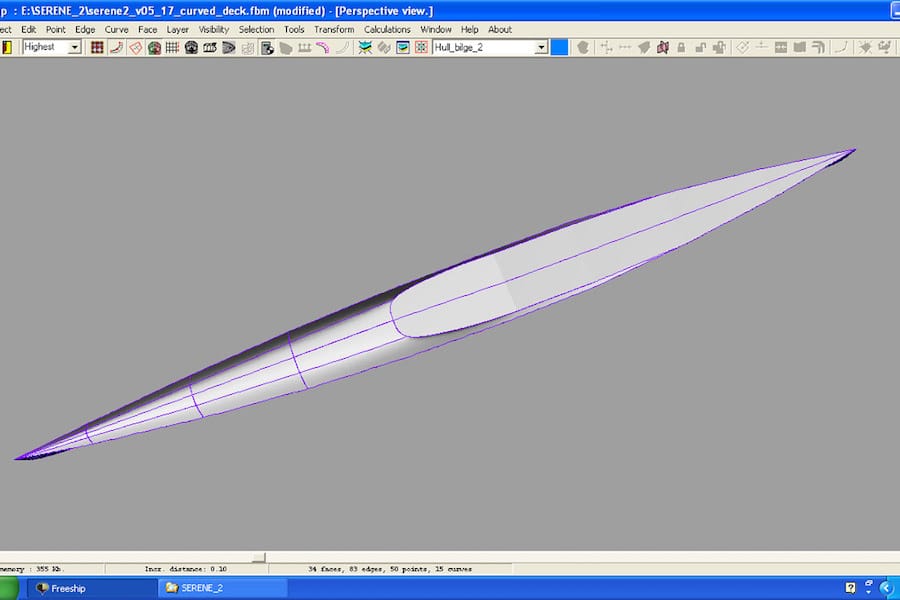
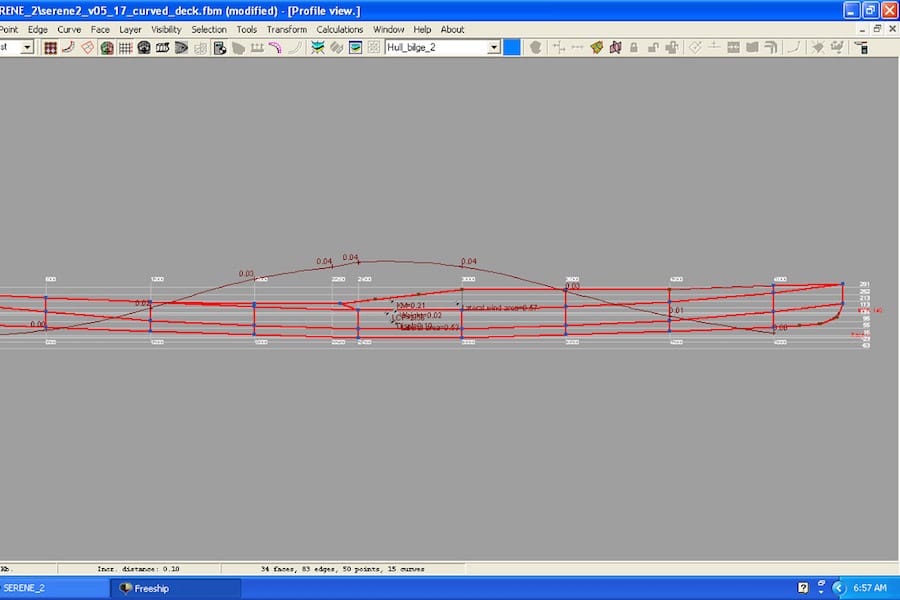
Spent a considerable amount of time on optimizing the hull and deck lines. Some little more rocker at the bow, and less (almost square) at the stern. The hull is now a bit finer (less full), hence reducing Cp (prismatic coefficient) further into the [0.48 ~ 0.5] range, quite low indeed. Primary stability is also reduced a bit, with Kmt (transverse metacentric height) at about 21 cm, but the boat is sufficiently stable already.

Cb (block coefficient) is now reduced to 0.33, stepping outside the normal range of [0.35 ~ 0.45]. That is, the boat wouldn’t be very efficient at lighter load, e.g: with the paddler alone. But that would be fine anyhow, since the hull is optimized toward its full displacement, beyond 115 kg. And as confirmed with experiences in my previous kayak Serene – 1, the boat would feel a bit heavier, but more comfortable at full load.

Some other design considerations still need to be done, but they won’t be reflected into the 3D modeling, for the sake of simplicity: the cockpit size and shape, the size and position of the hatches, the rudder and rudder control, etc… Serene – 2 will have a 3rd hatch, or usually called: the day hatch, which locates right behind the cockpit, to store food for lunch and other frequently – accessed things during a paddling day.

2nd image below: the stability curves for various loads: 85, 95, 105, 115 and 125 kg. The curves look exceptionally fine in my eyes, they won’t decrease until 50 degree of heeling angle, and the shapes of the curves closely resemble each other, showing a predictable behavior in hull’s stabilities. Almost done with the designing, I think, next is finding some free times to build the boat in the upcoming months.