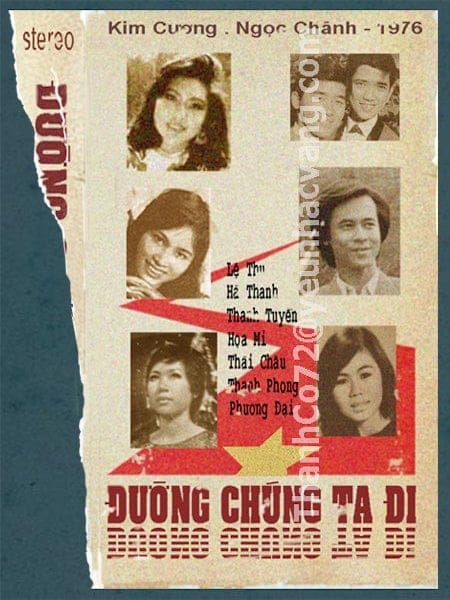
đường chúng ta đi


Album Đường chúng ta đi – 1976 và Album Tổ quốc yêu thương – 1978

Một chứng tích của lịch sử, album nhạc đỏ (thu âm năm 1976) với sự trình diễn của các ngôi sao nhạc vàng: Lệ Thu, Họa Mi, Hà Thanh, Thanh Tuyền, Thái Châu… Lệ Thu, Hà Thanh thì hẳn ai cũng đã biết, còn Họa Mi, Thanh Tuyền… là những giọng ca chuyên hát cho phòng Tuyên truyền của quân đội VNCH cũ… Một sự kết hợp lạ lùng nhưng vẫn hay trên một khía cạnh nào đó. Biết rằng điều này là khó nghe với khá nhiều người, nhưng âm nhạc vẫn vượt ra khỏi các biên giới chính trị, dù cho cái biên giới ấy nằm trong… chính phần ca từ các bài hát!

Theo như tôi biết, rất nhiều ca sĩ, nhạc sĩ miền Nam cũ đã chọn ở lại VN sau 1975 và phần nhiều cũng đã có những bước đầu hợp tác với chính quyền mới. Chỉ sau đó, khi điều kiện sống quá khó khăn, khi có quá nhiều những ngược đãi vật chất cũng như tinh thần thì họ mới chọn con đường trở thành “boat people” mà ra đi. Như Phạm Đình Chương, Thái Thanh… chỉ ra đi sau khi bị tuyên một cái án “cấm sáng tác và trình diễn vĩnh viễn” tại VN, như Hoàng Trọng còn ở lại VN mãi đến tận năm 1992…

Lá đỏ - Thái Châu 
Cuộc đời vẫn đẹp sao - Họa Mi, Phương Đại 
Hà Nội niềm tin yêu hy vọng - Lệ Thu 
Lên ngàn - Họa Mi 
Bóng cây Knir - Họa Mi 

Thôi thì khoan hãy bàn về cảm xúc trong các bài hát. Riêng về phần hòa âm thì có thể thấy miền Nam đi trước miền Bắc (lúc bấy giờ) rất xa trong chuyện hòa âm nhạc nhẹ. Và riêng về kỹ thuật hát thì một mình giọng ca Họa Mi cũng đã hơn đứt tất cả những ca sĩ nhạc viện được đào tạo chuyên nghiệp của miền Bắc như Lê Dung, Măng Thị Hội… (hãy nghe bài Bóng cây Knir và so sánh). Tôi có cảm giác rằng dù sao với tiếng Việt, lối hát rõ âm rõ chữ, nặng về luyến láy, hơi rung… vẫn là một lối hát truyền tải được tình cảm và phù hợp với cái tai âm nhạc Việt. Sớm muộn gì rồi lối hát này cũng sẽ trở lại…

diệc lạc hồ

双鸟齐飞

黄莺飞到北京都
会遇金鹏亦乐乎
大事未成行小事
双鸟齐飞至善图

Song điểu tề phi

Hoàng Oanh phi đáo Bắc Kinh đô, Hội ngộ Kim Bằng diệc lạc hồ! Đại sự vị thành, hành tiểu sự, Song điểu tề phi chí thiện đồ!

Nhân kỷ niệm 60 năm quốc khánh nước CHND Trung Hoa (1/10/1949 ~ 1/10/2009), trích đăng lại ở đây bài thơ của một nhân viên ngoại giao đoàn Việt Nam (đăng trên Tạp chí Sông Hương, 2002): Bài thơ thể hiện tình hữu nghị cao quý của nhân dân hai nước Việt – Trung. Bài thơ được làm năm 1991, sau một thời gian dài 10 năm (kể từ 1981), khi hai nước tuy không còn những đối đầu quân sự lớn, nhưng hai bên vẫn tiến hành một đường lối tạm gọi là artillery diplomaticngoại giao pháo binh – chân lý, lẽ phải đứng trên đầu nòng đại bác.

Các địa danh đẫm máu như Vị Xuyên, Ngọc Đường, Lũng Cú… những người từng bám trụ 10 năm ở đó đến nay vẫn nhiều người còn sống, vẫn còn kể lại chuyện ngày xưa ở đâu đó quanh đây. Trở lại với bài thơ, năm 1991, một đoàn ngoại giao VN sang TQ, những bước đi đầu tiên của tiến trình bình thường hóa quan hệ. Trưởng đoàn phía VN là ông Vũ Oanh, trưởng đoàn phía TQ là ông Lý Bằng.

Cả “Oanh” và “Bằng” đều là tên của hai loài chim (không giống nhau), như được thể hiện rất rõ trong bài thơ trên đây: Song điểu tề phiĐôi chim cùng bay. Không cần phải biết chữ Hoa, đọc phiên âm Hán Việt hẳn mọi người cũng sẽ dễ dàng hiểu nội dung bài thơ! Chúng ta thấy lại cái điệp khúc Diệc lạc hồ ở đây! Diệc lạc hồ (hay Bất diệc lạc hồ) đều có thể hiểu theo nhiều kiểu: vui lắm thay, há không vui hay sao… hay theo phương ngữ miền Nam: vui quá hén!

văn cao – hải quân việt nam


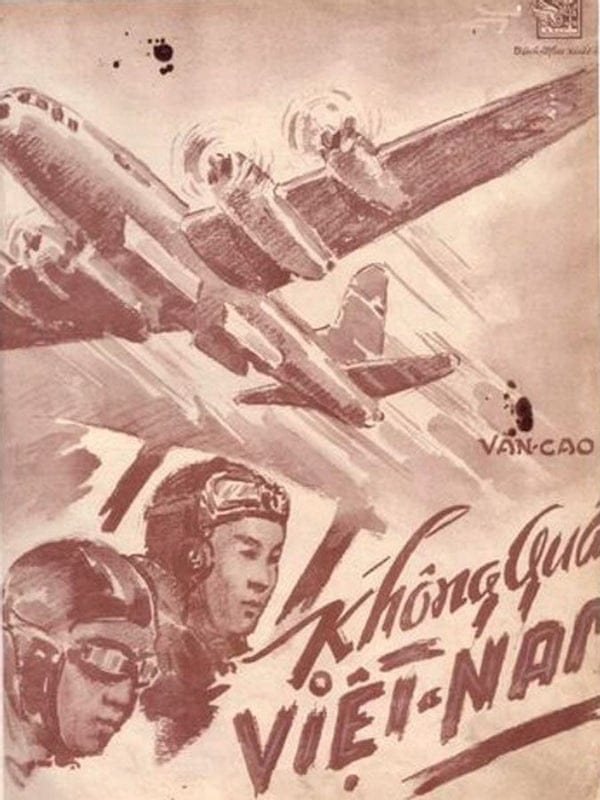
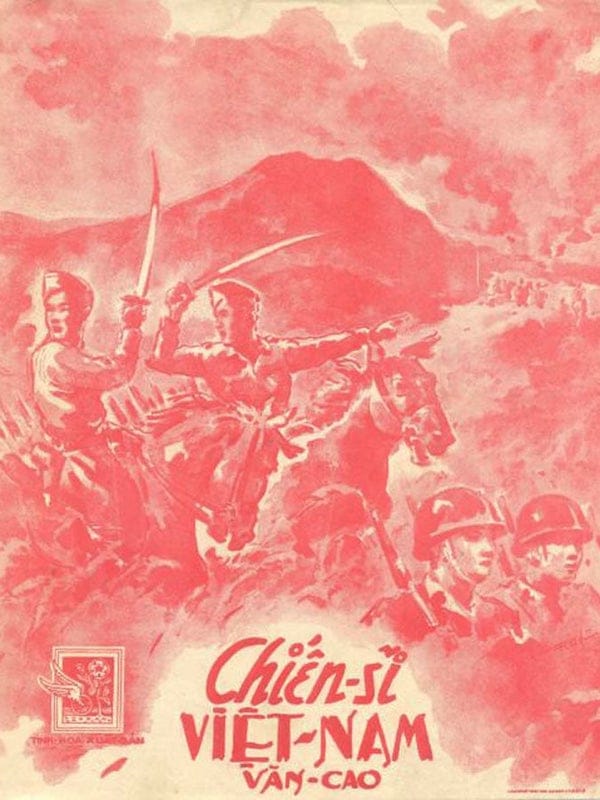
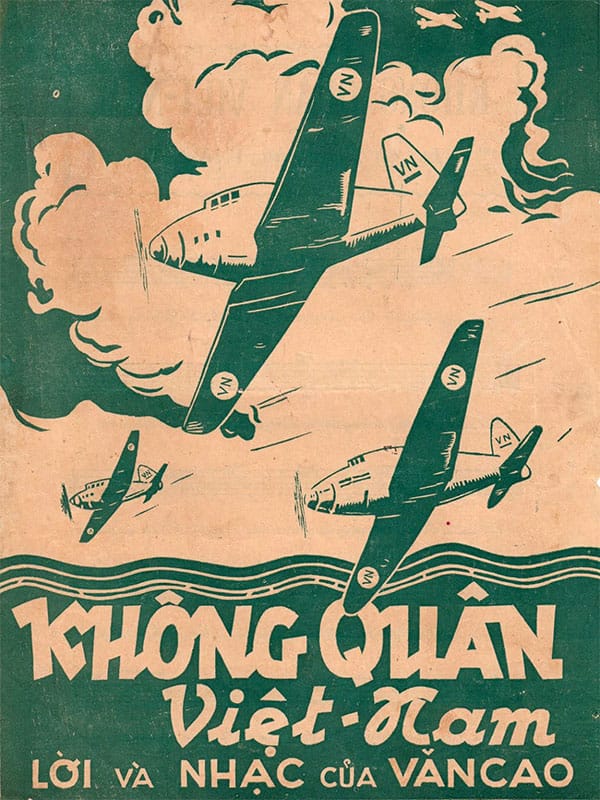
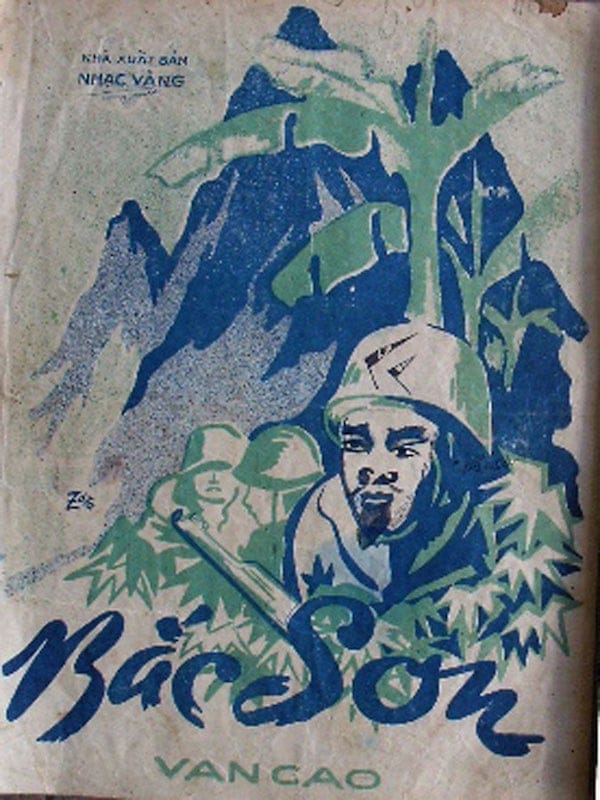
Nếu nhạc sĩ nói chung là những con người mơ mộng thì Văn Cao là con người mơ mộng siêu việt. Ông toàn mơ về những thứ mà mãi 60, 70 năm sau chúng ta mới bắt đầu có! Có 5 bài hát được viết trong những năm 1944, 1945, trước Cách mạng tháng 8. Ngoài Tiến quân ca đã được chọn là quốc ca thì Bắc sơn là bài ca viết cho các đội du kích, Chiến sĩ Việt Nam là ca khúc cho các chiến sĩ bộ binh, Hải quân Việt NamKhông quân Việt Nam là hai bài hát cho hải quân và không quân.

Hải quân Việt Nam 
Không quân Việt Nam 

Quốc ca được viết khi tác giả Văn Cao chỉ mới nghe phong phanh về mặt trận Việt Minh, còn những bài ca cho hải, lục, không quân thì được viết khi bộ binh còn là những guerrilla bands, còn hải quân và không quân hoàn toàn chưa có một chiếc canô hay tàu lượn nào, chưa nói đến những máy bay hay tàu chiến hiện đại. Mãi gần 70 năm sau khi hai bài ca được viết, VN mới bắt đầu có cái có thể gọi là Hải quân.

Việc Nga bán cho VN 6 chiếc tàu ngầm lớp Kilo, cộng với những tàu chiến đã và đang được đóng tại xưởng Ba Son (theo hợp đồng chuyển giao công nghệ từ Nga) đã chính thức hoá những tin tức đồn thổi lâu nay về việc thành lập Hạm đội biển Đông bao gồm khoảng 30 chiến hạm tương đối hiện đại, 6 tàu ngầm (Kilo-class submarine là lớp tàu tiên tiến) và vài chục máy bay đời mới. Thảo nào dạo gần đây, đài báo nói về biên giới, Trường Sa, Hoàng Sa có vẻ rõ ràng mạnh bạo hẳn lên, có đâu cứ “giấm giúi” như trước mãi!

the sorrow of war… film?

“Better to die than surrender, my brothers! Better to die!” – the battalion commander yelled insanely; waving his pistol, and in front of Kien, he blew his own brains out through his ear. (The Sorrow of War)

An un-put-down-able novel. It should win the Pulitzer prize, but it won’t. It’s too gripping for that. (The Guardian)

Dramatic… Will force American readers to acknowledge how little they still understand of the long war that left such a legacy of grief and guilt in their own country. (The Washington Post)

The Sorrow of War has won worldwide acclaim and become an international best-seller. (Amazon.com)

A good news: 8th, May, 2008, The Sorrow of War novel will be turned into movie by an American director: Nicolas Simon. After 10 years of discussion and negotiation, Bảo Ninh, the novel’s author finally permitted making of the film based on his famous book. The producer, Dominic Scriven, a very passionate admirer and friend of the author, who now holds the book copyright and want to transfer it onto the silver screen. An even better news: 9th, Aug, 2008, author of The Sorrow of War novel stated that he wouldn’t have any further connection with the The Sorrow of War movie project.

The reason given is: film’s script is not aligned with the author’s ideas. In fact, many people is doubtful that an unnamed director would be capable of working on such a great novel, although the producer (Dominic Scriven) ‘s goodwill is widely recognized! The movie project is now paused, in searching for another director! That’s a very good thing in my opinion, in the fear that we would have another history distortion (or even worse)! A picture is worth a thousand words? That’s not always true, think twice (or read the book)! In this case, words are worth thousands of pictures (or a movie)!

The novel is, more or less, an semi – autobiography. Bảo Ninh himself (or the protagonist Kiên in the novel) was a soldier in the 24th battalion, a special formation commissioned to the B3 front (central highland) in 1969. Of the unit’s 500 man, he is among the only 10 survivors. The story is an nonlinear scatter of memories, mixed the past with the moments of post-war time: childhood, a high school’s love story, the battles, and importantly lives after war.

The Sorrow of War is without doubt timeless. Perhaps it is one of the world’s greatest war novels ever written. Imagine the film Apocalypse Now and increase its effect, say by a factor of a thousand – this is the power of Bảo Ninh’s writing. I remember shivers in my spine when first reading the book, some 15 years ago! Just surf around some online bookstores, to see what readers have said about the book:

  • If this book doesn’t make you cry, you have no soul.

  • It’s definitely not a book for everyone, and I nearly put it down during the first 50-60 pages. But, I soon became wrapped up in the story and the language.

  • Books usually lay with me on my bed and after their formal end we sleep together for a few days but after the last sentence I promptly put this right back on my shelf and am having trouble thinking about it again. I had horrible nightmares during the read.

  • This book is amazing. The story progresses thematically rather than chronologically, and leaves you piecing together historical non-fictional events… He succeeds in taking the reader on a difficult journey of emotional and spiritual crisis, right to the core of the human condition and captures a sorrowful despair like no other literature I’ve ever read.

  • Like pouring acid on your moral center…

  • Just an excellent novel. To everybody who considers The Things They Carried the penultimate work of fiction about the Vietnam War: pick up The Sorrow of War and be prepared to be blown away by the stories of a Vietnamese.

  • In fact, my view of just about everything I thought I knew about North Vietnam from the mid-60’s to the mid-70’s was altered by this book.

  • This book is unbelievably emotional. The style of writing is unique: it is not linear or chronological in any way. It is chaotic, a reflection on the subject of the book. The writing style, though chaotic, seems to be a perfected style. The book was written with total disregard to order; there is no doubt that all was deliberate.

the battle of iadrang

To make war all you need is intelligence.
But to win you need talent and material.

For whom the bell tolls – E. Hemingway

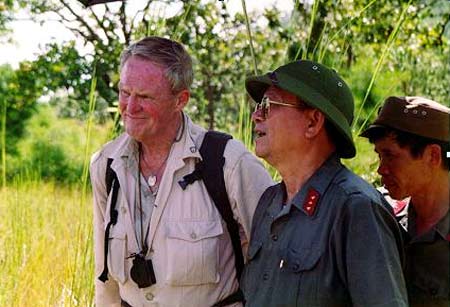
Col.Gen. Harold Moore and Col.Gen. Nguyễn Hữu An returned to the old battlefield, Oct, 1993, exchanging their diaries, maps, operational notes, memories and friendship.

The IaDrang Campaign was to the Vietnam War what the terrible Spanish Civil War of the 1930’s was to World War II – a dress rehearsal. The place where new tactics, techniques and weapons were tested, perfected and validated. In the IaDrang, both sides claimed victory and both sides drew lessons, some of them dangerously deceptive, which echoed and resonated throughout the decade of bloody fighting and bitter sacrifice that was to come.

While those who have never known war may fail to see the logic, this story also stands as tribute to the hundreds of young men of the 320th, 33rd and 66th regiments of the Peoples Army of Vietnam who died by our hand in that place. They, too, fought and died bravely. They were a worthy enemy.

Wild flowers now grow in those places of violent death. The IaDrang from PleiMe west is uninhabited except for a few montagnards who are/have been driven out to the east near PleiKu. The Ia Drang/Chu Pong area is now known as The forest of Screaming Souls and remains mysterious and beautiful.

Hoa dại giờ mọc đầy trên mảnh đất từng đầy rẫy chết chóc. Vùng IaDrang đến giờ vẫn không có ai cư trú, ngoại trừ một vài sắc dân miền núi đang được di dân về hướng đông gần PleiKu. IaDrang, ChưPrông nay được biết đến với cái tên Truông Gọi Hồn, vẫn nguyên vẹn huyền bí và đẹp đẽ như tự ngàn xưa.

Mar, 1965, the first U.S troops arrived in Vietnam (Danang). 8 months later, their first major engagement with the VPA in a large battle (of regimental, divisional size) took place at the Valley of IaDrang, which is since then known as the Valley of Death. Feb, 1994, President Bill Clinton announced the normalization in relationship with Vietnam. In an action to bootstrap of the process, in 1993, a film was made featuring the old bloodshed battle of IaDrang. Thus, battle of IaDrang marks the begin and end of a long-time painful and bitter relationship between the two nations. Up to the present days, lots of people from both sides still can not get it right about what had really happened then and there. The story below tries to recall the truth.

But first, about the film: We were soldiers is based on We were soldiers once… and young, a book written by Harold Moore himself, as one of the direct commanders in the battle (on the American side). It’s a Randall Wallace‘s film, the famous director of Brave Heart, Pearl Harbor, and now We were soldiers, with Mel Gibson as Lt.Col. Hal Moore, and Đơn Dương as Lt.Col. Nguyễn Hữu An. To my disappointment, the film is no better than any other Hollywood’s films such as Black Hawk Down, solely made to demonstrate American heroism. Exactly as written in Harold Moore’s book: Hollywood got it wrong every damned time, whetting twisted political knives on the bones of our dead brothers.

The film is no exception, it takes many of the small facts of the book onto it, but only to falsely portray the historical events. In fact, the film is a distortion of facts that happened, of peoples involved in the battle, especially the figure of Lt.Col. Nguyễn Hữu An. In a sense, the film has undermined the author Hal Moore’s (and many other American veterans) sincerity and goodwill. Hal Moore is also a man of literature talent, the following line is written upon his revisiting the old battlefield, 1993, accompanied by general An, about the battle and his old enemy (column on the left).

Strictly speaking, Lt.Col. Harold Moore was not the corresponding counterpart of Lt.Col. Nguyễn Hữu An, he was one of the three direct commanders in the battle, a battalion under Thomas W. Brown. Nguyễn Hữu An was then the division commander of the 325th. But history has brought the two man into one battle and a rendezvous aftermath. Battle of IaDrang was actually two main battles in an operation which lasted for one month (between American 1st division and VPA’s 320th, 33rd and 66th regiments). The main confrontations were at the X-Ray and Albany landing zones, between the 1st, 2nd, and 3rd battalions of the 7th cavalry regiment of the U.S army with the 7th, 8th, 9th battalions of the 66th regiment (and one company of the 33th regiment) of the VPA. Hence, in formations’ numbers, the two sides have equal forces.

Contrary to many many sources, Lt.Col. Nguyễn Hữu An did not have any advantages in power comparison, even in number of man. All his infantry battalions are light-armed units, with just some mortars. On the adversary side are air assault and air mobility cavalry units, with superior fire power support. From the air, an average number of 300 sorties per day was made, with all available air units in south Vietnam, and on land, field artillery came in heavy use. So the ratio here is at least 3:1 with the weaker is the Vietnamese side. Some sources give intentionally wrong information like: the landing troop of 400 man was surrounded by 4,000 soldiers, in fact, 4,000 was number in the whole area (not each individual landing zone), in the same way, we can say: two VPA regiments confronted with forces of the 1st division (a typical American division has at least 20,000 personnel).

The battle witnessed extreme uses of fire power: for the first time in history, strategic bombers B52 are used for tactical roles, air mobility by helicopters reached the highest level ever since the start of WWII. The VPA learned that they could neutralize the effectiveness of that fire power by quickly engaging American forces at close range, thus turned the battle into a close-quarter struggles with mainly knife, bayonet and other small arms. A series of well-planed ambushes turned the American situation to desperate. Finally, they know that they can not deny or hide an obvious defeat, then dropped napalm bombs to clear all vestiges, sacrificing all, including man of their own. This is known as one of the most savage battle and can be considered as microcosm of the whole war.

The American casualties is about 700, the Vietnamese is about 1100, a victory to Lt.Col. Nguyễn Hữu An in consideration to forces participated in the confrontation. The battle set up, for the first time, an example in which a modern Calvary division can be defeated (Calvary division was then a new concept of air assault and air mobility units, formed firstly in the Vietnam war). In fact, the battle is blueprint of tactics successfully anticipated by Lt.Col. Nguyễn Hữu An, many interesting details can be found in his memoir (all details, facts, formations, numbers, estimations… in this post can be confirmed by both 2 memoirs from the 2 sides). He is named: the General of Battles for his exceptional talent in tactical problems. The man is among only a few number of generals in Vietnam who truly gained respect from the people, not only for his success in military career but also for his righteous attitude toward history and moral principles he’s practiced in life.

⓵⏎ Hemingway’s words were true in the Spanish civil war, but it’s not true anymore in the Vietnam war. Even with talent and material, you still can not win it.

⓶⏎ The phrase: The forest of Screaming Souls may have been first introduced in the famous Vietnamese novel The sorrow of war by Bảo Ninh. The author (also the main character Kiên in the novel) was also a soldier in this B3 (Central Highland) front.

the rain on the leaves

Some interesting recently – collected video documents: Phạm Duy with Steve Addiss on his song: Giọt mưa trên lá (the rain on the leaves) and Phạm Duy with the legendary Pete Seeger and the American folk song Clementine. Center image: the original poster of the song, and the original Vietnamese rendition (by the singer Thái Thanh) on the left.

Giọt mưa trên lá - Thái Thanh 
The rain on the leaves 
Steve Addiss & Phạm Duy

It’s not an abnormal thing to see church – music – influential songs like this to be the first to catch notices from Westerners (the Vietnamese – native pentatonic is harder to digest however). Indeed the song has been thought by some as a translation of a certain American folk song, which is absolutely not. The same is applied to several other Vietnamese songs, such as this Scents of Yesteryears, which easily touch the hearts of listeners outside VN.

songs for free men

…The reasoning behind his persecution centered not only on his beliefs in socialism and friendship with the peoples of the Soviet Union but also his tireless work towards the liberation of the colonial peoples of Africa, the Caribbean and Asia, his support of the International Brigades…

Listening to Paul Robeson’s album: Songs for free men… a very lovely basso profondo concert singer (he was one of the few true basses in American music), performing spirituals. Despite being a very famous and successful singer & performer, the man was kept under strict surveillance by US and UK governments for his international activities in Labor and Anti – Colonialist movements. It’s believed that he was unsuccessfully murdered by the CIA while in Moscow. He is now deserved a position in mainstream history by various posthumous recognitions.

The USSR anthem - Paul Robeson 

In the background video above (1945 victory parade in Moscow), Robeson presents the Soviet Union’s national anthem with a translated English lyric (let read the verses). I think, though it’s a very subjective idea, the song is the best anthem in the world, much more impressive than French’s La Marseillaise. The music’s still used as national anthem in Russia now, with a new lyric.

Don’t know why, but the music reminds me of spaces in the mesmerized text of Ernest Hemingway’s For whom the bell tolls (yet another American activist). As a child, I adored Hemingway’s writing style, and remembered many excerpts from his novel by heart, the spirits of International Brigades! The paragraph quoted on the left had been given a wonderful Vietnamese translation, it describes El Sordo’s final fighting on a hill, his thoughts on life and death, yet another picturesque Song for free men!

mùa xuân đầu tiên

Thêm một bài trong chuỗi những điệu valse chào xuân. Một bài hát mà ai cũng biết: Mùa xuân đầu tiên. Mùa xuân đầu tiên là mùa xuân nào? Xin thưa đó là mùa xuân 1976, 20 năm kể từ sau vụ án Nhân Văn Giai Phẩm, nhạc sĩ Văn Cao mới sáng tác trở lại. Và cũng mất chừng ấy thời gian nữa để bài hát được chính thức công bố với công chúng (năm 1996 với tiếng hát Thanh Thuý).

Mùa xuân đầu tiên - Thanh Thuý 

Mà tại sao lại gọi là Mùa xuân đầu tiên, tại sao lại là năm 1976, tại sao lại có những lời ca: từ đây người biết yêu người, mùa xuân mơ ước ấy xưa có về đâu…? Thật tội nghiệp con người nghệ sĩ Văn Cao, ông mong mỏi rằng mọi khổ đau đã qua đi, trong khi thực sự chúng mới bắt đầu!

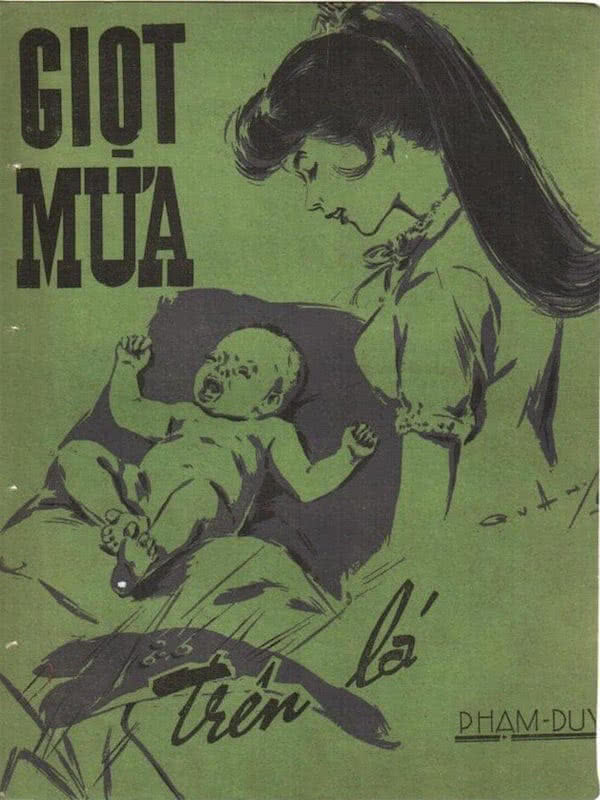
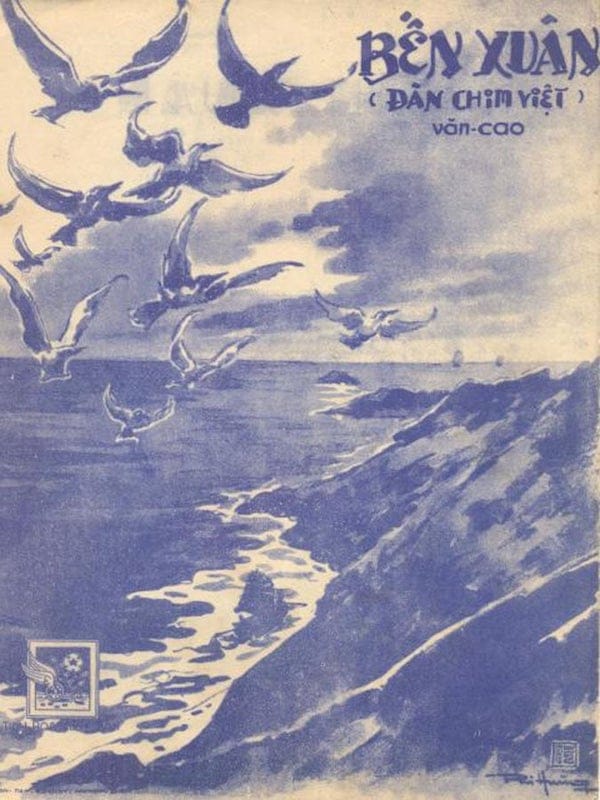
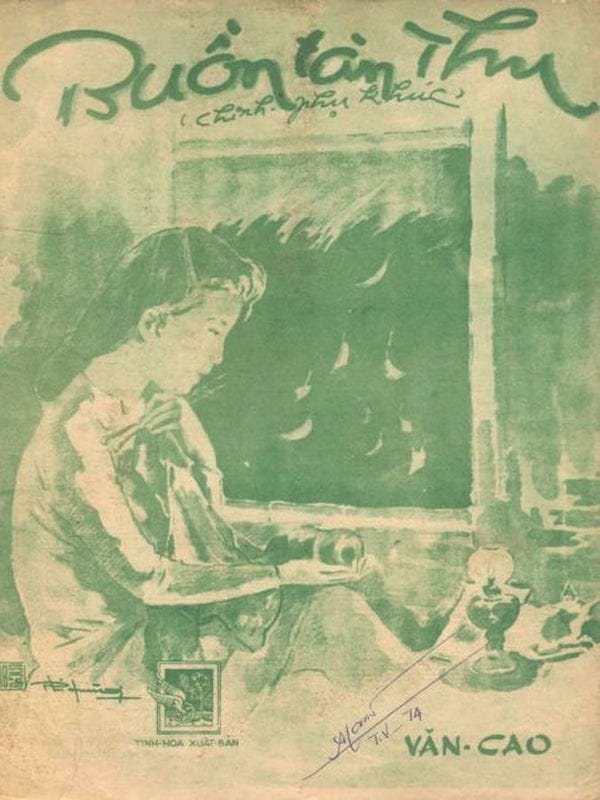
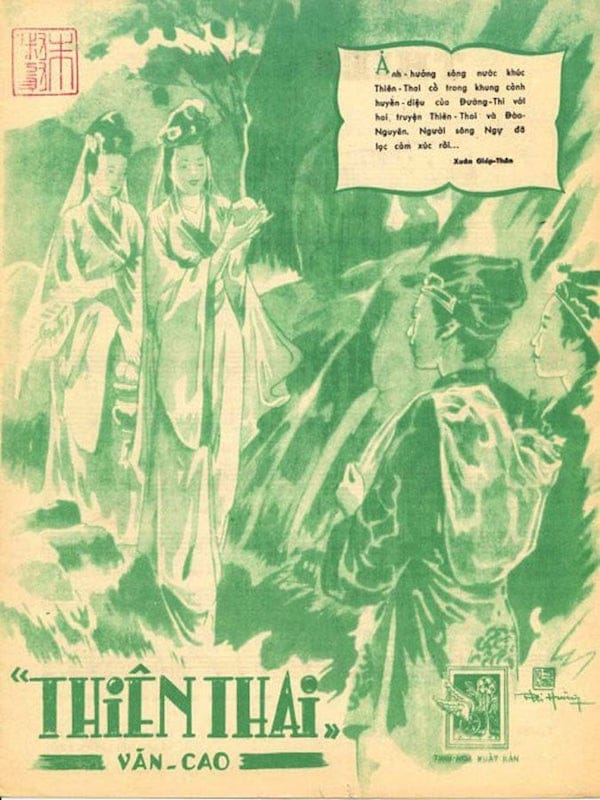
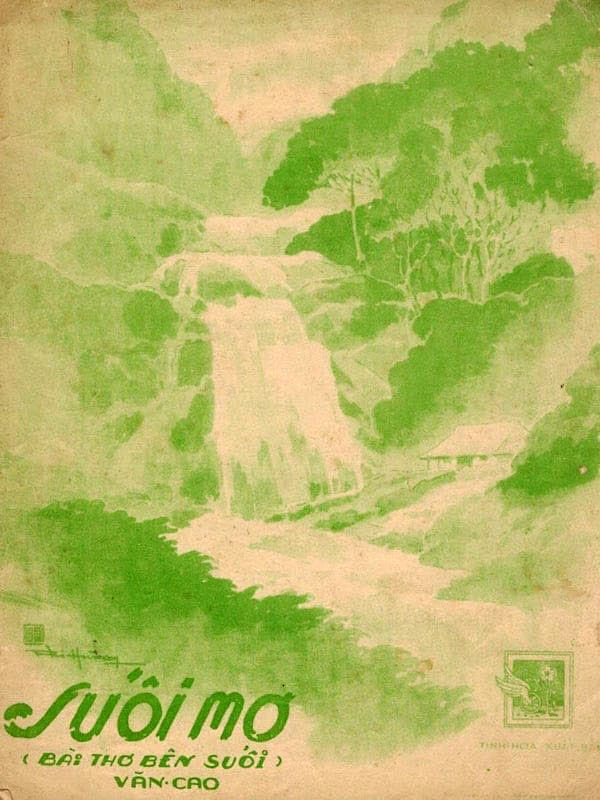
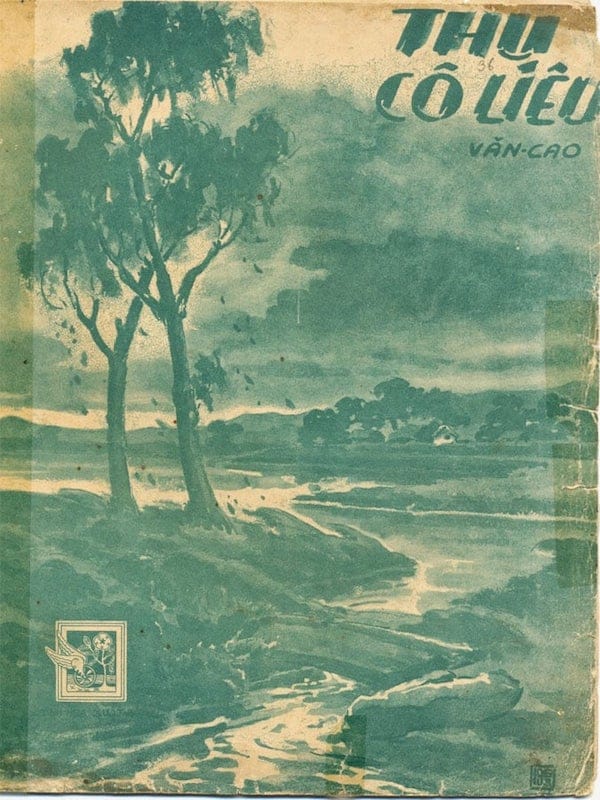
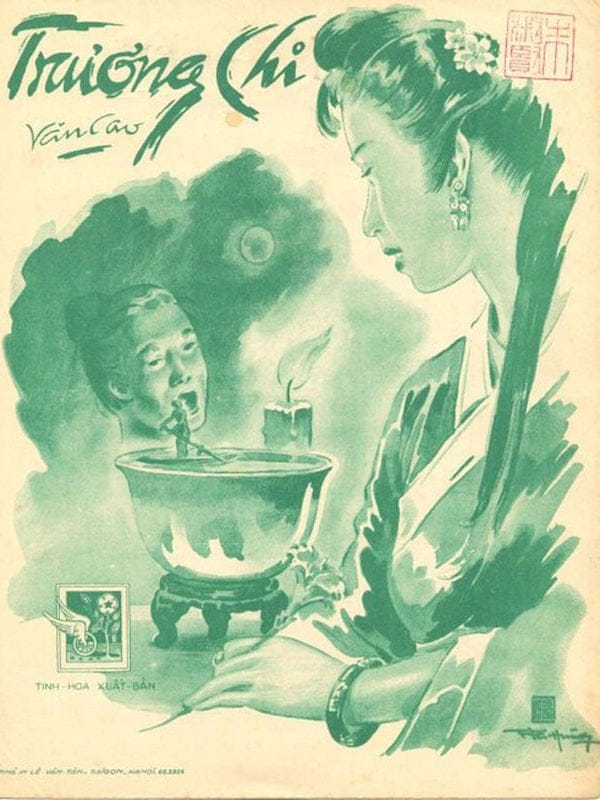
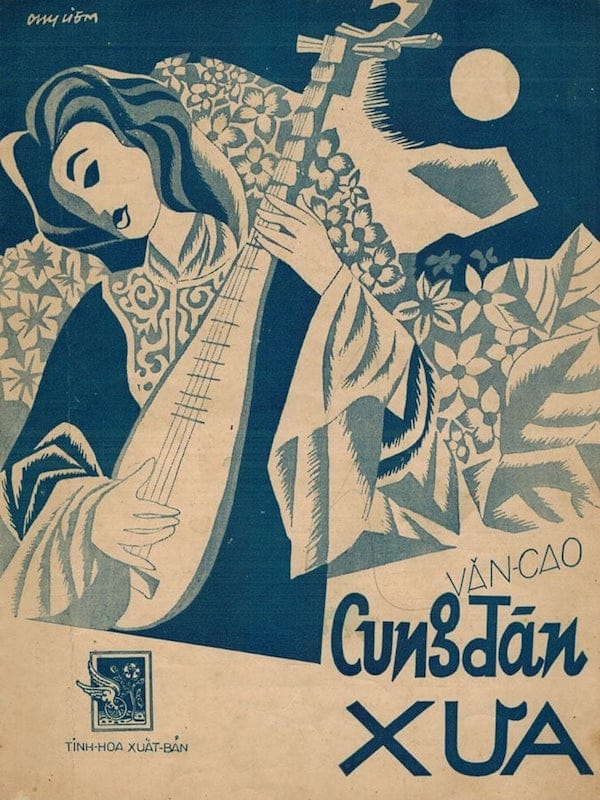
Một vài bìa nhạc Văn Cao:

nhạc vàng – nhạc đỏ

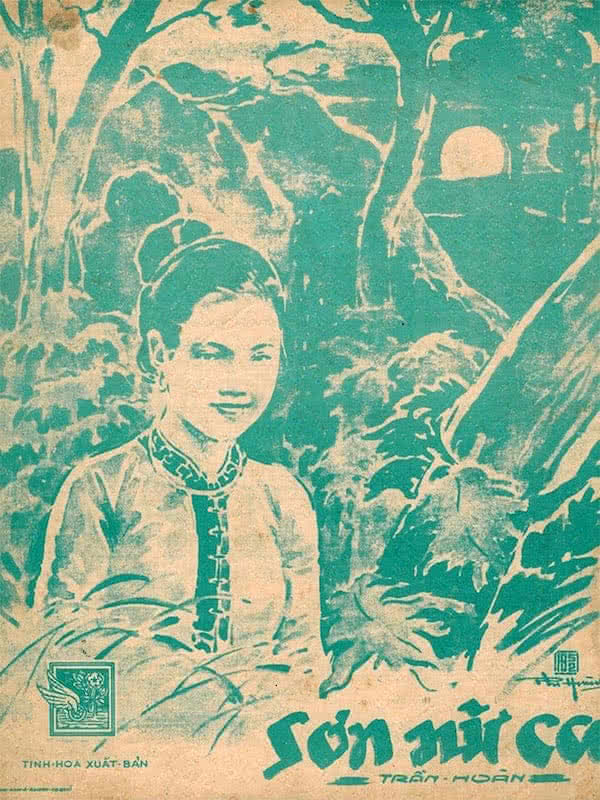
Bài Lời người ra đi này sáng tác năm 1949 trong kháng chiến 9 năm, của tác giả Trần Hoàn, nguyên bộ trưởng Bộ Văn hoá Thông tin. Thời gian ấy, lòng người còn lý tưởng, tâm hồn còn tươi trẻ, những Lời người ra đi, Sơn nữ ca… là những ca khúc đẹp, để rồi sau 1975, tác giả không còn sáng tác được một bài hát nào cho ra hồn nữa.

Khí nhạc: Nguyễn Đình Nghĩa 
Thanh nhạc: Ngọc Cẩm & Nguyễn Hữu Thiết 

Hãy nghe lại dáng nhạc ca khúc này, qua hai phần trình bày, phần thanh nhạc của cặp song ca Ngọc Cẩm & Nguyễn Hữu Thiết (tôi rất thích những phong cách trình bày rất Vietnamese – native như thế này), và nhất là phần khí nhạc của sáo thần Nguyễn Đình Nghĩa. Nhạc vàng, nhạc đỏ, dù vàng hay đỏ cũng là hai mầu của lá cờ, dù là cờ của bên nào – hay – bên thì ít vàng nhiều đỏ, bên thì đỏ ít vàng nhiều – Việt cộng, Việt kiều, hai Việt cũng đều chỉ là Việt cả mà thôi!
hồ trường

南方歌曲

丈夫生不能披肝折檻,為世扶綱常。逍遥四海,胡為乎此鄉。回頭南望邈無極兮,天雲一色徒蒼蒼。立功不成,學不就,少壯有幾辰兮,坐視百年身世驅陰陽。撫掌狂歌問斯世,茫茫天地,安得知一知己兮,試來對酌佑予觴。予觴擲向東溟水,東溟之水萬隊起狂瀾。予觴擲向西山雨,西山之雨一陣何汪洋。予觴擲向北風去,北風揚沙走石飛殊方。予觴擲向南天霧,霧中有人開口一飲蘧然醉。天地宇宙渾相忘,予不醉矣,予行予志。男兒自古事桑蓬,何必窮愁泣枌梓。

Ngâm thơ là một loại hình kết hợp giữa văn chương và ca nhạc, và là loại hình nghệ thuật tôi hoàn toàn không biết gì. Những điệu ngâm Sa mạc, Bồng mạc, ca trù, ngâm Kiều, Tao đàn… tôi hoàn toàn mù mịt, dù trong nhà từ nhỏ được không ít lần thưởng thức ngâm thơ. Xin post ở đây một bản ngâm thơ tôi được biết, cũng là bài ba tôi thường ngâm mỗi lúc cao hứng, ngà ngà say. Đây là một bài thơ rất có giá trị trong văn học sử Việt Nam cận đại, và câu chuyện về người tác giả (dịch giả) của nó cũng bị cố tình lãng quên, không mấy ai được biết đến!

Hồ trường - Tôn Nữ Lệ Ba 

Đại trượng phu không hay xé gan bẻ cật phù cương thường, Hà tất tiêu dao bốn bể lưu lạc tha phương. Trời Nam nghìn dặm thẳm. Non nước một màu sương. Chí chưa thành, danh chưa đạt. Trai trẻ bao lăm mà đầu bạc? Trăm năm thân thế bóng tà dương.

Vỗ gươm mà hát. Nghiêng bầu mà hỏi. Đất trời mang mang ai người tri kỷ? Lại đây cùng ta cạn một hồ trường.

Hồ trường! Hồ trường! Ta biết rót về đâu? Rót về Đông phương, nước biển Đông chảy xiết sinh cuồng loạn! Rót về Tây phương, mưa Tây phương từng trận chứa chan. Rót về Bắc phương, ngọn Bắc phong vi vút cát chạy đá dương! Rót về Nam phương, trời Nam mù mịt có người quá chén như điên như cuồng.

Nào ai tỉnh, nào ai say? Lòng ta ta biết, chí ta ta hay. Nam nhi sự nghiệp ư hồ thỉ, Hà tất cùng sầu đối cỏ cây!

Cũng lại là một người con của làng Bảo An, Điện Bàn, Quảng Nam, vùng đất địa linh nhân kiệt số một Việt Nam, Nguyễn Bá Trác tham gia phong trào Đông Du, trở về nước năm 1914, ông cùng Phạm Quỳnh duy trì tờ Nam Phong tạp chí. Sau đó, ông làm Tuần phủ Quãng Ngãi, rồi Tổng đốc Thanh Hóa, Bình Định. Ông bị Việt Minh xử bắn lúc họ cướp chính quyền, ở Huế năm 1945. Tên tuổi Nguyễn Bá Trác không được “chính sử” nhắc đến, nhưng chỉ nhờ vào một bài thơ Hồ Trường, cốt cách, chí khí con người ông vẫn còn được truyền tụng và ngưỡng mộ đâu đấy, như đại diện của một lớp “những người muôn năm cũ”.

Đến nay, đã có đủ cơ sở để tầm nguyên lời thơ Hồ Trường. Có thể đọc nguyên văn phần nghiên cứu của tác giả Phạm Hoàng Quân ở đây. Bài thơ Hồ trường – hóa ra lại là phần lời của một bài hát không tên, tạm gọi là Nam Phương ca khúc – được đăng tải trong thiên ký sự Hạn mạn du ký của tác giả Nguyễn Bá Trác trên Nam Phong tạp chí, phần chữ Hán (từ số 22 đến số 35, năm 1919 – 1920); sau đó thiên ký sự này được chính tác giả dịch sang chữ Việt và đăng tải ở phần chữ Việt của Nam Phong (từ số 38 đến số 43, năm 1920 – 1921). Nam phương ca khúc nằm ở chương 10 trong thiên ký sự này.

Vào khoảng năm 1912, khi lưu lạc ở Thượng Hải, tác giả gặp một người đồng hương cùng chí hướng, người này có giọng hát hay (giọng Quảng Đông). Một đêm nọ, hai người đi uống rượu. Rượu ngà ngà, Nguyên quân đứng dậy mà hát, ở bàn bên cạnh, một võ quan họ Lưu, người Trực Lệ, nghe điệu hát, sang hỏi là điệu gì, được trả lời: Ấy là một điệu đặc biệt ở phương nam, họ Lưu nói: nghe tiếng bi mà tráng, nhiều hơi khảng khái, nam phương mà có điệu hát đến thế ru? Sau đó họ Lưu xin người hát chép ra giấy lời ca ấy để giữ xem.

Nam phương ca khúc là một bài ca ấy không rõ tựa đề, không biết tác giả, Nguyễn Bá Trác đã chép lại toàn vẹn trong Hạn mạn du ký. Và khi Hạn mạn du ký được sang chữ Việt thì lời ca này đã được dịch rất thoát, linh động nương theo âm điệu tiếng Việt và có chỗ thêm tứ có chỗ bớt lời, khéo giữ được cái thần thái hào sảng của nguyên tác để có được một bài Hồ Trường như chúng ta được biết. (Hình bên phải: phần lời Hán văn của Nam Phương ca khúc, in trong Nam Phong tạp chí).

the sorrow of war – bảo ninh

In your head, in your head, they’re still fighting
(The Cranberries)

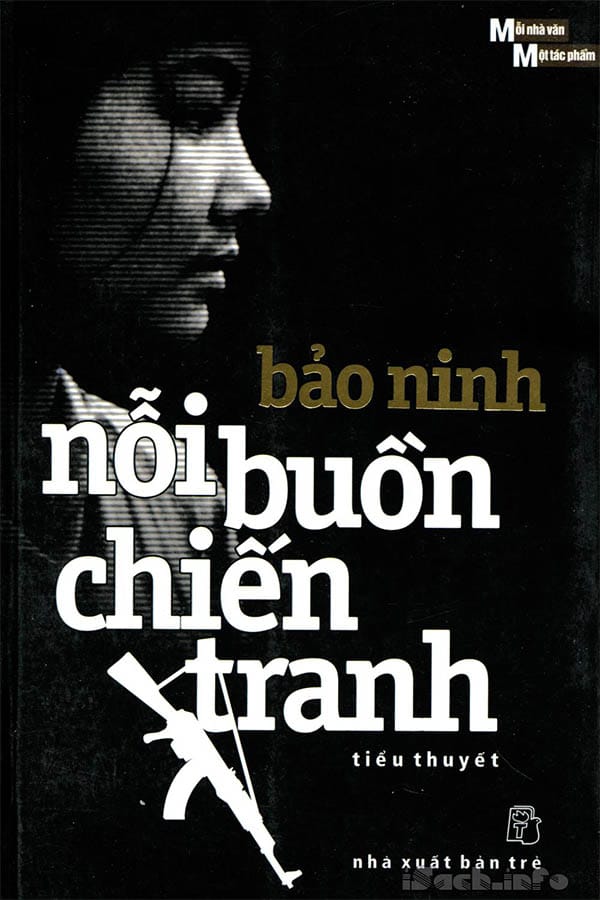
A chance of having a (not-so-) free week at home rereading the old books… The sorrow of war (or Nỗi buồn chiến tranh in Vietnamese). It’s the same dizzy and chilling feelings like 15 years before while the me-child was reading. Considered one of the best post-war Vietnamese novel, the author recalls and recites all experiences of a young soldier throughout the war, how he did survive through the blooding hell and the peace days thereafter.

Born to be the son of a famous linguist, the author has been very successful in using a narrative style to reflect all insides of the him-young soldier in battles. Though the techniques and motifs are not quite new (at least in my view), this is a unique writing in it’s own perspective.

Soldiers, guns, tanks – that is all normal to the Vietnamese. There is nothing special about war. War is what is normal. But peace? Peace is something very very special. As we had won, Kien thought, then that meant justice had won; that had been some consolation. Or had it? Think carefully; look at your own existence. Look carefully now at the peace we have, painful, bitter and sad. And look at who won the war… Justice may have won, but cruelty, death and inhuman violence had also won.

Have you ever asked yourself why we’re keep talking about war and keep acting as we’re in war all the time, don’t we have any better new things to think about? Why we still keep fighting with ourselves and with every others on every things in every moments. The answer is: with our Vietnamese, “war is normal, and peace’s a strange thing”, the “mother’s heritage” is so big and it is still passing to at least some more generations.

lời xin lỗi quá khứ muộn màng

Trong các tác giả đạt giải thưởng Hồ Chí Minh và giải thưởng nhà nước năm nay, có tên bốn người đặc biệt, bốn người được Chủ tịch nước ký quyết định tặng thưởng riêng, không có trong danh sách đề cử của Hội Nhà văn: Hoàng Cầm, Trần Dần, Phùng Quán và Lê Đạt.

Chỉ hai người còn sống để ghi nhận sự kiện này là nhà thơ Hoàng Cầm và Lê Đạt. Lật lại vụ án Nhân văn – Giai phẩm năm xưa, bút mực đã viết nhiều. Đày đọa cả một đời người, biết bao nhiêu là đau đớn! Cũng chỉ là một lời xin lỗi muộn màn và không chính thức trước quá khứ!

Em đi trong mưa cúi đầu nghiêng vai,
Người con gái mới mười chín tuổi.
Khổ thân em mưa nắng đi về lủi thủi,
Bóng chúng đè lên số phận từng người.
Em cúi đầu đi mưa rơi,
Những ngày ấy bao nhiêu thương xót.
Tôi bước đi, không thấy phố, không thấy nhà,
Chỉ thấy mưa sa trên màu cờ đỏ.

(Nhất định thắng – Trần Dần)

the vietnamese & american conscience

釋一行禅師
付法偈

一向逢春得健行
行當無念亦無諍
心燈若照其元體
妙法東西可自成

Previously in one of my post, I’d mentioned about Nẻo về của ý – a writing of Thích Nhất Hạnh. The monk has become a big figure in Buddhism community, at least as seen by Westerner. He is now considered to be one of the two most influential leaders of Buddhism, beside the famous Dalai Lama.

…I think we have the Statue of Liberty on the East Coast, but in the name of freedom, people have done a lot of damage. I think we have to build a Statue of Responsibility on the West Coast in order to counter-balance…

Originated from Từ Hiếu, the most ancient pagoda in Huế, his life has been a realization of what had been fore-told as a kind of prophecy in the hand-down poem from his own master (the last two lines on the right – which could be literally translated as: If the lamp of our mind shines light on its own nature, Then the wonderful transmission of the Dharma will be realized in both East and West. Recently, he gave this interesting talk at the (US) Congress: