đôi bờ

Bản nhạc này quá nổi tiếng rồi, không cần phải nói nhiều nữa. Nhưng có xem trích đoạn phim Khát (mà bài này là sound-track) thì mới thấy thực sự cảm động. Một tình yêu thời chiến, giản đơn và rung động, gần như là thiêng liêng (hãy nghe tiếng organ – đại phong cầm – cuối bài hát, khi đôi trai gái chia tay). Phần lời Việt dịch sát nguyên văn tiếng Nga, ngoại trừ một số chi tiết: dịch con vịt thành thiên nga – bệnh hình thức, sĩ diện kinh điển VN! Hãy nghe lời Việt để so sánh.

Đôi bờ - Thảo Vân ►

We’re like the two banks of a river, which go side by side but hardly meet each other!

a… joe dassin

Trước đây đã có giới thiệu về người nghệ sĩ Mỹ gốc Nga Do Thái hát tiếng Pháp Joe Dassin này qua bài hát Et si tu n’existais pas, một bài hát mà ai biết tiếng Pháp và văn hóa Pháp sẽ phải khóc khi nghe. Bài hát đã được chuyển ngữ sang tiếng Việt: ngày mai không có anh trong đời, trần gian riêng em đâu có vui gì, để yêu đương để nhung nhớ và tha thiết, nỗi yêu thương ôi bao giờ hết…

A toi - Joe Dassin ►

Hôm nay post tiếp bài hát đứng thứ hai trong số những ca khúc đẹp nhất của Joe: A toi, tạm dịch sang tiếng Việt là: Cho em (anh) hay Vì em (anh)… một ca khúc tuyệt hay về nhạc và có phần lời khó có thể viết hay hơn được. Thỉnh thoảng nghe lại cả hai bài hát này để A… Joe Dassin vậy!

A toi, a la façon que tu as d’être belle. A la façon que tu as d’être à moi. A tes mots tendres un peu artificiels quelquefois.

A toi, a la petite fille que tu étais. A celle que tu es encore souvent. A ton passé, à tes secrets, a tes anciens princes charmants.

[ REF ] A la vie, à l’amour. A nos nuits, à nos jours. A l’éternel retour de la chance. A l’enfant qui viendra, qui nous ressemblera. Qui sera à la fois toi et moi.

A moi, a la folie dont tu es la raison. A mes colères sans savoir pourquoi. A mes silences et à mes trahisons, quelquefois.

A moi, au temps que j’ai passé à te chercher. Aux qualités dont tu te moques bien. Aux défauts que je t’ai caché. A mes idées de baladin.

A nous, aux souvenirs que nous allons nous faire. A l’avenir et au présent surtout. A la santé de cette vieille terre, qui s’en fout.

A nous, a nos espoirs et à nos illusions. A notre prochain premier rendez-vous. A la santé de ces milliers d’amoureux, qui sont comme nous.

Vì em, vì dáng vẻ yêu kiều ngự trị trong anh, vì những lời nói đầy yêu thương (đôi khi vẫn thoảng chút giả tạo) dành cho anh.

Vì em, vì cô bé em từng là, vì người con gái là em như hiện tại, vì quá khứ, vì những điều thầm kín, vì cả những hoàng tử lịch lãm xa xưa của em.

[ REF ] Vì cuộc sống, vì tình yêu, vì đêm và vì ngày, vì những cơ hội luôn mãi còn giữa hai ta. Vì những đứa trẻ sẽ ra đời, mai đây chúng sẽ trở nên như anh và em.

Vì anh, vì những cơn giận mà em là nguyên nhân, vì những phút nóng nảy chẳng duyên cớ. Vì sự im lặng, vì cả đôi lần anh quay lưng phản bội em.

Vì anh, vì những lúc anh ghé qua tìm em. Vì những cá tính hay bị em diễu, vì những tật xấu anh thường che giấu. Vì cả những ý tưởng điên khùng chẳng giống ai của anh.

Vì chúng ta, vì những kỷ niệm ta đã có, vì hiện tại, vì tương lai. Vì cả trái đất già cỗi này, mà nó không quan tâm lắm đâu.

Vì chúng ta, vì những hy vọng và ảo tưởng. Vì lần “hẹn hò đầu tiên” sắp tới của chúng ta. Vì cả triệu cặp tình nhân như chúng ta trên khắp địa cầu.

la maladie d’amour

La maladie d’amour… tựa này dịch làm sao mới phải nhỉ, Căn bệnh tình yêu?? Nôm na nhưng chính xác phải là: Ốm tương tư… Dịch nghĩa phần lời: Nó hành hạ trái tim những “đứa trẻ” đang yêu, không ngoại trừ một ai từ 7 cho đến 77 tuổi. Nó cuộn chảy như một dòng sông ngạo nghễ, cuốn trôi theo nó mọi giới, mọi kiểu người. Nó làm đàn ông cất tiếng hát, làm thế giới trở nên rộng rãi hơn.

La maladie d'amour – Michel Sardou ►
Lời Việt: Tình yêu vụt sáng – (?) ►

Nó làm phụ nữ bật khóc, đôi khi là những tiếng khóc thầm trong bóng đêm. Lại có khi nó khiến con người ta đau khổ suốt cả cuộc đời. Chẳng ai thoát được căn bệnh tình yêu, nhưng đớn đau hơn cả lại là khi người ta lành khỏi căn bệnh đó…

japanese pentatonic

Mais, c’est la guerre pentatonique,
cinq notes au lieu de sept.

Cùng một tác giả: Kokoro No Tomo (lời Việt: Khi cô đơn em gọi tên anh), Koibito Yo (lời Việt: Người yêu dấu ơi), Ai No Shinkinro (lời Việt: Sa mạc tình yêu), Ribaibaru (lời Việt: Trời còn mưa mãi), Nokibiri (lời Việt: Tàn tro)… Xem ra nhạc Việt mượn của cô ca sĩ Mayumi Itsuwa này nhiều thật. Nhớ khi nhỏ, khoảng cỡ lớp 7, lớp 8, chưa biết bài gốc tiếng Nhật, thích bài Ngàn năm vẫn đợi này lắm, người khác thì cứ bảo: chỉ là thứ nhạc vàng đặt lời nhảm nhỉ… Giá như người ta hiểu nhạc không phải là lời nhỉ! Nó là cái intangible formation: 1 1/2 2 1/2 2!

Dakishimete (Mayumi Itsuwa) ►
Ngàn năm vẫn đợi - Ngọc Lan ►

the rain on the leaves

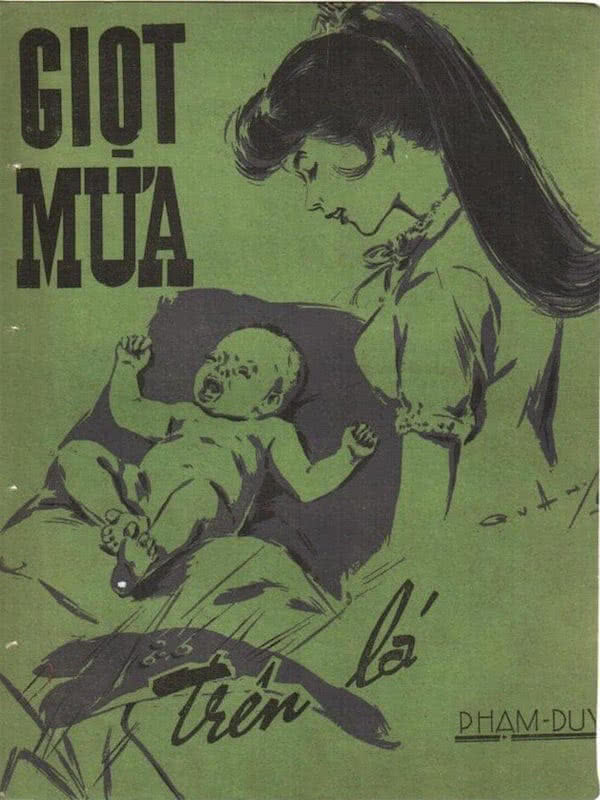
Some interesting recently – collected video documents: Phạm Duy with Steve Addiss on his song: Giọt mưa trên lá (the rain on the leaves) and Phạm Duy with the legendary Pete Seeger and the American folk song Clementine. Center image: the original poster of the song, and the original Vietnamese rendition (by the singer Thái Thanh) on the left.

Giọt mưa trên lá - Thái Thanh ►
The rain on the leaves ►
Steve Addiss & Phạm Duy

It’s not an abnormal thing to see church – music – influential songs like this to be the first to catch notices from Westerners (the Vietnamese – native pentatonic is harder to digest however). Indeed the song has been thought by some as a translation of a certain American folk song, which is absolutely not. The same is applied to several other Vietnamese songs, such as this Scents of Yesteryears, which easily touch the hearts of listeners outside VN.

for whom the bell tolls

Men of five still alive through the raging glow.
Gone insane from the pain that they surely know.

(Metallica)

Excerpts from the 1943 film following Hemingway’s novel. In some aspects, this is a great film, highly symbolic and dramatical, beautiful staging and casting, but still nowhere closed to the book. So read the book here (zipped text file)! It’s said that Hemingway handpicked the actors and actresses himself for the roles, but he greatly disliked the film due to it’s political content removal.

Excerpt 1: The old guerilla man of El Sordo and his last four men make their last stand on a dead-end hilltop. They’re waiting for their fate to come, and the young Joaquin does the praying when the Russian machine gun barrel turns hot on his shoulder as the planes approach: Holy Mary, Mother of God, pray for us sinners now and at the hour of our death, Amen!.

…Dying was nothing and he had no picture of it nor fear of it in his mind. But living was a field of grain blowing in the wind on the side of a hill. Living was a hawk in the sky. Living was an earthen jar of water in the dust of the threshing with the grain flailed out and the chaff blowing. Living was a horse between your legs and a carbine under one leg and a hill and a valley and a stream with trees along it and the far side of the valley and the hills beyond…

Excerpt 2: Robert Jordan, severely wounded on the way retreat after the mission, says farewell to his lover María. He stays behind to cover the enemy for others to safely escape. The scene removes the detail of Agustín asks if Jordan need a shot or he can manage himself once left behind. Counting the last minutes of his life, in such moment, one can hear the bell tolling for his soul!

Lieutenant Berrendo, watching the trail, came riding up, his thin face serious and grave. His submachine gun lay across his saddle in the crook of his left arm. Robert Jordan lay behind the tree, holding onto himself very carefully and delicately to keep his hands steady. He was waiting until the officer reached the sunlit place where the first trees of the pine forest joined the green slope of the meadow. He could feel his heart beating against the pine needle floor of the forest.
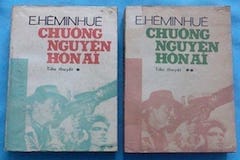
Robert Jordan, as illustrated on this Vietnamese translate book cover, using a Lewis gun, or just called a mácquina as in the book.

songs for free men

…The reasoning behind his persecution centered not only on his beliefs in socialism and friendship with the peoples of the Soviet Union but also his tireless work towards the liberation of the colonial peoples of Africa, the Caribbean and Asia, his support of the International Brigades…

Listening to Paul Robeson’s album: Songs for free men… a very lovely basso profondo concert singer (he was one of the few true basses in American music), performing spirituals. Despite being a very famous and successful singer & performer, the man was kept under strict surveillance by US and UK governments for his international activities in Labor and Anti – Colonialist movements. It’s believed that he was unsuccessfully murdered by the CIA while in Moscow. He is now deserved a position in mainstream history by various posthumous recognitions.

The USSR anthem - Paul Robeson ►

In the background video above (1945 victory parade in Moscow), Robeson presents the Soviet Union’s national anthem with a translated English lyric (let read the verses). I think, though it’s a very subjective idea, the song is the best anthem in the world, much more impressive than French’s La Marseillaise. The music’s still used as national anthem in Russia now, with a new lyric.

Don’t know why, but the music reminds me of spaces in the mesmerized text of Ernest Hemingway’s For whom the bell tolls (yet another American activist). As a child, I adored Hemingway’s writing style, and remembered many excerpts from his novel by heart, the spirits of International Brigades! The paragraph quoted on the left had been given a wonderful Vietnamese translation, it describes El Sordo’s final fighting on a hill, his thoughts on life and death, yet another picturesque Song for free men!

trăng chiều

Từ trước đến nay có xu hướng giới thiệu nhiều nhạc miền Nam trước 75, đôi lúc còn khẳng định: CNXH làm băng hoại con người và cảm quan nghệ thuật. Đó có phải là một cái “confirmation bias” hay không thì tùy các bạn nghĩ. Cùng thời gian đó, sự xuống cấp không cứu vãn nổi của một bộ phận lớn âm nhạc ở miền Nam, kiểu nhạc Chế Linh – Lính chê, cũng chẳng phải là không hiển nhiên !?!?

Trăng chiều - Đặng Hữu Phúc - Ái Vân ►

Để xoá bỏ những định kiến nếu có, mời các bạn nghe một đoản khúc thơ nho nhỏ dưới đây (nho nhỏ hàm ý là dễ thương nhưng có phần đơn giản). Để quay lại một không gian Hà Nội trong mắt ai, những năm đầu 80, có một mối tình đơn phương tuổi học trò, lãng mạn và sâu lắng. Có một chàng nhạc sĩ (tương lai) thầm yêu một cô ca sĩ (tương lai), tên cả hai người được ghi ra bên đây, bên dưới tiêu đề bài hát.

la bohème

The only song posted twice on my blog, my previous post is here (this version is performed when Charles was still young, a much higher tempo). I’d listened to both the vocal & instrumental versions of this song long before, but didn’t recognize that they are actually one same song. Just by a sudden special chance in Dalat made me realise that it is Paul Mauriat who was covering Charles Aznavour.

La Bohème - Charles Aznavour ►
La Bohème - Paul Mauriat ►

Charles Aznavour is a very big name in American & French music, but much more popular in his French audience. Till now, he still go to stage and have many performance at the age of 83, and still attract and seduce a lot of listeners. He is called by the title French Frank Sinatra, but to me Charles Aznavour is much more different however, Frank Sinatra didn’t wrote the song himself.