un vietnamien bien tranquille

Having a time to read some notable documents: The spy who loved us – Thomas Bass, and The perfect spy – Larry Berman. At first, I’d thought: oh, all these stories I’ve knew quite well already, there’s no need to read more. But then I considered it’s good to be reflective, reading the same stories in another language, from other points of view.

I’d read these two books (in English), which contains quite some interpreting errors (most of them are unintentional I think) then I proceeded to their Vietnamese translations (which are really bad, lots of linguistic mistakes), but again another reflections of reflections. All readings confirmed my understanding about the Vietnamese legendary intelligence agent Phạm Xuân Ẩn, whose role is now recognized as crucially decisive in the second IndoChina war.

Espionage and Journalism

As the first IndoChina war was approaching its end, the Việt Minh leaders knew that it’s just a matter of time before the American get their hands in. They had lived and fought with the French long enough that they had extensively well understanding on their enemy, the same is not true for the Americans. During the 9 years of the first IndoChina war, Ẩn had already worked against the French, under his cousin Phạm Xuân Giai, head of South Vietnam’s Cinquième Bureau – department for psychological warfare, who was working for the French’s Deuxième Bureau.

In 1957, Phạm Xuân Ẩn was ordered to go to the States, studying journalism (as a cover), learning their language, culture, their way of thinking… a preparation that later turned out to have devastating effects. During the time in America (and even long before), Ẩn has developed a sympathy (if not admiration) for American people and culture, and at the same time, touting his horns in a war to come against them.

These two professions were very contradictory, but also very similar. The intelligence job involves collecting information, analyzing it, and jealously keeping it secret, like a cat covering its droppings. The journalist, on the other hand, collects information, analyzes it, and then publishes it to the world. (Phạm Xuân Ẩn)

Information and disinformation

Upon coming back (1959), Ẩn worked for several presses: Việt Tấn Xã, Reuters, Time… Among all journalists in Saigon at the time, Ẩn is considered to be the best informants: new – comers introduced with him for guidances, seasoned ones sought him for tips. He had various sources in the governments, army officers, secret polices… he had the best ears on the ground for everything. He is dubbed: “the weatherman” who foretell the political atmosphere, generals consulted him before planning coup d’état, the Buddhist monks informed him in advance if they prepare a protestant self – burning.

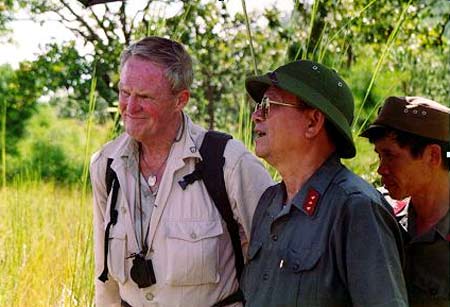
He made very good friend and closed cooperation with Edward Lansdale, head of IndoChina CIA division, the legendary agent nick – named: the king – maker, who manipulated every puppets on the Southern political stage, yet Lansdale had never doubted it. People was thinking he could be a CIA agent, a French sûreté, a South VN secret police, or he could be both. But none ever thought of him working for the Red NLF.

After the war, upon learning about the fact, some of his colleagues have tried to prove that Ẩn could had been giving disinformation at times. In fact, all his written records at the Time magazine (where he worked for 10 years) proved the opposite. Had he done it, with all the overwhelming clandestine agents among the presses, things could have easily been cross – checked and that would betray Ẩn, the espionage. And he of course hadn’t made those preliminary mistakes.

The source had given me the story on condition that I shouldn’t reveal it before it happened. These are the ethics of the press. You have to observe them, no matter how tough it may be. These are also the ethics of an intelligence agent who knows the propaganda value of burning monks. (Phạm Xuân Ẩn)

Balance and Objective

One thing Ẩn learned in American news career is that: a writing must be well – balanced, not biased in any directions, and at the same time it has to be objective, giving useful information to help coming to some helpful conclusions. Yet the two are usually contradictory. Similarly, questions have been raised about the nature of a man who lived an extremely dangerous double life for 30 years, about the one who deeply admires American culture but fiercely fights against them.

In fact, Ẩn made true friend to many American journalists, help them in many cases, many of whom still love him even after learning that he was a spy. Many would recall how he saved the life of Robert Sam Anson, the war correspondent who was arrested by the VC in Cambodia. Ẩn came closest to getting discovered when he promised to Anson’s wife (who was begging for help) that he would do everything he could, a dangerous remark which implies he really could do something. Anson was later released as per request Ẩn made to his superiors, a truth Anson would only know for sure years later.

He was a man of wisdom, courage, and clear – headed patriotism. He was also – even if it seems ironic to say this under the circumstances – a man of extraordinary integrity. He loved us at our best even while confronting us at our worst. (Daniel Ellsberg)

Strategy and Tactic

A pattern in Ẩn’s stories, as usual, as an amusing raconteur: I’m a strategic analyst, I was concentrating on background information and situation assessment. Yet it’s a reason he gives in order not to get into too much details that he wouldn’t want to release even in the next 50 years: that’s related to too many people, many have died, but some still alive with their relatives, there’s no reason to cause harm to them anyway (Ẩn has always been loyal and protective to his information sources, from either sides, many of which is built upon personal relations).

But Western researchers found this an “undeniable fact”: he’s been awarded with 16 medals, among which 2 are general (one “Hero of the People’s Army” medal, the highest military award in VN, and another medal for “50 years of Party’s service”), the other 14 are all credited to specific battles, 4 of which is apparently known: the Ấp Bắc battle (1963), the Tết offensive (1968), the Lam Sơn 1972 operation, and the final 1975 campaign. That gives some obvious hints on his role as a tactical adviser who devised detailed tactics to be used in various battles.

He would have had enough knowledge of the battlefield tactics, rules of engagement, logistics and battle – readiness of both the Vietnamese and Americans in that area at that time to give pretty good advice on the way to set up a trap for them. Certainly Ấp Bắc had the hallmarks of a trap. (Nick Turner)

Nguyễn Văn Tào (nom de guerre: Tư Cang), head of the H.63 spy ring, direct ‘boss’ of Phạm Xuân Ẩn, famous for his ability of pistol shooting with both hands, and never miss a shot.
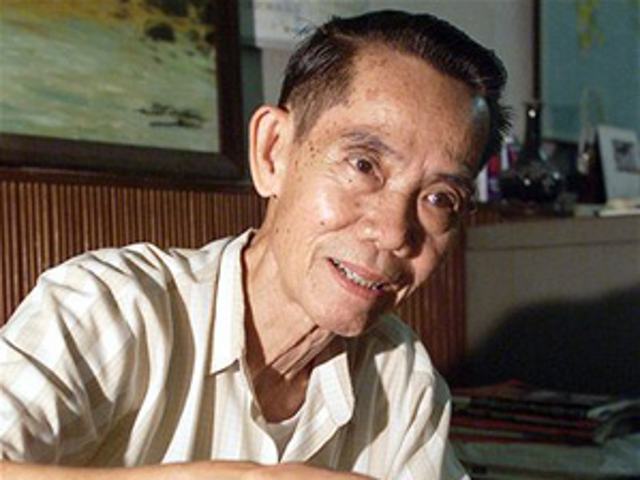
Phạm Xuân Ẩn (nom de guerre: Hai Trung), the strategic analyzer whose information, documents, assessments… greatly changed the pace of war.
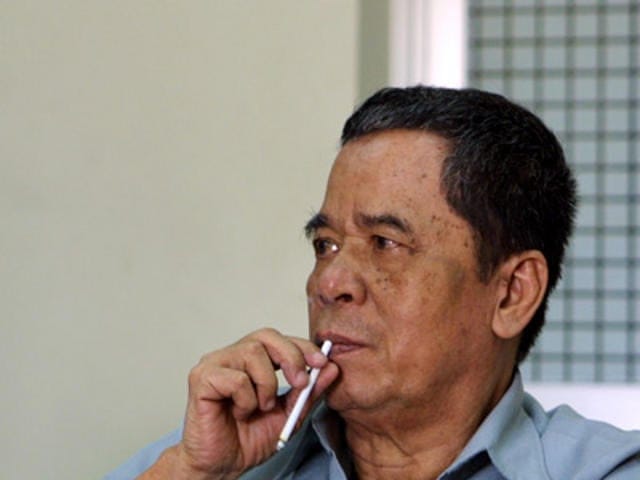
Nguyễn Văn Thương (nom de guerre: Hai Thương), one of the couriers who run Ẩn’s messages. He was arrested, tortured, both his 2 legs were cut off six times, each without any narcotic. He could had saved his life, but he chose to save the network.

How could someone so voluble and open about his life be a spy? How could someone so funny and pointed in his remarks about human stupidity be a Communist? …He was a divided man of utter integrity, someone who lived a lie and always told the truth. (Thomas Bass)

Communists and Nationalists

This is the point of hatred conflicting among Vietnamese communities for so many years. My point of view, which is also reflected thoroughly throughout the books (can be seen as 2 American views) is that: the communists, they had an ideologue (no matter right or wrong it could be), and they had determinations. On that basics, they’d had detailed planning and extensive efforts to carry it out, and they’d made sacrifices to carry it out to the end. The same is not true with the so called southerners’ nationalism.

As long as the Americans were pumping money in, the Southern government staffs were trying to steal as much as possible, and pretend to be supportive to the Americans’ causes while avoiding fights and casualties on the battle fields. They’d lost, as they presented nothing, not nationalists, not even anti – communists, but only their own personal and family’s interests. The consequence can be seen clearly: the majority of southern people took side, they have always been sympathetic to the Communists’ national independence causes, although they’re not communists.

Communism and Patriotism

It would eventually become clear why so many people have made extreme efforts and sacrifices, it was not because of any ideology. Of the total 43 members of the H.63 espionage network, 25 were captured, tortured, many of them chose to die, but the network remained unbroken. They were couriers, who in 15 continuous years, ran the total 498 messages (reports) from Phạm Xuân Ẩn to the Iron Triangle Củ Chi, from where it would be delivered directly to the Politburo in Hà Nội. Ẩn always kept an poison pill in his pocket, ready for a death that was hanging over him for those 15 years.

Many who survived the war found themselves disillusioned with the post – war living, finding that the new regime has become even more corrupted than the previous one, and that is not what they were fighting for. Yet they were fighting not for any individual, any ideology, any government… Many failed to realize it is patriotism in the truest and deepest meaning! Phạm Xuân Ẩn to the last year of his life, works as an consultant to TC2 (the Vietnamese equivalence of Deuxième Bureau), who doesn’t understand and doesn’t trust him, but badly need his razor – sharp analyses and assessments.

Lessons learnt

If something can be learnt from Phạm Xuân Ẩn’s life, it’s something about cultural understanding. While most VC has very limited knowledge about American culture and values, they’d succeeded in cultivating at least one spy who could think like an American, a spy who loved Americans and was loved by them in return. That way he can get deep into the adversary’s mind and soul, and know the way to defeat them.

It’s all about understanding, the French had stayed in Vietnam for a considerable amount of time, they’d learnt to divide and conquer the Vietnamese, a job they’d done excellently. It took a few generations to absorb their culture, to gain enough understanding to have successful retaliations. What the American had done in Vietnam to some extent was repeating things the French had done already, in a far larger scale.

Those above are indeed the small part of the lessons. Ẩn said: the American are very good at collecting and analyzing information, but they don’t know what to do with them (at least in scopes of the Vietnam war). Similarly, we can say: the Vietnamese know how to obtain a victory (or it supposes to be called so), but then they don’t know what to do with it. Phạm Xuân Ẩn in person is a talkative one, he can talk about his thinking all day.

But as a spy, a strategic analyzer, he is actually a very quite Vietnamese, who had much more profound thoughts and understanding but can’t say it out. Lots of our own problems are briefly reflected throughout the American books, but they’re not recognized thoroughly by our own people… Things get passed silently in our sleeping – pleasing minds until another war, another revolution that is… just pending.
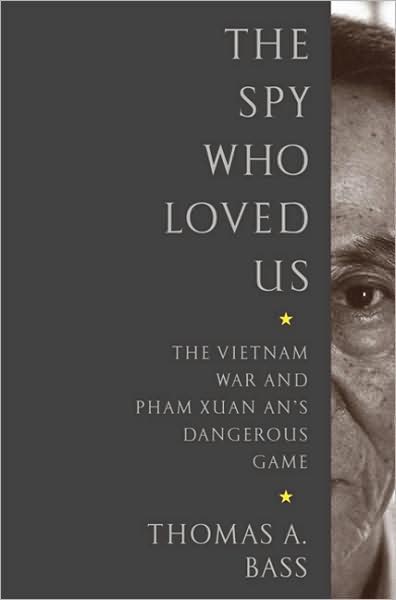
The spy who loved us – Thomas Bass (pdf.tar.gz) (mobi.tar.gz)

Perfect spy – Larry Berman (pdf.tar.gz) (mobi.tar.gz)

basic algorithms

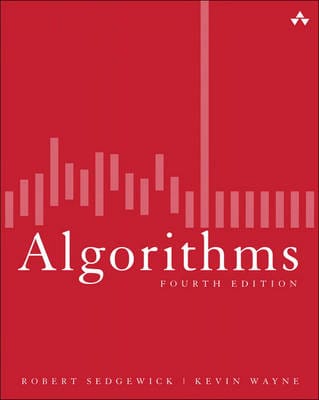
The book is my primary source of interest while being a freshman, which presents a wide range of algorithms in a very coherent and systematic way. I remember “rescuing” this hard-copy from a Fahasa‘s junk pile for about 4 USD, which from that time on became a student’s most precious thing! You can read the soft-copy here.

This is among the subjects I was very fascinated the early years at university: algorithms, graph theory, geometry, image processing… I was not quite good at “symbolic” math (like algebra), but “visual” math offered me much inspiration. The thing I would remember most is Robert Sedgewick‘s Algorithms, a book that I’ve read through over and over again many many times. It is indeed the most important Computer Science textbook that beginners MUST read until today.

The Java applet below is “refurbished” from the code I wrote the first year at college, which visualizes the nature of different sorting algorithms (original code was written in Borland C++ 3.1 with BGI – Borland Graphics Interface). This is among my various attempts to visualize the knowledge collected from the book, which had taught me that even a simple thing like “bubble sort” is not that “very simple”! Let select an algorithm in the dropdown list and click ‘Start’ and see the differences!

My visualizations above are very early (1997), much prior to those demonstrations on wiki. Later on, I’d learned that the author R.Sedgewick put a great emphasis on algorithms’ visualizing himself, his work used PostScript. Many new ways of visualization are really impressive and easy to understand, such as this (using JavaScript).

I started with with C/C++ at school, then continue with C/C++, Java, Design Patterns… on various projects. Later I abandoned Design Patterns (and Java), then I abandoned C++. To me there’s no Design Patterns, there’s only data structures and algorithms! Would write another post on the bloating and non-sense usages of Design Patterns later on!

It seems that most software engineers today lack fundamental knowledges and skills. It’s quite apparent that you could not rely on a guy talking about architecture, GoF’s design patterns… all the time but can not state the algorithmic differences between a DFS (depth first search) and a BFS (breadth first search).

diệc lạc hồ

双鸟齐飞

黄莺飞到北京都
会遇金鹏亦乐乎
大事未成行小事
双鸟齐飞至善图

Song điểu tề phi

Hoàng Oanh phi đáo Bắc Kinh đô,
Hội ngộ Kim Bằng diệc lạc hồ!
Đại sự vị thành, hành tiểu sự,
Song điểu tề phi chí thiện đồ!

Nhân kỷ niệm 60 năm quốc khánh nước CHND Trung Hoa (1/10/1949 ~ 1/10/2009), trích đăng lại ở đây bài thơ của một nhân viên ngoại giao đoàn Việt Nam (đăng trên Tạp chí Sông Hương, 2002): Bài thơ thể hiện tình hữu nghị cao quý của nhân dân hai nước Việt – Trung. Bài thơ được làm năm 1991, sau một thời gian dài 10 năm (kể từ 1981), khi hai nước tuy không còn những đối đầu quân sự lớn, nhưng hai bên vẫn tiến hành một đường lối tạm gọi là artillery diplomatic – ngoại giao pháo binh – chân lý, lẽ phải đứng trên đầu nòng đại bác.

Các địa danh đẫm máu như Vị Xuyên, Ngọc Đường, Lũng Cú… những người từng bám trụ 10 năm ở đó đến nay vẫn nhiều người còn sống, vẫn còn kể lại chuyện ngày xưa ở đâu đó quanh đây. Trở lại với bài thơ, năm 1991, một đoàn ngoại giao VN sang TQ, những bước đi đầu tiên của tiến trình bình thường hóa quan hệ. Trưởng đoàn phía VN là ông Vũ Oanh, trưởng đoàn phía TQ là ông Lý Bằng.

Cả “Oanh” và “Bằng” đều là tên của hai loài chim (không giống nhau), như được thể hiện rất rõ trong bài thơ trên đây: Song điểu tề phi – Đôi chim cùng bay. Không cần phải biết chữ Hoa, đọc phiên âm Hán Việt hẳn mọi người cũng sẽ dễ dàng hiểu nội dung bài thơ! Chúng ta thấy lại cái điệp khúc Diệc lạc hồ ở đây! Diệc lạc hồ (hay Bất diệc lạc hồ) đều có thể hiểu theo nhiều kiểu: vui lắm thay, há không vui hay sao… hay theo phương ngữ miền Nam: vui quá hén!

fooled by randomness

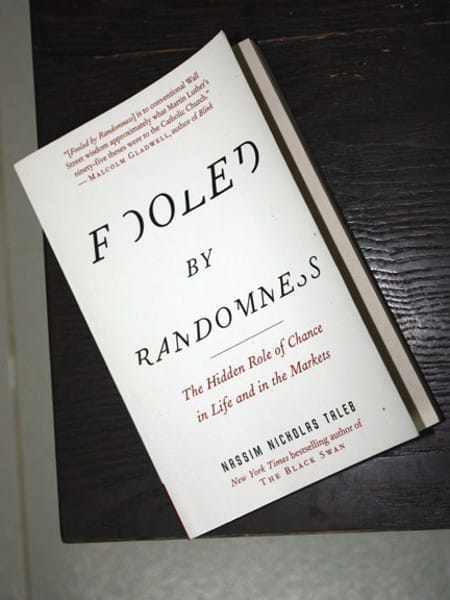
Usually on my birthday, I would receive messages like: Congratulation to the Party! Congratulation to the government! Congratulation to President Ho Chi Minh! (the day happens to be also the Man’s birthday). But last month, I received this book, a nice gift from a friend, a soft – paperback hard – copy of the famous writing: Fooled by Randomness! I’m now half – way through the book, a bit difficult for non – English – native readers, but really interesting in every details!

My major hobby is teasing people who take themselves & the quality of their knowledge too seriously & those who don’t have the courage to sometimes say: I don’t know. You may not be able to change the world but… (www . fooled by randomness . com)

As with every outstanding thinkers and thinkings, the book’s caused controversies since it was first published (2001), written by Nassim Nicholas Taleb, a skeptical scholar and at the same time, a successful trader. I’ve been for long, looking forward to these types of cognitive thoughts! It’s too soon to have some comments on the book, but for now, the debate between Einstein and Heisenberg, between determinism and un – determinism would just go on!

the sorrow of war… film?

“Better to die than surrender, my brothers! Better to die!” – the battalion commander yelled insanely; waving his pistol, and in front of Kien, he blew his own brains out through his ear. (The Sorrow of War)

An un-put-down-able novel. It should win the Pulitzer prize, but it won’t. It’s too gripping for that. (The Guardian)

Dramatic… Will force American readers to acknowledge how little they still understand of the long war that left such a legacy of grief and guilt in their own country. (The Washington Post)

The Sorrow of War has won worldwide acclaim and become an international best-seller. (Amazon.com)

A good news: 8th, May, 2008, The Sorrow of War novel will be turned into movie by an American director: Nicolas Simon. After 10 years of discussion and negotiation, Bảo Ninh, the novel’s author finally permitted making of the film based on his famous book. The producer, Dominic Scriven, a very passionate admirer and friend of the author, who now holds the book copyright and want to transfer it onto the silver screen. An even better news: 9th, Aug, 2008, author of The Sorrow of War novel stated that he wouldn’t have any further connection with the The Sorrow of War movie project.

The reason given is: film’s script is not aligned with the author’s ideas. In fact, many people is doubtful that an unnamed director would be capable of working on such a great novel, although the producer (Dominic Scriven) ‘s goodwill is widely recognized! The movie project is now paused, in searching for another director! That’s a very good thing in my opinion, in the fear that we would have another history distortion (or even worse)! A picture is worth a thousand words? That’s not always true, think twice (or read the book)! In this case, words are worth thousands of pictures (or a movie)!

The novel is, more or less, an semi – autobiography. Bảo Ninh himself (or the protagonist Kiên in the novel) was a soldier in the 24th battalion, a special formation commissioned to the B3 front (central highland) in 1969. Of the unit’s 500 man, he is among the only 10 survivors. The story is an nonlinear scatter of memories, mixed the past with the moments of post-war time: childhood, a high school’s love story, the battles, and importantly lives after war.

The Sorrow of War is without doubt timeless. Perhaps it is one of the world’s greatest war novels ever written. Imagine the film Apocalypse Now and increase its effect, say by a factor of a thousand – this is the power of Bảo Ninh’s writing. I remember shivers in my spine when first reading the book, some 15 years ago! Just surf around some online bookstores, to see what readers have said about the book:

  • If this book doesn’t make you cry, you have no soul.

  • It’s definitely not a book for everyone, and I nearly put it down during the first 50-60 pages. But, I soon became wrapped up in the story and the language.

  • Books usually lay with me on my bed and after their formal end we sleep together for a few days but after the last sentence I promptly put this right back on my shelf and am having trouble thinking about it again. I had horrible nightmares during the read.

  • This book is amazing. The story progresses thematically rather than chronologically, and leaves you piecing together historical non-fictional events… He succeeds in taking the reader on a difficult journey of emotional and spiritual crisis, right to the core of the human condition and captures a sorrowful despair like no other literature I’ve ever read.

  • Like pouring acid on your moral center…

  • Just an excellent novel. To everybody who considers The Things They Carried the penultimate work of fiction about the Vietnam War: pick up The Sorrow of War and be prepared to be blown away by the stories of a Vietnamese.

  • In fact, my view of just about everything I thought I knew about North Vietnam from the mid-60’s to the mid-70’s was altered by this book.

  • This book is unbelievably emotional. The style of writing is unique: it is not linear or chronological in any way. It is chaotic, a reflection on the subject of the book. The writing style, though chaotic, seems to be a perfected style. The book was written with total disregard to order; there is no doubt that all was deliberate.

the battle of iadrang

To make war all you need is intelligence.
But to win you need talent and material.

For whom the bell tolls – E. Hemingway[ 1 ]

Col.Gen. Harold Moore and Col.Gen. Nguyễn Hữu An returned to the old battlefield, Oct, 1993, exchanging their diaries, maps, operational notes, memories and friendship.

The IaDrang Campaign was to the Vietnam War what the terrible Spanish Civil War of the 1930’s was to World War II – a dress rehearsal. The place where new tactics, techniques and weapons were tested, perfected and validated. In the IaDrang, both sides claimed victory and both sides drew lessons, some of them dangerously deceptive, which echoed and resonated throughout the decade of bloody fighting and bitter sacrifice that was to come.

While those who have never known war may fail to see the logic, this story also stands as tribute to the hundreds of young men of the 320th, 33rd and 66th regiments of the Peoples Army of Vietnam who died by our hand in that place. They, too, fought and died bravely. They were a worthy enemy.

Wild flowers now grow in those places of violent death. The IaDrang from PleiMe west is uninhabited except for a few montagnards who are/have been driven out to the east near PleiKu. The Ia Drang/Chu Pong area is now known as The forest of Screaming Souls [ 2 ] and remains mysterious and beautiful.

Hoa dại giờ mọc đầy trên mảnh đất từng đầy rẫy chết chóc. Vùng IaDrang đến giờ vẫn không có ai cư trú, ngoại trừ một vài sắc dân miền núi đang được di dân về hướng đông gần PleiKu. IaDrang, ChưPrông nay được biết đến với cái tên Truông Gọi Hồn, vẫn nguyên vẹn huyền bí và đẹp đẽ như tự ngàn xưa.

Mar, 1965, the first U.S troops arrived in Vietnam (Danang). 8 months later, their first major engagement with the VPA in a large battle (of regimental, divisional size) took place at the Valley of IaDrang, which is since then known as the Valley of Death. Feb, 1994, President Bill Clinton announced the normalization in relationship with Vietnam. In an action to bootstrap of the process, in 1993, a film was made featuring the old bloodshed battle of IaDrang. Thus, battle of IaDrang marks the begin and end of a long-time painful and bitter relationship between the two nations. Up to the present days, lots of people from both sides still can not get it right about what had really happened then and there. The story below tries to recall the truth.

But first, about the film: We were soldiers is based on We were soldiers once… and young, a book written by Harold Moore himself, as one of the direct commanders in the battle (on the American side). It’s a Randall Wallace‘s film, the famous director of Brave Heart, Pearl Harbor, and now We were soldiers, with Mel Gibson as Lt.Col. Hal Moore, and Đơn Dương as Lt.Col. Nguyễn Hữu An. To my disappointment, the film is no better than any other Hollywood’s films such as Black Hawk Down, solely made to demonstrate American heroism. Exactly as written in Harold Moore’s book: Hollywood got it wrong every damned time, whetting twisted political knives on the bones of our dead brothers.

The film is no exception, it takes many of the small facts of the book onto it, but only to falsely portray the historical events. In fact, the film is a distortion of facts that happened, of peoples involved in the battle, especially the figure of Lt.Col. Nguyễn Hữu An. In a sense, the film has undermined the author Hal Moore’s (and many other American veterans) sincerity and goodwill. Hal Moore is also a man of literature talent, the following line is written upon his revisiting the old battlefield, 1993, accompanied by general An, about the battle and his old enemy (column on the left).

Strictly speaking, Lt.Col. Harold Moore was not the corresponding counterpart of Lt.Col. Nguyễn Hữu An, he was one of the three direct commanders in the battle, a battalion under Thomas W. Brown. Nguyễn Hữu An was then the division commander of the 325th. But history has brought the two man into one battle and a rendezvous aftermath. Battle of IaDrang was actually two main battles in an operation which lasted for one month (between American 1st division and VPA’s 320th, 33rd and 66th regiments). The main confrontations were at the X-Ray and Albany landing zones, between the 1st, 2nd, and 3rd battalions of the 7th cavalry regiment of the U.S army with the 7th, 8th, 9th battalions of the 66th regiment (and one company of the 33th regiment) of the VPA. Hence, in formations’ numbers, the two sides have equal forces.

Contrary to many many sources, Lt.Col. Nguyễn Hữu An did not have any advantages in power comparison, even in number of man. All his infantry battalions are light-armed units, with just some mortars. On the adversary side are air assault and air mobility cavalry units, with superior fire power support. From the air, an average number of 300 sorties per day was made, with all available air units in south Vietnam, and on land, field artillery came in heavy use. So the ratio here is at least 3:1 with the weaker is the Vietnamese side. Some sources give intentionally wrong information like: the landing troop of 400 man was surrounded by 4,000 soldiers, in fact, 4,000 was number in the whole area (not each individual landing zone), in the same way, we can say: two VPA regiments confronted with forces of the 1st division (a typical American division has at least 20,000 personnel).

The battle witnessed extreme uses of fire power: for the first time in history, strategic bombers B52 are used for tactical roles, air mobility by helicopters reached the highest level ever since the start of WWII. The VPA learned that they could neutralize the effectiveness of that fire power by quickly engaging American forces at close range, thus turned the battle into a close-quarter struggles with mainly knife, bayonet and other small arms. A series of well-planed ambushes turned the American situation to desperate. Finally, they know that they can not deny or hide an obvious defeat, then dropped napalm bombs to clear all vestiges, sacrificing all, including man of their own. This is known as one of the most savage battle and can be considered as microcosm of the whole war.

The American casualties is about 700, the Vietnamese is about 1100, a victory to Lt.Col. Nguyễn Hữu An in consideration to forces participated in the confrontation. The battle set up, for the first time, an example in which a modern Calvary division can be defeated (Calvary division was then a new concept of air assault and air mobility units, formed firstly in the Vietnam war). In fact, the battle is blueprint of tactics successfully anticipated by Lt.Col. Nguyễn Hữu An, many interesting details can be found in his memoir (all details, facts, formations, numbers, estimations… in this post can be confirmed by both 2 memoirs from the 2 sides). He is named: the General of Battles for his exceptional talent in tactical problems. The man is among only a few number of generals in Vietnam who truly gained respect from the people, not only for his success in military career but also for his righteous attitude toward history and moral principles he’s practiced in life.

[ 1 ] Hemingway’s words were true in the Spanish civil war, but it’s not true anymore in the Vietnam war. Even with talent and material, you still can not win it.

[ 2 ] The phrase: The forest of Screaming Souls may have been first introduced in the famous Vietnamese novel The sorrow of war by Bảo Ninh. The author (also the main character Kiên in the novel) was also a soldier in this B3 (Central Highland) front.

hiểu quá hương giang

十載掄交求古劍
一生低首拜梅花

Lâu không trở lại chủ đề thơ chữ Hán của Cao Chu Thần. Con người ông tính khí ngang tàng, tư tưởng xã hội chính trị không có gì mới lạ, nhưng văn tài thì đúng là lạ lùng. Một trường hợp nổi bật hiếm hoi trong cổ văn Việt Nam. Đôi câu thơ giáo đầu ở trên: Thập tải luân giao cầu cổ kiếm, Nhất sinh đê thủ bái mai hoa (Mười năm giao du tìm bạn tri âm, khó như tìm cổ kiếm, Cả một đời chỉ biết cúi đầu trước hoa mai) vẫn thường được truyền tụng như chính cốt cách con người Mẫn Hiên – Cúc Đường vậy!

高伯適 – 曉過香江

萬嶂如奔繞綠田
長江如劍立青天
數行漁艇連聲棹
兩個沙禽屈足眠
塵路悠悠雙倦眼
遠情浩浩一歸鞭
橋頭車馬非吾事
頗愛南風角枕便

Hiểu quá Hương Giang

Vạn chướng như bôn nhiễu lục điền,
Trường giang như kiếm lập thanh thiên.
Sổ hàng ngư đĩnh liên thanh trạo,
Lưỡng cá sa cầm khuất túc miên.
Trần lộ du du song quyện nhãn,
Viễn tình hạo hạo nhất qui tiên.
Kiều đầu xa mã phi ngô sự,
Phả ái nam phong giác chẩm biền.

Xin đọc thêm về thơ Cao Bá Quát trong những post trước của tôi: Trà giang thu nguyệt ca, Sa hành đoản ca, Trệ vũ chung dạ cảm tác.

for whom the bell tolls

Men of five still alive through the raging glow.
Gone insane from the pain that they surely know.

(Metallica)

Excerpts from the 1943 film following Hemingway’s novel. In some aspects, this is a great film, highly symbolic and dramatical, beautiful staging and casting, but still nowhere closed to the book. So read the book here (zipped text file)! It’s said that Hemingway handpicked the actors and actresses himself for the roles, but he greatly disliked the film due to it’s political content removal.

Excerpt 1: The old guerilla man of El Sordo and his last four men make their last stand on a dead-end hilltop. They’re waiting for their fate to come, and the young Joaquin does the praying when the Russian machine gun barrel turns hot on his shoulder as the planes approach: Holy Mary, Mother of God, pray for us sinners now and at the hour of our death, Amen!.

…Dying was nothing and he had no picture of it nor fear of it in his mind. But living was a field of grain blowing in the wind on the side of a hill. Living was a hawk in the sky. Living was an earthen jar of water in the dust of the threshing with the grain flailed out and the chaff blowing. Living was a horse between your legs and a carbine under one leg and a hill and a valley and a stream with trees along it and the far side of the valley and the hills beyond…

Excerpt 2: Robert Jordan, severely wounded on the way retreat after the mission, says farewell to his lover María. He stays behind to cover the enemy for others to safely escape. The scene removes the detail of Agustín asks if Jordan need a shot or he can manage himself once left behind. Counting the last minutes of his life, in such moment, one can hear the bell tolling for his soul!

Lieutenant Berrendo, watching the trail, came riding up, his thin face serious and grave. His submachine gun lay across his saddle in the crook of his left arm. Robert Jordan lay behind the tree, holding onto himself very carefully and delicately to keep his hands steady. He was waiting until the officer reached the sunlit place where the first trees of the pine forest joined the green slope of the meadow. He could feel his heart beating against the pine needle floor of the forest.

Robert Jordan, as illustrated on this Vietnamese translate book cover, using a Lewis gun, or just called a mácquina as in the book.

khát vọng

渴望

悠悠岁月欲说当
年好困惑亦真亦
幻难取舍悲欢离
合都曾经有过这
样执着究竟为什
么漫漫人生路上
下求索心中渴望
真诚的生活谁能
告诉我是对还是
错问询南来北往
的客恩怨忘却留
下真情从头说相
伴人间万家灯火
故事未来共斟酌

Khát vọng: những ai thuộc thế hệ 7x có thể sẽ nhớ phim này, chiếu trên truyền hình VN đầu những năm 90. Không nằm trong số những phim TQ thành công nhất, nhưng 50 tập phim mang lại những tình tiết cảm động của những cảnh đời thời cách mạng văn hoá. Dù ở TQ hay VN, dù ít hay nhiều, chúng ta đã sống qua những tháng ngày như thế, những đày đoạ và thăng trầm, những điên rồ của lịch sử, và những hậu quả dai dẳng của nó… hãy nhớ để đừng bao giờ quên chúng! Cố sự bất đa, uyển như bình thường nhất đoạn ca: chuyện cũ chẳng nhiều, cũng bình thường như một khúc ca… Đã trải qua rồi, phải như thế nào đó mới nói được một lời như thế! Truyền hình VN thực hiện việc thuyết minh đã chuyển ngữ lời nhạc thành một đoản khúc thơ lục bát thật khó quên:

gió lạnh đầu mùa


Hằng năm vào độ sau ngày tựu trường, lũ học sinh chúng tôi biết rằng những ngày vàng ươm nắng này dài chẳng bao lâu, gió lạnh cuối thu sẽ tràn về. Cái cảm giác giao mùa, cũng như sự trông ngóng nó thật đáng yêu, hầu như chúng ta ai cũng sẽ nhớ tới nhà văn Thanh Tịnh: Hằng năm, cứ vào cuối thu, lá ngoài đường rụng nhiều và trên không có những đám mây bàng bạc… Riêng tôi, tôi đã không yêu Ngày khai trường (Thanh Tịnh) bằng Gió lạnh đầu mùa của nhà văn Thạch Lam. Đơn giản vì Gió lạnh đầu mùa chính xác là cái không gian của tuổi thơ tôi, cái không gian giản dị mà ấm áp, đẹp như những mãng màu-nguyên tranh Bùi Xuân Phái.

Thế mà qua một đêm mưa rào, trời bỗng đổi ra gió bấc, rồi cái lạnh ở đâu đến làm cho người ta tưởng đang ở giữa mùa đông rét mướt. Sơn tung chăn tỉnh dậy, nhưng không bước xuống giường ngay như mọi khi, còn ngồi thu tay vào trong bọc, bên cạnh đứa em bé vẫn nắm tay ngủ kỹ. Chị Sơn và mẹ Sơn đã trở dậy, đang ngồi quạt hỏa lò để pha nước chè uống. Sơn nhìn thấy mọi người đã mặc áo rét cả rồi. (Gió lạnh đầu mùa – Thạch Lam)

Cũng là cậu bé Sơn (trước khi mang cái tên bây giờ, tôi có cái tên khác là Bảo Sơn), cũng những mẫn cảm được gợi lại chính xác như trong truyện… Lớn lên một chút, tôi bắt đầu lang thang tìm hiểu về cái không gian mình đang sống: những đồi núi chập chùng, đẹp như mơ của vùng trung du Đại Lộc, những tháp Chàm vùng Bằng An, Bảo An, những vùng đất đá ong xưa nhiều ngấn lệ Mỹ Sơn, Duy Xuyên… Đi nhiều để mà cảm nhiều hơn, về những điều lẫn khuất bên dưới một không gian bấy giờ tiêu điều và nghèo đói.

Rồi tôi tìm ra chính xác rằng, cái không gian của Gió lạnh đầu mùa là ở Cẩm Phô, Hội An. Nơi gia tộc Nguyễn Tường với ba anh em nổi tiếng Nguyễn Tường Tam, Nguyễn Tường Long, Nguyễn Tường Lân sinh sống. Không ít, nhưng cũng không nhiều người biết về ba anh em nhà Nguyễn Tường này: Nguyễn Tường Tam, tức nhà văn Nhất Linh, đảng trưởng Việt Nam Quốc Dân Đảng; Nguyễn Tường Long tức nhà văn Hoàng Đạo (người bị Việt Minh thủ tiêu trong vụ án phố Ôn Như Hầu), Nguyễn Tường Lân tức nhà văn Thạch Lam, tác giả cuốn truyện của tôi. Ba anh em Nguyễn Tường, bên cạnh hoạt động chính trị, còn là những người thành lập nhóm Tự lực Văn đoàn lừng lẫy.

Sự nghiệp của gia tộc này thiết tưởng không cần phải nhắc đến nhiều. Ở đây, tôi chỉ muốn hồi tưởng lại cái không gian Gió lạnh đầu mùa của vùng Cẩm Phô, Hội An ngày nào. Cái không gian ấy thật lạ lùng, thô ráp như bao không gian xứ Quảng khác, vừa ẩn chứa nét tinh tế ngấm ngầm của phố cổ. Chỉ nơi ấy mới đẻ ra được những Gió lạnh đầu mùa, Nắng trong vườn và đặc biệt là những rung động xao xuyến của tình yêu thủa ban đầu Dưới bóng hoàng lan.

Ngoài vườn, trời vẫn nắng. Giàn thiên lý pha xanh một bên tà áo trắng của Nga. Những búp hoa lý non và thơm rủ liền trong giàn, lẫn vào đám lá. Gạch mát và phủ rêu khiến Thanh nhớ lại hai bàn chân xinh xắn của Nga, ngày nào, đi trên đó. Hai bàn chân nhỏ, lấm tấm cát, để dấu tự ngoài ao trở về… Chàng đột nhiên mỉm cười, rồi hỏi: – Cô Nga có còn hay đi nhặt hoàng lan rơi nữa không? Nga cũng cười hơi thẹn: – Vẫn nhặt đấy. Nhưng không có ai tranh nữa. Nàng nhìn Thanh, nắng như tụ lại những hình ảnh tự bao giờ, và sẽ vuốt mấy sợi tóc mai ra một bên. Thanh thấy quả tim đập nhẹ nhàng. (Dưới bóng hoàng lan – Thạch Lam)